
In honor of Criterion’s new release of Crossing Delancey, I had the honor of speaking with the film’s star Peter Riegert! We chatted about Joan Micklin Silver’s remarkable body of work, Peter’s many roles, and of course, pickles. Enjoy!
This interview has been lightly edited for clarity.
BOSTON HASSLE: I’m very excited to be able to talk to you because I love Crossing Delancey and all of Joan Micklin Silver’s movies. I watched it a few years ago– I think it actually ended up being like a week before Joan Silver passed, which was kind of a crazy coincidence. But I loved it. I watched that and Chilly Scenes of Winter in the same week, which was very fun. You’re in Chilly Scenes too, right?
PETER RIEGERT: Yeah, I play Michael, the guest who wouldn’t leave.
BH: I love that movie, too. Joan has such a spikiness to some of her films that I think is definitely present in Crossing Delancey. But there’s so much nice New York rom-com-ness with this. A friend of mine wrote a review once and I’ve always thought about it. They said “I would give anything for a guy to wait around for me to stop being crazy,” which is a big part of Sam. Sam knows what he wants. He’s like, OK, well, you’re great, but I’m going to give you a minute.
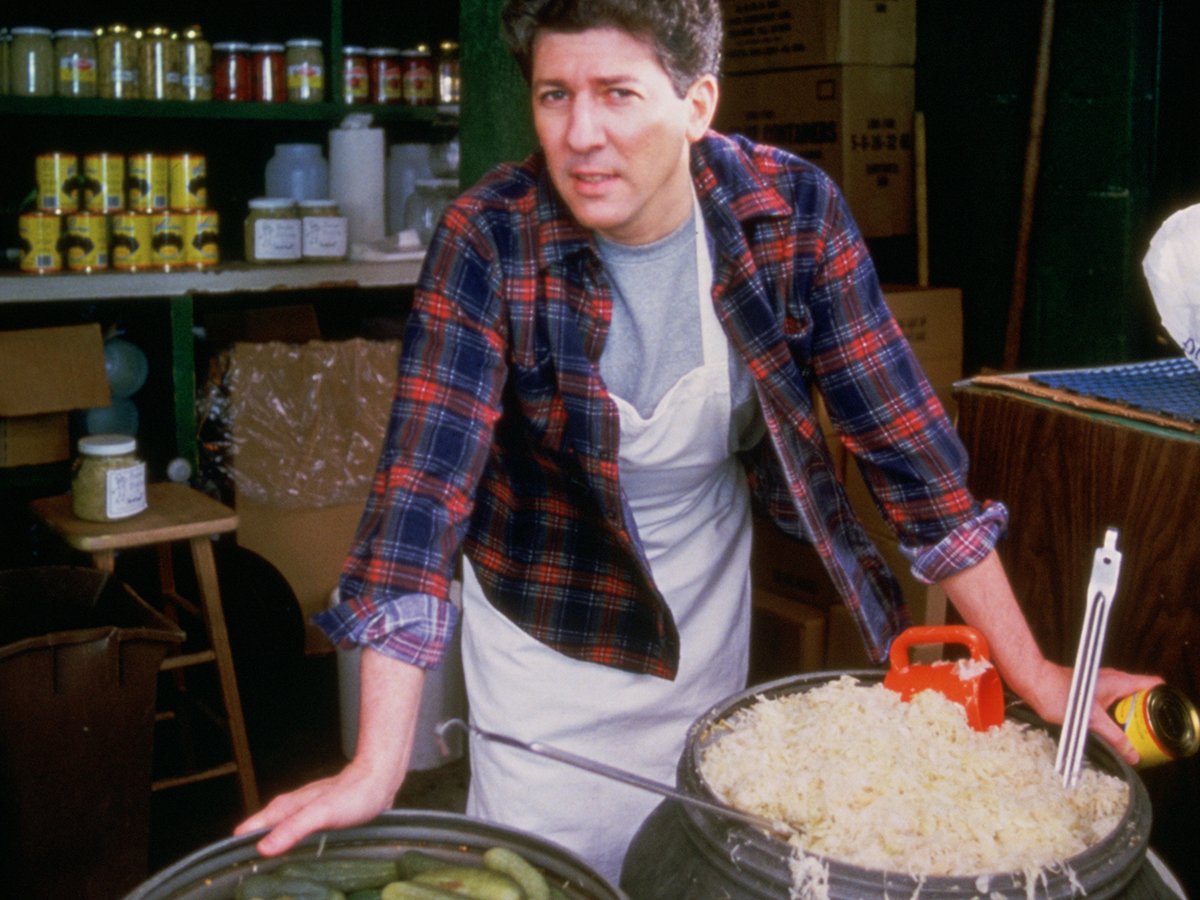
PR: I think that’s what makes the character attractive, is that he seems to know who he is. He doesn’t have a problem with who he is. And it’s interesting because, you know, what’s he doing in his father’s business selling pickles? It’s a very sympathetic character. I remember when the movie came out in ‘88. And I mean, it was especially popular in New York, but it was popular wherever it was. And it’s a very iconic character.
BH: The pickle man. Yeah, everyone loves him. Everyone shouts him out when you talk about Crossing Delancey. Is that what you’re most recognized for?
PR: Depends where and when. When The Mask hit, it was younger people. Animal House was obviously everybody. I mean, it was so huge. The Sopranos. It’s just different all the time. But yeah, I was surprised at how strong an impact the movie made. It made about five times its initial investment, which is pretty good. Warner Brothers distributed it. I don’t know how much they put into it because the year before was Moonstruck, which was an Italian family. So I don’t know if they had a lot of confidence in a Jewish story, not that it was really Jewish story. It’s a universal story. But, you know what I’m getting at, it’s just all these things are very strange.
BH: That’s what all the best stories are like. These kinds of romances are like specific, but universal, because it is about a woman and her bubbie. But it’s about an independent woman who has pretty much everything she wants. She’s like, no, I like my life. I have my friends. I hang out with my grandmother. The only thing that’s missing is a guy. And that’s fine. And it’s just about her getting to that point of like, no, actually, I should want more, even though this is good.
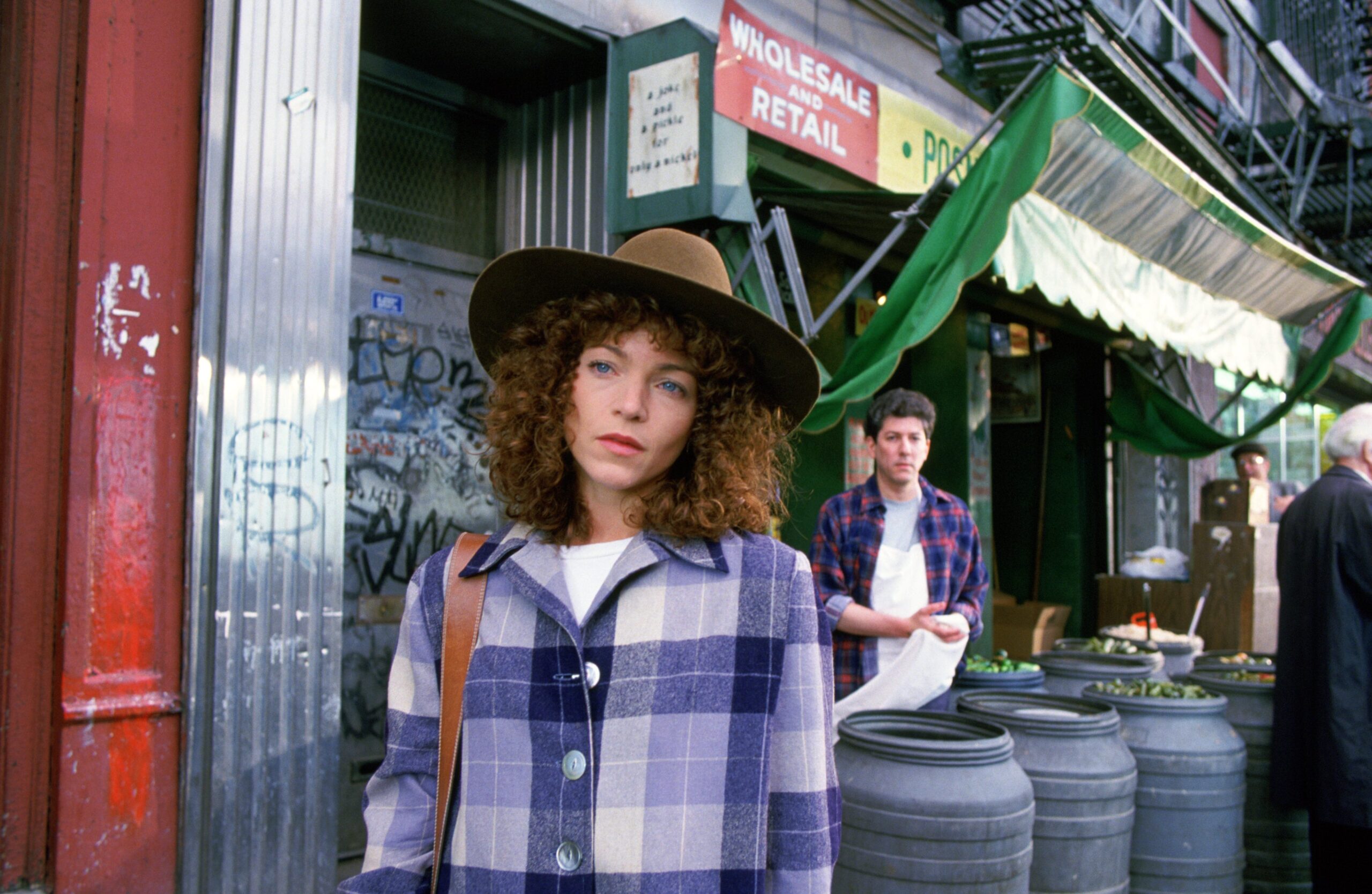
PR: I think one of the most pivotal scenes is when the woman comes into the hot dog stand and sings “Some Enchanted Evening.” It’s a really moving rendition. I think her last name was Lawrence. I can’t remember her first name right now, shame on me. I don’t remember if that was in the play. You’d have to ask Susan [Sandler]. But as a device for the change that Amy [Irving] goes through, that’s a pretty interesting song to choose. And of course, like you said, she’s going along happy as a clam claiming she’s perfectly fine. But that’s what we all claim at certain points. I remember a mentor saying to me once, “You don’t have to do it alone.” And I said, “What?” He said, “Life, you don’t have to do it alone.” And no matter what age you are, when you come to that understanding that asking for help is okay. Like, you know, the matchmaker, in a way, that’s asking for help. And of course, she’s repulsed. Amy’s character, Izzy, is repulsed by the idea. But I’ve kind of flirted with the idea because she gave me Amy’s picture. So it’s an interesting dynamic about whether we find who we want or what we want by dumb luck or by the use of an outside force?
BH: That’s part of what Izzy assumes about Sam– like, oh, he’s just like some guy. He’s a pickle man. He’s just doing this because whatever. And then she learns more. And Sam is like, oh, no, no, I also thought this was kind of weird. But I decided to really go for it. And that’s not a bad thing.
PR: And also, this is in the movie which came out in 1988. So that’s 37 years ago. Dating has changed. The younger generation, they don’t have any problem going on their phone and checking into matchmaking apps. They had them in papers. You could find that in a newspaper. But that felt inauthentic. But of course, you find love where you find it.
BH: Exactly. Did you see the play when it was running?
PR: I didn’t. Susan asked me to do it, but I had a conflict. And she very sweetly wrote me a postcard saying maybe you’ll do the movie. Very rare, but it turned out for the best.
BH: It’s just such a nice movie to be inside of. The diner sequence made me think of Sex and the City where it’s just like a woman, like thinking about her situation, very New York. She’s like, you know what, this is the greatest city in the world. I can do whatever I want. I can go hang out with the man.
PR: When you get to the point when all the choices are yours, in the sense that you’re done with high school, you get to decide if you want to go to college or not. Whenever it is that you take full control over being responsible is a really exciting time in someone’s life. I don’t know what younger generations are going through because it’s so dramatic. I mean, we had a loan for me to go to college. I went to the University of Buffalo, but it was a state school. I think it became a state school in 1962. So when I went in 1964, I think it was a thousand dollars all in.
BH: Oh, my gosh.
PR: Unheard of. And when I moved to Greenwich Village in 1968, my rent was ninety-five dollars a month. I mean, my gosh, no one’s ever going to see again. Yeah.
BH: I mean, I got lucky. My rent is pretty cheap for this area.
PR: But I bet it’s not ninety-five dollars a month.
BH: No, I wish. I don’t even know what I would do with all that money.
PR: Well, you know, it’s all relative. It wouldn’t be that much money. I taught for about a year and a half and I think I made fifty-nine hundred dollars a year as a public school teacher. And then I started acting, which was 1971. I was holding three jobs a week, but I only needed to make my ninety-five dollars, which I can get. I think the template was a week’s salary should equal your rent.
BH: People say a third of your income. Basically, you know, that’s fine.

PR: Well, actually, I have a question for you. What is your sense of what American movies are these days? Do you sense an independent cinema, or is Hollywood just like just devouring everything?
BH: It’s a lot of Hollywood. But I will say, we have a good film scene here because of the Brattle Theatre. Whenever I go, I always think about right after lockdowns had lifted, the Brattle reopened. I saw a Polish sci-fi film called Ikarie XB-1 on a Wednesday night. I was like, I’ve never heard of this. I’ll go see that. It was a 9 p.m. screening. I looked behind me. It was basically full. People want to watch these things. But then I’ll review the Mario movie and people were just screaming the whole time, even though it’s not really very good. I was just like, oh my God, this is what’s popular.
PR: I think popularity is always weird. I mean, The Godfather was popular. Chinatown. You know, Mel Brooks’ films. The Marvel stuff I don’t get, but it’s not it’s not made for me.
BH: That’s what I try to approach it with, where I’m like, these movies have moved beyond where I enjoy them. I try to get what people like. I saw the new Captain America when I’m like, this is mostly very anonymous, but like, I like Harrison Ford. Obviously, I’m not a monster. I try to find something.
PR: Yeah. I just saw Harrison in a half hour comedy called Shrinking. The series is good. And it was interesting to see. I’m forgetting the name of the actor. He’s very good. He came out of that group Freaks and Geeks.
BH: Oh, Jason Segel. Yeah, it’s his show.
PR: He’s used his clout, whatever he has to develop something very interesting.
BH: Yeah, I’ll find certain artists that I’m really interested in. And I’ll just try to keep an eye on what they’re doing. Like there’s a director in Baltimore named Albert Birney I really like. And whenever he has a new short film, like he’ll make it in his house. And I’ll watch that. I’m like, this is great. And I’m like, I recognize his house at this point, because I’ve talked to him a few times. I’m like, I know which room this is.
PR: What’s his name?
BH: Albert Birney. He’s still in Baltimore. I think he teaches down there and he makes films in like, his yard with his friends there. They’ve started a production company. I’m talking to him soon, about his Sundance movie OBEX. He did Strawberry Mansion a couple years ago, which was really cool. Well done. Very handcrafted.
PR: If you’re interested in being creative, it’s the same as when I started. You can’t wait to be chosen. You go out and make your own way. And that’s always been creative people’s point of view. I’m sure it hasn’t changed at all. That’s why I was asking, because you, you know, you’re younger than me. I always like to check in to make sure that my instincts are pretty much what they were.

BH: That’s always been the way. I remember watching the bonus features on Chilly Scenes of Winter and Griffin Dunne and his producing partners and saying, we have the rights to this book. We’re gonna make this movie. And then it came from that.
PR: I worked with Mark Metcalf on Animal House. And he told me then that he optioned this book with his two friends. I didn’t know Amy, I knew her work from Mean Streets as an actor. And Griffin Dunne, I didn’t know. And two years later, we made the movie, which is relatively fast. You know, because we made Animal House in October of ‘77. And we started shooting Chilly Scenes in February of ‘79. And it came out in ‘79. And it came out twice. It was released under the title, I’m forgetting it, I blocked it out of my head.
BH: Head Over Heels.
PR: Head Over Heels. I remember talking to one of the Warner Brothers executives, and I say, why are you changing the title of the book? And he said, well, it’s a terrible title. And I said, why? He said, it has winter and chilly in it. And I said, I don’t understand you guys. You know, it already has an identity. And Chilly Scenes of Winter has a sound to it. It’s got a nice sound to it. The other one was just generic.
BH: Exactly. It makes it sound like a normal rom-com rather than mostly about John Heard’s character just stewing. It’s kind of like a darker version of Crossing Delancey in that way where you really experience New York and the Lower East Side. But then you do the same thing in Chilly Scenes, but it’s Salt Lake City in the dead of winter.
PR: Well, that’s interesting. At the end of the day, if your romance isn’t working, you only have Salt Lake City. But if your romance isn’t working and you’ve got New York City, yeah, you might do okay.
BH: I remember showing it to my friends a couple of years ago, and they’re just like, why can’t he just move? And I’m like, listen, like, maybe he will. But he’s pretty entrenched in the city.
PR: Ann Beattie, who wrote the book, she’s very happy with the movie version of it.
BH: That’s good.
PR: I was really happy that she plays the waitress in the movie. There’s a diner where John and Mary Beth Hurt go and the waitress– that’s Ann. And she was really pleased with the result, which is rare.
BH: Does Susan have a cameo in Crossing Delancey?
PR: I don’t know if I saw her. She might have had. I wouldn’t be surprised.
BH: There’s a bunch of people that show up, like David Hyde Pierce.
PR: That was one of his earlier jobs. Joan was always great at finding a good cast.
BH: Yeah, of course. Between the Lines has the best cast ever.
PR: Have you ever seen Hester Street?
BH: Yes.
PR: Oh, my God.
BH: I can’t believe that movie is real. It’s so incredible.
PR: And it holds up incredibly well. When Joan passed, they asked me to speak at the memorial, so I went over her films. I hadn’t seen Hester Street in a long time and I was blown away at how good it was. And Carol Kane, there’s a reason she was nominated. That was an incredible performance.
BH: Yeah. She’s so amazing.
PR: I saw her in a movie called Between the Temples. She didn’t get nominated, but she’s also very good.
BH: Every cast that Joan Micklin Silver put together is just great. She has this movie called Big Girls Don’t Cry, They Get Even. It’s a ’90s kids movie. I had never seen it, but Griffin Dunne’s in that.
PR: That’s very funny. Yeah. She really is a good storyteller.
BH: Her movies are so distinct. It was an era where I feel like there were just not a lot of female directors.
PR: Oh, she was almost all alone.
BH: She was like the only one, besides like, I think Joan Tewksbury directed once, right?
PR: Joan Tewksbury did one. Martha Coolidge was just starting. I worked with Martha. I worked with a French director named Diane Kurys. She was great. There’s somebody else I’m forgetting who did a movie with Melanie Mayron. She showed up around that same time. Obviously, now it’s nice to see more and more women. And that’s what Joan had to overcome. Hester Street, I think, was made for $400,000, which is almost hard to believe.
BH: Yeah, it’s crazy. She has such a great body of work. Claudia Weill, I actually just watched another movie by her. It’s My Turn, with Jill Clayburgh and Michael Douglas.
PR: That’s right. It’s nice to see, I don’t know if progress is the right word, but the idea of waiting to be given permission will not help you. It doesn’t mean it wasn’t really hard, but Joan went through, and Claudia went through. Martha, the resistance was ridiculous. But it seems like people from every walk of life are now saying, I can do this.
BH: Absolutely.
PR: And they figure out how to do it, which is, you know, that’s the battle. Entrenched giants like Hollywood, I mean, Hollywood doesn’t have a brain. It’s just this place that gives out money. And if you could make money, they’ll figure out a way to give you more money until you can’t.
BH: There’s so many people where, they’ll have such a sudden, huge first success. And you’re like, okay, now what are they going to do? And there just needs to be more of those people so there’s less pressure on each of them. Because it’s just like one female director would be like, okay, you did this. Now you’re going to do this huge movie, don’t screw it up. There should be 10 of these people.
PR: That’s why you need numbers, nobody wants to be doing it alone. There’s no glory. Maybe being told, well, you were the first to do this, from whatever group you’re from. Well, it really has no value. What has value is a plethora of people. Lots of people should be allowed to fail, rather than all have to succeed. Most movies are mediocre at best. At best. When you find a film you like, one of the exciting things about it is it’s like you discover a new continent.
BH: That’s how Between the Lines felt to me, where I was like, I can’t believe I haven’t seen this now. But also, thank God I finally got to watch it. It really drove me nuts. And it was so nice being able to watch Joan’s other movies and obviously Crossing Delancey. People really talk about Crossing Delancey again. And now we have the Criterion.
PR: Apparently, it’s making a little comeback in terms of people talking about, which is nice to see.
BH: It felt like it happened a couple years ago. I was like, oh, it’s that time, people are watching Crossing Delancey again.
PR: It’s nice to be able to hang around long enough to see something you did come back.
BH: It must feel really nice to be part of that.
PR: Absolutely. Because I’m oblivious to it, other than the fact that when Criterion called me and told me they’re doing this new version, I thought, well, they’re not doing it for no reason. There’s got to be something. Yeah, it was a really fun conversation with Amy and Susan.
BH: I was watching that earlier. I heard an interview with Amy last year, where she was talking about working on Yentl. She just seems like the coolest person.
PR: Very cool. I think we had met in the ‘70s. My brain is telling me the Odeon restaurant in Soho. 50 years ago. Holy cow. Time is so bizarre. It seems to take forever until you look back. And it’s like, how did it happen like that?
BH: I’m trying to think of any final Delancey bits. How much pickling did you actually have to do? Did you learn the craft?
PR: I learned the craft by eating all those pickles. No, I know that area. I worked as a quasi-social worker at a settlement house on the Lower East Side. I knew all the streets and all the restaurants. Once upon a time, there was a pickle stand on every corner. So other than plunging my arms into the pickle barrel, I know all the delis down there, or used to.
BH: My sister used to live down there until recently. And every time I would go down I’d say, “We’re crossing Delancey! Here we go!”
PR: Yeah, I actually was going to a club at the end of the far eastern part of Delancey before you go over the bridge. And I was there with my then girlfriend, now wife. And we got out of the subway and we were literally crossing Delancey. And I thought, you can’t write this. This is silly.
BH: It’s just a description of something I’ve done many times now. Feels good to be a part of it.
PR: Well I’m happy to talk with you, it’s a pleasure.
BH: Thank you so much!
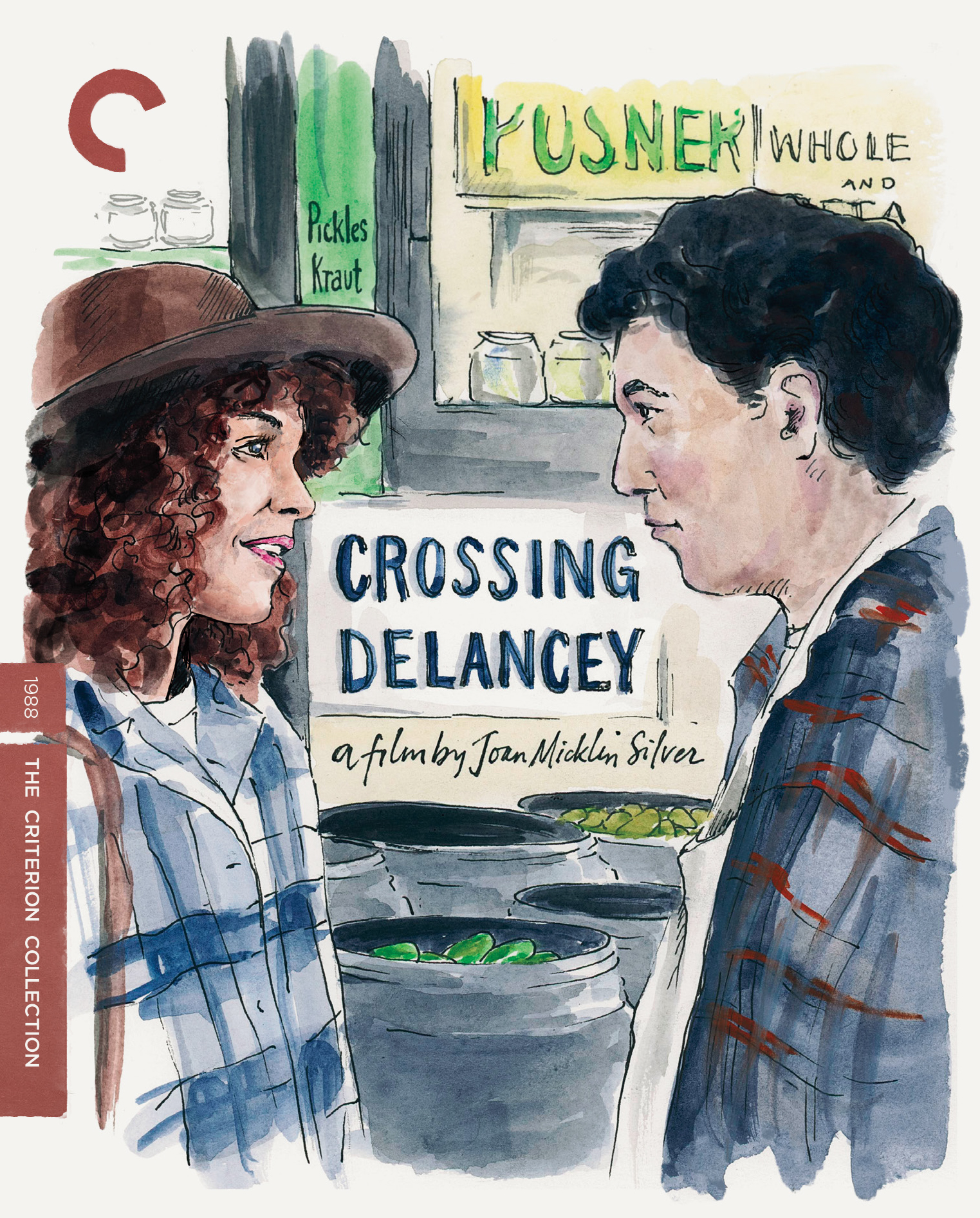
Crossing Delancey is now available on 4K UHD and Blu-Ray from the Criterion Collection. It is also streaming on the Criterion Channel!