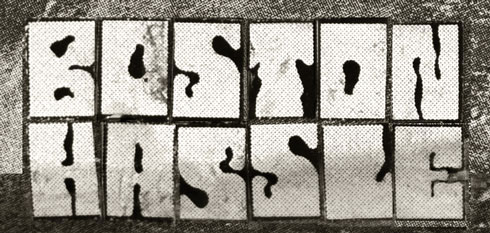

It’s a fun exercise to review the full breadth of directors who have risen up to the final-boss task of making a movie about movies, mainly because no two films will look or sound the same. Consider the nostalgic sweetness of Spielberg’s autobiographical The Fabelmans or Obayashi’s gonzo-goodbye Labyrinth of Cinema. It’s ungainly to even consider putting these films with a nebulously similar premise on a linear spectrum. By which measure could they be placed on? Accuracy? The width of cinema’s history encapsulated — and if so, will any movie surpass Babylon‘s boldened inclusion of Avatar?
There is a quiet urgency in Bi Gan’s Resurrection, a sprawling, genre-hopping odyssey across a century of films. Without a physical form of a narrator per se, the film still gives the impression that it’s told by a person on their last gasping breaths and stricken eyes to illuminate the last remnants of cinematic storytelling. It’s unquestionably a movie about movies, and its conclusion feels like acknowledged resignation to an uncertain death, but it holds a simplicity about the truth in connection we have with each other, which can only sometimes be understood when we see it on screen.
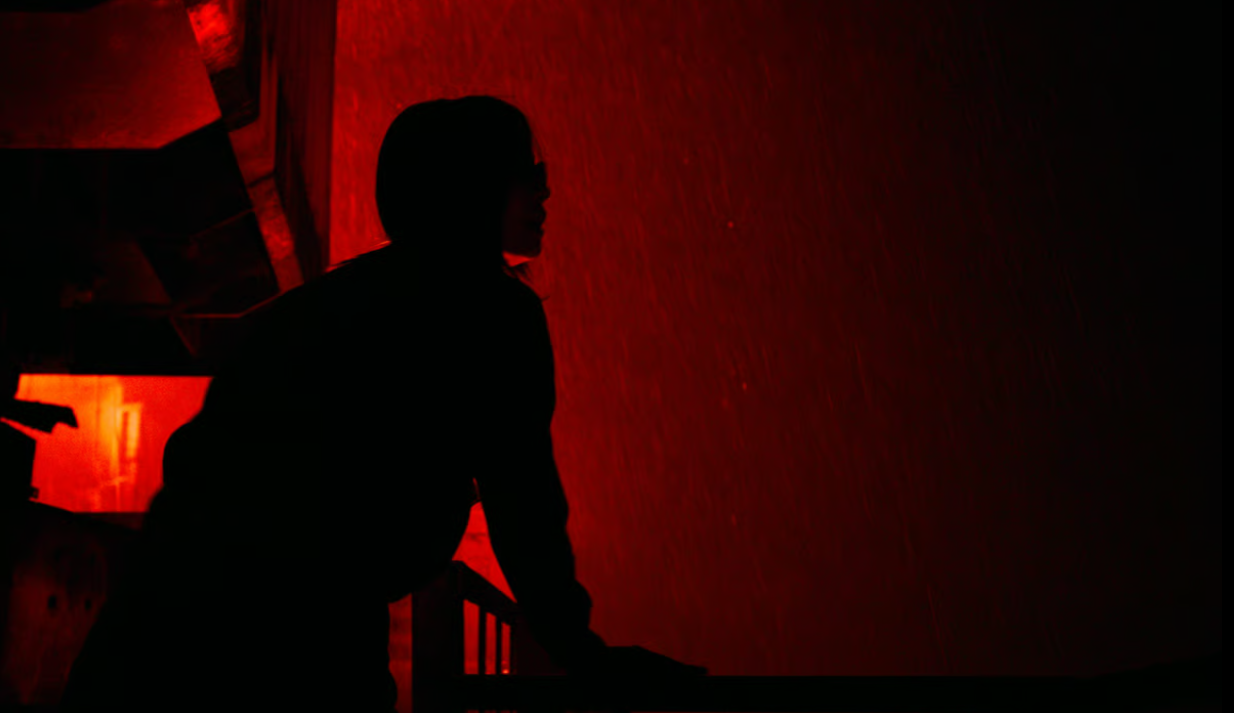
Admittedly, I had a few unanswered questions on my first watch, and perhaps more hypotheses than concrete facts at the second go-around. And I can share the understandable skepticism if I were to tell you that a movie about movies starts off with a reenactment of A Trip to the Moon, but let me explain how Bi does it. Through an introductory title card, the world in Resurrection is segregated between Deliriants (those who have the ability to dream) and the Other Ones (those who have exchanged that ability for eternal life). And then there are those who have the talent to see through the Deliriants’ illusions to stop the chaos that they bring to the world. Shu Qi plays the unnamed central hunter, and she has targeted a Deliriant (Jackson Yee) named “Film.” In pursuit, she finds herself in an opium den, framed and colored so preciously like a Neoclassicist painting set in a saloon. She is able to escape the trap set by the Deliriant, who then has morphed into the familiar shadowy figure of Nosferatu. Eventually, Shu’s character captures him, but he refuses to submit. Bruised and battered, his pale face is centered on the screen, invoking the familiar moon’s winced expression, if only briefly.
This first sequence between Shu’s character and the Deliriant is nothing short of a straight-up stunner, worthy of details in textural breakdown, mood lightning, silk-like camerawork, and the aesthetic incorporation of 19th century cinema. Shu’s character is able to see the Deliriant’s withering visions by installing a film projector in his chest, which sets up the film’s subsequent chapters demarcated by the human senses. While the next three stories find themselves following the same dream-logic bent to the will of Bi’s imagination, they have a more traditional format in movement and dialogue. Varying in environment and genre — train murder mystery to a conversation between a thief and temple spirit to two budding con artists — Bi unites their atmosphere with an encroaching world-is-ending aura. Perhaps this is done because of the Deliriant’s predisposition and his inserted role in these stories. It feels prudent to mention that Yee was 23 when filming first started, as I was convinced that he was either an older actor or his characters were played by different people. Yet, his performance for some of the characters is wizened much deeper than what I imagine a twentysomething could even be cognizant of, and plays to the emotional intensity in each story.
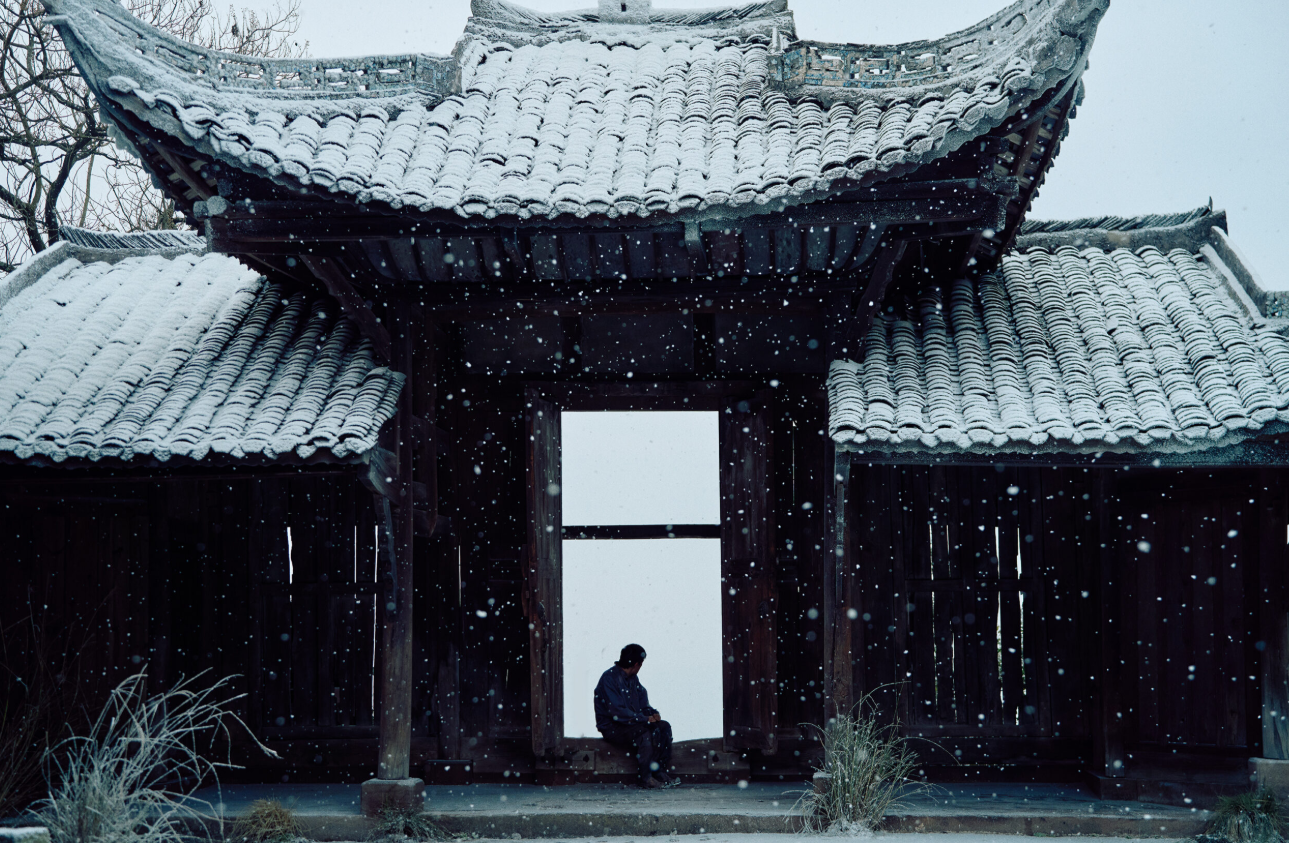
Resurrection plays with the Deliriant’s sentiments of the world, where boundaries are erased to make room for the pure extracts of motivation – desire, redemption, forgiveness, belonging – and cinematographer Dong Jingsong’s eye for the M.C. Escher-like angles that tensely pull on the viewer’s objectivity and the toying between illustrative settings and sci-fi tinglings goes unmatched, electrifying the genre manipulations in each story. Scenes that seem to exist as a new entity for the camera are seamlessly weaved in with expertise: the honeycomb-quivering of water during a storm, the overlaying images of a snowy ground over a pollen-blanketed pond, bloodletting over a whiskey glass, the many creative endeavors you can display the reflection between two people. Because it’s image-driven, it’s hard to exact the film’s magnetism when, really, the only way to know is to watch it.
The film is a fantastical escape into cinema, exploring the humanness in stories that have been told. One could rewatch it a few times and find new recurrences within the chapters (so far, I was able to count the sound of theremin in at least two of the stories and a couple of fart punchlines). However, if there was ever a moment in the film that showcases grand magnificence, Bi’s killshot is the last story, a chance meeting between two strangers, Apollo and vampire Tai Zhaomei (Li Gengxi), on the apocalyptic last day of 1999. Bi is no stranger to extended takes, but in this, the choreography that takes place between these two is unparalleled to any scene this year. From the do-or-die flirtations to fisticuffs at a karaoke nightclub, it’s funny that for a movie about movies, that watching this story can feel so singular. When Tai declares, “I want to see the sunrise,” it might seem like a dying wish to see beauty once last time. It might also a resurgence of hope: that we should enjoy the things that we have while there’s still time and freedom. That includes our movies.
Resurrection
2025
dir. Bi Gan
156 min.
Opens Friday, 1/2 @ Coolidge Corner Theatre