“I think I have this thing where I need everybody to think I’m the greatest, the quote-unquote Fantastic Mr. Fox,” says George Clooney’s voice in the slightly rushed, nonchalant style of Wes Anderson’s dialogue, which lends itself to both profound philosophy and quirky comedy. Anderson’s adaptation of Roald Dahl’s Fantastic Mr. Fox retains the book’s themes of ingenuity and community, but takes the story to new cinematic heights and asks what it means to be a father, an animal, or simply different.
Anderson and a pre-Frances Ha Noah Baumbach substantially expand upon the source material, making the film a work unto itself. Going for an observational, metatextual approach, they poke holes in the very premise of an anthropomorphized society. “Because I’m a wild animal,” Mr. Fox (“Foxy” to his friends) tells his wife, Felicity (Meryl Streep), when she asks why he had to go behind her back and start stealing poultry again. She doesn’t exactly say he’s not, just that he’s “also a husband and a father.”
Fantastic Mr. Fox follows its smarmy titular character, who endeavors to steal from a trio of comically evil farmers. When they retaliate, Foxy’s entire community is driven underground and must fight for their lives. Fantastic Mr. Fox bears the hallmarks of Anderson’s visual style: symmetrical shots and bright colors. In this particular case, the mise-en-scene is soaked in yellow and orange hues, though the palette effectively shifts as the story moves to new locations and tonally different moments. Accompanied by soundtrack choices such as “The Ballad of Davy Crockett,” the film evokes a subversive Americana and emphasizes it as Foxy’s world (as he is also orange).
Anderson’s signature flair is a critical tool in turning the cherished children’s book into an original story about domesticity vs. wilderness. The theme of fragile masculinity is present in how Foxy caves to a fox’s supposed traditional tendencies. There are familiar tropes that also support this idea: a family man having a mid-life crisis seeking adventure without his wife’s knowledge, and an awkward son struggling to live up to his father’s image. Certainly, Fantastic Mr. Fox does well with this side of the story, through Foxy’s conflict with his taciturn son Ash (Jason Schwartzman) and zen, dexterous nephew Kristofferson (Eric Anderson, the director’s brother and frequent illustrator).
A possible reading of Fantastic Mr. Fox is even as a cautionary tale against the manosphere’s arguments that men are biologically meant to be aggressive or dominant. But where wildness doesn’t become a perfect analogy for toxic masculinity in this lovely film is in the character of Fantastic Mrs. Fox.
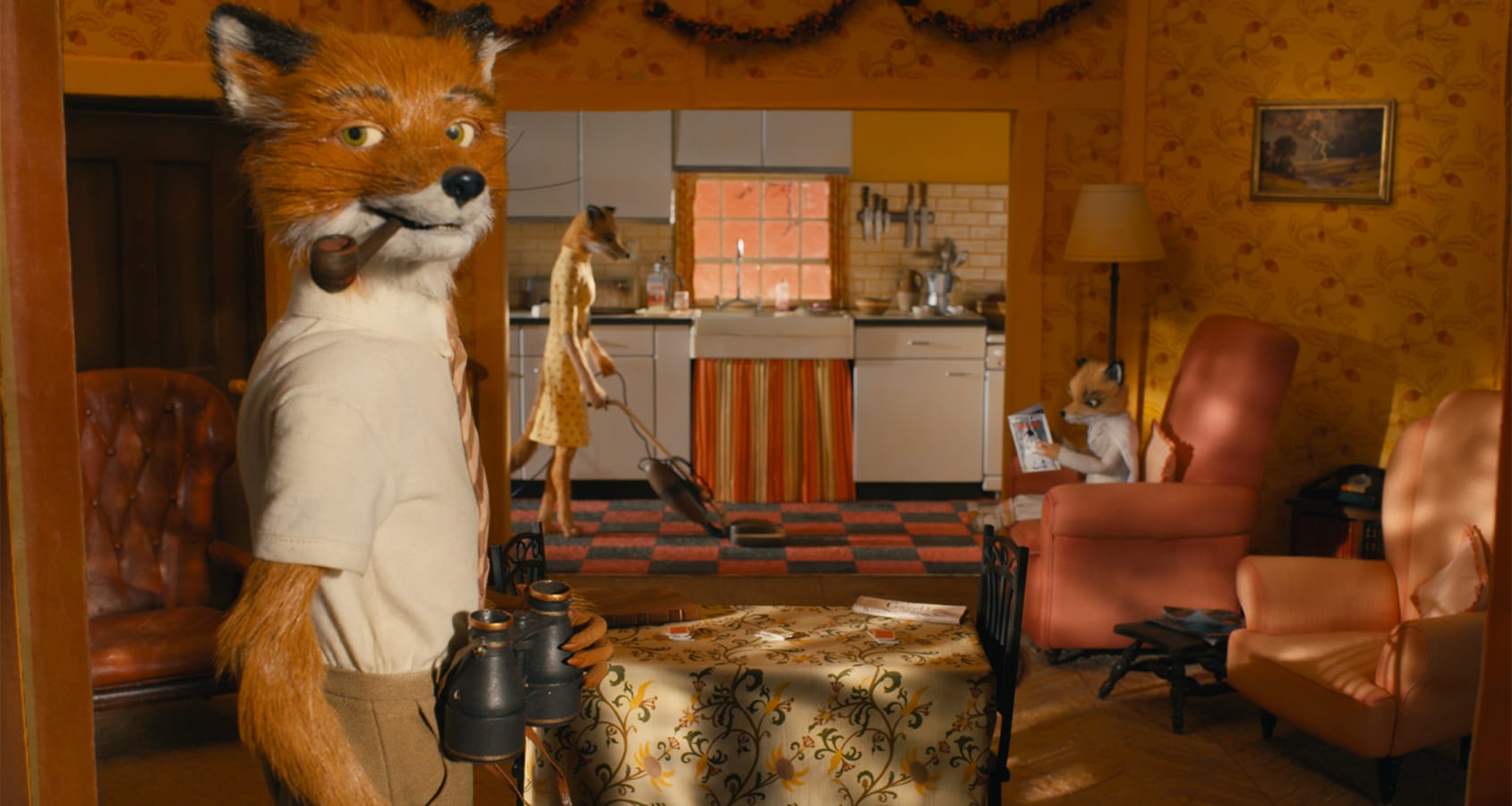
When we first see Felicity in the prologue, she’s wearing a hippie-style linen shirt and headband. We learn from the sexist account of Rat (Willem Dafoe) that she was once the “town tart,” which, from my perspective, means she was rightfully enjoying her youth while happening to be an attractive woman. She eventually settled into a quiet family life with a self-assurance that her husband lacks. In her spare time, she paints landscapes that mirror her surroundings, but with storm clouds on the horizon and a shock-white lightning strike (or a few).
She’s really not ignorant of what Foxy is up to; she’s daring him to keep doing it or to come clean. “If what I think is happening, is happening…it better not be,” is one of the most iconic things Meryl Streep has ever said. When things start to spiral for the family, she maintains her deadpan, non-reactive anger, until she takes Foxy aside and says she is going to lose it now — then slashes him across the face with a guttural growl.
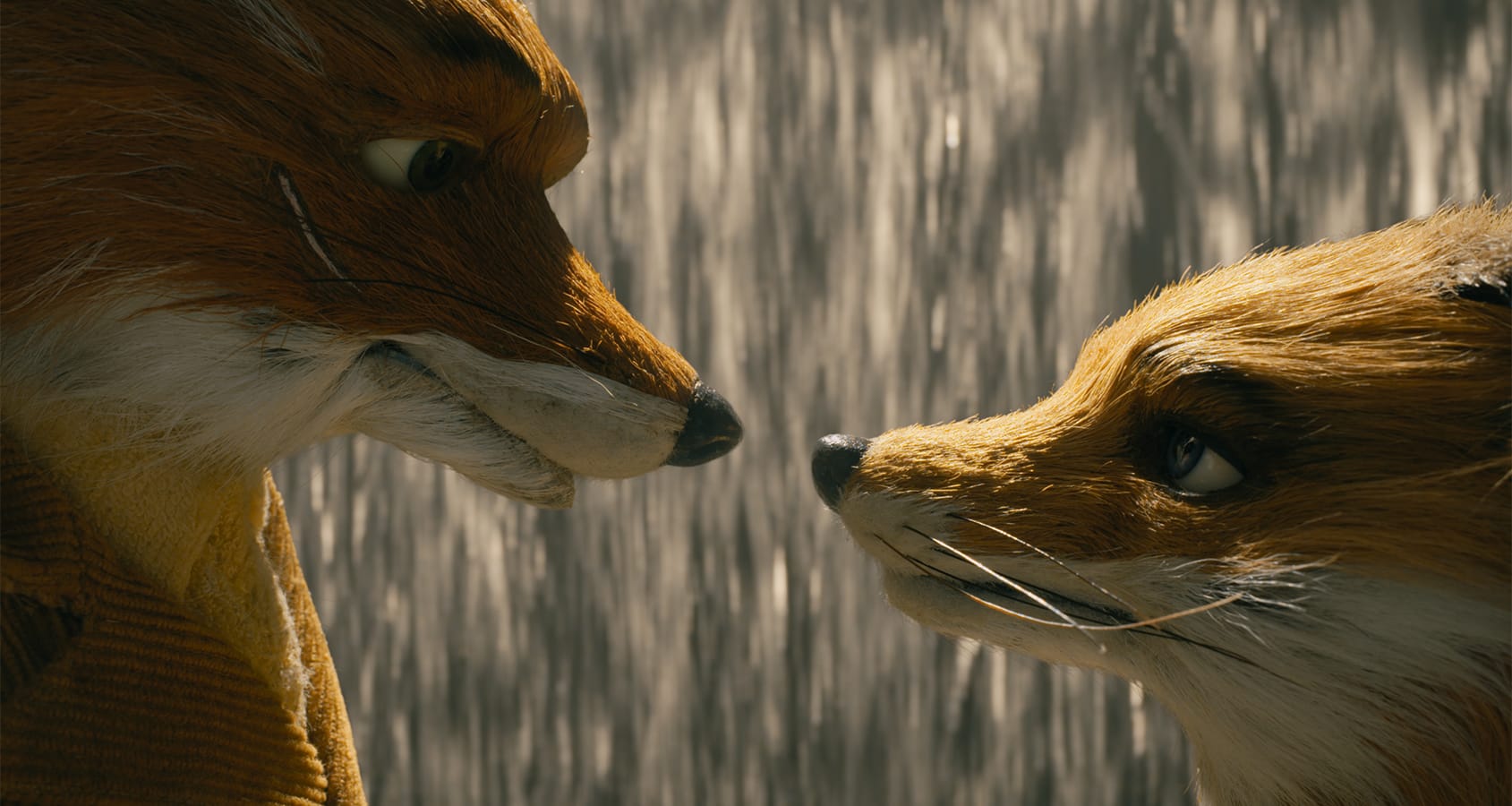
Felicity is essential to the story because she is not a rejection of having a wild side, or an argument that one must give it up to be a good parent. Rather, she is controlled and then strikes like a bolt of lightning, making her more intimidating. Her solitary discussions with Foxy take place in two very distinctive settings — a glittering mineral deposit and against the backdrop of falling water — representing his failure to appreciate his family.
Two more electrifying scenes affirm the dual thematic sides of Foxy’s personality and how he makes peace with them. Bean’s (Michael Gambon) rat security guard is a bizarre story addition, with a brutal, strobe-light affected fight scene between him and Foxy. Rat dies from his injuries, confessing that he was only ever after the superficial compensation of cider. Rat makes it possible for the heroes to rescue Kristofferson, thereby redeeming himself, “but in the end, he’s just another dead rat in a garbage pail behind a Chinese restaurant.”
While Rat is the tragedy of wasting years on wanton pursuits in contrast with living one’s life for a family or community, Foxy also has to reckon with how he has perceived his own animal nature to be at odds with his home life. And so we get the record scratch of the wolf scene.
There’s a recurring joke throughout the movie about Foxy having a “phobia” of wolves, leading up to the scene where he, Kylie (Wallace Wolodarsky) and the kids spot one. Foxy slams on the breaks, seeing the autumnal landscape give way to a clearing of snow and a black wolf’s silhouette, standing stoically on a mountaintop. The epic symbol of the wilderness itself, who has never worried about trivial concerns like real estate, credit cards, etc. Moved to tears by the “beautiful creature,” Foxy sees that he is not the wolf, but maybe some part of him is still its kin, as the wolf acknowledges him with a raised fist of solidarity.
The lines between animals and humans are completely nonsensical in Fantastic Mr. Fox. Foxy and co. seem to be able to communicate in English with the humans, but the chickens killed are only chickens. The foxes and badgers randomly maul their food or growl viciously at each other. It’s framed as ridiculous that the wolf would understand any of Foxy’s polite small talk, though he can replicate the salute. But this blurriness works for what the movie is getting at: What animal do we believe exists inside us? Be wild, be unique, be weird, be fantastic. Just…don’t lie to your spouse and pay your bills on time.
Fantastic Mr. Fox
2009
dir. Wes Anderson
87 min.
Screens Friday, 7/10, 6:30pm @ MIT Open Space
Free outdoor screening! Register here.
Part of the repertory series “Animated Animals,” presented by Brattle Theatre