Written by Neil Horsky, this column was originally published in the May 2015 issue of the Boston Compass
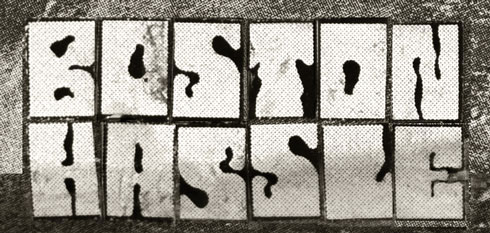
Art by Katie James, “Elma Lewis”
In the early 1980s Congress debated the future of the National Endowment for the Arts (NEA), which in the ‘70s contributed to the emergence and expansion of cultural institutions nationwide. Conservatives argued that federally funding cultural production undermines artists’ right to free expression because funding decisions are inevitably politically motivated. The Reagan Administration’s advocacy to completely abolish the NEA in 1981 received pushback from Hollywood celebrities and others who staged protests and media spectacles heralding the NEA as vital to American cultural life. Nevertheless, in 1982 the Administration significantly reduced the NEA budget, with severe consequences to arts institutions. Adjusting for inflation, the NEA has never fully recovered their pre-Reagan endowment.
On May 17 1983 President Reagan held a special luncheon at the White House to honor leading artists and arts patrons from across the US. These thirteen guests were the inaugural class of recipients of the annual Presidential Medal of Arts, now known as the National Medal of Arts. Among those honored were painter Frank Stella, tobacco mogul and philanthropist Philip Morris, and Elma Lewis for her four decades of visionary leadership in arts education in Roxbury. At the luncheon President Reagan personally presented each guest with a medal. With all in attendance, Lewis took this face-to-face opportunity to criticize Reagan’s arts policies. She asserted that politics were no excuse for denying fair access to the arts for all Americans, which in a civilized society should be a moral obligation of government.
Lewis founded the Elma Lewis School of Fine Arts in Roxbury in 1950, where she practiced a holistic arts-integrated pedagogy intended “to support anything positive in black life and to destroy anything negative that touches it.” In 1966 she started the Elma Lewis Playhouse in the Park, a summer concert series in Franklin Park that has recently been resurrected. In 1968 she founded the National Center for Afro-American Artists (NCAAA), a collective of artists in all media who exhibited and performed together worldwide. In 1980 the NCAAA opened a museum, still in operation at 300 Walnut Avenue, to house their permanent collection and to exhibit contemporary art of the African Diaspora.