Written by Neil Horsky, this column was originally published in the March 2015 issue of the Boston Compass
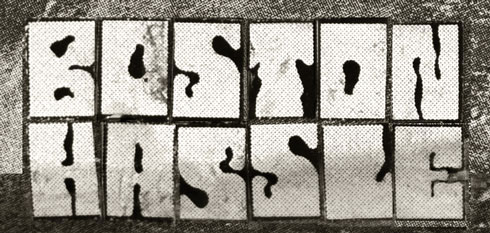
Art by Noah Grossman, “Neighbors”
In the 1760s a radical mob of Bostonians, the Sons of Liberty, intimidated and terrorized merchants and local officials for colluding with Britain in the tyrannical rule of the American Colonies. In 1768 British troops were ordered to occupy the town and keep the peace. After incidents of harassment on both sides, on March 5 1770, in an armed altercation near what is now the Old State House, a soldier in the 29th Regiment accidentally fired upon the mob, startling other soldiers to fire. Five Americans were killed.
The details of the Boston Massacre tragedy are misconstrued in America’s public memory thanks in large part to an engraving and poem The Bloody Massacre in King Street published by Son of Liberty Paul Revere three weeks later. In the mass-media of the day, the propaganda artwork demonizes the British while depicting the volatile mob as wholly innocent, swiftly garnering in the 13 Colonies public sympathy for and solidarity with the Sons of Liberty, leading ultimately to revolution.
In Revere’s interpretation of events, women, a puppy and well-clothed unarmed men comprise a peaceful public gathering. An officer stands behind a row of soldiers, ordering them to fire upon the crowd. A line from the poem reads, “Like fierce barbarians grinning o’er their prey, approve the carnage and enjoy the day.” The slain figure of Crispus Attucks, a Native/African-American who was the first to be shot, is portrayed as a European. This fabrication, however, did not cement into historical fact, as the true Attucks has since been deemed a Patriot and martyr.