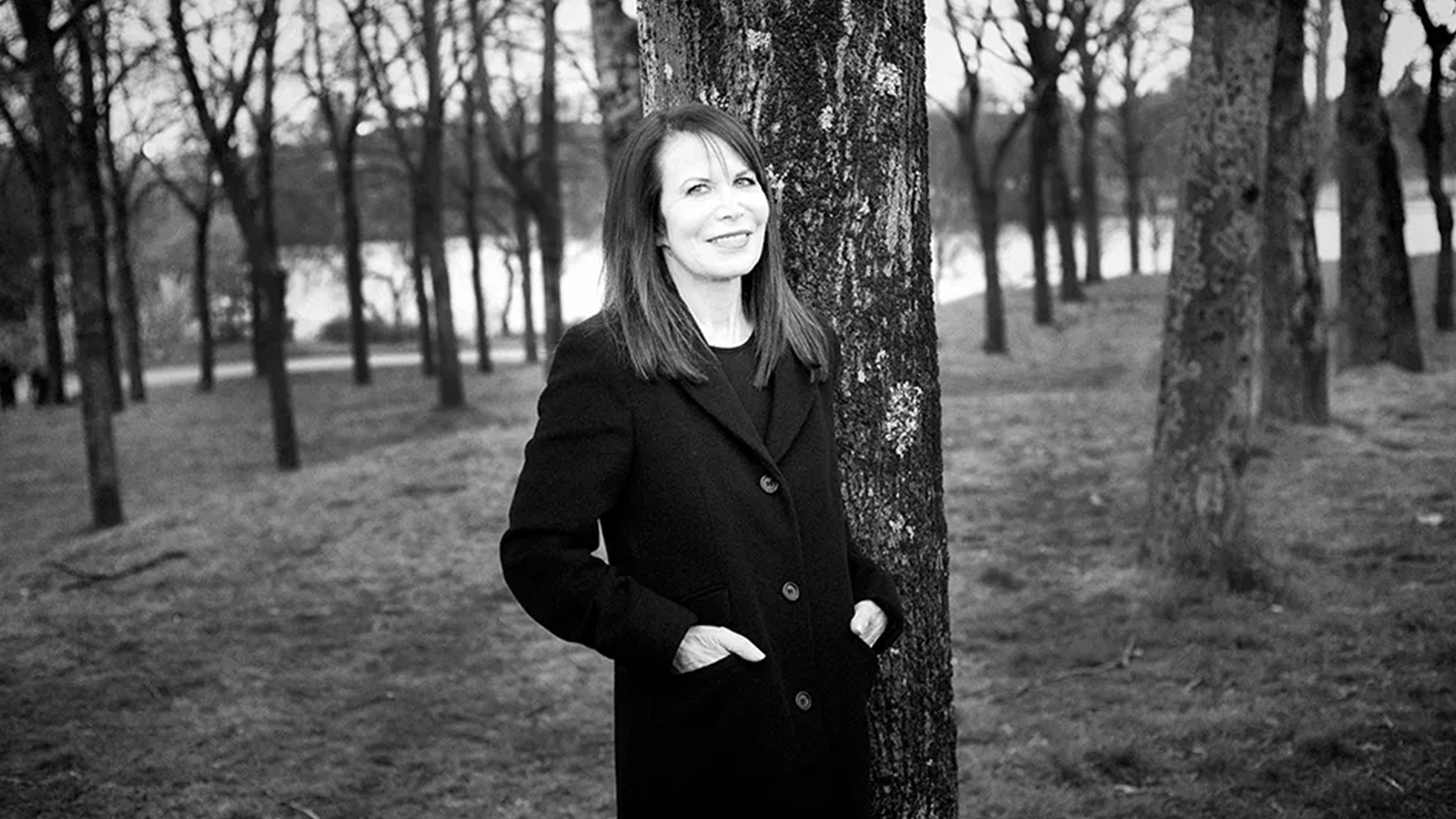
In honor of the film’s Criterion release, I spoke with director Lizzie Borden about her revolutionary independent film BORN IN FLAMES! It was an honor to chat about guerilla filmmaking, fact and fiction, and old New York location scouting.
BOSTON HASSLE: I’m really excited to ask you about Born in Flames. I love the movie. I was just left wondering how this even got made. And now from everything I’ve read and your introduction for the Criterion edition, I learned that the answer was “a lot of work, every single day, forever.” It’s really amazing.
LIZZIE BORDEN: It was amazing in the ‘70s and ‘80s that I owned the means of production. I leased an editing machine. I had a camera until the film was over. I had people who would help me, but most important was that editing machine. I would rent it out to other people in eight hour shifts, not for much, $25. It paid for itself, because then I could work on the film forever and edit and edit. It was the old way of editing where you cut and tape it together. It’s magic when you actually see what it is. I loved it. I loved the process of it. These days people do things on their iPhones with the drag and drop. I never got into that, but I think it’s great that they have their own means of production on their phones. By editing like that, ideas would come to me. It was like writing, as you do rewrites on various things.
BH: It’s a very on-your-feet sort of thing. The best kind of filmmaking is just taking what’s really happening and being able to put it into your narrative and be like, well, we can use this and make it mean this. It’s collaborative cinema, which I really love. I see friends of mine who are making films now in similar ways where they’re like, well, my friend knows how to do this. He’s going to do this. We got the backgrounds painted by this person. It really blows me away. I’ll watch anything with guerrilla radio in it. I really love the idea of dueling guerrilla radio stations. Can you tell me a little bit more about the leads?
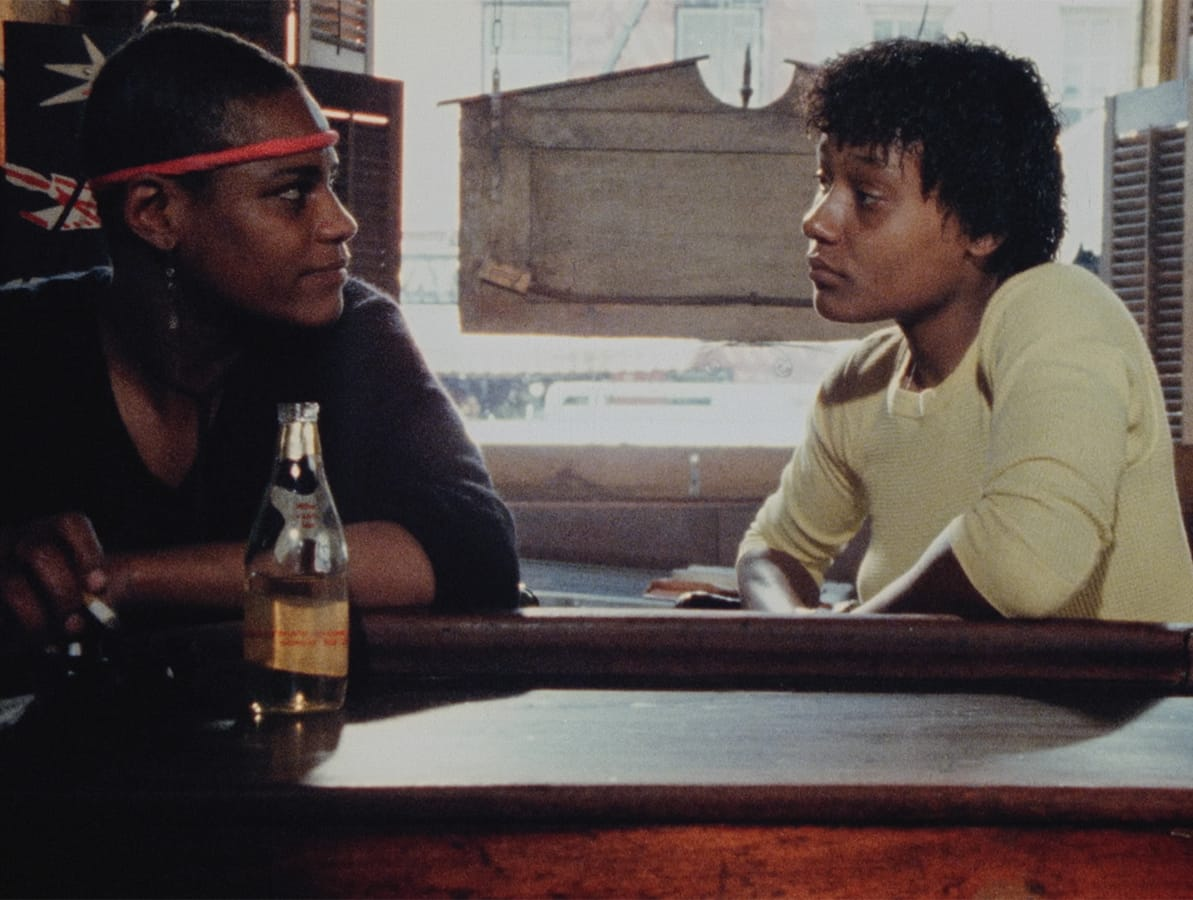
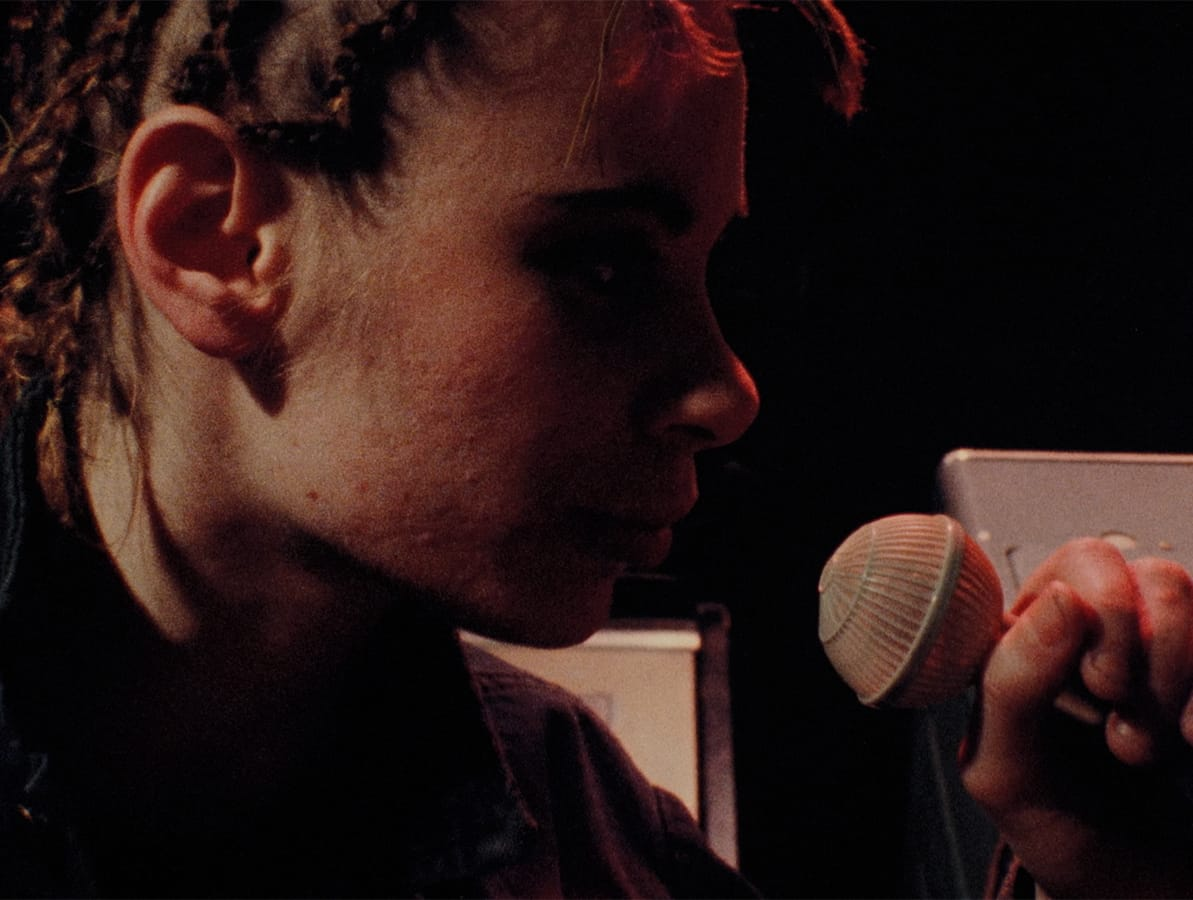
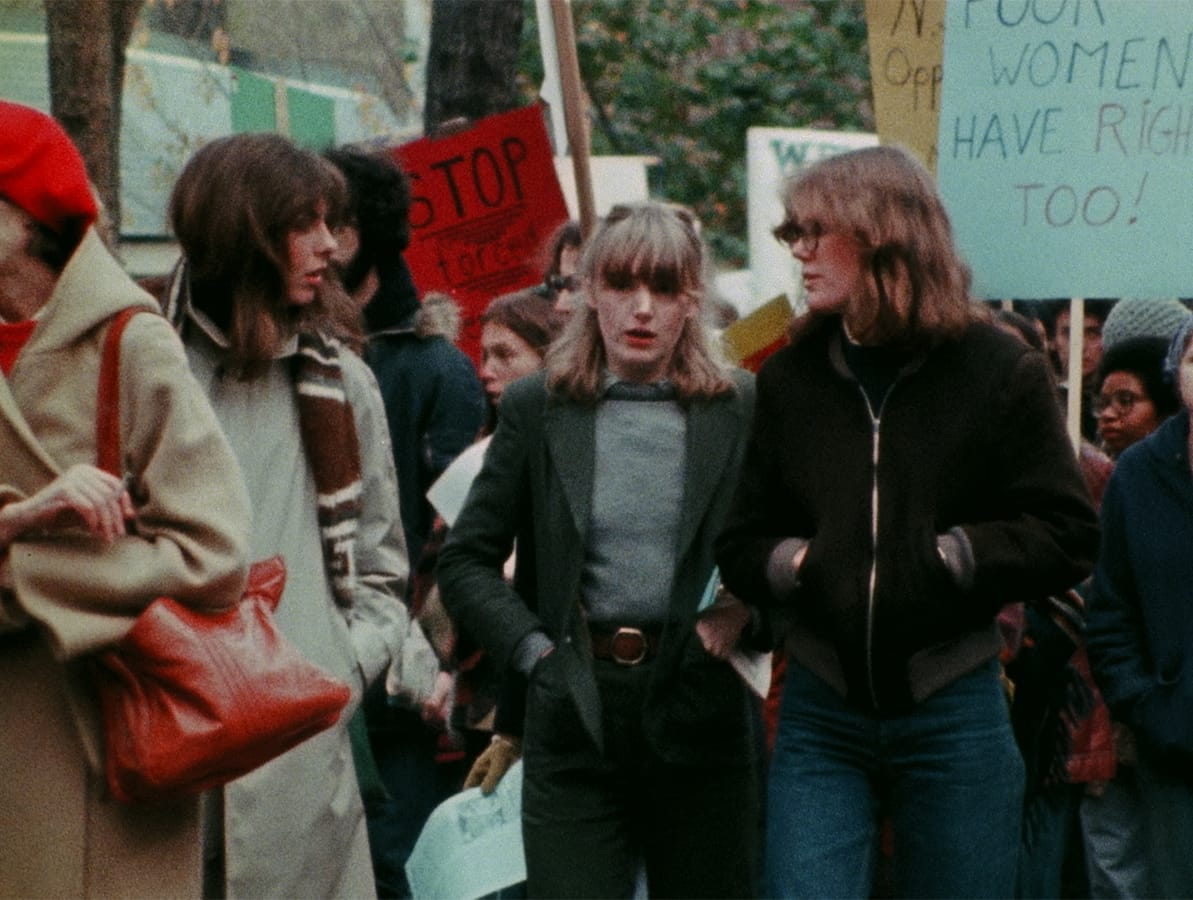
LB: Honey of Phoenix Radio and Adele Bertei as Isabel for Radio Ragazza. Adele had that idea because she’s a singer and a performer. So we’d have dual radio stations and then by bringing Honey in who just had such a different sound, had such a different mellow energy, until the point where in the film she gets angry. Well, she has an anger, but it’s a different kind. The idea that they have two different styles and their audiences are completely different was really appealing to me. And the fact that they broke the fourth wall, which was an idea that came from watching Godard films. I love Anna Karina, but I love the films where he has a story but then he has people just talking straight out. So it became an essay because I wanted this to be a story, but I wasn’t sure what the story was gonna be for a couple of years. And by editing, I found the story. When they get destroyed, which was part of the story, I had to look really hard to find images of radio stations being destroyed.
BH: I was wondering about that.
LB: It was Radio Alice in Italy. So much of this was searching for images, because it was a combination of documentary footage, found footage, shot footage, other documentary footage then redone as fictional scenes. It was just everything. One of Honey’s speeches, the one where she’s really in closeup, was her interpretation of a Malcolm X speech. Adele wrote her own speeches, especially at the end where she’s talking about turning shit into gold, but also earlier on where she says, “It’s doogee time in the big city,” and she’s talking about heroin. I was so innocent. I was like, Adele, what’s “doogee?” Her energy was so intense. She’s okay with me saying this, which is that back then, people drank a lot and very often we would shoot and I didn’t know what she was going to say. I kind of knew because I always said, “this is what you have to say, more or less, in this scene.” And she would come up with something and we would do it again.
It was a really interesting way to work and it evolved and it evolved. They improvised more than Jeannie Satterfield, who played Adelaide Norris. I met her at the McBurney YMCA. She was running on the track and I thought, “She looks interesting. Would you be in a film?” She improvises some of the things she says, but much more to just a scene. They were the central characters. There were other characters who played a big role, but the three of them were really the voices of the film.
BH: I recently ended up with a DVD of the Christian Slater movie, Pump Up the Volume, which is also about pirate radio. As I was watching it, I was like, this kind of reminds me of Born in Flames. Just a different version, because it’s more about suburban malaise. But the idea of revolution through sound and fiery speech, it’s always there.
LB: I was really good friends with [Pump Up the Volume director] Allan Moyle. He was kind of an impossible person, and I still feel he’s an impossible person, but he wrote the movie that– I don’t claim it anymore– I did after Working Girls, which was Love Crimes. He wrote the original script, which I really liked cause it was so out there. And then it ended up… not being that. I found out it was a Me Too film, and it was just a mess. So it’s not my film. It’s something else, but it was Allan’s script to begin with. Allan was really, really edgy. We shared ideas down there, you know, that nobody’s ever brought that up. People talk about other influences, maybe downtown Manhattan in that period of time, or talk about other filmmakers, but never Pump Up the Volume. But that’s really interesting for you to bring that up.
BH: Yeah, I was just like, huh, this reminds me of something. It’s so funny just to think about films informing each other, even if it’s just subconscious in that way. When I’ve had friends watch Born in Flames or I know people who have seen it, they’re just like, well, it feels as relevant now as it did then. Because it’s about a struggle. The struggle does not end. The fight for equality and socialism and everything. That’s why it feels relevant because it’s about real things. Can you talk about when the film was really rediscovered? I believe I watched it through Kanopy, the library service. I know it’s been available online, but it feels like the past couple of years and now with a wonderful Criterion release, that people are like, ah, the canonical ‘80s film Born in Flames, which feels really nice. Was there ever a period where you were like, oh, people are seeing it again.
LB: At different periods. It came out, it showed at the Berlin Film Festival, but the audience wasn’t huge. It was a lot of women, mostly downtown artist types. And I never knew who the audience was. I didn’t make it for an audience. I just made it because I thought it was necessary to make. But then over time it was written about a lot; Teresa de Lauretis wrote about it, so it was in a lot of books and it was taught. It was taught kind of endlessly. There was a huge reawakening late in 2016, when the Anthology Film Archives did a restoration. And that was after Occupy Wall Street. I think a lot of young men came around to it. I also think it was people starting to make their own really low budget movies on iPhones. Because I think at the time people asked, what is this film? It’s kind of raggedy. It’s not telling a story with a locked down camera. It’s not anything that people can relate to. I think by people making these more experimental films by themselves, they could relate to the style. The weird thing was, the more time that went by, the more dystopian it seemed. Because now in New York, wherever we shot had graffiti, they’re all simplified gardens. Now Born in Flames feels more exotic. But after 2016, I was shocked when I saw the restoration. Because, all of a sudden, not only did it look so much better, but the sound was better too. So I think people could actually hear it for the first time and they could see it for the first time. It went to a lot more film festivals, although between 1983 to 2016, it sort of never stopped going to film festivals. During the Reagan years, it was shown a lot. During the more liberal administrations, it didn’t seem urgent. My desire was for people to walk out of it wanting to do something. Arguing about it was what these women did. Should they have done it? Should they not have done it? It was like a stone gathering moss over time. I remember getting a lot of requests over time for little cine cafes all around the world. And we can’t pay you, but there’s 50 people in the cafe. Would you send us a file? Sure, why not?
BH: People find the final image of the film really striking, somehow post 9/11 with the destruction of the radio tower on the World Trade Center. But how did you accomplish that effect? Was that also scrounged footage or a model?
LB: It took me a year to find someone who could create, yes, a model. I had a budget of $200. I found a Japanese artist who created fronts, just the fronts in cardboard of the World Trade Center. And they were not very big. So I got a Bolex and blew glitter through a straw and slowed it down. It looked like an explosion, just ingenious. And I was like, oh my God, we have this. But people ask, how did you know that would happen? But when you lived in downtown New York in the ’70s and ’80s, it was really quite undeveloped. For example, some of the scenes of Adelaide Norris going to the Sahara, some of it was shot on a beach in Mehar. They built some buildings before they developed it. But here it’s two big phallic towers that kind of swayed. People had mixed feelings about it. These are so ugly. But if you destroyed the transmission towers and put your own message there, it would be on everybody’s televisions. And that’s actually what happened on 9/11. Until the Empire State Building could take over, nobody had cell transmission. The other horrible thing is now that they’re gone, I miss them so much. It was so nostalgic. My screensaver on my phone is of the World Trade Center.
BH: It’s overwhelming to know that every photo you see with the Twin Towers, it can only have been taken between 1973 and 2001. It really locks it into a moment of time more than just anything else. And it’s something I think about a lot with New York films. I just saw Night of the Juggler for the first time. That obviously has a lot of the Twin Towers in it. But also it’s about blown out neighborhoods in Harlem and higher up than that. And you’re just like, wow, right, this was all rubble. It’s just amazing to see stuff like that. It’s the same within Born in Flames.
LB: I don’t recognize the landscape of New York anymore. It feels alien to me. The only way that Born in Flames could have been made is because of the ‘70s, ‘80s community downtown. Most of the filmmakers were not doing political films, but they helped in their own ways. You could get film stock for nothing. I needed someone to shoot that day. There are people I could call. I had a car, which I parked in front of my building with a fake film permit, and they didn’t check. I traded driving people around or lending people the car in exchange for work. There was a lot of bartering that went on. Without that community, a film like this couldn’t have happened. But it became so gentrified. So not only is the World Trade Center not there, but downtown New York is unrecognizable.
BH: Are there any contemporary films you’ve seen where you’re like, okay, this feels like something I could have worked on? Is the spirit of Born in Flames somewhere in an independent film? Because I see a lot of really nice handmade stuff, like Strawberry Mansion and things like this, you can really feel the craft.
LB: I always ask people to send me things to watch. There was a film done in Latin America that made me think of it. It wasn’t guerrilla, but it made me think of the spirit of rebellion of Born in Flames. Several filmmakers have come to me with films that they say were inspired by Born in Flames and those have been done in the last few years. I have to come back to you on that because, living in LA, I don’t see as many films as I would in New York. In New York, I would see so many films just randomly. Whereas now I’m part of the– thank God, I don’t know how this happened– but I’m part of the Academy, so I see a lot of films because of that. I sign up to see the foreign films because a lot of them don’t get released. But I would love to see these smaller budget films that have that guerrilla feeling. So instead of you asking me that, I’m asking you that. So I would ask you, if you don’t mind, sending me a list of what you think resembles it. Because I do get filmmakers who want me to see their work because it resembles my film. I’m like, how? But I love to mentor filmmakers if I can, whether or not the film resembles mine. I’m just so thrilled. If Born in Flames can inspire anyone, can inspire a filmmaker, can just even spark anyone to make films, I am thrilled.
Born in Flames
1983
dir. Lizzie Borden
80 min.
Born in Flames is available on Blu-Ray from the Criterion Collection now!