You will be hard-pressed to find a film of greater emotional drainage this year than The Voice of Hind Rajab, Kaouther Ben Hania’s latest docudrama. A composition of real-life events mixed with professional actors, the film seems to have an obvious gameplay on the surface level. The real voice of Hind Rajab, a 5-year-old girl who was trapped in a bullet-riddled car in Gaza, is played in the film without manipulation or re-enactment. From the moment the volunteer-based Red Crescent call center receives the phone call in late January of 2024, Hind’s voice serves as the writer and painter, adrenaline and sympathy, and the eventual conclusion.
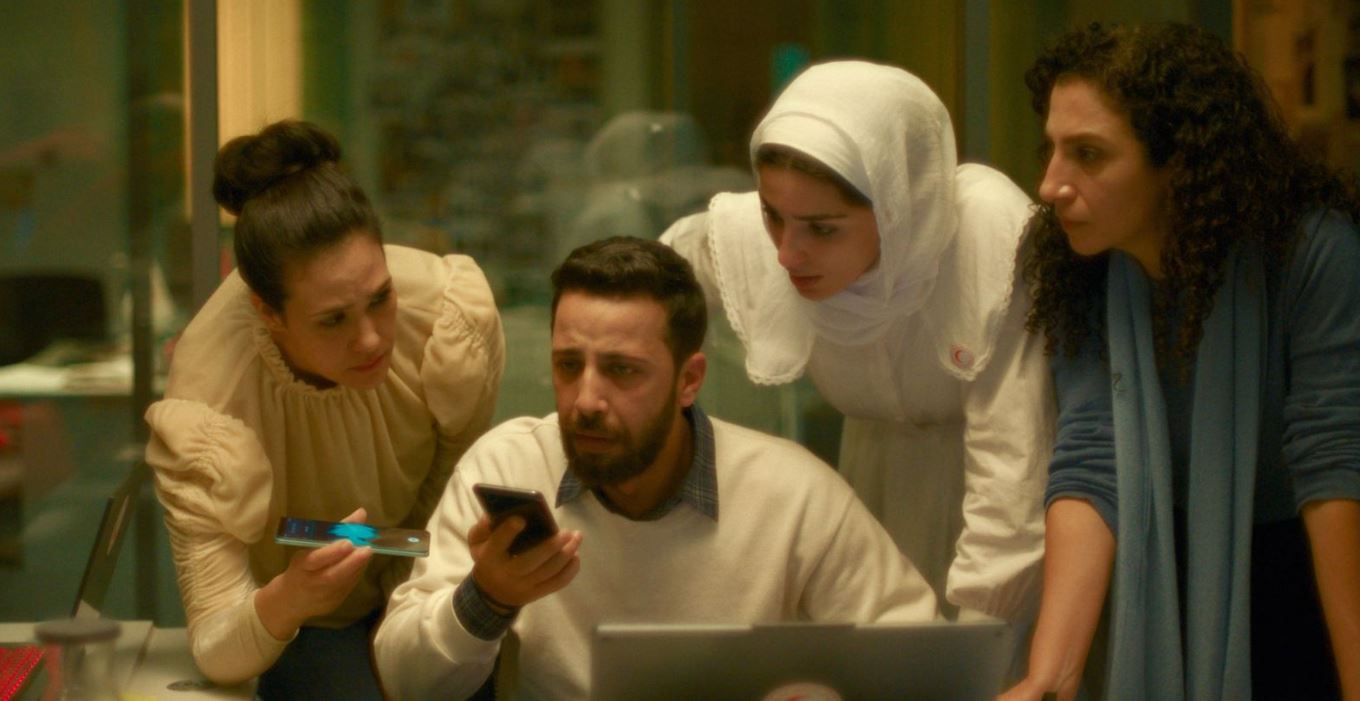
On the other side of the call, both hope and helplessness co-manage the long shifts at the Palestinian Red Crescent. Rana (Saja Kilani) is about to get off her shift when Omar (Motaz Malhees) picks up a call from an adult who is bleeding out in a car flipped over after an Israeli attack. As the adult succumbs to her wounds, Hind continues the conversation with Omar and Rana by attempting to describe the warzone activity all the whilst surrounded by her dead relatives in the car. Mahdi (Amer Hlehel), the rescue-team coordinator, is the film’s target of anger and distress; he has to reiterate to the team that local and international paramedics are holding their efforts until it is reasonably safe to retrieve Hind.
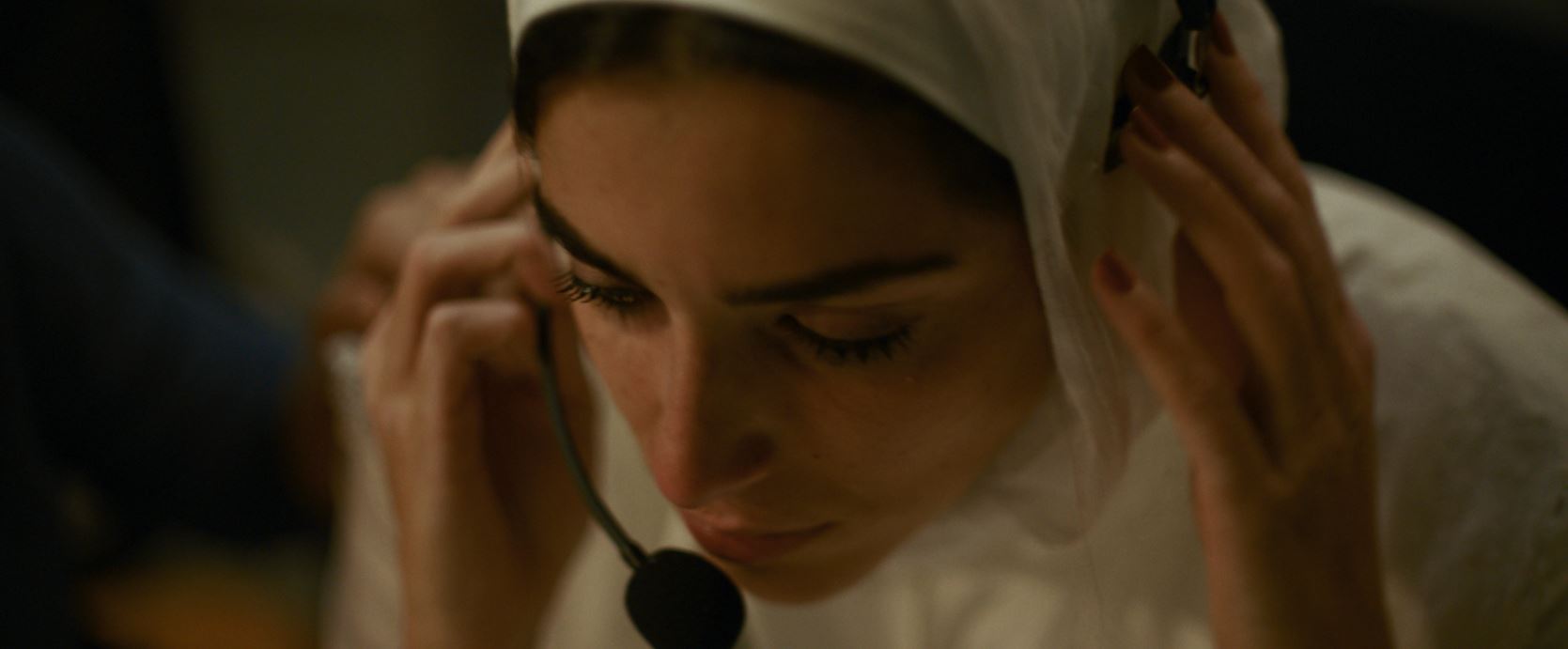
A thing about children: with life ahead of them and limited knowledge of how time goes, they are impatient. Hind, however, matches Rana’s calm demeanor over the phone, making it even more heartbreaking when Hind would politely check in on the rescuers’ estimated arrival time. There’s no one right way that Hind should sound or act in these literal life-or-death scenario, but if a child in a warzone is holding a conversation like she’s waiting at a dentist’s appointment, you know there’s something that’s fucked. If the call center has to pull different request tactics to get help out there knowing that there seems to be no reasonable way for the other side to stop shooting, you know there’s something that’s fucked.
I’m reminded of recent movies that also intermingle real footage and material with the movie-magic of lighting and top-notch cameras (Dead Man’s Wire, September 5) that also seems to use the momentum of eventual facts to propel it. This film’s small cast (and a countable crew of sixteen people behind the scenes) does not have to do much heavy lifting, as Hind’s voice is frankly the star of the show. But the pressure-cooker experience succeeds, whether it’s Mahdi giving another depressing update or how another round of gunfire over the phone silences the room for a moment, until Hind is able to safely speak again. The film trims this 13-hour conversation to what it precisely needs to be; the message’s resonance afterwards speaks louder.
Examining the rather extensive list of executive producers (Alfonso Cuarón and Joaquin Phoenix, to name a couple) and organizations gathered to make this film happen is sorta nice, if not distressing. It had not seemed so long ago that No Other Land, the film that had difficulty finding US distribution despite winning an Oscar, received violent feedback when two co-directors were separately attacked. It seems presumptuous to even describe the current state of Gaza, right now, but there is comfort that Ben Hania, a Tunisian-based director and no stranger in confronting difficult topics on screen, knew that this had to be heard. She ramps the pacing and punches in a format that still allows Hind’s words to breath as they were. I tend to criticize how documentaries shape the viewer’s affectation down to a formula, but in watching this film play out, I find my thoughts and words swallowed and concentrated in the pit in my stomach. We owe it to Hind to see this film through. She was just a child.
The Voice of Hind Rajab
2025
dir. Raouther Ben Hania
89 mins
Opens Friday, 1/9 @ Coolidge Corner Theatre