The Boston Palestine Film Festival runs in person across various venues from October 18 through October 27. Click here for the schedule and ticket info, and watch the site for Joshua Polanski’s continuing coverage.
FAMILIAR PHANTOMS (2023) dir. Søren Lind & Larissa Sansour
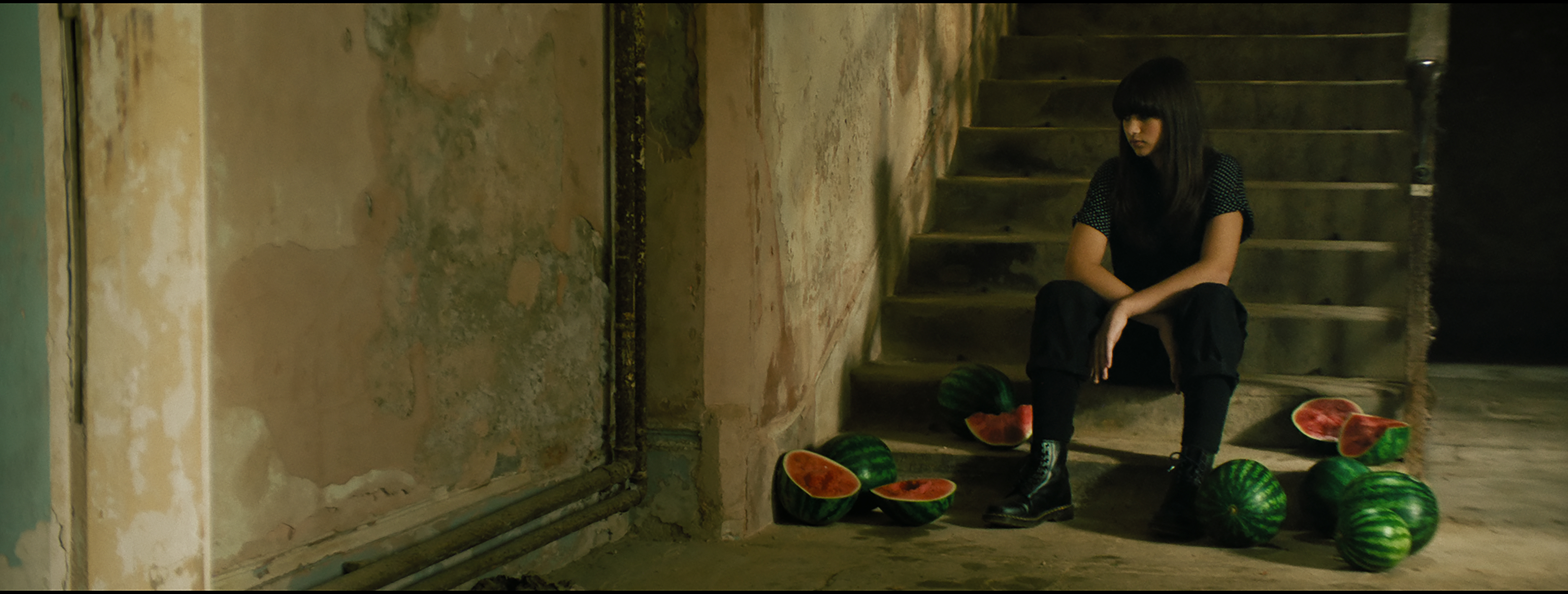
Palestinian cinema is unlike any other national or regional cinema. For nearly the entirety of the history of cinema, Palestine has been under violent military occupation. As this film reminds us, the Ottomans occupied the land first, then the British, before passing on their sins to Israel. The Palestinian occupation is the biggest elephant in the room of any single national cinema industry. Very few films were made before the 1948 nakba, and of those even fewer remain today; the specter lurks over the country’s cinema industry like the Nazgûl looking for the hobbits in The Lord of the Rings: The Fellowship of the Ring. You just cannot find a Palestinian film unrelated to the occupation. The experimental documentary Familiar Phantoms ,co-directed by Søren Lind & Larissa Sansour, assertively confronts these unavoidable ghosts.
The specific ghosts come from the past shared by the Sansour family. Larissa grew up in Bethlehem to a Palestinian father and a Russian mother (both communists). Most of the authorities in the region weren’t big fans of the communists, and that made communication back home difficult for her father, who was married to a Palestinian woman before meeting his Russian lover in exile. Even though what attracted him to communism wasn’t Leninism but an ideology threatening to the oppressive status quo, the Soviets took him in as a political exile. Sansour, through the narrated voice of Sofia Asir, recalls memories, stories, and anecdotes from her childhood in part, but never in whole. These stories only connect through their tragic circumstances and shared characters. The memories aren’t always hers, and they don’t always add up. This is purposeful. Sansour the narrator tells them confidently, hesitatingly, and everywhere in between, casting off dirt in the process.
The documentary fluctuates between 8mm archival footage, family photos, reenactments staring living members of her family playing (mostly) dead ones, and slow-moving, quasi-transcendental footage of empty and derelict liminal spaces. These liminal spaces sometimes make for incredible and effective images, snippets of a broken place and a shattered sense of belonging. “Palestine is a waiting room,” she says, a liminal space itself. Her narration never stops, and this deflates the images. Had Lind and Sansour been more patient with the images, allowing them space to work on the viewer as a visual poem instead of insisting on the spoken word, the pain of the neglected building wouldn’t have felt as fleeting as they end up. The images profoundly impart the loneliness of a land experienced in forced migration and an exiled people; the unabating voiceover often fills space that would have been better off left silent and floats into video essay territory, bludgeoning the estrangement effect of the experimental film in the meantime.
I mostly liked Familiar Phantoms. There’s something about the way the puzzle fits together that just works. The story about the toy soldiers from Sansour’s childhood is especially moving. She always chose the red soldiers as a sort of rebellious and innocent nod to her father’s communist past and the country (USSR) that gave him a home when nowhere else dared. This meant her brother would have to play as the green soldiers– the bad guys. At the time, she didn’t understand why the green soldiers were bad. Only later in her life would she make the connection with the soldiers standing outside of her home. This flawed and cloudy process of constructing meaning from stories is how memory works; eventually, when an exile continues for long enough, stories become all that’s left tying a people to the metanarrative of their ancestry.
AIDA RETURNS (2024) dir. Carol Mansour
I’ve more or less spent my whole life around the Great Lakes — Ohio, Ontario, Michigan — and I plan for that to continue. This wasn’t fully by design, but as a person with Ojibwe blood in their veins, it’s also not random. Even though I do not know where I will be when I die, I’m confident that somewhere not too far away from the world’s largest body of freshwater is where my loved ones will lay me to rest. For many, where we are from more than defines who we are. Where one ends and the other begins can be impossible to untangle.
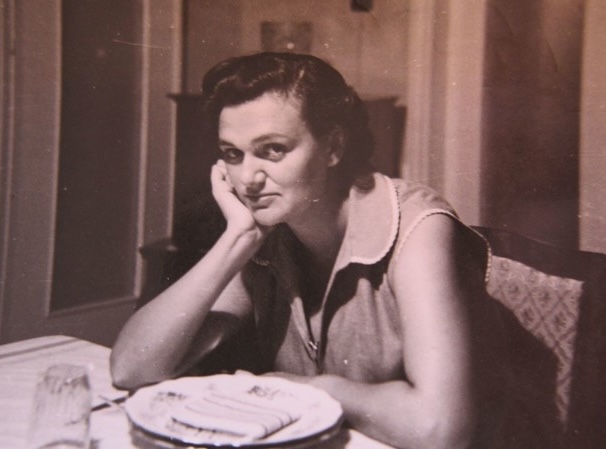
That’s also the case for Aida Abboud Mansour. Aida was born in 1928 in Yafa, Palestine, placing her in her early 20s during the nakba. Most of her life was spent in forced exile in Beirut, Lebanon before leaving for Montreal, Canada, where she would spend the last years of her life. By the time of her death in 2015, Aida spent more years living outside of Palestine than inside. Israel may have been able to take the Palestinian out of Palestine, but they could never take Palestine out of the Palestinian. She tells her daughter, director Carol Mansour, that she wishes to return home in death. Carol, who cannot travel to Palestine, arranges for two friends in Lebanon to take her mother’s ashes to Yaffa (Jaffa) and to document Aida’s final return through the lenses of their cellphone cameras.
Aida Returns documents the live moments of a very personal and familial journey. It is also a DIY-spy film. Carol’s two friends, Tanya and Raeda, with the help of an American journalist who gets detained at the border, superstitiously avoid locals and run-ins with the Israeli authorities. They are on a reverse heist that others can’t know about until it’s accomplished. The “criminals” speak multiple languages and do their best to blend into the mundane. The team only consists of the friends who receive orders from the director-daughter “guy in the chair” through video chat.
The reverse heist is nothing less than an attempt to reclaim an iota of hope for the exiled and subalterned. That hope comes from the care given to memories. Memories define Aida Returns. Lost ones. Stolen ones. Restored ones. Memories in formation. Sometimes the memories come in the shape of photos from pre-nakba Yaffa from Aida’s family collection. Other times they are stories told from one person or another. They also open a window into the life Aida regretted losing in Lebanon and Montreal.
Tanya and Raeda document their trip to Yaffa on their smartphones, recording the most significant and minute details of Aida’s final pilgrimage. We don’t see the unadulterated images on their phones; instead, Aida Returns favors a split-screen presentation. In one, we get the two women in Palestine. This, too, has two different modes: a video of them talking to Carol as they film on a different camera, or more rarely the content of their phone recordings. The other screen is always a still shot of Carol in her office, also from another camera, talking to and reacting to her conversations with her two friends on her phone. The style fully embraces the emotional interactions between the three women than it does the landscape of Yaffa. An Italian language map of the Levant rests as the background that the split screens are imposed on top of. All of this innovative digital cinematography sounds right up my alley. In theory, at least. In practice, there was something estranging about the Zoomer-documentary. It’s a deeply personal moment in Carol’s life, and the style (as well as the circumstance of her not being able to go on the trip herself) keeps her mourning at a distance. The style makes her hesitant to drop the mantle of director, and in turn makes her unable to pick up the mantle of a lamenting daughter.
Aida Returns
2024
dir. Carol Mansour
77 min.
Familiar Phantoms
2024
dir. Søren Lind & Larissa Sansour
42 min.
Aida Returns screens Saturday, 10/19, 3:00pm @ Museum of Fine Arts, Boston. Familiar Phantoms screens for free Monday, 10/21, 7:00pm @ MassArt Design & Media Center. For ticket info and full schedule, visit the Boston Palestine Film Festival’s website.
Joshua Polanski is a freelance film and culture writer who writes regularly for the Boston Hassle and In Review Online. He has contributed to the Bay Area Reporter, Off Screen, and DMovies amongst other places. His interests include the technical elements of filmmaking & exhibition, slow & digital cinemas, cinematic sexuality, as well as Eastern and Northern European, East Asian, & Middle Eastern film.