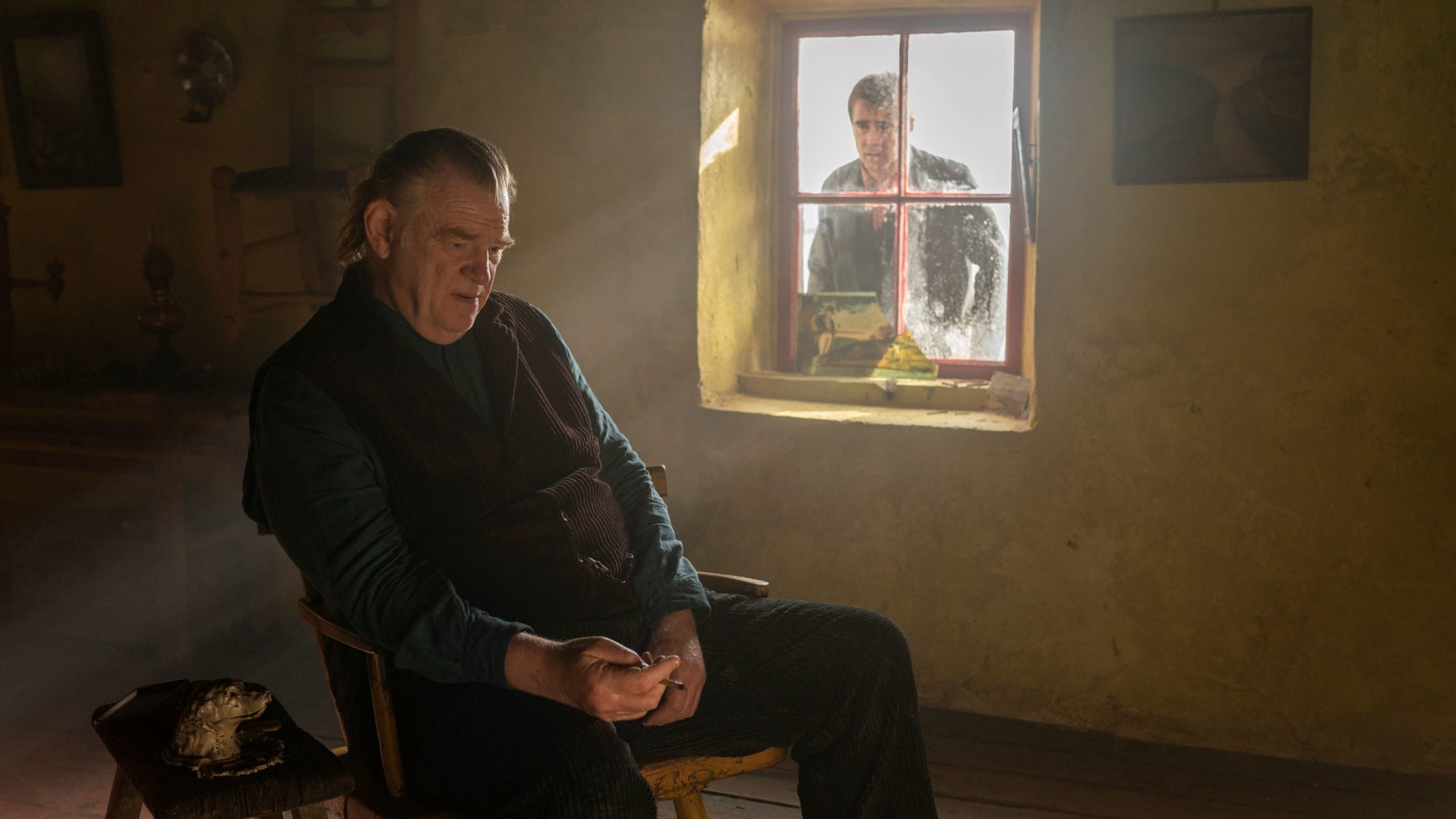
At first blush, the story told in The Banshees of Inisherin, the new film by Martin McDonagh, is a small one. The inciting incident is certainly less explosive than that of McDonagh’s previous film, Three Billboards Outside Ebbing, Missouri; there’s no murder, no fight against years of police brutality and negligence toward institutional rape culture, not even any rational justification to speak of. There is simply the dissolution of a friendship, which is not even predicated on any particular discernable transgression. But when you live in a small village on a tiny island, even the smallest ripple can feel like a tsunami, and though the central conflict itself may be trifling, its effects are every bit as operatic as those that rocked Ebbing.
On one side of the conflict is Pádraic (Colin Farrell, continuing his 2022 hot streak following After Yang and The Batman). Pádraic is a bit of a dim bulb, but a kind enough soul– “one of life’s good guys,” as the local barkeep describes him with just a hint of derision. He lives in a cottage with his sister, Siobhán (Kerry Condon), and beloved pet donkey, Jenny, and his days are largely anchored on his daily afternoon trip to the pub with his best friend, Colm (Brendan Gleeson). One day, however, Colm simply refuses to acknowledge his presence, for reasons that Pádraic simply can’t fathom. “Are ye rowin’?” Siobhán asks; “I don’t think we be rowin’,” Pádraic replies. Siobhán shrugs, “Maybe he just don’t like ye no more.”
That, more or less, turns out to be exactly the case. Colm, a decade or two Pádraic’s senior, has decided that he wants to spend his remaining years focusing on his music (he’s an avid fiddler and aspiring composer); “I just don’t have time for dullness no more,” he sighs, and dullness, however pleasant, is Pádraic’s dominant mode. Exasperated by his former friend’s obliviousness, Colm issues an ultimatum: for every time Pádraic bothers him going forward, he will cut off one of his own fingers with a pair of garden shears. Unflappable to the last, Pádraic reasons his friend is simply in a mood and needs to be won over with kindness– until he finds a bloody index finger lying on his doorstep.
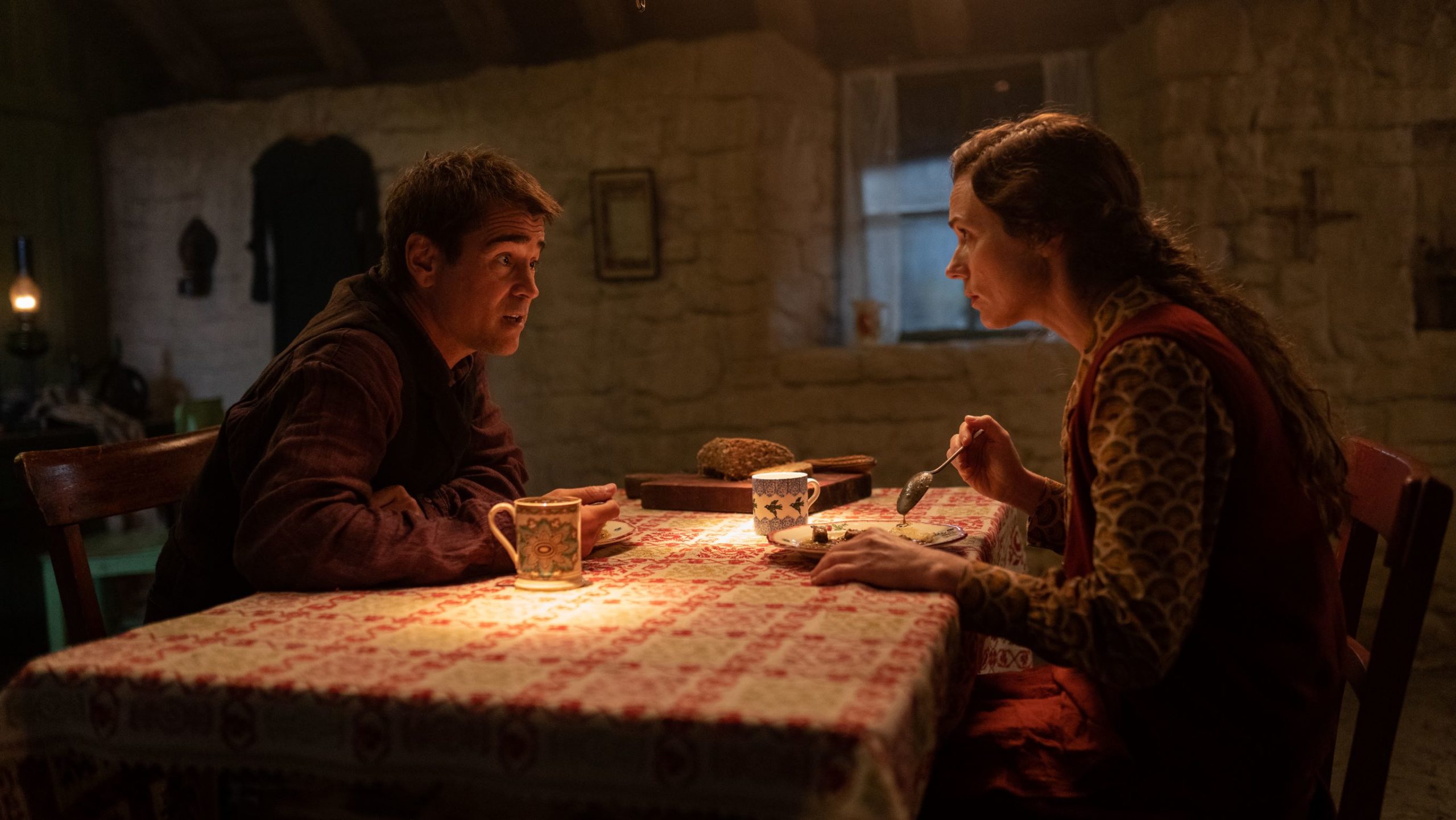
In classic Irish fashion, The Banshees of Inisherin is outwardly warm and inviting, yet harbors a decidedly prickly core. Its charm lies in the whip-fast banter and dialects of its characters, in its cozy pubs and cozier knitwear, in the sweet rapport between Pádraic and his animals. But there is a hardness to Inisherin as forbidding as its seaside cliffs: consider the drunken police officer who not-so-secretly abuses his son, or the mail lady who reads and casts judgment on her neighbors’ incoming letters. We are as taken aback by Colm’s rejection of Pádraic as Pádraic is, because we want Inisherin to be the BBC-cute idyll that it initially appears to be. But Colm’s coldness never exactly feels out of place in this world, either. As much as Pádraic advocates for “niceness,” it’s plain that he’s fighting a losing battle.
Much of the film’s success hinges on Farrell’s performance, which is both enormously winning and deceptively complex. Pádraic is, by all appearances, a genuinely good fellow; he’s well liked on the island (save for perhaps that awful local constable) and even keeps up a friendship of sorts with the village idiot (the latest in a string of vaguely menacing jackasses deftly played by Barry Keoghan). He simply can’t seem to wrap his head around anyone disliking him– much less his best friend in the world– and his uncomprehending denial is simultaneously hilarious, tragic, and altogether relatable. In a lesser actor’s hands, Pádraic could have tipped too far into either broad comedy or maudlin pathos; in Farrell’s, he’s one of the most indelible characters of the year.
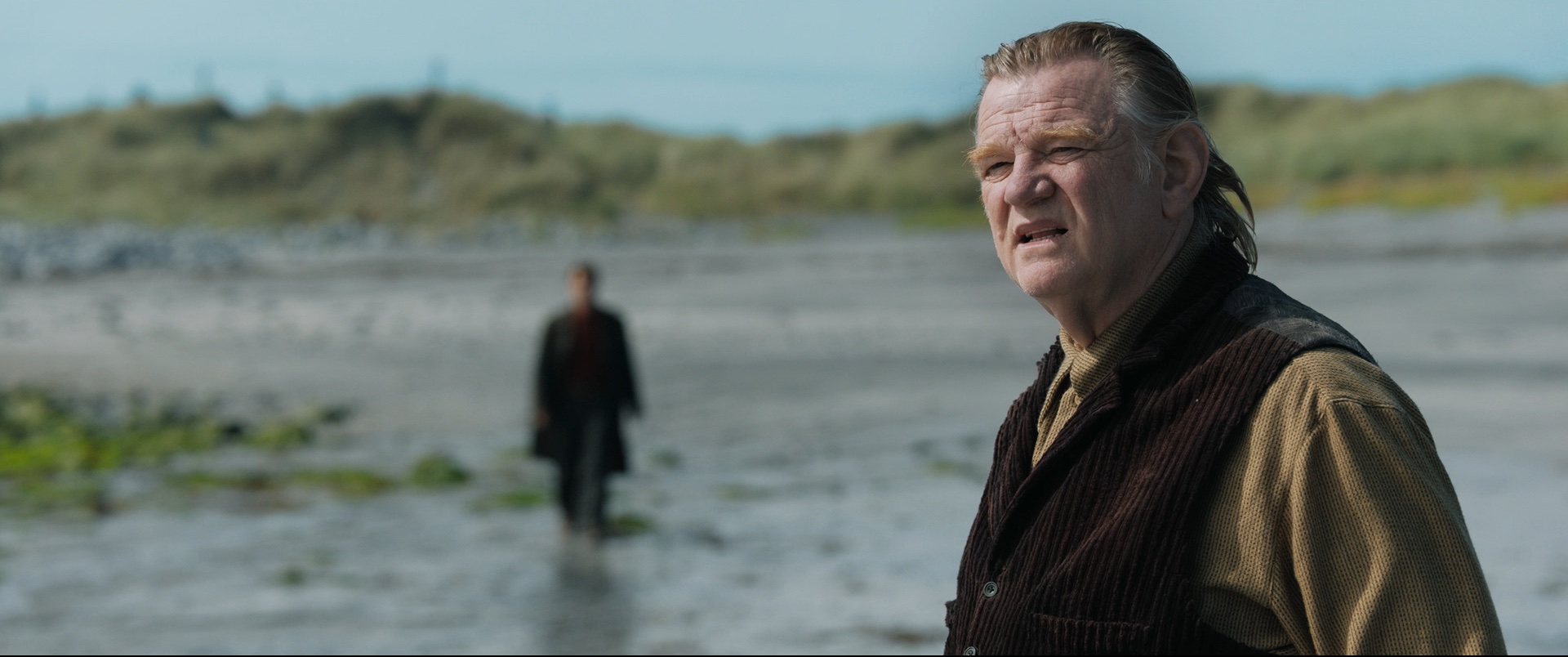
Brendan Gleeson in the film THE BANSHEES OF INISHERIN. Photo Courtesy of Searchlight Pictures. © 2022 20th Century Studios All Rights Reserved
Which makes it all the more tragic that Colm isn’t wrong, really. Colm, at least at the point in his life that we meet him, is a nasty old shit– that much is not debatable. But who can’t relate to wanting to be left alone to work on their passions, especially paired with the realization that one has only a finite amount of time to waste away at the pub? It’s a stupidly simple schism to which there is seemingly no resolution, with Colm’s reasonable requests for solitude at absolute loggerheads with Pádraic’s equally reasonable defenses of “good, normal chattin’.” Of course, the Irish are no strangers to these sorts of irresolvable troubles (pun intended); the film takes place in 1923, and the characters can occasionally see the explosions of the Irish Civil War flare up on the mainland. It’s a canny metaphor which only threatens to become overly obvious in the film’s final moments (when Pádraic spells it out in an uncharacteristic bit of unsubtlety). It’s a heartbreaking split because both sides are nominally reasonable– at least until self-mutilation enters the picture.
The Banshees of Inisherin could have been an almost unwatchably bleak film; it could also have been unbearably cutesy-poo. As always, McDonagh deftly weaves between the two poles, keeping both the comedy and the tragedy in sharp focus through each and every scene. What it is, ultimately, is a film about toxic masculinity, and the ludicrous extremes men will go to to navigate feelings they don’t understand. This year has seen plenty of more plainly topical films (with more on the horizon), but despite its very specific time, place, and circumstances, its story feels universal. Men will always goad each other into pig-headed arguments; god willing, few will end in voluntary de-digitization.

Good take on Irish inner woven culture example :humor and tough exteriors.Was crackin up during the preview as the banter between our 2 main characters who are honest with each other which is refreshing. Plan to see this gem ASAP.