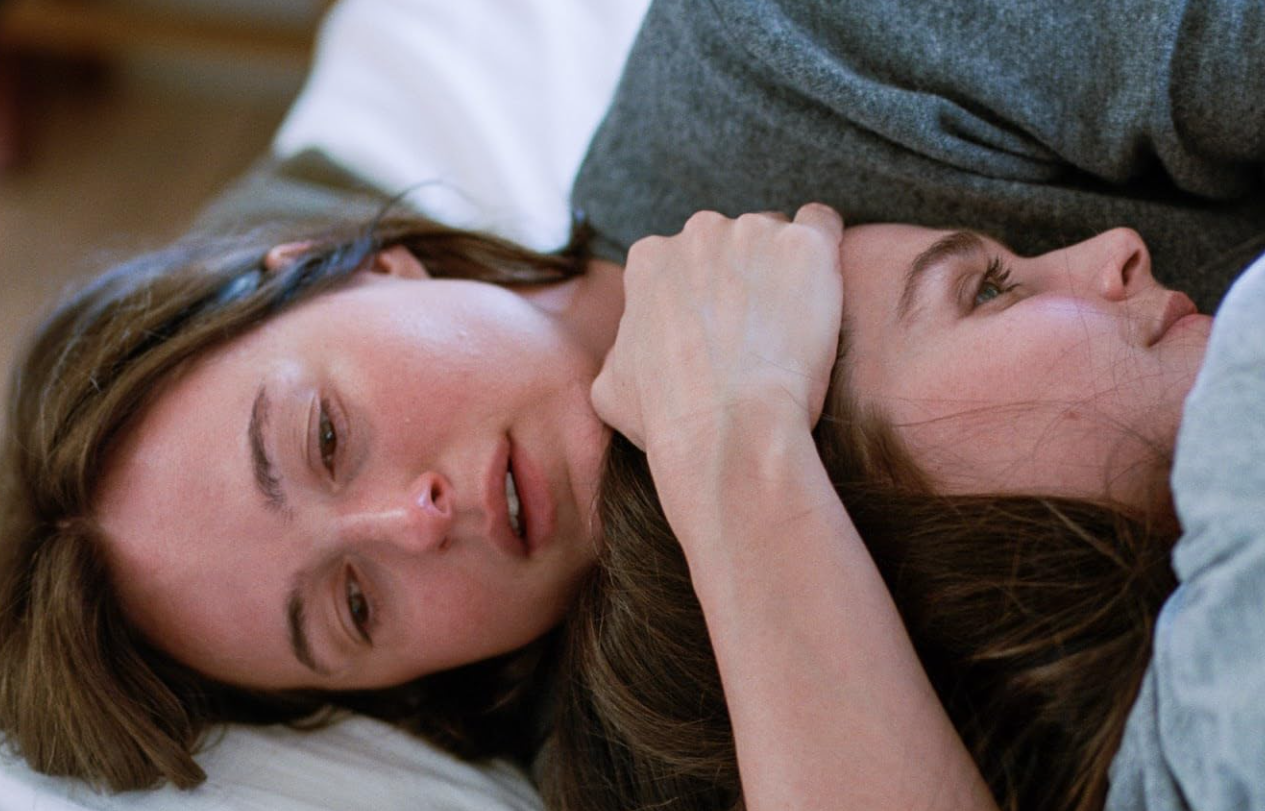
Though Joachim Trier had been writing movies since the turn of the millennium, it felt like his name was set ablaze with The Worst Person in the World. It was a provocative title at a time when we had already seen some of humanity’s worst selfishness in a health pandemic. But the film wasn’t a direct response to the pandemic (though it’s worth noting that Anders Danielsen Lie, who plays the first cartoonist boyfriend, is a practicing medical doctor who worked during the pandemic after shooting the film, deepening his depiction of terminal illness). Nor was it really about the worst person in the world, but the quiet complications that can make yourself feel that way, accompanied by Trier’s yearning for levity, was enough to get people into seats.
Sentimental Value pulls back in the witty cynicism in favor of wholesome earnestness, though not by much. In the opening scene, theater actress Nora (Renate Reinsve) is trying to escape from performing on stage during a presumed anxiety attack, quite literally at the moment when she is supposed to be on stage. It’s uncomfortable because we know that an audience is waiting for her; the music that once started has stopped, and the spotlight is devoid of the star. Backstage, Nora is ripping at the seams of her dress and trying to distract herself by hooking up with a married fling, but to no avail. And then, finally, in an act of unspoken willpower, she shuffles to the center of the stage. There is a moment that you think she will break down (out of character), but then a percussive techno beat and accompanying light sequence occur. You kinda think that you’ve been pranked by the ending of Tár.

But that first riveting scene doesn’t quite match up to Sentimental Value‘s purview of the human spectrum, contained inside the history of a house. In a narrative provided by a faceless woman, the house holds generations of disappointment, anger, and violence, culminating in the film’s story about the disappearance of Nora’s filmmaking father Gustav (Stellan Skarsgård) when she was young. Now adults, Nora and her sister Agnes (Inga Ibsdotter Lilleaas) had thought that they inherited the house once their mother died, only to find that it is still under Gustav’s name, who returns on the day of her funeral.
When Gustav and Nora spend time alone at a bar, Gustav presents a script with a role that he believes only Nora could do. A famed director long ago with only retrospective programming in his schedule, Gustav’s nostalgia and possible olive branch feels absolutely incorrect to Nora, who refuses to read the script and waves him off. Gustav later meets Rachel (Elle Fanning), an American star who had been emotionally enamored with one of his films at the retrospective. With Rachel’s star power and Netflix production money getting involved, Gustav sets out to return to his house once again, now with a vivaciousness to work on his passion project.
What is his movie about? Gustav walks Rachel around the house, envisioning its entirety as a long shot (Rachel’s surprised expression cannot be ignored as a punchline) of a mother watching her son while dealing with her own depression. It’s a role that Rachel takes seriously, dying her hair brown and mustering a Norwegian accent, not looking unsimilar to Nora.

But what is Sentimental Value about? Trier and longtime co-writer Eskil Vogt write another hit for the books. But what verges off from his thematic Oslo trilogy is the power of plurality, even when we present in broken shards. The downstream impact of Gustav’s upbringings to Nora and Agnes’ uncertain stability in family shakes the floor but doesn’t get to the pow! until the end. In between the monumental conversations and acts of love/pain are the moments of liminal existence before the next “important” parts. Cinematographer Kasper Tuxon’s eye for dust floating in the light as a young Nora sits on the coach, the still crack of a wall due to the house’s faulty foundation that can feel like a ticking timebomb, the textural livelihood of the predecessors before the world we know (some flashbacks invoke the same scrapbook wistfulness as Mike Mills’ Beginners, also shot by Tuxon). People are made of little building blocks, and then plastered over by pain and experience that we forget what makes us connected.
All to say, so much of Sentimental Value rides on the hunger for goodwill — of Gustav’s apology tour to his daughters, Nora’s guarded vulnerability, Rachel’s sincerity, and Agnes’ quiet stoicism. Many aspects of this film are expectantly appealing, but as a whole two-hour picture, I’m not sure if I agree with its intended totality. I had a similar feeling with The Worst Person in the World, in which there are stunning frames and moments that are searingly memorable, sometimes muddled with cottoned dialogue and motions that don’t feel as significant as its sibling scenes. I live for the spaces in between, but sometimes dead weight can feel especially heavier.
I previously mentioned that Sentimental Value might forgo the humor seen in The Worst Person, but that’s not quite true. The first real outburst of laughter we might experience is Gustav gifting Agnes’ son a physical copy of Irreversible and The Piano Teacher, or maybe when an IKEA stool was implicated in a white lie. But the best line delivery, in my opinion, is shared in a heart-crushing admission from Agnes to Nora that upends and rocks the film to another level that you might forget everything else that happened before — just almost. Sentimental Value challenges the temporal spaces of feeling sentimental: it doesn’t have to exist for the closed chests of the past, but to power the forgiveness and opportunities of the present.
Sentimental Value
2025
dir. Joachim Trier
133 min.
Opens Friday, 11/14 @ Coolidge Corner Theatre, Kendall Square Cinema, and AMC Boston Common