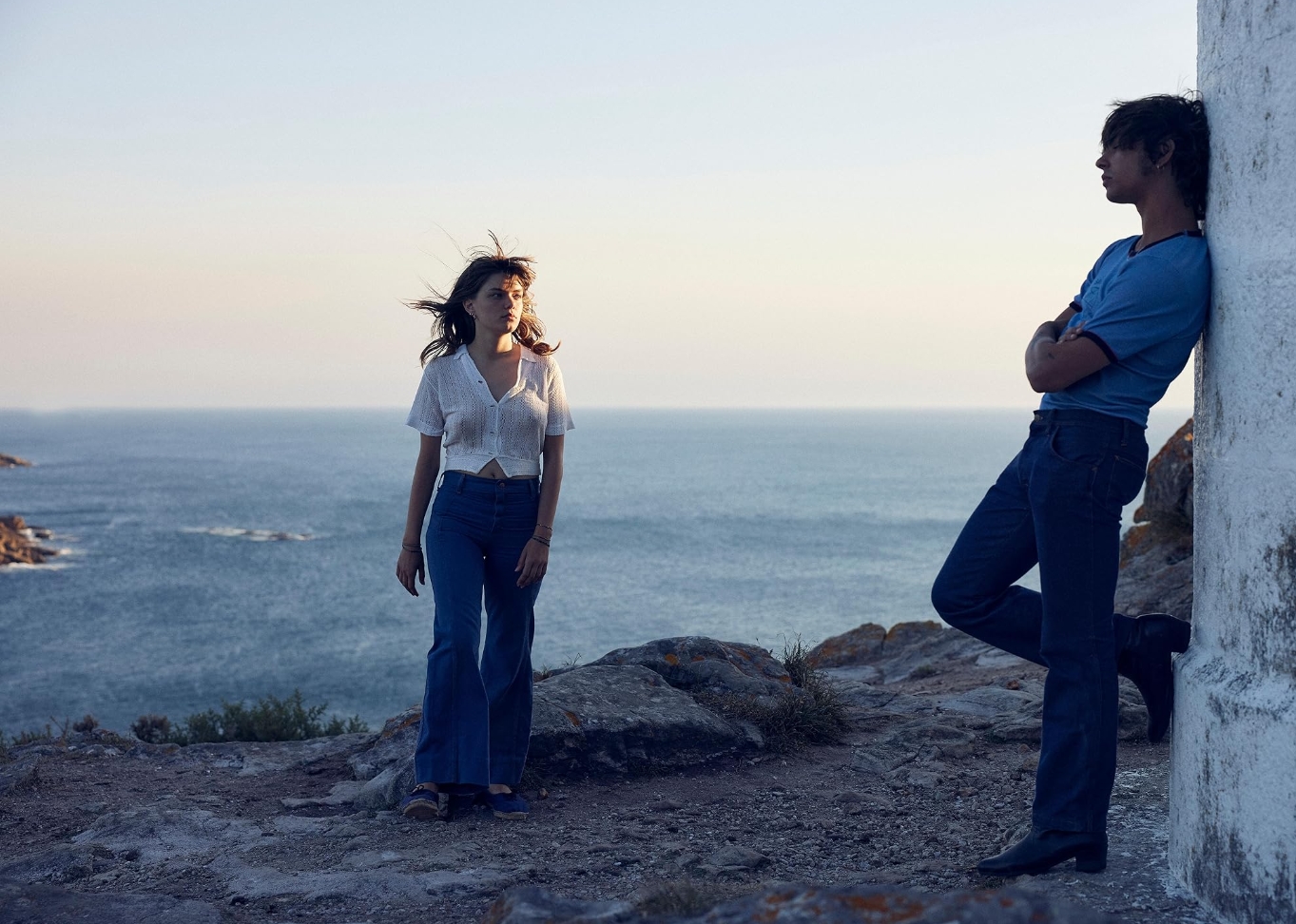
Postcards are beautiful. I have a collection, picked up at airports and thrift stores, stored in my keepsake to commemorate a story succinctly stated in a single picture. In its purest mission, sending a postcard to someone lets them know that I’m safe, that I’m thinking of them, and that something in this moment is temporary and doesn’t require a long-form correspondence to commit to. It’s the most romantic goal I can place upon my postcards featuring a delectable picture of a fruit or of a dilapidated building in North Adams.
But the perspective of the postcard is narrow. A postcard from Greece seems cool, but a postcard from The Lost Daughter seems to warrant a wellness check. A postcard from a sleepy Silician villa would invoke an idyllic vacation, but a postcard from The Godfather is probably an official death sentence. I think of the postcard that would come from Carla Simón’s Romería, in which a newly turned 18-year-old Marina (Llúcia Garcia) traverses to Vigo to find her biological father Fon’s death certificate to complete a college scholarship application. It’s a dicey undertaking, as its retrieval will invoke the eventual question of her father’s extended family seeming abandonment when both her parents died.
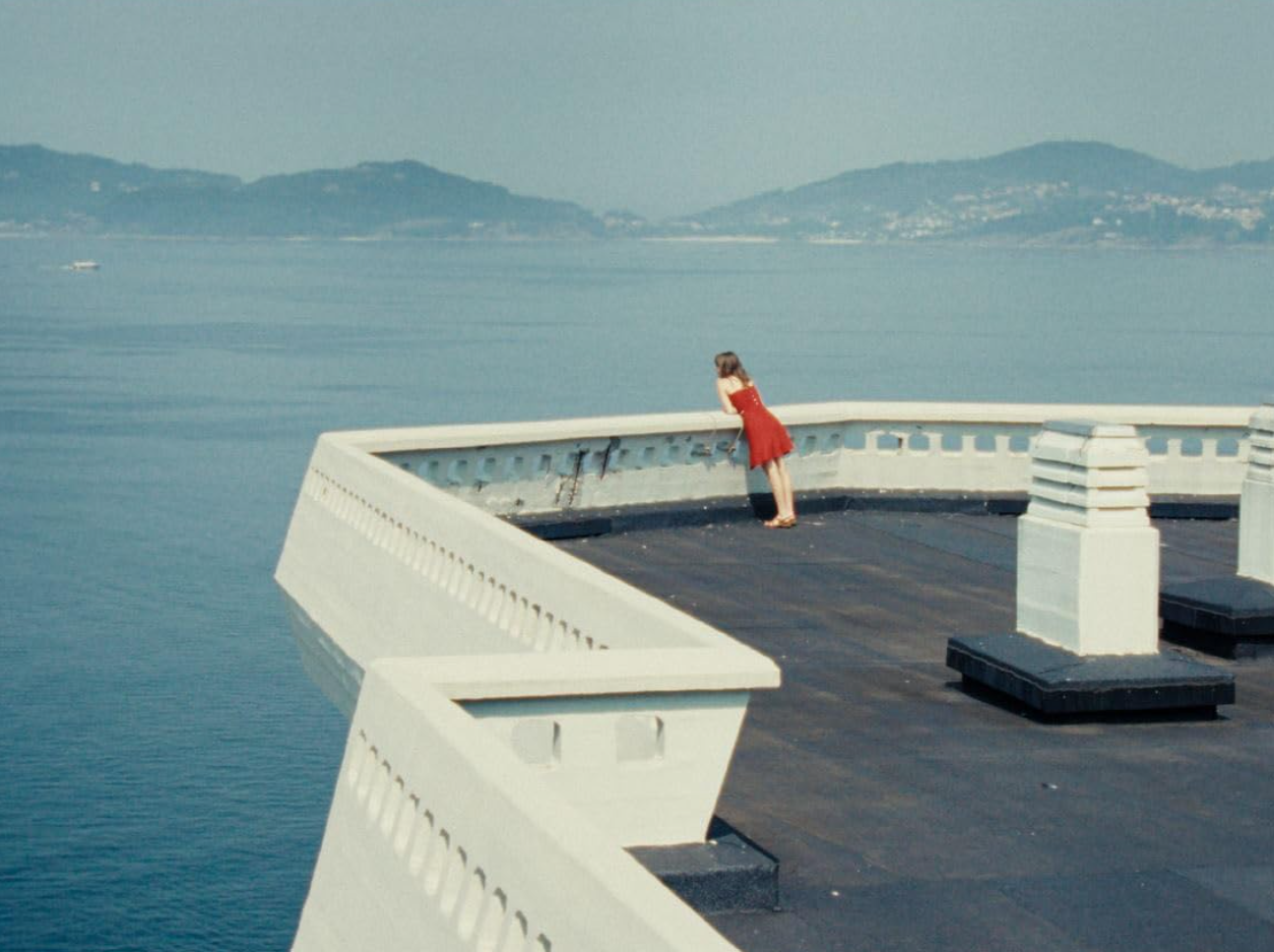
Though some of her father’s relatives signal Marina’s arrival with open arms, the family affair is complicated by opinions and recollections of Fon’s life, which had ended from AIDS complications contracted by substance misuse. Snapshots that Marina receives from her uncle Iago, who still runs in drug-use circles, are kinder than, say, her grandparents, who had behaved toward Fons with the fear of social and infectious contagions that pervaded the ’80s. Marina discovers that while the family had mainly tried sweep away the broken pieces, they are fragmented themselves about what has not fully been shared between the families and the impact toward the next generation, who had told Marina that she did not look sick enough to stay away from.
While not necessarily harmed or abused in the physical sense, Marina’s stay with the family is a persistent breeze of snide comments and mannerisms. Her experience, juxtaposed with what we hear about Fon’s treatment, becomes more ostensible. Some of her cousins’ peers refer to her as an orphan, transcribing her primness as a psychological avoidance to her parents’ downfall. The patriarch and matriarch (again, of her own blood) regard her with disdain in their home, a feeling that sinks deeply to the fact that Marina is still so young, ready to embark on a new adventure only to find that the past is still spiked of bad memories and faith.
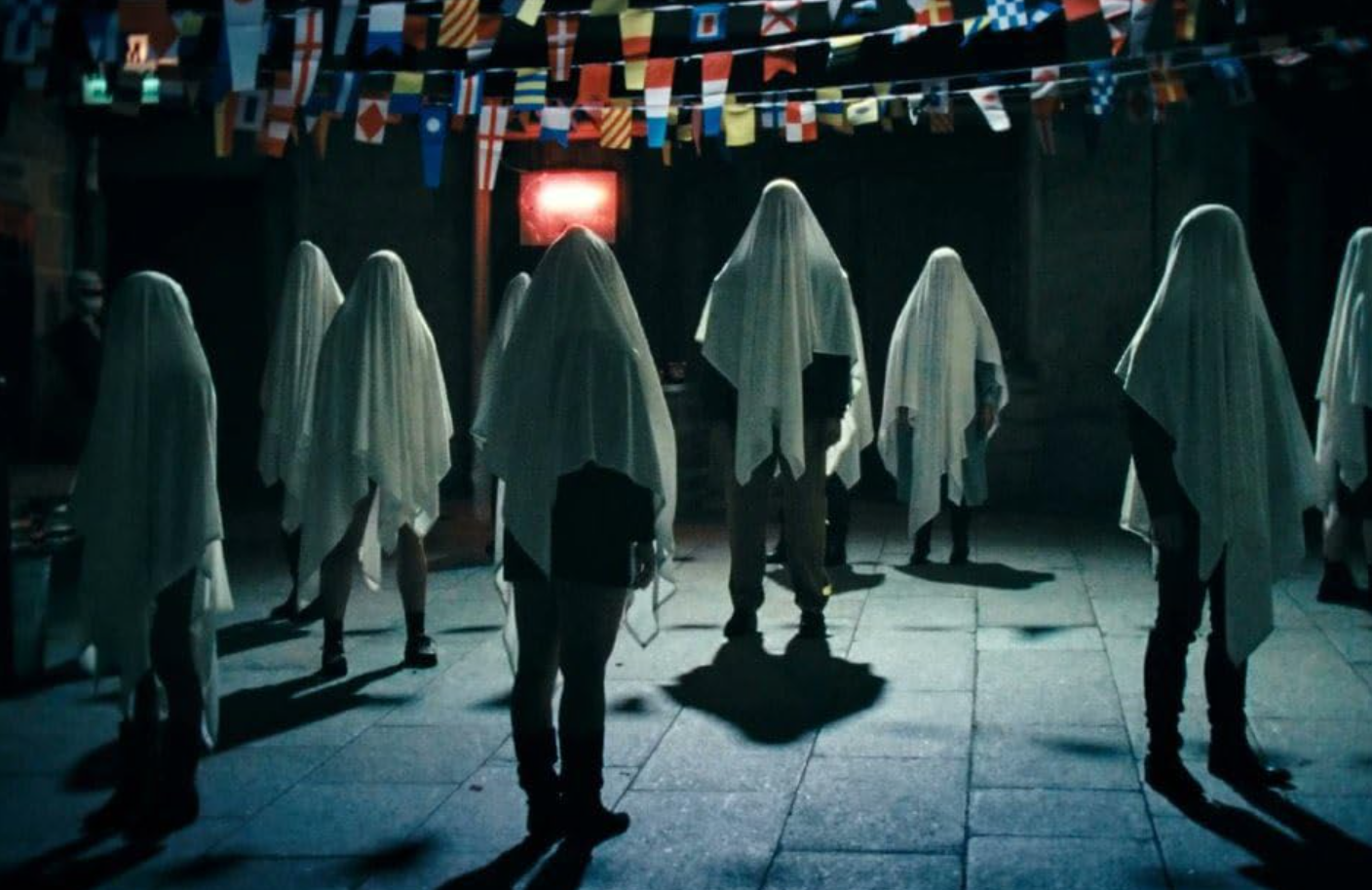
With plans to study cinema, Marina spends time recording the parts of her visit that wouldn’t make it to a postcard: eerie corners, empty tabletops, dark rooms that may have a sleeping inhabitant inside. From a technical standpoint, her shots supply as scene transitions as Marina visits relatives and residents at their jobs or houses, but it also helps set in place the inversion of the beautiful setting and the internalized secrets. Even the family yacht’s interior darkness couldn’t be helped with the clean decks and view of the majestic water. Simón’s imagination lets loose in the third act, which may be compared to one of this year’s most mesmerizing and haunting films, Blue Heron. Both come with swells of ambition and raw emotion; at least for Romería, its closure might be a bit happier.
The story gets a little long-winded, especially with a journey that seemed like it could have been settled in a day, but Garcia’s performance brings an enchanting and respectful young-adult curiosity that it becomes easy to root for her (as this story is based on Simón’s experience, I can see how the camera and script would lean on Marina). It’s of this exploratory nature that makes Romería feel like a children’s coming-of-age story (acceptance of full-body nudity may vary), set with the maturity of real life events and a cast of different personalities. Romeria‘s postcard ends up being beautiful, and I suspect that Marina will also receive some when she returns home.
Romería
2025
dir. Carla Simón
114 min.
Opens Friday, 7/3 @ Coolidge Corner Theatre