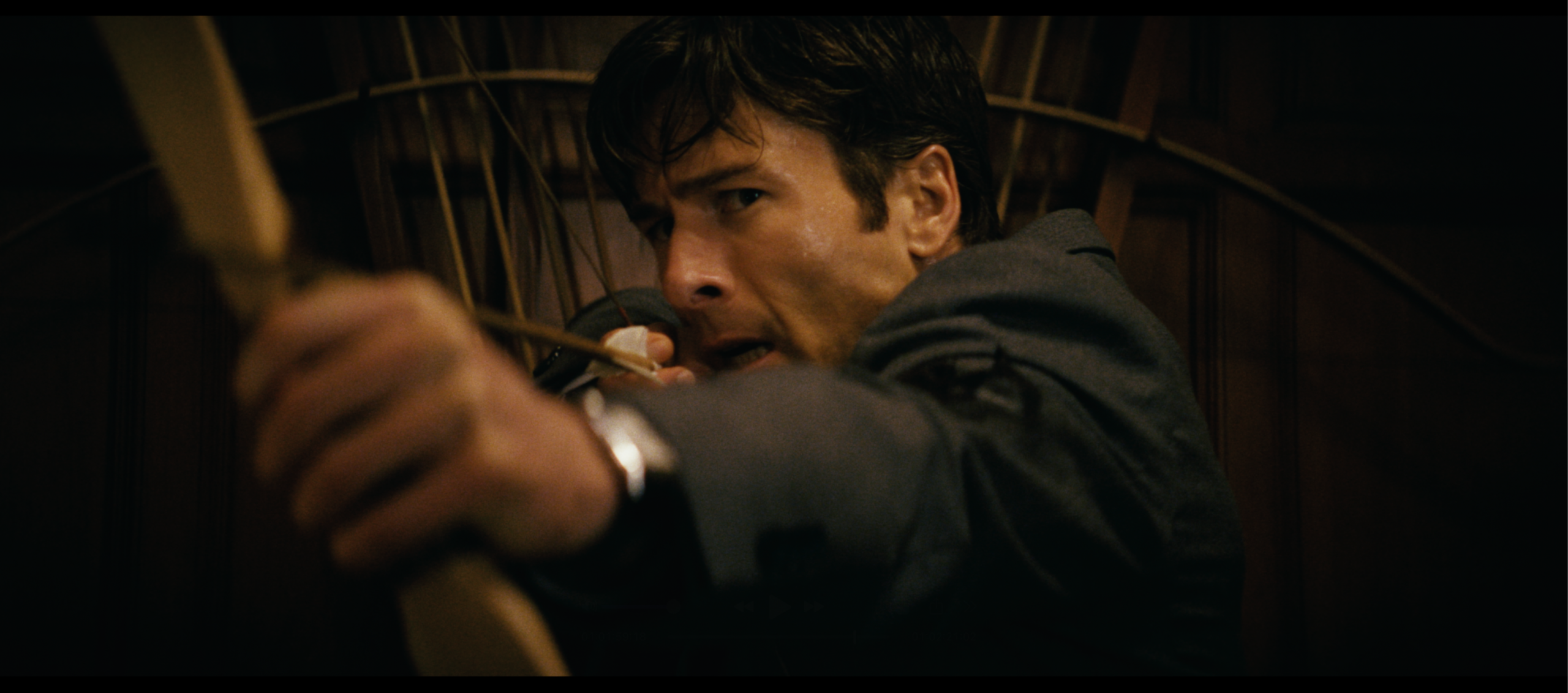
“Money can’t buy happiness”: a mantra that is both comforting and slightly threatening, but doesn’t quite vibe with everyone. While it may allow contentment to thrive in otherwise ordinary lives, there’s an encouraged attitude that if we are currently not rich, we should at least get rich or die trying. In John Patton Ford’s latest film, How to Make a Killing, Becket Redfellow (Glen Powell) flirts closely to a life resembling heaven on earth, but cause it’s unclear where the goalposts should be, Becket’s ambition makes it hard to stop, or be able to guess who he’ll be when he eventually does.
Though I had issues with Ford’s previous project Emily the Criminal, it felt like he was more at ease sharing the common psychological stress one could have with the lack of money and a mountain of debt. For the majority of How to Make a Killing, the film is as lost as Becket, who stumbles into the only-in-the-movies logic that he should kill the rest of his family members in order to inherit the Redfellow inheritance. Nothing is confusing about wanting money (and lots of it), though it is strange that Becket feels that he deserves it. After his mother was cut off from the family and later succumbing to an illness, I suspect that Becket’s adjacency to wealth and security leaves a taste that lingers in his mouth, despite not quite knowing what it means to be rich.
The sudden deaths in the Redfellow clan are loose and emotionless. There is no rest for the wicked or pity for the murdered wealthy, and Ford wastes little time to ponder the logistics of Becket’s plans. The first three murders that are shown in scenes longer than three minutes are of his three male cousins, played by Raff Law, Zach Woods, and Topher Grace, who are set up for comedic fatality and somehow conclude their roles in poor whimpers (no fault to the actors). Even Saltburn lets you feel bad about the characters. Here, the Redfellow family are as disposable as Becket’s baseball caps (and he has many).

Therefore, the lack of persuasive characters fling the responsibility to Powell’s performance. His early career-charm is sorely missing from this film, though one can argue (and may use this argument for other flaws) that it could be the point not to root for an empty shell of a man with a large appetite. Becket’s lack of personality is wildly distracting, losing altogether the thread that holds the film’s fabric together when it’s missing creative kills or notable one-liners. When it was just Becket and his mother growing up in a New Jersey neighborhood, she had insisted on raising him the same way that she did: archery lessons, being in rich circles, learning to play the piano. When she dies, she tells him to never stop until he gets the life that he deserves (therefore drawing the neon arrow sign to his blind ambition).
But his skills as a killer doesn’t make sense. Powell the action actor makes sense, but asking him to become a regular-schmegular guy that can blend into both ultra-wealthy and arthouse crowds and commit familicide under the nose of the FBI with little shown experience is not in my suspension-of-disbelief capabilities. I’m not sure if we have come to accept that the casting of Powell as the everyman assassin is acceptable: Hit Man, Running Man, and now Killing Man without the cream or sugar. Perhaps that’s why one of my favorite scenes (and where the movie perks up) is when Becket lets his guard down as he rushes to a New Jersey office for a transaction under blackmail, where his usual maxillofacial area is slacked and frowning while his frantic stride makes his hips swing despite the tightness of tailored trousers.

Ed Harris’s supporting role as the elder Redfellow patriarch is severely underutilized, though monumental even for the few moments where he is curtained in shadow (and really cements himself as an amazing scene partner, after have given even Kristen Stewart’s performance in Love Lies Bleeding a boost). Margaret Qualley, who plays Becket’s elementary school crush-now-turned bored housewife is adequately utilized, but feels off in the presentation. Her hybrid performance as mistress candidate and confrontational mouse-detective demeanor as seen in Honey Don’t! works by leaving you guessing her motives every time she appears on screen, but personally, I cannot let go of the fact that she has the same salon-quality hairstyle in literally all her scenes, which speaks less about needing to be prim and proper and more distractedly like the prominence of TV actresses’ regular on-screen hairstyle. Rich Qualley characters don’t deserve this.
In A24 fashion, the movie looks pretty in the way that it could benefit as a Ralph Lauren summer/spring catalogue gone awry, and Powell in a textured rugby polo or all-white prison jumpsuit is that man for the job. But his performance of Becket’s performative chameleon role doesn’t work with or against the script, which was adapted from the storyline for the 1949 British film, Kind Hearts and Coronets. It’s a story that feels like it could be brought up again today, but unfortunately, to make a good killing, it helps to hit the mark.
How to Make a Killing
2026
dir. John Patton Ford
105 min.
Opens Friday, 2/20 @ Alamo Drafthouse Boston Seaport and all local AMCs