Since splitting professionally (at least for the time being) from brother and longtime collaborator Joel, Ethan Coen has wasted little time establishing an independent identity as a filmmaker. His solo directorial debut, last year’s Drive-Away Dolls, was a brash, horny road comedy, drawing in equal parts from Coen’s comic sensibility and the real-world experiences of Trisha Cooke, Coen’s wife and co-writer, as a queer woman. Coen’s latest, Honey, Don’t!, is another collaboration with Cooke, and is of a piece with its predecessor’s world of lipstick lesbians and pulp-genre violence. But as admirable as it is that Coen has stepped out of his brother’s shadow, it’s becoming increasingly hard not to wish they’d get the band back together.
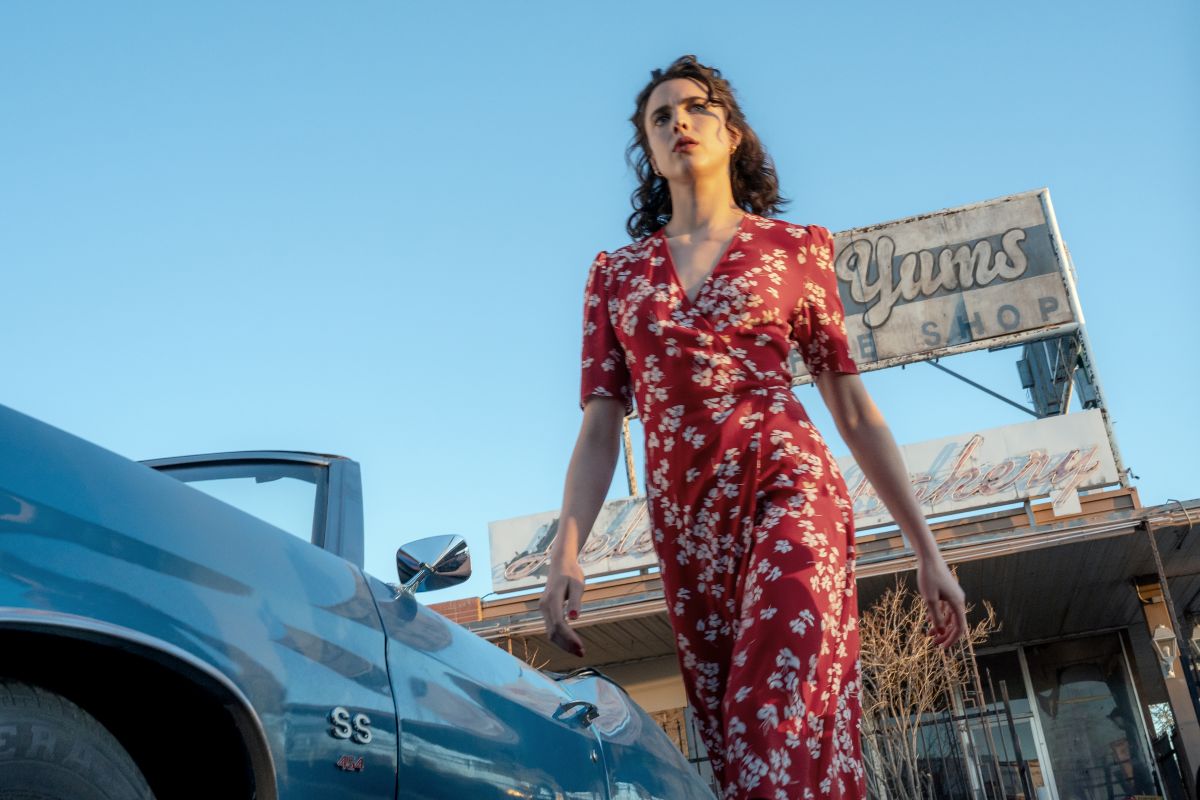
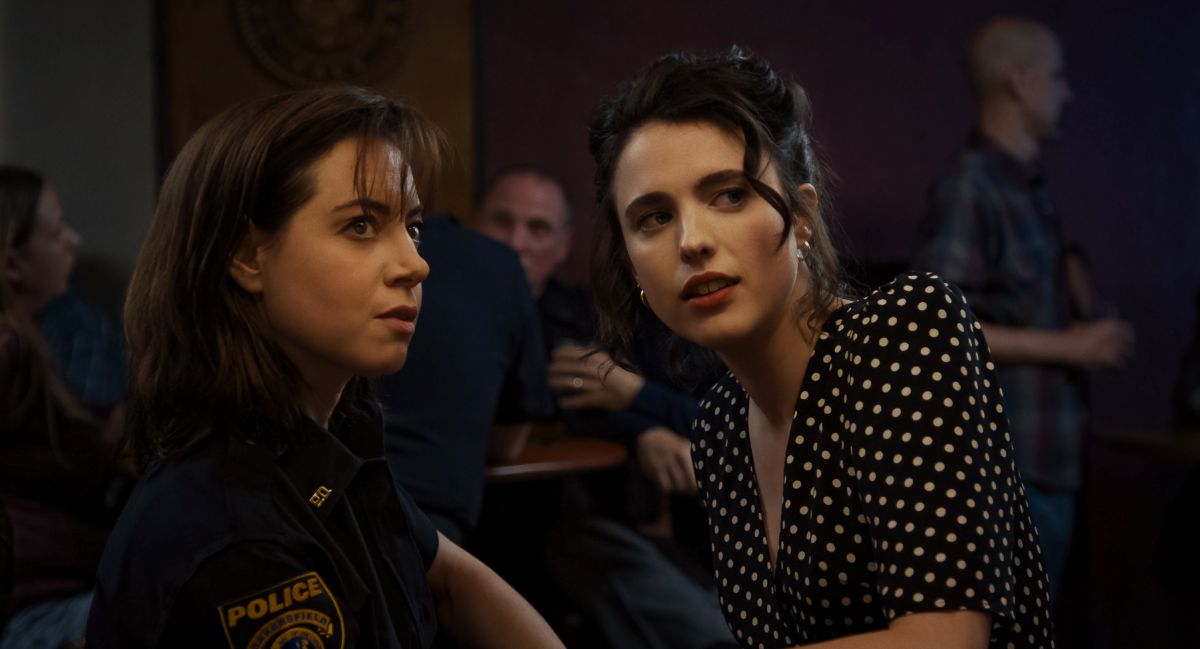
Margaret Qualley, returning from Drive-Away Dolls, plays Honey O’Donahue, a sharp but cynical private investigator working out of an appropriately seedy office on the outskirts of Bakersfield. Honey is drawn into an investigation by a clueless police detective acquaintance (Charlie Day, playing the most New York cop in California) when a would-be client is found dead in a grisly car crash hours before their first meeting. The case leads Honey to a shady church run by an ingratiating, libidinous pastor (Chris Evans), as well as the bed of kindred-spirit police officer MG Falcone (Aubrey Plaza). The plot thickens, however, when Honey’s troubled niece vanishes following her shift at the local burger joint. Can Honey solve both mysteries, and maybe find peace in her perpetually agitated life?
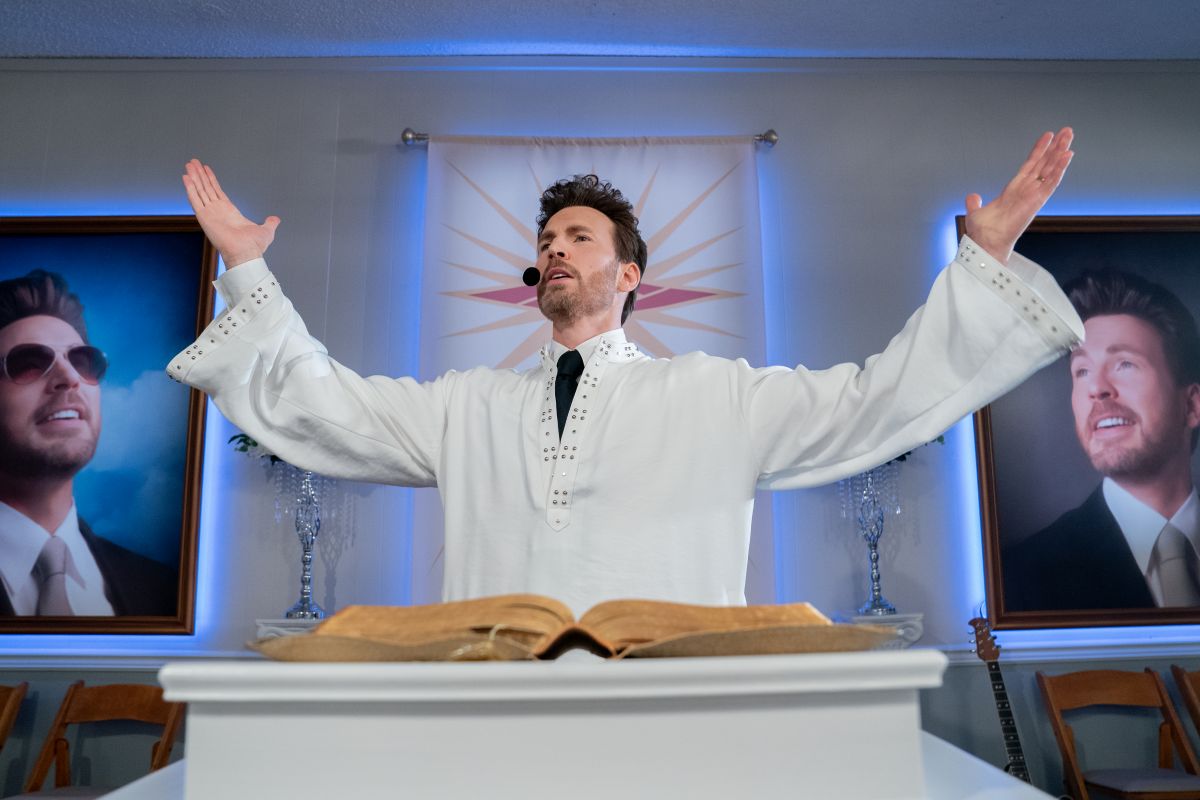
On paper, just about everything in Honey, Don’t! suggests a promising whole. The dialogue pops with the idiosyncratic rhythms which have been the Coen stock in trade since Raising Arizona, and the margins of the film are filled with the director’s trademark colorful oddballs. Qualley and Plaza, two of the most reliably watchable actors working today, have genuine chemistry together, and Evans is clearly having a ball playing a character who is not a variation on Steve Rogers or Lucas Lee. The film looks fantastic, with Power of the Dog cinematographer Ari Wegner once again capturing the vistas of the American southwest as if they were the wilds of the Australian Outback. The score, by longtime Coen collaborator Carter Burwell, adds a layer of soul, thanks in no small part to mournful guitar solos from Tom Waits sideman Marc Ribot. And the film is of interest to auteurists as the first contemporary-set Coen effort since 2008’s Burn After Reading, allowing the director to cast a typically jaundiced eye toward both MAGA cretins and COVID doomers.
Yet despite all of these individually promising elements, the film itself, on a fundamental level, simply does not work. Honey’s investigation is strangely inert, a shocking amount of her detective work consisting of listlessly waiting at bus stops. What’s more, the two central mysteries never satisfactorily intersect (indeed, at least one major plotline is left almost entirely unresolved). This is not in itself a dealbreaker, of course, as much of the Coen canon has been dedicated to the subversion of thriller convention. The problem is that there’s not much in the way of subversion, either. The wild, go-for-broke energy which propelled Drive-Away Dolls over the thinness of its plot is lacking here making Honey’s world-weariness contagious. Individually entertaining scenes, such as a bloody hit gone comically awry and a nonsensical sermon comparing parishioners to macaroni, exist in isolation, as if waiting to be written into a more cohesive screenplay. It’s just not as fun as it feels like it should be, which, for a film which positions itself as an homage to the lusty, gonzo exploitation epics of Russ Meyer, is damn near fatal.
In other words, there’s something missing— and it’s not hard to wager a guess as to what that something is. While the Coen brothers have never been forthcoming with the exact dimensions, it has become clear that their films are the result of an alchemy between two distinct creative visions, neither of which is quite as strong without the other. It is unlikely that Ethan Coen would have written Honey, Don’t! with his brother (it’s clearly as much Cooke’s vision as it is his), but it would benefit from a steadying hand, from the baroque underpinnings which provide needed depth to the Coen brothers’ great comedies (and would become a meal unto itself in The Tragedy of Macbeth). Individually, the Coen brothers have proven themselves to be fine stylists, but nothing they’ve thus far produced on their own approaches the level of their legendary collaborations.
Seven years after their last joint effort, it still doesn’t quite feel right to refer to the Coen brothers’ oeuvre in the past tense. Their split does not appear to have been anything but amicable (though who knows), and both brothers have expressed a sense that they will probably collaborate again at some point. But that point is probably still a few years off; Ethan has described Honey, Don’t! as the second installment of a loose trilogy (and is opening his off-Broadway debut next month), and Joel is reportedly preparing a new solo film of his own (reportedly titled Jack of Hearts, though the director remains characteristically cagey on the details). That gap would likely make both brothers septuagenarians by the time they reunite, which brings a sense of urgency to the resolution of whatever creative differences they might have. For every Honey, Don’t! we receive, we lose another potential Coen brothers collaboration, which is as disappointing as a dead end in a homicide case.
Honey, Don’t!
2025
dir. Ethan Coen
88 min.
Opens Friday, 8/22 @ Somerville Theatre, Kendall Square Cinema, West Newton Cinema, Alamo Drafthouse Boston Common, and all local AMCs