When a famous person dies, I’ll see a couple of adages thrown around. “Death comes in threes” will surface when there is a supposed pattern, whether it’s a batch of the “good ones” leaving this heavenly earth or when karma collects others for the urn. “Why do the good die young?” is another, though I suppose it might be tough to determine goodness in someone who had not yet face the painful choices of adulthood. Similarly, the phrase “Evil never dies” pertains to the immoral shells of humans who festered their way into senior age. These phrases materialize as soft comforts to a blurry truth, when in fact, there is little that could be said to confirm how death really works.
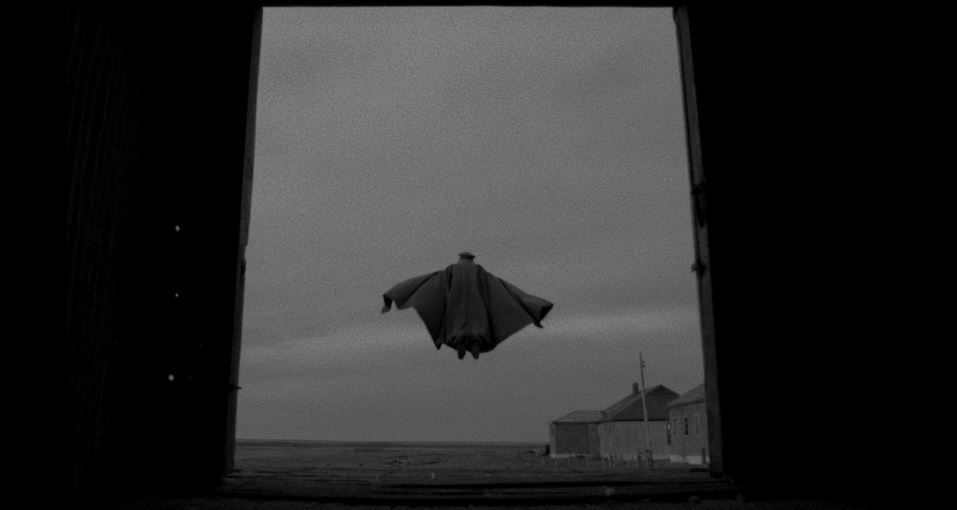
There is a small probability that Pablo Larraín and Guillermo Calderón were reading grief headlines when they were writing El Conde, a dark comedy questioning if evil really dies. After previous films like 2010’s Post Mortem and 2012’s No, Larraín revisits the life of former Chilean dictator Auguste Pinochet, exploring the alternate option where Pinochet is a centuries-old vampire living in his twilight years. There is a lot of information that I can catch up on regarding that specific period of Chilean history (and if you do know it, I’m hoping that it would make the experience richer). But even without any knowledge, El Conde ambitiously takes souvenirs of strong-willed genres — the underbelly of a family melodrama that the Roys of Succession‘s poison couldn’t hold its liquor to, the comedic exposé of a historical tragedy, the surrealistic portrayal of an aging, deflated vampire — to create one of the most daring and entertaining films of the year.

After his military regime, Pinochet (played by Larraín’s frequent collaborator Jaime Vadell) wishes to die. In preparation, he has weaned off from feasting on civilians’ hearts and pretended to die of a cardiac arrest in the eyes of the public. Withering away in a dilapidated gothic-type farmhouse mansion with his wife Lucia (Gloria Münchmeyer) and longtime wartime-torturer companion Fyodor (Alfredo Castro), he gathers his adult children to notify them of the offshore accounts and hidden treasures that shall be distributed to them when he finally dies. Pinochet’s slow march to death and financial secrets are known to the family, but as a safe measure, one of the daughters hires an exorcist nun named Carmen (Paula Luchsinger), who comes to the farm masquerading as an accountant helping to resolve the family inheritance. Additionally, Fyodor (who, of note, is the only person in Pinochet’s circle who has been bitten and converted) has been hunting at night, which caused the family to believe that Pinochet may not be ready to give up the ghost.
Larraín’s bigger American draws have been snapshots of public figures in the midst of tragedies that have overshadowed their personal and professional lives. Even in its black-and-white harrowing affair, El Conde‘s tone starkly contrasts with Spencer‘s bleak Christmas special or Jackie‘s government-officiated haunting halls. This time around, Larraín wants to have fun. The film first fills in the blank spaces of Pinochet’s life (which includes how he was around to witness Marie Antoinette at the guillotine and had aimlessly roamed around the world until he figured that being a ruthless dictator is the next life stage) before it settles down into some form of former totalitarian-retirement. In the lenses of someone who doesn’t have the depth of El Conde‘s nonfiction details, I had focused on Pinochet’s representation of an old man who is done. Is he unmoved by the vitality of his children’s successes and failures? Does he regret his wrongdoings? Does he still love Lucia? Does he know that Fyodor has been hunting at night? In such a lived life, Pinochet’s tiredness might be the truest answer to anyone wishing for immortality.
Vampire representation in the modern age has shown glistening Victorian-era torso models, hardened by plagues and lost ones, adapting to the changing world in hidden sight. In 2002’s Queen of the Damned, a semi-bored, man-pained Lestat fronts a nu-metal band. The career interests from imitating Jonathan Davis to a dictator is good for a laugh, but even in appearance, I appreciate the subtle denouncement in the usual vampire-sex appeal (no shade to Vadell). Still, going against typecast wouldn’t be close to tying down the specifics of El Conde. It has lighthearted jokes, but it doesn’t share Jojo Rabbit‘s whimsical spirit. It’s tense but doesn’t share the sharpness of The Death of Stalin‘s screaming matches (not to discredit the violence, as the camera does not shy away from a beheading or heart extraction). It can be a bit slow at times, which becomes destructive to the film’s wild, unpredictable ending that makes it feel both unfinished and exhilarating. Maybe that’s why someone would ask for a renewed lease on life if they could.
El Conde
2023
dir. Pablo Larraín
110 min.
Now streaming on Netflix