
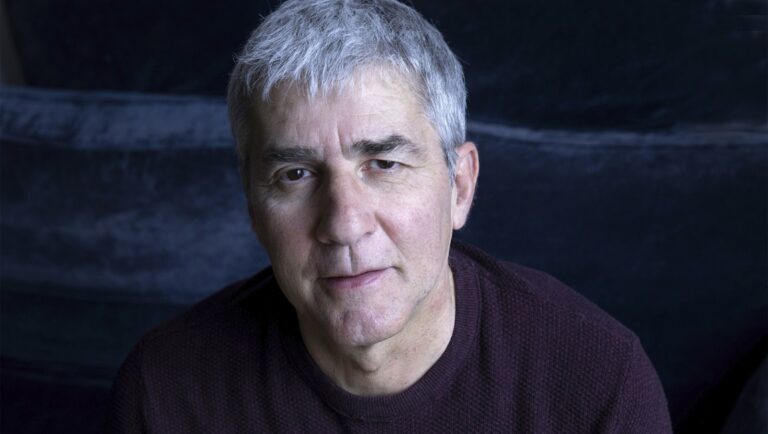
With the help of a translator, I spoke with award-winning French director Alain Guiraudie about his latest film, Misericordia, now playing at Kendall Square Cinema!
This interview has been edited for clarity and to bridge the language gap.
Boston Hassle: I’ve done a bilingual interview before. Have you seen the film Dry Wind from Brazil? Vento Seco. The director is Daniel Nolasco.
Alain Guiraudie: No, I don’t even know the name of the director.
BH: It’s an interesting movie. I think you would like it. It’s about an older gay man in rural Brazil who works at a factory, and then a beautiful man who looks like a Tom of Finland character shows up and everyone really wants to get with him, and it’s sort of about him expressing his feelings and it’s just really well done. But when I interviewed the director, they said, oh, yeah, there will be someone translating for you and I was like, okay, thanks. And then it was the lead actor from the film. I was like, oh, if I had known it was you, I would have come up with something.
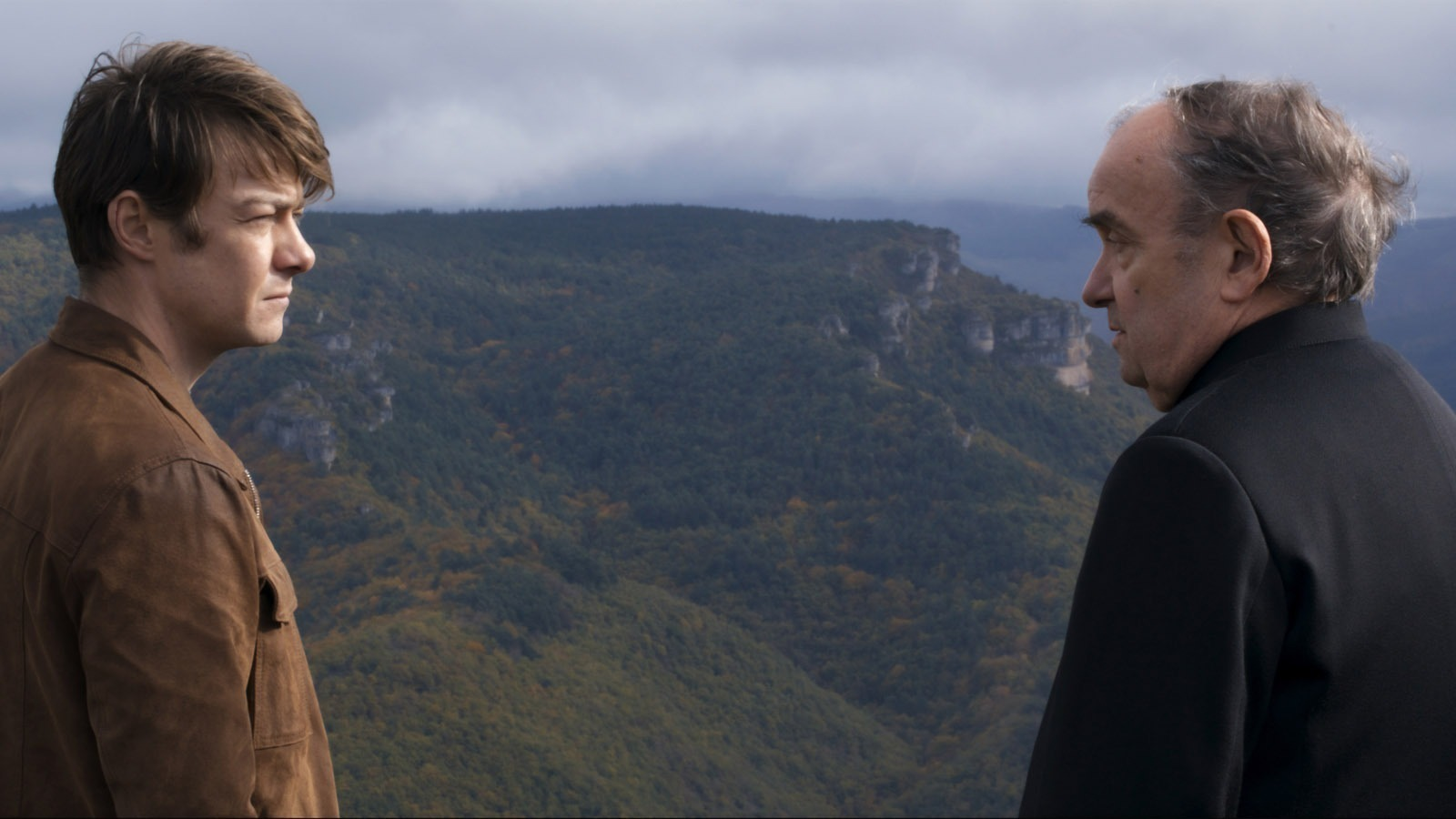
BH: Is this the first stop of the tour for Misericordia? Have you done a tour like this in the U.S. for a film before, for Stranger by the Lake or anything?
AG: No, I came for Stranger by the Lake, but it was only in New York.
BH: Did you film this in the region in France where you grew up?
AG: No, not exactly. Not exactly. It’s 150 kilometers away from the place I grew up. It’s similar. It was impossible for me to shoot this movie in the village where I grew up.
BH: I’m not that familiar with rural France. I’ve only been to Paris. The only real connection I have to rural France would be films like this. Petite Maman, I think, was somewhere in central France. Céline Sciamma. And she worked with Claire Mathon, who did the cinematography for Misericordia too. What was it like working with her?
AG: It’s the first film we did together with Claire Mathon. We were very grateful.
BH: It’s a very autumnal film compared to Stranger by the Lake, which is in the summer and so bright, but there’s so much darkness underneath. Misericordia is similar, where the plot sort of gets… I don’t want to spoil anything, but when things get going, it’s very moody and chilly in a way, which I think works with the setting. It’s the opposite of Stranger by the Lake, where there’s a lot of sex, and here it feels like no one is getting laid.
AG: You see, in the end, in cinema, there are quite a few films in which there’s [unsimulated] sex. In cinema, there’s very few movies with actual sex. And maybe in this one, the project was to make an erotic film without sex. Erotic and sensual without sexual acts.
BH: I really love a film where a character like this just ends up in a worse situation after making a bad decision and it just keeps getting worse for him.
AG: He builds a history that doesn’t stand on its own. He’s always starting to reinvent a story. And he gets lost in his story.
BH: Did I see that you based this on your own novel?
AG: Similar. In a certain way, yes, because we have some similar characters and situations. I think the priest… They are not exactly the same characters. The main character is not the same as in the novel. But, yes, you can recognize them. There’s a very similar situation, but it doesn’t happen in the same way as in the novel. But the problem is that the novel is a 1,000-page novel. And so it’s a very long novel with a lot of… Words. Peripeties. And a lot of characters, a lot of places. This is a very little part of a novel.
BH: That makes sense. So it’s using similar themes and ideas on a smaller, more intimate scale, because we really only know these few characters in the village. It reminded me somewhat of a rural Talented Mr. Ripley. Felix is doing a similar thing to Ripley, but in a village, which I really enjoyed. So it’s harder for him to get away with these things because it’s not a large city, and he can’t hide.
AG: It’s harder.
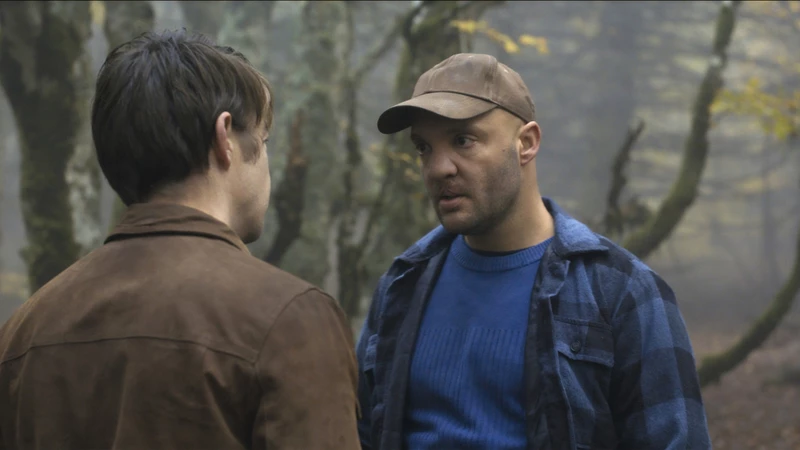
BH: That idea of transgressive cinema, with unsimulated sex and murder and intrigue, it was cool seeing it in this film in a totally different way. It’s more, I’m not sure, repressed?
AG: What do you mean by repressed sexuality?
BH: I’m not sure how to phrase it.
AG: The fact that nobody wants to sleep with him? To make love with him?
BH: Yeah.
AG: I don’t have anything to add to that, because… I think it’s a reality in the village, and it’s a reality in the world. You know, there’s only 6% of the population who’s homosexual. And even if, when you’re homosexual, you meet another homosexual, it doesn’t especially work between the two men. So I think it’s more conforming to the reality of life.
BH: Can you talk more about who plays the priest? What is that actor’s name?
AG: Jacques Develay. He’s not a well-known actor.
BH: That’s what I was thinking. I didn’t recognize the people in this film, and usually there are a few French actors that show up in everything. So I was interested. Do you usually work with unknown actors, or were these more well-known in France?
AG: Catherine Frot, who plays Martine, is a very famous actress in France.
BH: That’s what I’m wondering, yeah. Because the French actors I know are Isabelle Huppert, Juliette Binoche, Gerard Depardieu. Catherine Deneuve. The biggest names. Anyone that’s done Godard.
AG: In France, the people who see the movie, they only recognize Catherine Frot. The other actors are quite unknown.
BH: The cultural difference is interesting to me, where I think an American audience might take this movie in a completely different way from a French one.
AG: An American audience will appreciate the movie in a different way.
BH: Did it go over well in Telluride? That audience is very specific. Some movies go over poorly there that do really well everywhere else. Telluride can be really difficult to get to and expensive. So it’s a different kind of audience that can afford it, compared to Toronto.
AG: I think both audiences appreciated the movie, but not in the same way, I think.
BH: Well, that’s what I think. Another French example, Claire Denis has become really big in the US, but I feel like sometimes for French awards, she’s kind of ignored.
AG: Well, it depends. I think a movie like Beau Travail has been very successful in France, but not for the César. But I think it’s the same problem for the Oscars.
BH: Is there anything else about the movie you’re looking forward to seeing audiences respond to on your tour?
AG: I don’t know, but I’m pretty sure that the film will be well appreciated all over the country. It will be fully appreciated in different cultures. So if you’re in Japan, it’ll certainly be a different approach.
BH: My friend saw this in Toronto and he loved it. And he’s been raving about it since. Is the region where you grew up entirely that rural?
AG: Everybody was a farmer when I was a kid. Except for the priest, the school teacher… And the mayor. No, this kind of village is… People from big cities are moving in. And they work in the city. There are middle cities.
BH: Julie Delpy had a film recently that was set in a bigger town than this village. But I’m not sure where exactly it was. Meet the Barbarians. I think it’s in Brittany. And something like Titane takes place by the sea. There’s much more to France than what I know, which is just Paris. So it’s always interesting to see on film.
AG: Yes, there are definitely many shades to France.
Misericordia
2024
dir. Alain Guiraudie
104 min.
Now playing @ Kendall Square Cinema