Early on in In the Hand of Dante, Oscar Isaac, as novelist Nick Tosches, is asked his opinion of Dante’s Divine Comedy. “I like it,” he responds, “I used to love it. When asked what changed, Tosches shrugs: “You look at anything wrong enough, you see what’s wrong with it.” The same could be said of In the Hand of Dante itself. The story, adapted from Tosches’ novel, is at its core pure pulp, a sort of gutter-gangster version of The Da Vinci Code. Unfortunately, director Julian Schnabel drags the proceedings out to an interminable degree, repeating dramatic beats and gumming up the works with unearned gravitas. There’s fun to be had here, but, like Dante, you have to spend some time in purgatory to get to it.
Isaac’s Tosches— or rather, Isaac’s embodiment of Tosches’ fictionalized avatar— is the sort of bad-boy writer who more or less stopped existing around the turn of the millennium (when the film is set), chain-smoking and expounding upon his process to anyone who will listen (“I’d rather see the stableboy fuck my wife than get edited!”). His closest confidant is played by Louis Cancelmi, signaling to the audience that he is at the very least crime-adjacent. Sure enough, when mob boss Joe Black (John Malkovich, hamming it up in a sort of Judeo-Italian accent) needs a runner with both flexible morals and a working knowledge of literature, Tosches is his first call. The McGuffin: an original manuscript of the Divine Comedy handwritten by Dante himself, rumored to be in the possession of a dying Sicilian aristocrat (played in cameo by spaghetti western icon Franco Nero). Soon enough, Tosches is on a plane with a comically macho heavy (Gerard Butler) to retrieve the document and make a fortune.
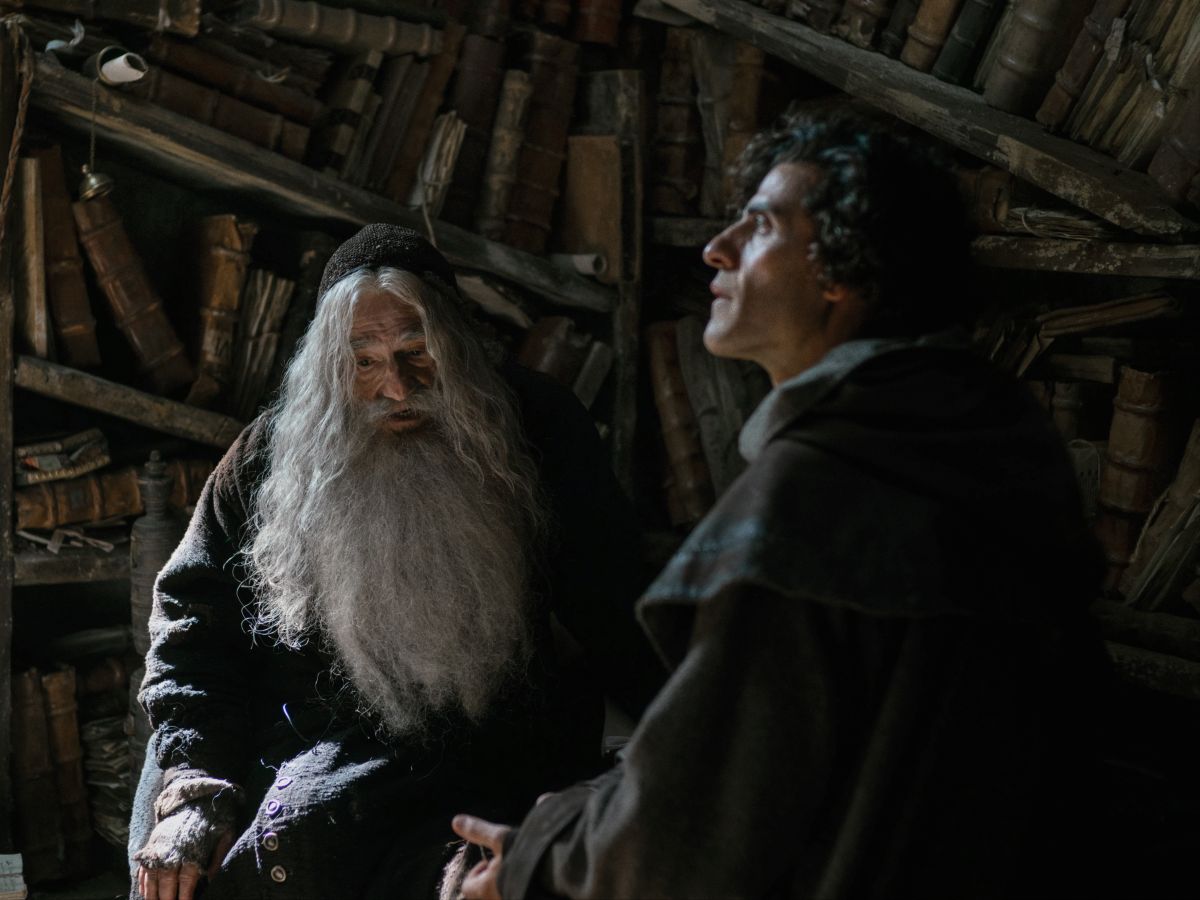
Parallel to all of this, we follow the actual Dante Alighieri (Isaac again) as he struggles to write the Comedy. Cancelmi and Butler appear in this storyline as well (the latter, incredibly, playing the Pope), as does Martin Scorsese, playing Dante’s wizened mentor in what my wife succinctly described as “Dumbledore drag.” Both Isaacs are in love with an enigmatic woman played by Gal Gadot— though, as Tosches learns, keeping a woman who looks like Gal Gadot protected from an international web of intrigue is easier said than done.
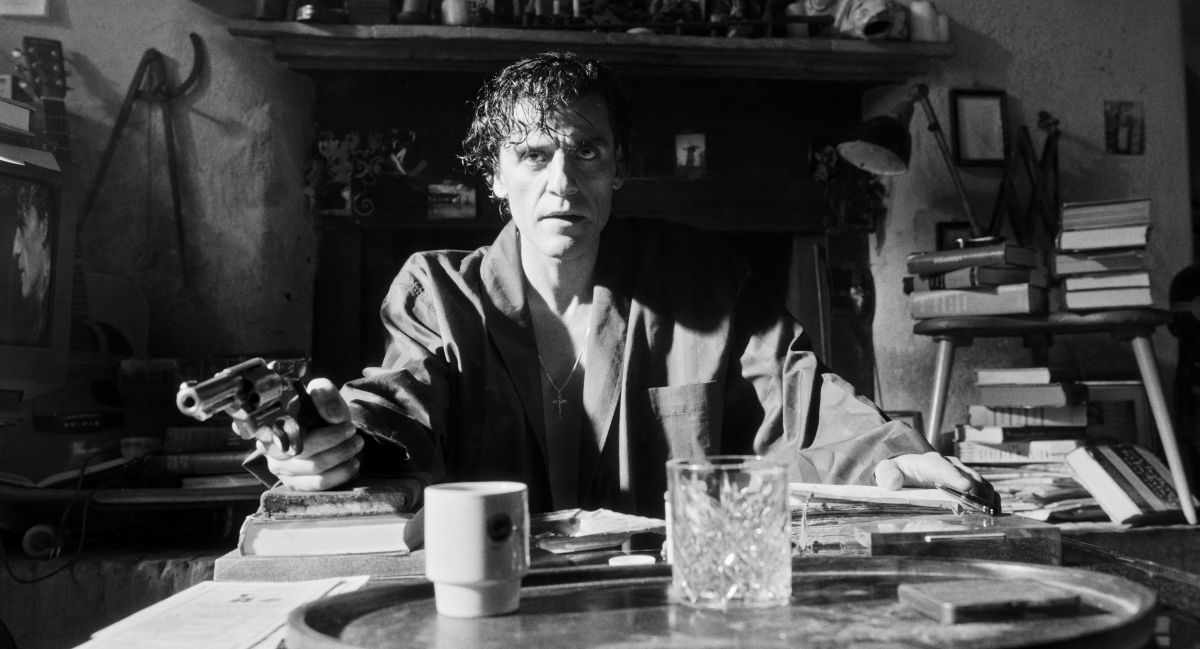
This all sounds like rip-roaring fun, and moment to moment it can be. Isaac is quite good as the motormouthed Tosches, and Butler and Malkovich are clearly having a ball playing their diet-Sopranos wiseguys. The film fully conveys the awe of laying one’s hands on such a priceless artifact, and the comically arduous task of keeping such a discovery secret. Tosches was a great writer (as was Dante, for that matter), and the film sings when it gives space to both writers’ prose. And, of course, if you’re in the market to see Martin Scorsese in a billowy robe and an enormous fake beard, this is almost certainly your best bet.
Yet, as a whole, In the Hand of Dante is rarely either as profound or as gleefully sordid as it feels like it ought to be. The gangster material is needlessly convoluted, bogged down with plot cul de sacs and side characters which probably worked better on the page than on screen (particularly puzzling is an Italian enforcer played by Jason Momoa, who is never quite convincing in roles which force him to wear people-clothes). Worse, the Tarantinonian bursts of violence often come off as mean-spirited rather than tongue-in-cheek fun. Schnabel, the director of such lovely films as Before Night Falls and The Diving Bell and the Butterfly, can’t seem to bring himself to sketch his mafioso canon-fodder as anything less than flesh-and-blood people. I wanted to have a devilish grin on my face as Butler popped caps in a roomful of armed guards, but I mostly just felt bad for them.
At the same time, the edginess of the modern storyline keeps us from fully getting lost in the scenes set in 14th century Florence. I don’t know enough about the historical Dante to speak to the accuracy of the material, but it’s all told with a straight face, which plays largely at odds with the grit of the A-plot. I kept waiting for the revisionism to kick in— for Butler’s pope to start mouthing off like his mob goon, or for the revelation that Dante was just as cynical as Tosches. Instead, it plays enough like a standard historical biopic that it’s tough to know what to make of the total package.
The problem, I think, with both halves is that they’re so committed to their own importance that they never quite loosen up into an agreeable whole. Scenes which should be darkly funny, such as a scene in which Tosches turns on the TV in his hotel, learns about the 9/11 terror attacks, and immediately starts spinning a plot to use the story to fake his own death, are instead played as just another grim plot beat. I want to recommend In the Hand of Dante; it’s the sort of wild swing auteurs should be allowed to make more often, and it does have some things you aren’t likely to see anywhere else. Unfortunately, it’s so stuffed with itself that by the end I felt like I’d gone on a grueling journey of my own.
In the Hand of Dante
2025
dir. Julian Schnabel
150 min.
Now streaming on Netflix