After Hlynur Pálmason’s Godland brought his name across new audiences (including myself, where I placed it on my list of favorite movies in 2023), it wasn’t a surprise that many would tune in for the his next project. But those who were in the know, or have followed him closely since, knows that the Icelandic director stays busy. The origins, development, and production of his latest film The Love That Remains is the continuation of a short film that he worked on. Even as the film starts to gain national traction across theaters, a sixty-minute companion film called Joan of Arc is already set to release.
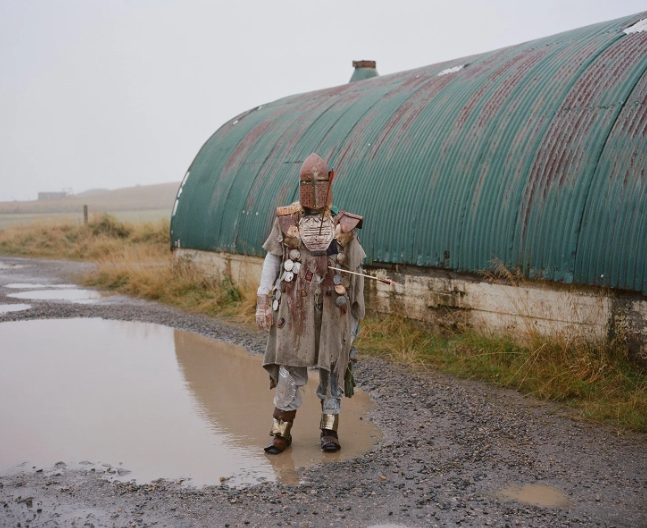
It’s not so much as a barrage of work as it is the natural flow of these films coming to light. When you take a gander at Pálmason’s behind-the-scenes portfolio on his website, you can see that the pictures are uploaded chronologically, but the images and settings belong to different projects that you might find scenes from The Love That Remains in 2023. To some degree, that is the nature of the film, a story of change as it were to occur on its own. If Godland showcases Pálmason‘s sharp vision and dexterity with the camera, The Love That Remains holds his sighing heart. In writing, the film doesn’t quite share Godland‘s quiet causticity, but they both place nature to its beautiful, ever-changing moods as humans inhabit and traverse over land and sea with their own thoughts and emotions. Over the course of a year, the film displays a marital separation between two former lovers Anna (Saga Garðarsdóttir) and Magnus (Sverrir Gudnason), who are parents to three lively children (played by Pálmason’s own). It comfortably sits in its pacing and utilizes a Knight mannequin as a fixture through the passage of time, but for those who take the time to enjoy the view, there are many delightful images to accompany the journey.
Ahead of its screening at the Brattle on February 20, I spoke with Pálmason on multitasking, weather temperament, and a fisherman’s life. The conversation has been edited for clarity, length, and flow.
BOSTON HASSLE: This movie is about a portrait of a family as they navigate separation, but also togetherness. I was wondering how you came up with the idea and how you knew it was going to look and be structured.
HLYNUR PÁLMASON: It’s a project that’s been going on for a long time, even before Godland. Even the first image you see in the film, the roof being pulled up, was shot back in 2017. It has always been parallel [with] the other projects. I was trying to figure out a new process where I can stretch the period of time you have with each project, because I felt like sometimes when you start a project, it goes too fast. Shooting is very condensed into two months or something, and I often feel that I’m not able to explore the things that I want to. I’ve been trying to find ways to expand time instead of dictating or preconceiving everything. I’m more exploring and listening and observing and writing while I develop the film.
One of the triggers that I could talk about where I got really serious about the film was when I made a short film called Nest a couple of years ago. It’s a 20-minute film that I did with my kids during the pandemic, and I filmed them building a tree house. I was filming them for two years, and I built this small camera house where I was inside with the camera to not scare away the animals that came, the birds and horses. During this time, spending all of this time observing them, building the tree house and filming and recording, a narrative started to grow. Like, what are their parents doing? I began writing this narrative about this fractured family that was in the process of figuring things out, and that’s sort of the heart of the film: how do you spend time with the people you love when you have a friendship or family?
BH: Did you find it hard to establish how the family was going to interact? Did [your kids] have any collaboration in how they should be as characters, what their relationship to each other was going to be like, and with the parents as well?
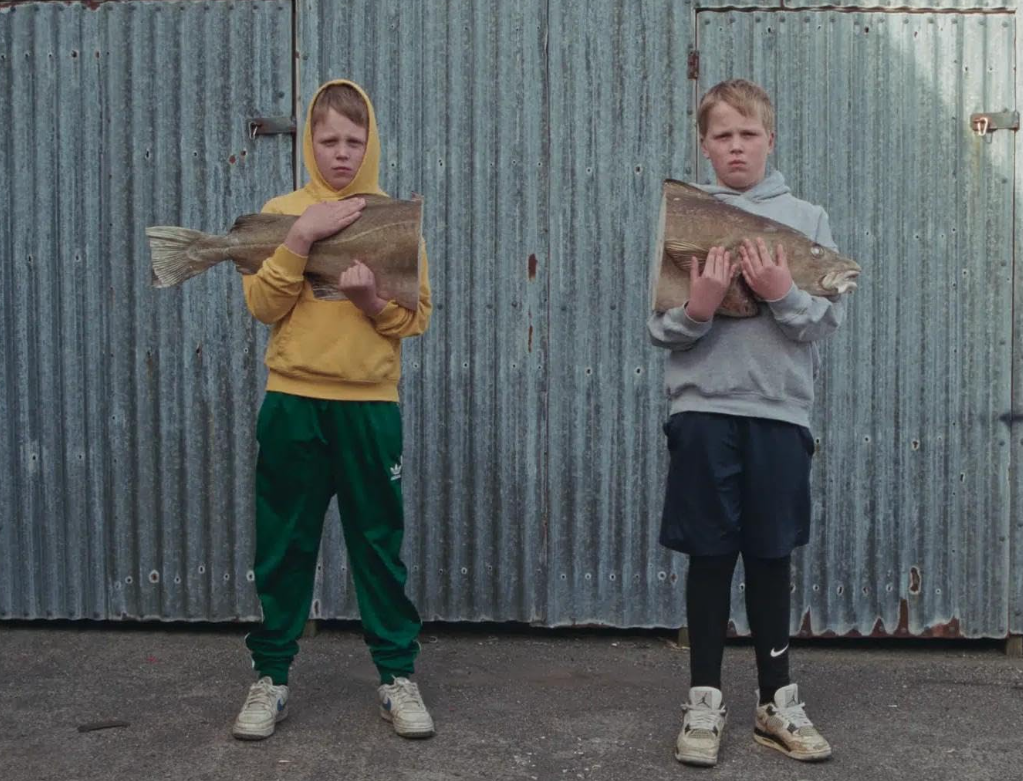
HP: I know them so well because they’re mine and they’ve been collaborating with me ever since they were born. They’re part of my paintings and photographs, and they have been in everything: the video installations and everything. They’re very natural. They don’t see the camera anymore. They’re good at reacting naturally on film, and they [have a wildness], which is an element that I really like and I don’t see a lot. They surprise me, almost like animals. I also know how to write for them because I know them so well and I often tend to use actors that I know and like to work with again. If you see my other films, it’s the same ensemble. There are always new faces that pop up in my films, but [there are] recurring actors.
BH: You talked a bit about how you work on projects, like they’re boundless and there isn’t a start or end. They kinda come together as you’re working on things. You mentioned Nest, and then I know Joan of Arc is also coming out, which is [footage] from this film. How did you know that that was going to be a separate project?
HP: I just became so in love with that kind of process. I always felt like [Joan of Arc] was turning into its own beast, its own thing, and I felt like we should make something out of it. We made so many scenes that I loved, [but] my favorite scenes are almost all in Joan of Arc. I was just like, “We have to make it as a film, or a short film, or just something, a video installation or something.” We didn’t really have the money to do it, but we figured out a way to do it very [cheaply] and did the post-process parallel to a lot of domains. They were hand in hand, helping each other, and Joan of Arc really needed help financially. It’s an idiosyncratic film. Sometimes you just feel that some things just grow if you spend a lot of time with it and I felt like it was a small gem. I really worked hard on trying to get it out there, try to get cinemas to show it, because I think it’s an interesting experience.
BH: I’m not sure if I’m using the right [term to describe the statue], but this movie happens over four seasons, and you see how this knight totem is being established and how the kids are interacting with it. It’s a really cool image, and I’m so glad it’s having its own shining moment.
HP: Yeah, me too. Because you have ideas and you know how some ideas really fit into the preconceived market or the world more easily, but then there are others that are more like oddballs, or they’re like a little bit more strange. But I feel like they are just as important and more interesting and more exciting. I always try to make these small projects because I feel like they fuel the other ones, the more normal ones.
BH: The opening scene of the roof being ripped off was also such a stunning thing, because it was so gentle yet so violent in some ways. You mentioned that you had that scene filmed in 2017. Were you waiting for the right moment to use it?
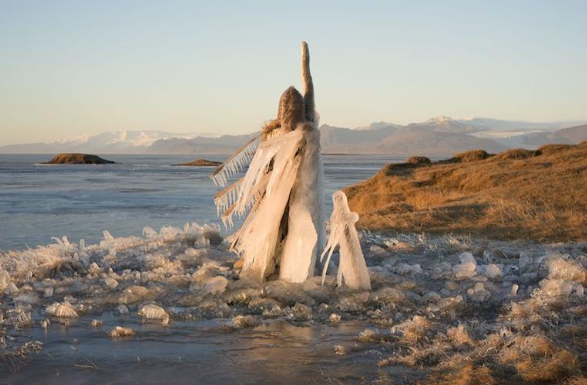
HP: When I filmed it it was more of an act of despair, because my studio was being torn apart and I was trying to stop it, so I just went in there in protest to film it. When I saw [the scene], I saw it without sound because I had a Zoom recorder so it wasn’t synced up with the sound. So when I saw it, it was so gentle and beautiful because I didn’t hear the construction workers and the machines outside. It was almost like nature lifting it up, like gently. It was hovering in the air. There was something beautiful about that because change can be hard, but they can also be quite important. There was something about that image that just connected very strongly with this project that we were working on, this kind of portrait of a family that I really wanted to make but I didn’t know what it was. I didn’t know more at that time, but I just had a very strong feeling that this is the beginning scene. It’s as simple as that.
BH: Thank you for sharing the backstory. I think that kinda feels like what heartbreak is, especially in the perspective of Magnús, who knows that he’s feeling the separation and he doesn’t know where he is placed in it. Like change does happen and it is very hard, but it could also be natural.
HP: Also you just don’t know what you have until it’s not there anymore. You can feel that this thing is gone or moved on, or whatever has happened. It’s an interesting thing to explore in the film. Film is good at not saying things, holding things away, because it creates a vibration. Cinema is a beautiful medium of tension and making things vibrate, and not giving you what you want but keeping you in a certain temperament or experience.
BH: You have a background as a visual artist, and you were listed as cinematographer, which I believe might be the first time in your movies. Did you find it hard, doing both roles?
HP: I really missed Maria [von Hausswolff], who’s been my cinematographer on all my films. But some of the projects that I’m doing are stretched over such a long period that she would have to move to my hometown and live there for years. She lives in Copenhagen, so that’s not possible. I did kinda force myself to do it on my own, but I studied photography in Denmark so I’ve always had a technical side in me, like a basic, primitive side that can work with those kinds of things.
It’s a process that I find okay. You miss the presence of a friend, and I mean, we’re a really tight, small crew, and I’ve been working with the same people for years now. Every time there’s something in the crew that isn’t there, we miss them [and] that kind of collaboration. Even if it’s a creative conflict, you miss someone to ping pong with and discuss things. I think she was actually filming here in New York when we were filming. But we stayed good friends.
BH: There was a line in the movie where one of the characters says, “Why don’t all artists just do their work outside?” We see later on in the movie why it’s not always feasible. I also thought it was funny because I think a lot of your shots are outside. What challenges do you have filming outside? Do you ever foresee just a mainly interior film in the future, or do you feel that the outside is very important in your work?
HP: I really do like both interiors and exteriors. I like creating a dynamic when I’m editing from something to another thing, like [Anna] working the land to Magnús working the sea. I like these kinds of contrasts from something to something completely different. An edit from something very calm to something very windy, or something very warm to something very cold. I’ve never thought about being very much exterior. Maybe I am, but I do like the outdoors and that’s probably colored me and my work. Nature is very much present in our films.
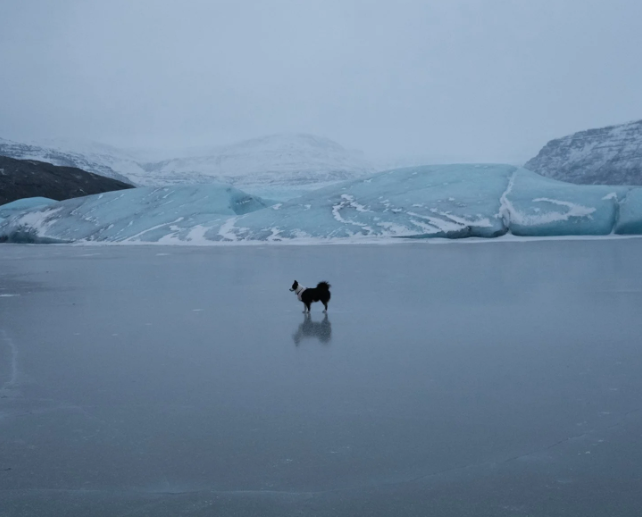
I was thinking about this a couple of days ago because I’m a big fan of a filmmaker called Roy Andersson, who is a Swedish director who makes all of his films inside his studio. His exterior scenes are filmed inside his studio, and they’re beautiful films that have inspired me. I was starting to compare myself with him, because I was thinking that he makes his interiors and I’m almost always outdoors. There’s something in the changing seasons and the things that take place in nature that are really hard to capture because they happen very suddenly. It’s almost impossible to capture if you have a film crew, so you have to create a setup where you can capture it alone with your camera. That’s something I’ve been trying to do for the last couple of years: capture a snowstorm passing by, or a rainfall that’s out of this world, or a sun going behind something.
BH: It’s almost like improv in nature. I’m not sure what the weather is like in Iceland. I’m from Boston, so the New England weather is always fickle. Do you feel like you’re being challenged when you’re filming?
HP: Yeah, because it’s island weather, so it’s changing constantly. I know that filmmakers in Ireland are used to making films – what do you call it when you film across – I don’t even know because I never do it. But when you shoot one face, and then you shoot the other face, and when you do that, the light is constantly changing. [Writer’s note: It is called a shot/reverse-shot, and it will forever haunt me that I couldn’t name it in front of one of my new favorite directors.] But the weather is not that important. Continuity isn’t even that important because I only shoot it from one way, and we’re always cutting it while we’re shooting.
BH: I read that you shot Godland chronologically. Did you also shoot this film chronologically?
HP: The Joan of Arc figure is shot chronologically, and that’s what we used as the structure of the film because it was quite hard to figure out. The creating of the figure was just such a nice thing to put up, and then put scenes around that. No, I don’t think it was shot very chronologically, but we were flexible. We tried to have 24-hour access to all the places so that we can just really react to the weather.
We also tried to have the movement of the emotional narrative linear. For example, not filming the most dramatic scene in the beginning.
BH: For the last scene, it captures the tone of the film but in the deeper sense, it feels so scary and gets at you. I was wondering how you came up with it.
HP: I was having dinner at a friend’s place. He was a fisherman and he told me the story of when his wife got pregnant. He dressed up in this suit and jumped into the ocean, and there was a ship coming up on the other side that was toward land. I didn’t believe him – that’s insane! It’s impossible. But he said, “It’s no problem. If the weather is good and you have a GPS on you, they can always find you, so it’s no worries.” So they just put his things in a plastic bag and he jumps in the ocean and the ship just left him there.
I thought it was just a dramatic feeling, like overwhelming, you know? When I was working on this film, I spent a lot of time with fishermen, documenting and photographing them. I slowly wrote this scene into the film. The strange thing was that when we were shooting that scene, it felt too cynical or dark, so I had to reshoot it in a different light, where the ocean was more beautiful and velvety, and the sun was just behind the glacier. It has this beautiful glow. When you’re making a film, you’re always thinking about the balance of not being too sentimental, but you don’t want to be too cynical. The right balance in that scene is the beauty. The ocean was just enough so that it wouldn’t feel dreadful, this scary feeling of being alone and being left there.
The Love That Remains
2025
dir. Hlynur Pálmason
109 min.
The Love That Remains screens Friday, 2/20 through Thursday, 2/26 @ Brattle Theatre – click here for showtimes and ticket info