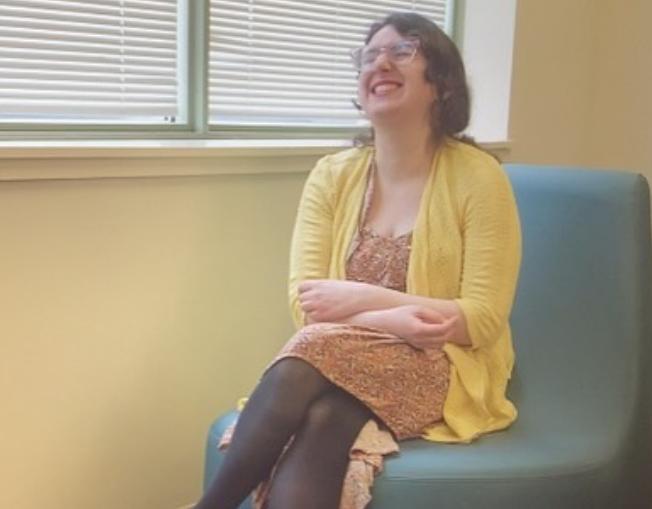
Medical issues suck. Big or small, manageable or fatal, and chronic or temporary, it’s no fun being sick. For Cambridge-based filmmaker Sharisse Zeroonian, illness isn’t unfamiliar. Struggling with a rare condition called cyclic vomiting syndrome (CVS, pun ignored), Zeroonian has faced constant bouts of nausea and episodes that have disrupted her social, professional, and personal lives for years.
CVS is a significant component of Zeroonian’s newest film, Nothing Solid. Upon moving out of her parents’ house, local Armenian-American paper writer Nikki (Zeroonian) faces a Solid wall of stressors. Independence, finances, familial woes, self-confidence, and general well-being all come under fire in Nikki’s suburban and city life. In times when the U.S. feels divided even over the most common issues, small flicks like Nothing Solid bring new angles and nuanced issues to the cinematic table. In an email interview with Zeroonian, who has worked in independent filmmaking since 2016 and wrote poetry, plays, and other fictitious works before that, I got firsthand insight into how CVS has affected her and others, how Nothing Solid came to life, and what the film and representations mean to her and others with CVS or in similar life circumstances.
BOSTON HASSLE: How long have you been into filmmaking? I see you’ve created other works like the 2018 flick The Mouse in The Bread and the once-Los Angeles CineFest Semi Finalist flick Well Water, so did it start there or earlier?
SHARISSE ZEROONIAN: I have been making films since 2016, starting with an extremely low-budget short called Big People Talking that was in some festivals. I also have an Amazon Prime show called One Plus One Is Two, which was adapted from a stage play I wrote by the same name. I’m primarily a writer, so my fiction, play, and poetry writing got the ball rolling into film.
BH: Was Nothing Solid’s production and realization different from your earlier work?
SZ: This is definitely the most personal and vulnerable piece of work I have ever created, so that already sets it apart from anything else I’ve ever done. Craft-wise, I did write it as a part of my thesis for my Creative Writing MFA, so I did write it under the guidance of teachers — which I didn’t do for any of my other work.
BH: What was the most challenging component of creating Nothing Solid, and how’d you get by? How about the most challenging component to translate about living with CVS or other similar conditions?
SZ: Money. The movie took a year to make mainly because I was completely broke at some points and had to stop. My health was also an issue; CVS can often be triggered by stress, and making a movie while working three jobs definitely did not help.
BH: If you had an unlimited budget and access to the best filmmaking equipment and software, what would you change?
SZ: The sound. Most definitely the sound. We had different crew people and mics every day, so it was really hard to regulate that. Plus, there was quite a bit of background noise that we had to remove, so that compromised the volume a little bit.
BH: How cumbersome does CVS continue to be on work life, hobbies, relationships, and the like, even as it’s managed? Will Nikki ever find something solid to escape CVS’s vicious cycle with?
SZ: CVS is an often debilitating condition that varies in how severe it can be or how often it strikes. In between episodes, people have what’s called “well phases,” which is a period of time where a person does not have an episode. But even the well phases can be hard to enjoy since you’re always on edge anticipating the next episode. The best way I can describe it is to imagine that someone’s following you and you’re constantly wondering when you’re going to get jumped.
I am lucky enough to currently be in multiple workplaces that are flexible and understand that I might have performance issues sometimes due to my condition. The only trouble is that working too much or not sleeping enough (due to working too much) can also bring on an episode. It’s a really hard balance to do what I need to do while also trying to maintain good health.
As for the last question, the movie showed Nikki improving as she becomes more at ease with her life and figuring out her environmental and even hormonal triggers. I obviously didn’t write this at the end, but I’d like to imagine that she achieved remission in the future — at least for a little while.
BH: Where does research stand on CVS’s treatment? Might you make a sequel if there’s ever a cure or significant new treatment remedy discovered?
SZ: CVS is not a well-understood disorder. All that’s really known is that its etiology is thought to be neurological and related to migraines. Luckily, there are organizations like the Cyclic Vomiting Syndrome Association (CVSA) that work to facilitate more research and advocate for patients.
I don’t know if I’ll make a sequel. When a project is done, I typically like to move on. If viewers want a sequel, though? We’ll see!
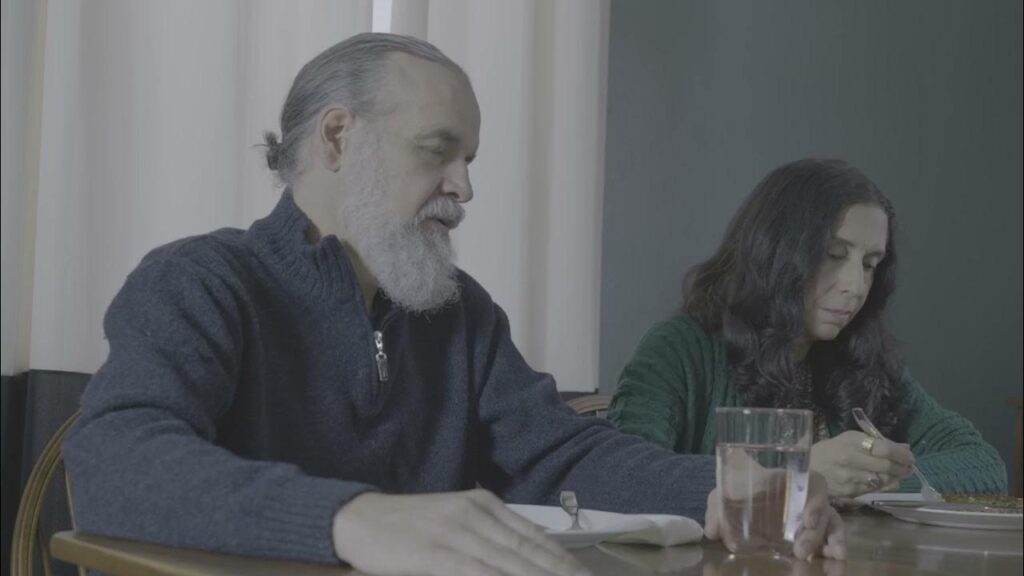
Nothing Solid deftly considers the nuances of living with CVS and similar medical conditions, with Zeroonian using self-deprecation and ironic humor to soften the blow of Nikki’s familial affairs. With an overly critical mother in Ani (Louise Mara) who babies 25-year-old Nikki every step of the way—“Why would you take the train by yourself?” Ani demands before insisting her past-college-age daughter is naive because there “… are a lot of crazy men out there” Nikki apparently didn’t consider—and a deadbeat father in Haig (James J. LaBonte) who consistently reminds Nikki of her flaws, especially when she gets sick, Nikki’s home life is strenuous even after moving out of her parents’. Her work life, though better, is marked by privileged, rude co-workers who undermine Nikki and nip at her for her sickness-induced inconsistency and low workload. As she finally enters therapy—against her mother’s own wishes—and meets the more upfront but forgiving Dr. Miller (Russell J. Gannon), she learns through laughs and confrontation how her condition can be eased: communication and direct appeal.
With a heavy dose of unusual emotional intelligence that makes a complex problem like hers or others viewers may experience seem so simple to correct, Nothing Solid delivers its most fine-tuned component. Dr. Miller does what any good therapist does, which Nikki herself comments on agitatedly: he connects her problems “back to my parents. I know. I know. Christ. Do you therapists say anything else?” Instead of allowing her to continue through her vicious cycle of vomit bouts and near-anxiety attacks, Dr. Miller takes every opportunity to reinforce how her stresses amplify her condition, confronting her when she can’t confront herself: “So you don’t care about me,” an upset Nikki relents, fishing for a contrary comment only to receive, “I don’t think you care about you.” As Nikki finally opens up, she discovers her unconscious contributions to the cycle and the big miscommunication between her and others in her life, such as how her father is always working because he loves her, which she never understood.
Nothing Solid thus zooms out to consider the cross-cultural, emotionally challenging issues that often plague most people’s lives and traumatize generations of family trees: “Well, you know, we didn’t choose where we came from. And, it doesn’t have to be the way it was. You know, that can end with me. It could end with you. Yeah. There’s still time.” As she and her family communicate, they understand each other more and live more peacefully; as she demands more clarity at work, she becomes able to work on more with better results; as she demands more self-respect as she discovers her needs, she becomes more at peace with everything medical and mental. Even with an often debilitating condition like CVS that, as Zeroonian herself says above, feels like “someone’s following you and you’re constantly wondering when you’re going to get jumped,” communication and emotional openness—especially with those we know well enough—can help heal us from emotional wounds that plague or bolster the stressors of our routines, relationships, perceptions, and, like for Nikki before medicine and standing up for herself, our physical well-being. Thankfully, both Nikki and Zeroonian in the end manage their CVS episodes more easily than before, but as Zeroonian says herself, even “well phases can be hard to enjoy since you’re always on edge anticipating the next episode,” reinforcing the need for continuous compassion and communication.
Thus, in elegantly contradictory fashion to its title, Nothing Solid provides a solidified message of acceptance, understanding, self-respect, and trust through a fairly funny lens of medical amusement. Even with the aforementioned sound and budgetary issues, given the daily crew swaps and low budget, Nothing‘s had a Solid string of August screenings in Lexington. It has also been entered in the English production company Lift-Off Global Network’s “Lift-Off Filmmaker Sessions Volume 9,” scheduled September 22 through to October 6. Hopefully, more screenings through Lift-Off will arise, as Nothing Solid is a strong example of cinema’s ability to bring awareness to even the most obscure issues, whether medical, financial, cultural, infrastructural, or otherwise, thanks to Zeroonian’s knack for humorous and emotional perceptivity.
2025
dir. Sharisse Zeroonian
105 min.