
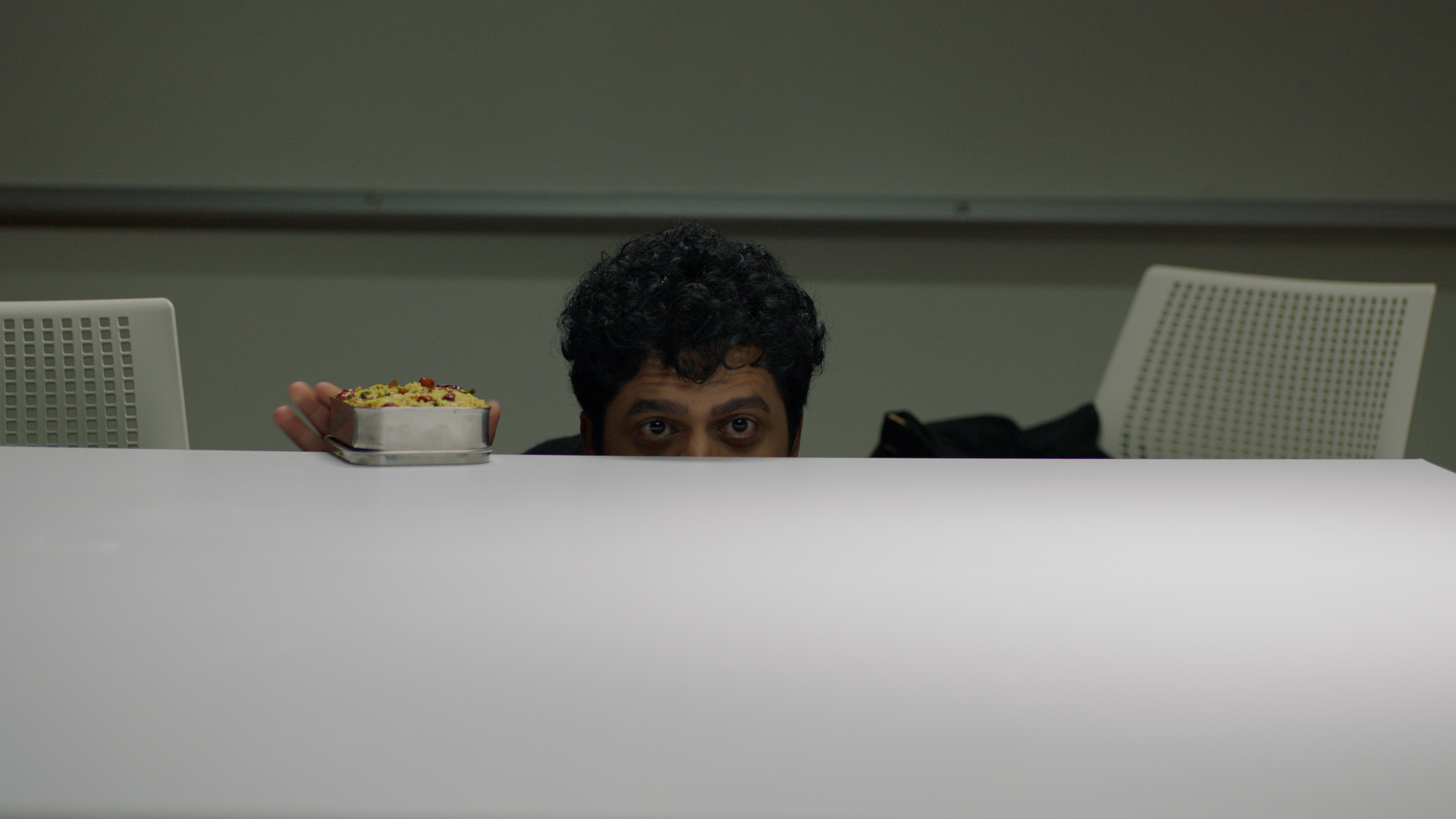
If you happen to be a film fest enthusiast—and assuming you’ve either attended February’s DC Independent Film Festival (DCIFF) or plan to visit the Boston International Film Festival (BIFF) in the coming days where Jam Boy will screen—Jam Boy may be a familiar title. If not, it should be. Having just won Best Picture at DCIFF, director, co-producer, writer, and star of this breezily zippy 22-minute short, Sriram Emani, delivers a deliciously entertaining sci-fi-drama-comedy about (un)belonging in a socioeconomic system that relies on you, but doesn’t want you or care to understand you. The titular Jam Boy is an immigrant coder, also named Sriram, who attempts to earn his way back home to South India from the U.S. in a big-city environment meant to keep immigrants as permanent workers. As Sriram and co-worker Sofia (Kris Sidberry) get closer to understanding their true worth at work and in the larger system they’re caught in, Sriram can either remain resilient or become compliant. Tears may drop either way.
Emani takes Sriram’s individual experiences and, through clever doses of humor, frustration, and somber realities, widens their applicability to the many larger diasporas of immigrants across the U.S. As Emani says himself, “Being needed and yet not fully accepted is not a new phenomenon,” but immigrants for generations traveling here in hopes of better lives experience such dehumanizing treatment on multiple fronts, daily, and for years of their lives—even now, as these ugly, sinister, but subtle components of the larger social structure continue controlling many. Holding the esteemed privilege of having watched Jam Boy twice—and probably thrice soon—I got to chat with Jam Boy’s creative genius on all things about the piece, Emani’s work and creative process, U.S. immigration complexities, cross-cultural understanding, and much more. There’s simply so much to Jam Boy that it requires multiple (enjoyable!) viewings to appreciate fully, with each watch leaving you more satisfied and educated.

BOSTON HASSLE: How did your passion for the arts start? I know you’ve got quite the experience in
dancing, acting, filmmaking, modeling, and even martial arts; was it all a fortunate accident, something dreamed up in childhood, or did the passion begin differently and
somewhere else along the way?
SRIRAM EMANI: I grew up in Mumbai, training in the South Indian classical (Carnatic) style of vocal music. My mom was my first teacher at the age of five, and then I starting taking lessons from a teacher who lived a few blocks away. This is a rigorous style that emphasizes a lot of repetition and grounding in fundamentals before being allowed to move forward. Yet I was drawn to it, and apparently never missed a lesson. My mother still remembers how I’d ride my bike through torrential rain to get to lessons. Yet what I remember most is the feeling. The moment the shruti box would start playing, the sounds of the metropolis outside would fade away.
Later, in undergrad, I stumbled onto videos of So You Think You Can Dance on our institute servers and got completely hooked. I would watch them for hours. At the time, there weren’t any places that I could find in Mumbai to learn those styles, so I tried to create that ecosystem myself. I ended up launching the first ballroom and Latin dance competition at our college festival, Mood Indigo, just to bring those artists to campus. One of the winning teams even stayed back to teach us for a while. But it wasn’t until I moved to Boston that I really found a community and started training seriously in dance. My current instructor, Olga Goncharova, actually choreographed the waltz sequence in Jam Boy and performs it in the film with me, which feels like a full-circle moment.
In hindsight, I don’t think this was ever accidental. Performing arts have always been at the core of who I am, and I credit my mom for catalyzing it. No matter what else I explore, I keep coming back to it. And each time, it reveals something new. If anything, the realization now is that there’s far more that I want to learn than I ever will. One lifetime probably won’t be enough. But I’m okay with that.
BH: How long has Jam Boy been in the pipeline? Is the project born out of general experience, or inspired by specific instances you or someone you’re familiar with encountered?
SE: In its current form, I started writing Jam Boy in late 2024, so it’s been about a year and a half. But the question behind it has been with me much longer.
It really started back in 2007 when I first came to the U.S as an adult. That was the first time I became aware that I was something called “brown,” and that there was already an opinion about my capabilities before I even walked into a room. It felt like the path had already been chosen for me—the right ambitions I should espouse, the successes that would count, and the version of myself people were most comfortable rewarding.
In small ways, I pushed back. I’d try to take some late evenings off to go watch a Broadway musical. I refused to shorten my name for Starbucks baristas to write on the cup. My thinking was, if people can learn to say Schwarzenegger, they can learn to say Sriram. If not for me, then for the next Sriram who walks in. There are a lot of us.
At the time I joked about these things, but over time I started to feel how suffocating it was to constantly perform a version of myself that fit those expectations.
The turning point came during a trip to the Himalayas in mid-2008 with close friends. Our raft overturned on a white water rafting excursion, and we were thrown into the river. For the next several minutes, we were just carried by the current with no control, no sense of direction, just surrendering to it. At that altitude, there was no cellphone network, the oxygen was low, and strangely it created this quiet, almost meditative bubble amidst extreme nature. That was the first time I was forced to stop optimizing for some imagined future and just sit with the present.
That experience became the emotional core of Jam Boy—the illusion of control. You feel like you’re making choices, moving in a direction you’ve chosen and then suddenly, you’re not. You’re already in it, being carried along.
And when I finally sat down to write it, it didn’t feel like I was inventing something. It felt like I was finally giving shape to something that had been building for years.
BH: Did you encounter any issues or resistance from others regarding your project? Anyone who didn’t like that you’re breaking the pattern?
SE: As a first-time filmmaker, there’s an unspoken pressure to pick a lane and make something that is easy to categorize. Jam Boy doesn’t do that. It moves between sci-fi, drama, and moments of humor, and it centers a theme like the model minority experience, which isn’t always widely understood or visually obvious.
That makes it a higher-risk higher-reward choice for festivals and platforms. But the upside is that the people who connect with it do so very deeply, and I personally value that more than anything else. Our experience at the DC Independent Film Festival, where the film won Best Film in its category and sparked a 20-minute long, engaged discussion, showed me that the risk has paid off. We are building a community that really sees the work.
Many South Asian stories are built around visible conflict—family expectations, inter-generational trauma, identity clashes. You can point to the source of pressure. What I wanted to explore was a form of pressure that doesn’t have a clear face. The model minority experience is internal. It’s quiet. It’s something you carry and reinforce yourself.
That makes it harder to dramatize, but also more unsettling. How do you make something internal feel cinematic?
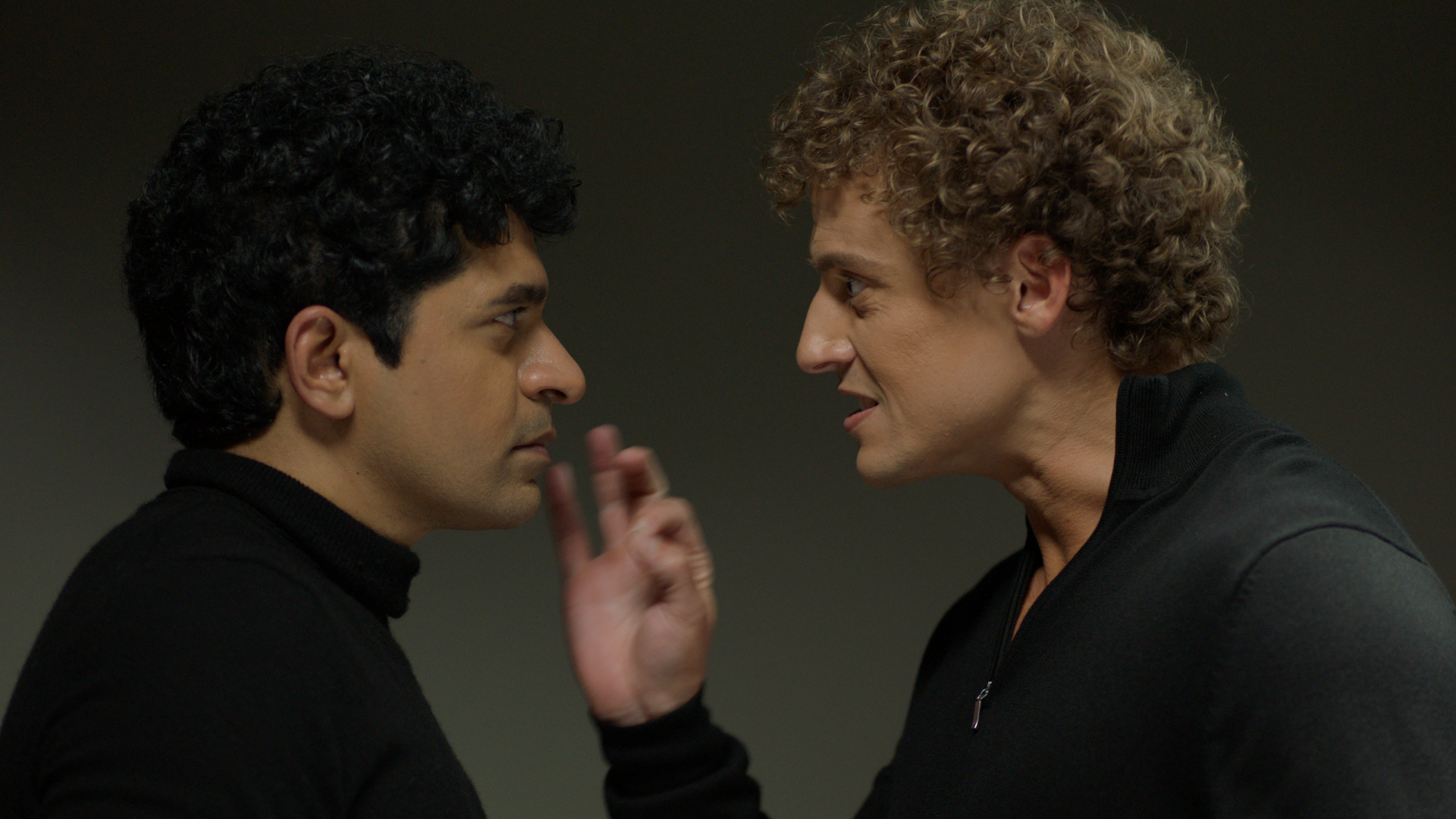
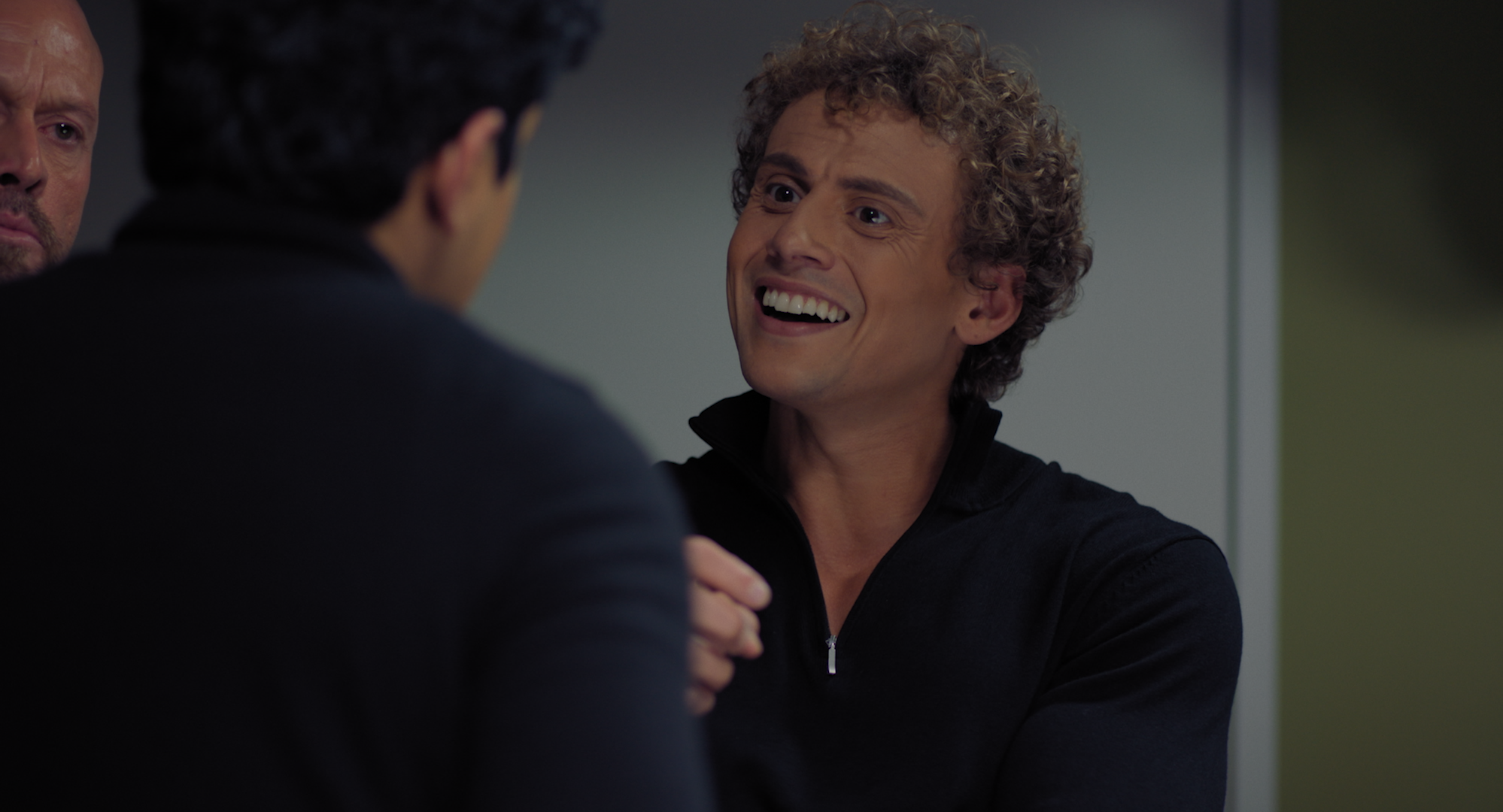
One decision I made was to resist locating the conflict entirely in an external villain, whether that’s a person or a system. Those forces exist, but I was also interested in the role our own insecurities and conditioning play. Initially, some of the lines written for the supervisor character, Niko, made him feel like a caricature. So I pulled that tension inward and created the mirror scene with those lines.
As an actor, that scene was challenging. It required me to sit with parts of myself I would normally avoid. It became a way of holding the protagonist accountable to himself. In many ways, that was the turning point of the film, and it ended up being one of the most resonant moments with audiences.
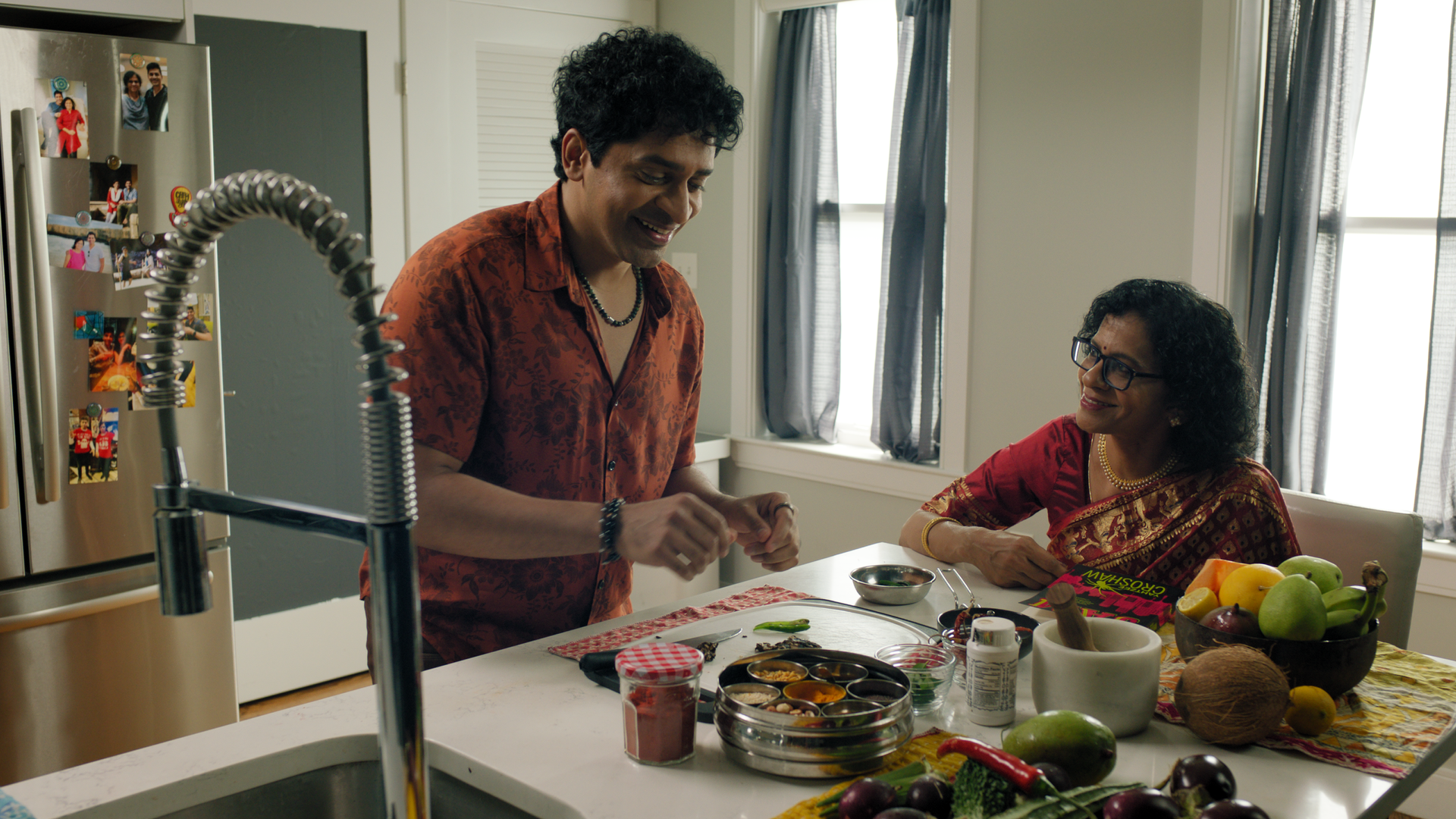
The same thinking shaped how I approached the mother. In many diaspora narratives, I feel that parents are framed as obstacles. I wanted to move away from that. I see mothers, especially in South Asian contexts, as both nurturing and deeply resilient. They carry tradition, but they also have the strength to challenge harmful patterns when they see one. That duality was important to me. Casting my own mom, Manga Emani, made that portrayal feel grounded and real—she has truly embraced this role on screen and in real life.
Ultimately, breaking the pattern as a debut filmmaker is not for the faint-hearted. You give up some ease of entry. But in return, you create space for something more specific, more personal, and hopefully more lasting.
BH: How have the current sociopolitical tensions over immigration affected Jam Boy’s production and your working life in general? What components of both were affected most?
SE: When I first started writing Jam Boy, I had set it in 2060 as a way of saying that, if things continued in this direction, we might get there. As the political climate started shifting, I moved it to 2040. And then within a few months, I removed the year entirely.
If you look closely, the calendar the protagonist uses has no year. It could be the near future, but it might also be someone’s present reality. The distance between fiction and reality collapsed faster than I expected.
At the same time, there were real-world moments that felt eerily aligned with the film – Incidents like Indians panicking and deboarding an Emirates flight when sudden H-1B changes were announced, food racism at universities, and the heartbreaking death of Jaahnavi Kandula, which raised difficult questions about how certain lives are valued.
All of it pointed to the same underlying tension – conditional belonging. The idea that they want your brain but not your food and culture, as the protagonist’s mom in Jam Boy points out to him.
In some ways, it made me feel like the colonial “Jam Boy” never really disappeared, but went digital – millions of techies toiling away for global corporations that we call the Model Minority.
Like many in the diaspora, I believe deeply that immigration must be legal and follow due process, and in the idea that cultures can blend, like sugar in milk, and make it sweeter for all. But what we’re seeing right now is far from that ideal.
The film itself wasn’t directly affected in production. But in my day-to-day life, I’ve seen the impact very clearly. Friends and family hesitating to leave the country, even for important celebrations or to tend to family members who are unwell, because they’re not sure they’ll be able to return, despite having valid documents.
And that’s the question that kept coming back to me while making this film. How can a visa decide whether you get to go home and see your mother?
BH: In a previous chat, you mentioned that Boston relies on immigrants in big industries like tech and media, while at the same time, fewer international students and workers are accepted or allowed to travel here because of the U.S. government’s current immigration approach (not to mention all the ones who continue to get deported). What other major hypocrisies about immigration and immigrants themselves have you experienced, seen or heard?
SE: What’s been interesting to me, especially in a city like Boston, is how immigration in this country is often treated as an isolated policy question, rather than as part of a larger system with second-order effects.
Boston is built on global talent. Universities like MIT and Harvard bring in international students at scale. Research hospitals like MGH rely on them. The tech and biotech ecosystems across Cambridge and Kendall Square depend heavily on immigrant entrepreneurs, engineers, and researchers.
So the contradiction is that the city depends deeply on this inflow of global talent, while the broader system is introducing uncertainty that makes people hesitate before even entering it. Because the system doesn’t just control who gets in. It changes who even chooses to try. And by the time you see the impact, it’s already happened. In the real world, that shows up as people deciding not to come or not to stay. In Jam Boy, it shows up as people starting to reshape themselves to fit what the system rewards.
So the tension, especially in a place like Boston, is less moral and more structural. The city has built itself as a global hub of knowledge and innovation, powered by people coming in from everywhere, while operating within a system it doesn’t control that is now introducing uncertainty into that flow.
And over time, you don’t just lose people—you lose the version of the city they would have helped create.
Screening at the Boston International Film Festival felt especially meaningful because of the kind of dialogue the festival fosters. It brings together audiences who are not only passionate about cinema, but also deeply connected to the industries and institutions the film is in conversation with. That creates a setting where the film’s themes—around systems, identity, and belonging—can land in a more immediate and personal way.
BH: Did shooting primarily in and around Boston help/hinder Jam Boy’s creation creatively, financially, or otherwise?
SE: Boston didn’t just help Jam Boy. It is Jam Boy.
This is a city packed with some of the smartest people on the planet. MIT, Harvard, over 80 universities, a massive tech ecosystem. And yet you keep running into moments where you’re like, “Wait… you can’t be serious,” when you meet people building the future, but living on paperwork that can collapse overnight.
I kept hearing stories that felt almost absurd if they weren’t so real. Founders who can’t legally work at their own startups because of visa rules. Students who did everything “right,” perfect grades, perfect assimilation, only to get rejected and be told to leave. A friend who missed his own brother’s wedding because he couldn’t get a visa renewal appointment for months. It’s this constant low-grade instability sitting under a surface of excellence. That contradiction is the movie.
Financially, Boston made it possible in a very real way. We shot it partly in my own home, which gave us both flexibility and authenticity. Emerson College students joined the crew and brought incredible focus and commitment to the process. My friends and family showed up to support in multiple ways and also be extras on set, so even the background of the film carries real community energy. The production was fully professional, but grounded in people who were personally invested in what we were making.
Boston is what happens when you become a magnet for the best minds from everywhere. But it is also a glimpse of what happens when those same people start feeling like they don’t belong here long-term.
So yes, Jam Boy is sci-fi. But it is also very much a Boston story.
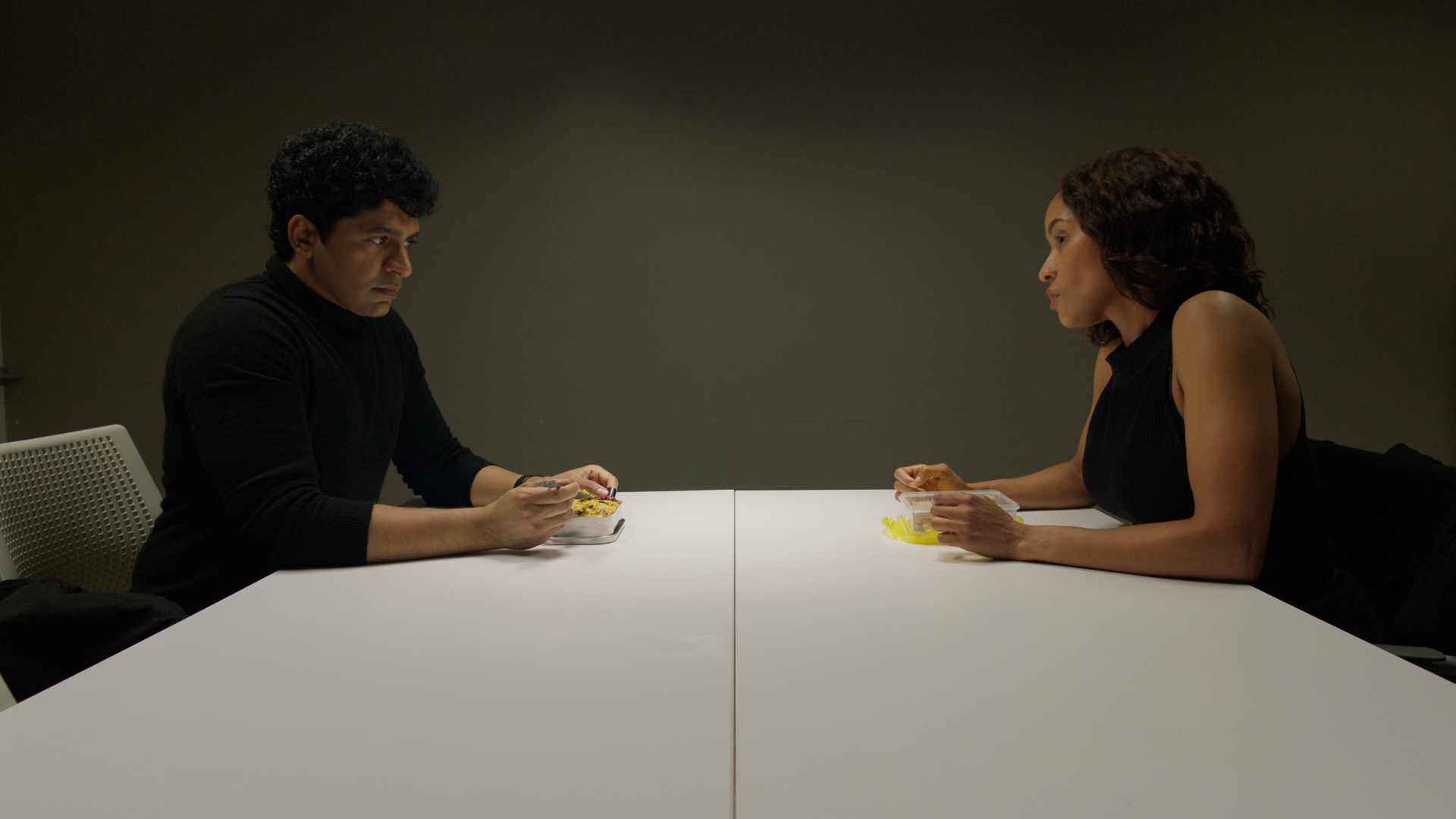
BH: Jam Boy shows a unique world take where AI has been outlawed or forgotten in exchange for, essentially, mind-dulled indentured servants—I mean, fiercely dedicated tech company employees! Do current AI developments fit into what you predict, or do you think it’ll come to harm immigrants, jobs, and communities differently, if it isn’t already hurting them?
SE: AI has kind of hijacked the conversation. It’s become this shiny buzzword that takes up way more mental space than it deserves. The truth is that the dynamics Jam Boy is talking about existed long before AI and will exist with or without it. The model minority myth, conditional belonging, over-optimization of human beings. That’s why I kept AI out of the world. I didn’t want people to walk away thinking, “Oh, this is about that new tech problem.” It’s not. It’s about us.
Technology will always need human minds behind it. And if it doesn’t, then we’re dealing with a much bigger existential problem. But right now, the real question is about agency. The people building these systems are often the same people who feel like they have the least control over their own lives.
Jam Boy is really asking: what happens when excellence becomes a trap? When you’ve been conditioned your whole life to succeed, but never to question what you’re succeeding at?
These are people building incredibly powerful systems, and yet many of them feel completely replaceable within those systems. Their labor, their intelligence, even their identity gets absorbed into something larger that they don’t feel empowered to challenge.
We’ve seen this pattern before. Whistleblowers get ignored or punished, and then years later the damage becomes undeniable and the system reacts. Social media, for example, took years before courts started acknowledging its addictive harm.
So the film isn’t predicting some AI dystopia. It’s pointing at a very current reality. The danger isn’t that machines take over. It’s that humans forget they ever had a say in the first place.
BH: Which industries, specifically in Massachusetts, do you see Jam Boy warning about? Should American college grads of un-American backgrounds worry about job and residential security?
SE: In Massachusetts, you see this most clearly in universities, research labs, biotech, and tech. These are the spaces built on global talent. People come here to study, to innovate, to build a life.
But Jam Boy isn’t really calling out specific industries. It’s more interested in what happens to the people inside them. Because the first shift is never external. It’s internal.

When the rules feel uncertain or constantly shifting, people start adjusting themselves. You second-guess decisions. You play it safer. You start staying within lines that no one explicitly drew. The question quietly changes from “What do I want to do?” to “What is safe for me to do?” And that’s where it gets interesting. The system doesn’t need to force you. It just needs to create enough uncertainty that you begin to manage yourself. So it’s not just about job security or residency. It’s about how that uncertainty gets absorbed and starts shaping behavior from the inside out.
I don’t think the takeaway is fear. But I do think awareness is growing. And once you see it, you can’t unsee it. You start noticing how often you’re editing yourself in real time. That’s really where the film lives. Not in predicting which industry collapses or survives, but in watching how people slowly become participants in their own constraint without even realizing it.
BH: You detail how food keeps in-film Sriram connected to his home and family, and how it keeps him mentally intact given company-mandated food’s mind-numbing effects. Is financial security ever worth sacrificing love and family over, regardless of where anybody comes from?
SE: It’s not a simple yes or no. For a lot of immigrants, the pursuit of financial security is an act of love. You’re not choosing money over family. You’re choosing money for family. But somewhere along the way, the tradeoff stops being visible and starts becoming internal.
You tell yourself it’s temporary. That it’s necessary. That it will all pay off. And sometimes it does. But sometimes, you slowly lose touch with the very things you were trying to protect in the first place. That’s what Jam Boy is really exploring. Not the big, dramatic choice, but the quiet shift in what you value and how you justify it.
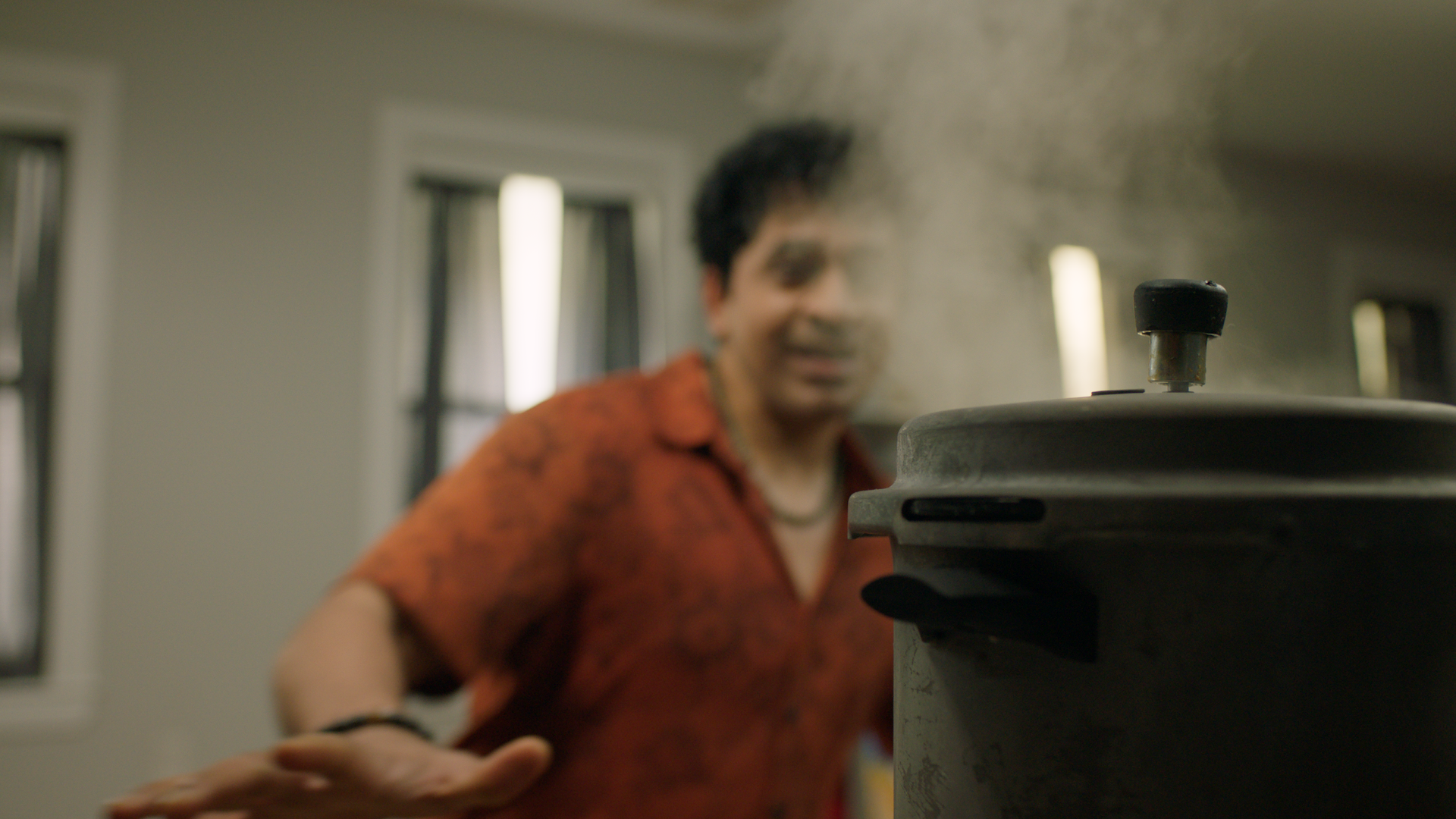
In the film, food becomes an anchor. It’s memory you can taste. It’s one of the last things that resists optimization. You can standardize systems, but you can’t fully standardize feeling, memory, or the way something tastes when it reminds you of home. So the question isn’t just whether financial security is worth sacrificing love or family. It’s how much of yourself you’re willing to reshape in the process, and whether you even notice it happening.
To me, food is the visible outcome of invisible security. There’s a reason it becomes such a powerful symbol. As Padma Lakshmi has pointed out, so many of the foods we take for granted exist because immigrant families felt secure enough to stay, adapt, and pass something down. When that sense of certainty disappears, you don’t just lose people. You lose what they would have created.

BH: You strike an effective balance between different tones and artistic representations throughout Jam Boy. How challenging, creatively and technically, was maintaining that creative balance without losing sight of the overarching narrative?
SE: It was definitely one of the biggest challenges, because the film is constantly moving between tones. You have elements of sci-fi, moments that are more grounded and emotional, and then some that are slightly heightened or even a bit absurd. The risk is that it starts to feel disjointed if those shifts aren’t anchored in something consistent.
For me, that anchor was always the internal experience of the protagonist. As long as everything felt truthful to what he was going through, the tonal shifts didn’t feel like separate ideas. They felt like different expressions of the same state of mind.
There were definitely moments in the process where something leaned too far in one direction, like Niko’s characterization before the mirror scene came in, that I mentioned earlier. Then there’s the spice rap by the mother character, which was initially just regular lines. But it felt like a pedantic Spice 101 course so I wrote it as a Telugu rap.
The scene with Sofia in the conference room did not initially have a conflict between them, which made it feel too convenient and contrived to me. As I thought more about it, I leaned into the underlying philosophical contrast in their characters, and let it play out honestly.
In the end, I think the balance comes from being very clear about what the film is emotionally, even if it’s shifting in form. As long as that core stays intact, the audience can move with you.
BH: What can we all do—immigrant or not—to combat this ferociously anti-immigrant sociopolitical landscape? Does the hope lie in community strength and cultural understanding, or elsewhere?
SE: I don’t think what we’re seeing right now is entirely new. History has a way of repeating this pattern.
You see it with Chinese laborers in the mid to late 1800s, who were essential in building railroads and infrastructure, and then excluded through policies like the Chinese Exclusion Act of 1882. You see it with Irish and Italian immigrants in the late 1800s and early 1900s, who helped build American cities while facing open discrimination. You see it with Mexican laborers brought in through the Bracero Program, and then targeted during Operation Wetback. And you see it with Japanese Americans who were fully integrated into society and then incarcerated during Japanese American internment in the 1940s.
Even in recent storytelling, whether it’s films like Sinners or Train Dreams, you see echoes of that history. And in a different way, someone like Bad Bunny can be celebrated on one of the biggest stages, while the deeper structural realities around the communities he represents remain far more complicated. Different forms, but a similar underlying tension.
Being needed and yet not fully accepted is not a new phenomenon. What changes is who it applies to and how it shows up. What’s different for the model minority today is how invisible the pressure has become. It doesn’t always look like exclusion. Sometimes it looks like opportunity.
Jam Boy is really looking at that same dynamic, but from the inside. Not just what the system does to you, but how you start to respond to it. When your value is tied to how well you perform or comply, you begin to internalize that logic. You optimize yourself. You quiet parts of yourself. You start to believe that your place is conditional. So in that sense, the film isn’t just about one community or one moment. It’s about a recurring structure, and what it does to people over time, not just externally, but psychologically.
Jam Boy is not a prescription but an invitation to recognize that pattern, and to ask where we might be participating in it, even quietly.
BH: With Jam Boy now being a feature script and becoming a finalist at Studio Skyfire Fellowship at Stowe Story Labs, what components do you most look forward to expanding in a full film? How about the most challenging?
SE: We’ve just been selected to two prestigious labs this summer, focused on early development and building a strong dramatic engine for the feature, so I’m really excited to dig in. I’m coming in with a lot of learnings from how audiences have responded to the short, and I’m sure those instincts will be challenged and refined through the lab process. So this answer may evolve quite a bit over the next few months—but where I am right now, I’m really interested in exploring the post-colonial mindset and conditioning that can affect entire generations, and how that can leave communities vulnerable to systems that reward compliance—like the model minority construct.
At the same time, I’m drawn to the idea that the solution also comes from within. How do we build resilience across generations? How do identity, culture, and ancestry become a kind of internal shield?
For me, that connects deeply to elements like food, music, dance, and rituals—the things that ground us, that carry memory, that remind us who we are even when systems try to flatten that. I’m especially excited to bring in the richness of South Asian upbringing and households—the values, contradictions, humor, and texture that I’ve personally experienced—and share that as both homage and authentic representation. I really believe stories land differently when they come from lived experience.
The biggest challenge right now is identifying the right engine for the feature. There are multiple dimensions to this story—it could lean more into present-day sociopolitical reality, or draw more from historical parallels, or fully embrace the sci-fi frame. Each path leads to a very different kind of film. So the key question is: what’s the most compelling spine that can hold all of this? That’s exactly what I’m hoping to workshop and uncover over the summer.
BH: Last but not least: can you cut a tomato without your mother’s help now?
SE: Not only can I cut a tomato now but cook up a full Telugu feast!
During COVID, I made it a personal project to learn almost all of my mom’s recipes over video calls. I think it came from a simple realization: if I can’t always go home, I’ll recreate home wherever I am.
South Indian cooking is not beginner-friendly—as the protagonist points out in Jam Boy, many dishes use at least 5 spices in their tempering. So there were a lot of failed experiments early on where I treated it like a lab protocol, measuring everything precisely and still wondering why it didn’t taste right. But over time I learned to stop measuring so much and started feeling the food a bit more.
Now I can cook multiple dishes, and I’ve started hosting full-on feasts for friends and family. And honestly, there’s nothing more joyful than sitting around a table, sharing stories over recipes that have been passed down through generations. It feels like you’re wrapped in this invisible layer of love and memory—like a kind of ancestral security blanket.
My next challenge, though, is a fun one: getting more of my friends to eat with their hands like we do in South India.
It looks simple, but needs some getting used to. Once you get the hang of it, though, it changes your relationship to food—you’re more present, more connected, and there’s something really beautiful about removing that artificial metallic boundary that cutlery creates.
Bonus BTS:
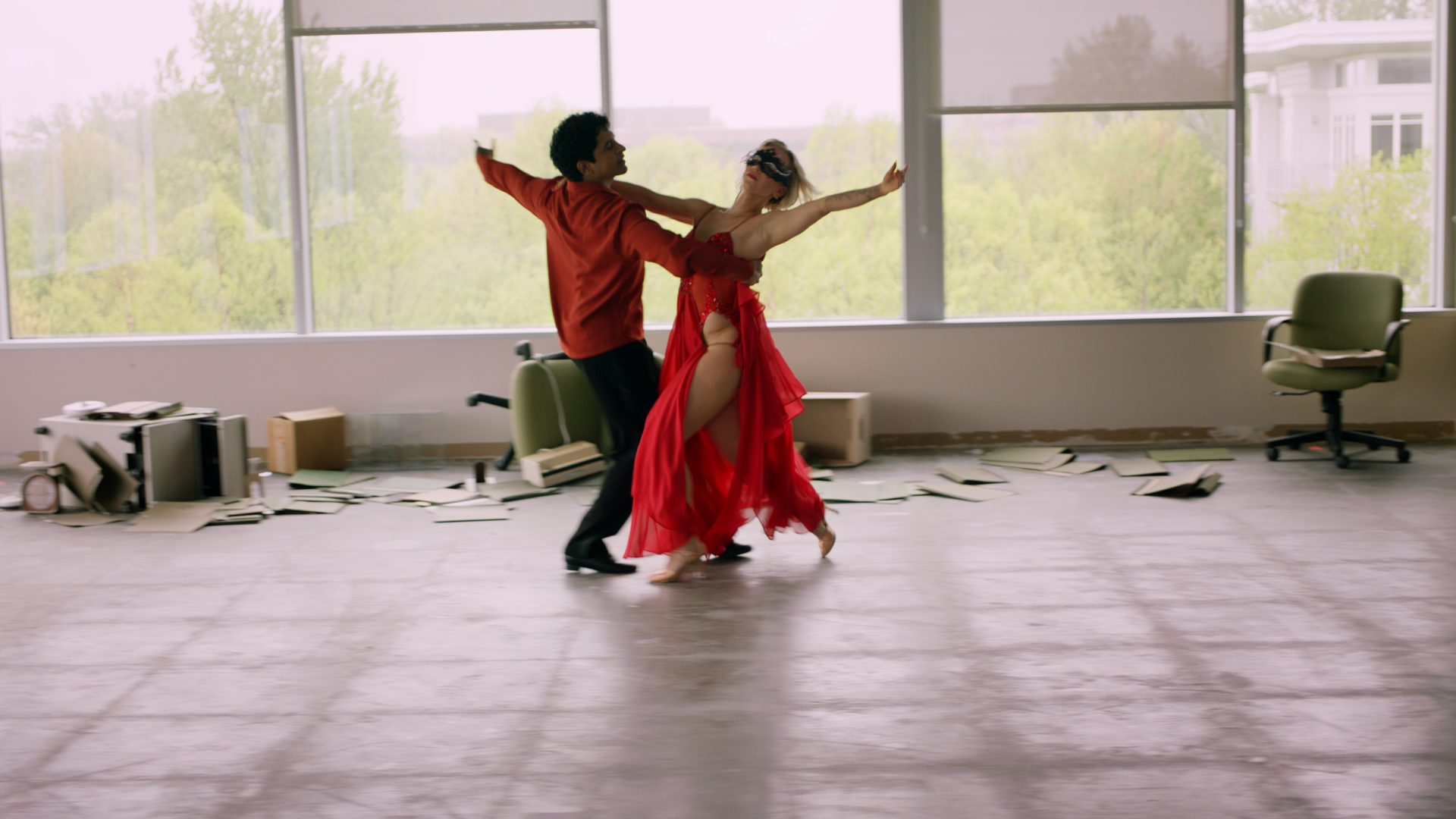
SE: The dance sequence actually came out of a production constraint, which ended up being one of our best pivots. We did not have time for a company move so a few days before production I decided to do the sequence in an under-construction area of our office location.
I also decided to stage it as this free-spirited waltz inside the shell/skeleton of the corporation. Everything around him is rigid and controlled, and then suddenly you have this moment of movement and flow. My instructors Olga Goncharova and Andrew Escolme helped bring in that sense of freedom with a looming sense of urgency before he gets pulled back into his reality.
We made a few very intentional choices. The bright red against an otherwise muted world. The choreography moving toward warmth and connection, while the environment keeps pulling him back. For me, it was another way of taking something internal and giving it a visual release.
And interestingly, I chose a waltz instead of something more culturally rooted. Not as a statement, but almost as a reflection of how deeply the idea of assimilation can settle in. It starts to shape even your imagination.
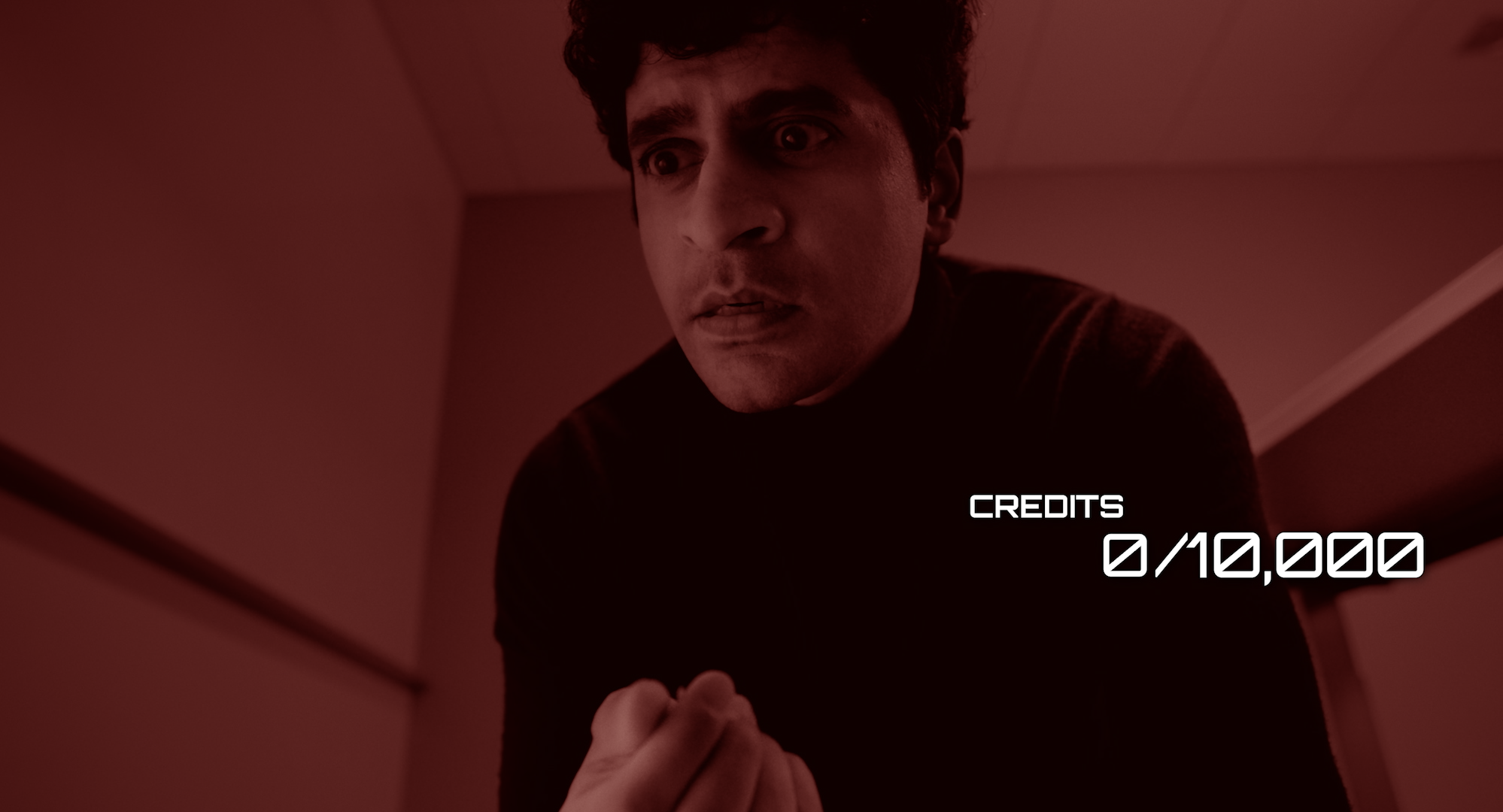
Jam Boy is nothing short of a beautiful sci-fi-drama-comedy blend, but calling it just that blindsides everything it stands for. It’s an illustration of the “model minority experience” in modern, post-colonial, and, unfortunately, American cities, an emotionally all-encompassing portrayal of the pain such system-trapping life brings for all involved, and a universally resonant example of food’s power to connect and comfort us. Jam Boy is also the short film every filmmaker should strive to produce: entertaining art that represents a dazzling mixture of personal experience, cultural understanding, genre blending, and technical prowess that memorably teaches viewers about certain problems, feelings, experiences, or all the above. Immigration problems aren’t going away anytime soon, and nor will general exploitation of the powerless by those in power. But, as Jam Boy and Sriram Emani eloquently remind, breaking that pattern is doable. Too many are already too aware of such potential for the ripples to dissipate. For those looking for an exciting and insightful sci-fi genre-cultural mashup, Jam Boy is a well-paced perspective changer.
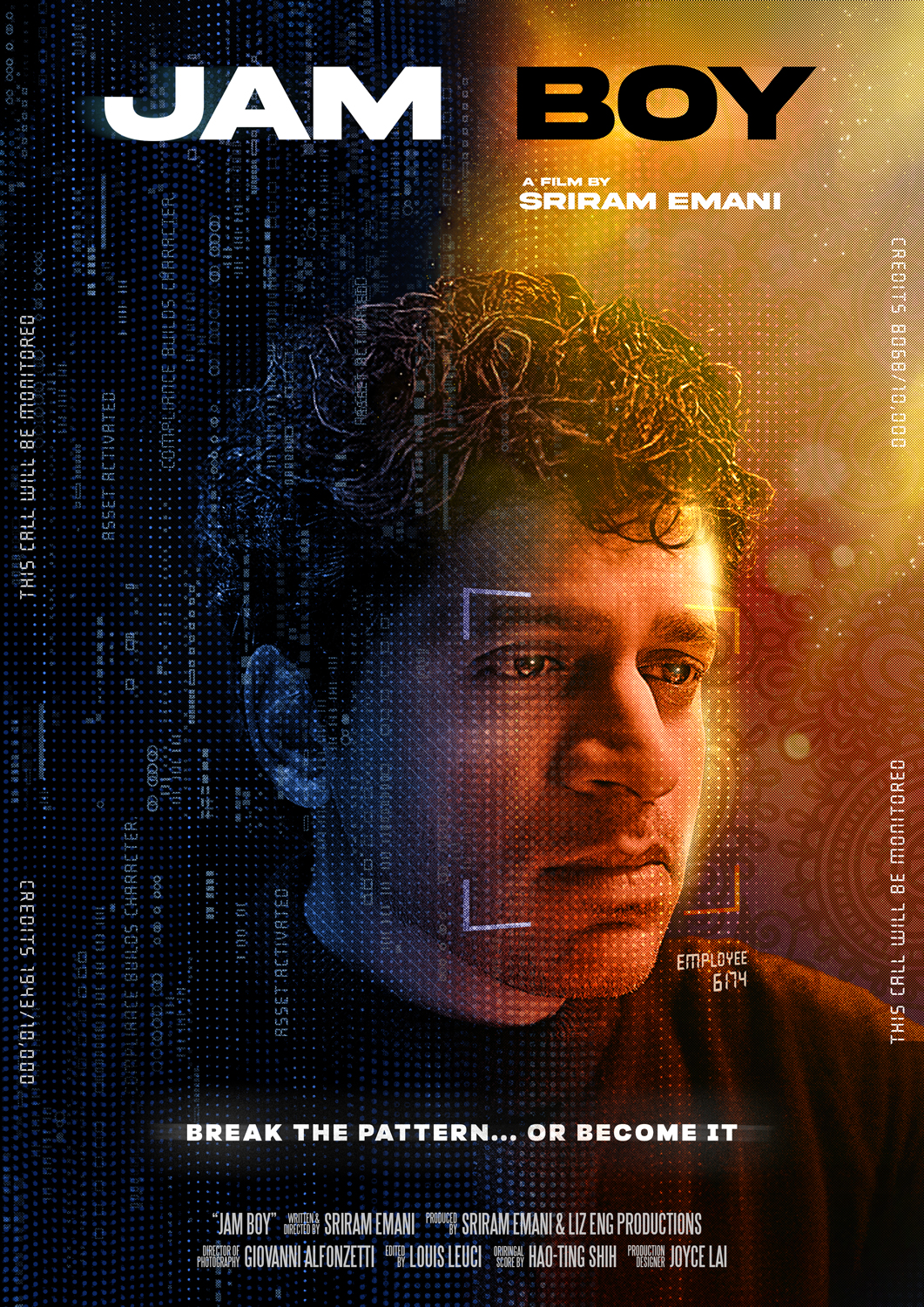
2026
dir. Sriram Emani
22 min
Screens Saturday, 4/11, 5:00 p.m. @ Simons IMAX Theatre
Part of Boston International Film Festival Session 5