What if you turned into a chair and everyone liked you better as the chair? That’s what Amanda Kramer explores in her latest feature, By Design. We caught up on the eve of the film’s Boston premiere to discuss the chair, choreography, letting go of disbelief, and the world of fantastical thinking. Enjoy!
BOSTON HASSLE: By Design premiered at Sundance last year, and the logline was just, “Juliette Lewis turns into a chair.” I was confused until I saw who directed it. I understood where it was coming from.
AMANDA KRAMER: One weird brain.
BH: I felt like this was taking place in the same city as Please Baby Please, where this is just down the street.
AK: The Amanda Kramer mind is one block, really.
BH: Exactly. Down the street, Demi Moore’s over there. It’s all connected.
AK: Thank you. Wouldn’t that be a great film? They’re all together just going to the laundromat.
BH: So, which came first? The concept for the film or the chair itself? Did you see a beautiful chair and think, “It deserves a film?”
AK: No, I wish. Wouldn’t that be so amazing? No, the concept came first. As a writer that would consider herself an absurdist, working in sort of abstracted realities, the idea came sharp and fast. I laughed. I don’t know, I tickled myself. I felt my wit sort of being stroked. That’s such a good starting place, to entertain oneself. To feel an idea immediately brings forth other ideas. The thing with Please Baby Please is I’m doing something like an exploration of a marriage. I’m doing an exploration of gender. A totally different thing. That’s about like, where can I go? How can I unfurl this universe? A single idea that makes you feel a way is exciting, because they’re rare.
BH: That’s what I thought with Give Me Pity, too, where it’s the variety show from hell. It’s just her spiral. I think this is a very different kind of spiral. Did it take Juliette Lewis some convincing to play the chair?
AK: Absolutely zero.
BH: Yeah, obviously. I don’t even know why I asked it like that. Obviously, you ask Juliette Lewis, “Hey, do you want to be a chair?” She’s like, “Yeah, sure, where?“
AK: It was almost exactly like that. What I love about Juliette is she wants a challenge. I’m sure all the time she’s getting scripts that are similar to the characters she’s played before, and played beautifully. I think for a while she was probably getting a lot of Natural Born Killers style scripts. And she was like, I’ve done that. And I did it so brilliantly. It’s cool to be able to say, here’s something you’ve not tried, and would you like to try it?
BH: That’s what I love about her. I was so shocked that she even did a second season of Yellowjackets. People were like, “Oh my gosh, I can’t believe her character is gone.“ There was no way she was sticking around. She came in. She wanted to do this. She’s like, okay, next, please. And then obviously, here comes By Design.
AK: She is inspired by a gut instinct. She’s pulled toward projects because she can do something that excites her, not necessarily because the project has names everyone’s looking for. She is looking for the thing that is calling to her.
BH: That’s why she’s amazing. And which is why it’s so interesting to place her in a film where she’s lying on the side of a bed for most of it.
AK: She does a lot of lying. Yes.
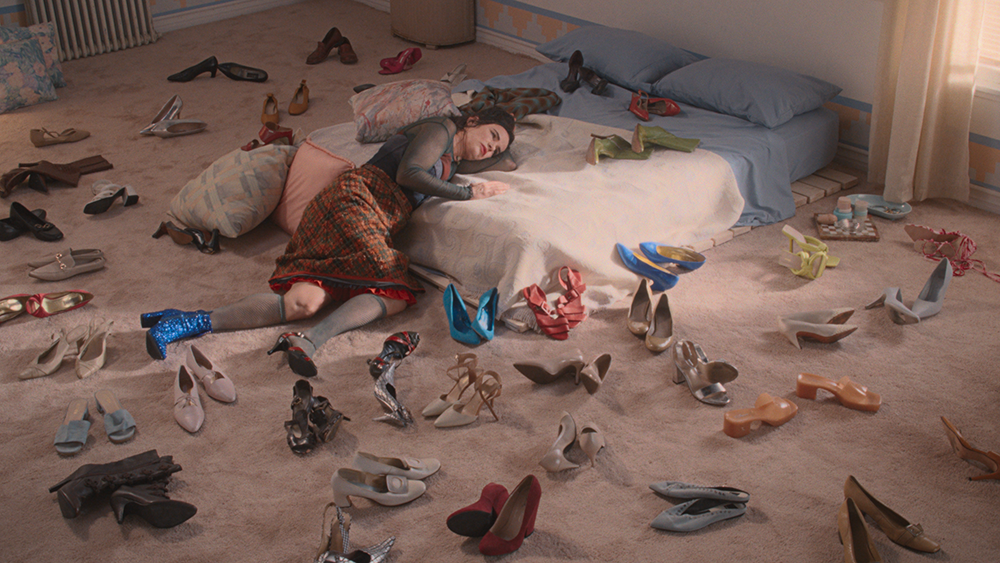
BH: Can you talk more about the divide between chair Camille and real Camille, who’s left behind comatose? How do you approach the blocking of these things?
AK: So on a day where Juliette is a chair, she would come in and she would get in the full hair and makeup costumes. We’re ready to do the scene. We’ve already blocked with the other actors who are animate characters. And I say to Juliette, “Here’s where you will go in this general area. How can we move your body? You definitely need to stay still, and you definitely need to be in this position for quite a long time. What is comfortable to you? Can I arch you? Can I prop you on a pillow?” But Juliette is a dancer, and she has the mentality of a dancer, and she wants her legs and arms and head to be in an exotic, erotic, specific, particular, unique position. She doesn’t just want to lay there, and she doesn’t just want to approximate the chair. She wants to use a dancer’s body. So it was always exciting to see a way that she could somewhat contort herself while staying still and not in too much pain. Though I’m sure she went home some nights and was like, “Fuck me. I need a bath.”
BH: The other part of it is, the main character is still in her human body and still as a chair, but there’s so much movement and dance around her. And it’s what the chair compels them all to do and feel. Can you talk about the choreography?
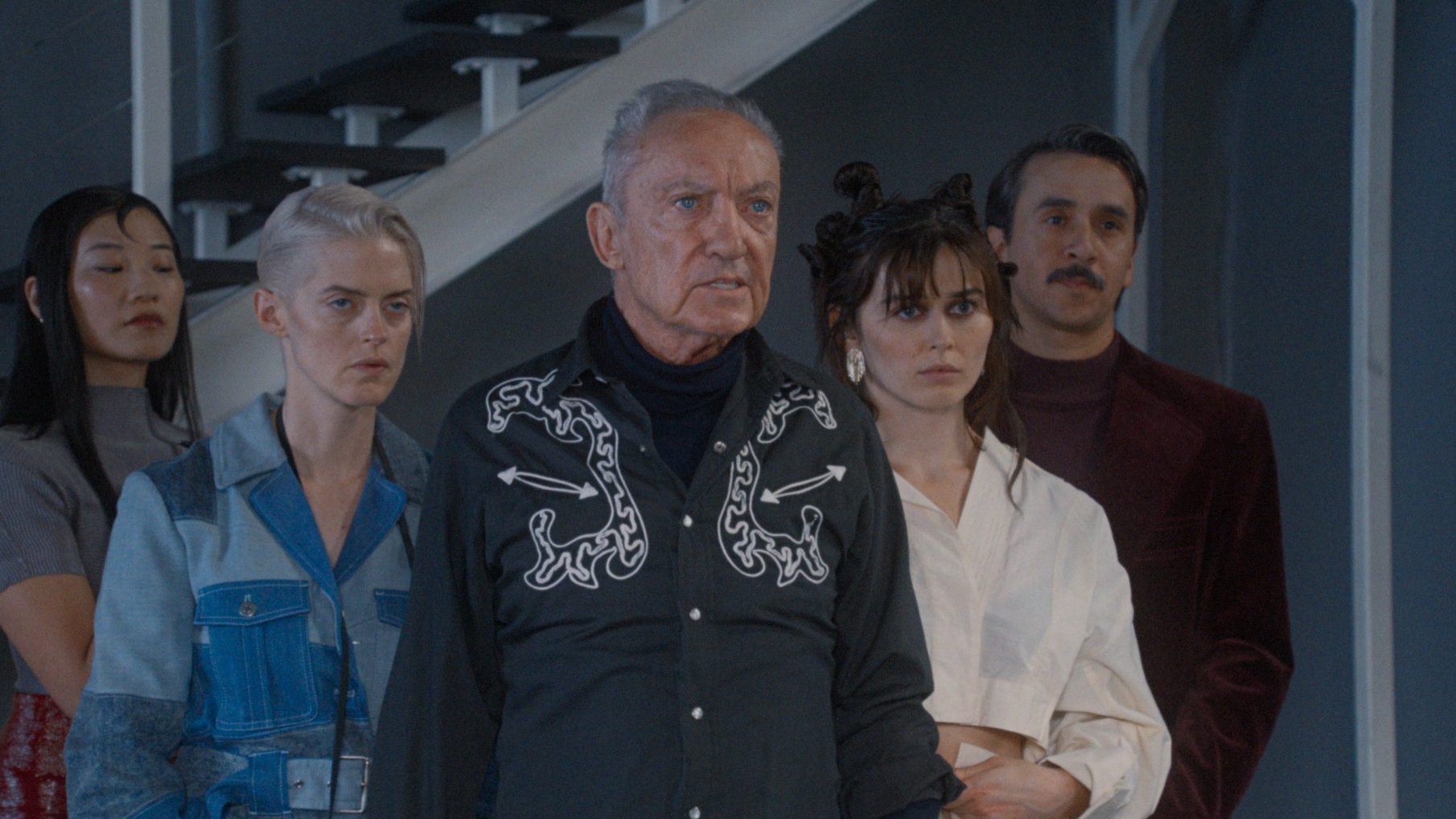
AK: Yes. My choreographer’s name is Sigrid Lauren. She is absolutely brilliant. She’s based in New York City. When I started talking to Sigrid, I said I wanted something romantic, somewhat balletic. I definitely wanted it to feel almost like The Red Shoes. I wanted it to feel like a love story. I wanted it to feel like Swan Lake in part. You know, I wanted that sensation of romance that comes over you. It transforms you. It takes over your body, your mind, your soul, your heart, and it makes you feel like you’re floating. These are the energies I’m looking for. But of course, with Sigrid’s style, which is such a signature, we’re also doing modern and more abstract, conceptual dance. So we went piece by piece and we just talked about the emotions that we needed the characters who were not dancing to feel. And then we helped our dance troupe to become those emotions through their bodies. Mamoudou [Athie], you can tell in scenes where he’s dancing with the dancers, he is doing very little. They’re moving him and they’re dancing around him, and they are like the sprites of his inner demons. His nightmare realized.
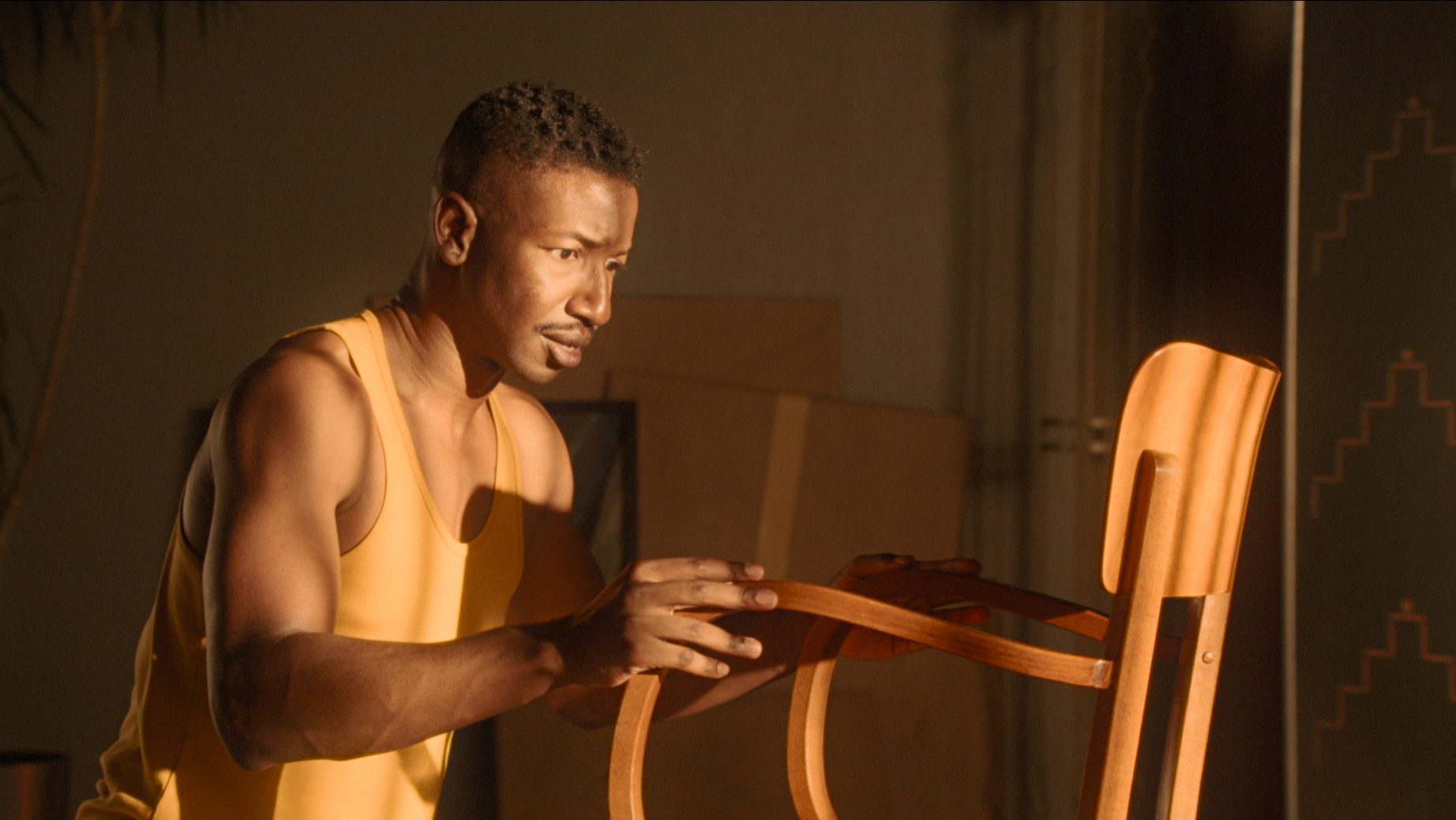
BH: The challenge of working around an inanimate object that drives everyone to madness in this way. There’s so much monologue in this movie, just by necessity, because half of them are talking to a comatose Juliette Lewis. How do you do that?
AK: There were days, honestly, where she was laying there being like, “I have to cover my face because I have to laugh.” Laying there opposite Samantha Mathis and Robin Tunney is quite difficult, because they’re so funny and they’re very close to her face. So it requires a lot of allowing your mind to go. Allowing your mind to leave your body because you need to embody the stillness, since they need to work off of your stillness, where the humor comes from. It’s about how intentional and intense they’re being towards someone who is providing them with absolutely nothing.
BH: It’s like they’re talking through themselves and filling in the blanks with what Camille would be saying if she were there, but they’re also just like, “You’re such a good listener!” It’s like no one really cares. It made me think of Dougie Jones in Twin Peaks, where everyone’s just kind of rolling with it.
AK: Well, there’s nothing wrong with her. She’s barely being different. I think she also prides herself on being a good listener. She still has an opinion because she’s a person, but once you take the opinion out, of course they like her better. Now she’s a better listener because she isn’t also someone with something to say, which is a sad thing to say about humanity, but it is something I feel is true.
BH: Yeah, there’s zero friction. Even when she is half considering buying the chair, her friends can’t handle it. It just completely turns them on their heads.
AK: Yeah, stressful way for them to be living. Sometimes your friends know you so well, they tell you that you wouldn’t do a thing because they know you wouldn’t do it. And you’re boxed. You’re boxed in the memory of yourself, like the way that they see you is somehow the role you start playing. Freud called that repetitive compulsion. And he got there first, you know? He got there first. I came much later.
BH: So where did you get the chair? Is it a bespoke chair? Is it from your fantasies?
AK: We did not make it. We bought it from France. It’s a beautiful chair. I have one. Lucky for us, we got two. Juliette has the one that is perfect. I have the one with the blemishes. It’s in my living room and I look at it every day. It means something so different now that it is a star of one of my films. I live with one of my actors.
BH: I’m always interested in how you approach dialogue, where there’s a lot of monologuing, but also a lot of expression. The sort of language they use is a bit askew in an interesting way, but recognizable as human. Can you just talk about your world? This is the Amanda Kramer brain world, I assume.
AK: Well, I went to Emerson in Boston. I studied theater there. I studied playwriting there, and just writing in general. I come from a rich tradition of thinking about dialogue over all else. That is my approach to screenwriting. I’m not the person who’s going to think about the action sequences, or even the plot machinations. I am there to really speak through speaking. And much like other heavy dialogue-specific writers– the Coen Brothers, Tarantino, Wes Anderson– it’s like you create a language by allowing your actors to speak your way. You create a tone. That tone is across all of your films, if you’re lucky or crazy, which I think I am. I hear people say things all the time and I don’t know if they realize that they’re being so theatrical. And I don’t mean dramatic theatrical. I don’t mean they’re being wild or over the top when I say that. I mean they sound so stalled, and I’m so compelled to that. There’s a Canadian-ness to it. That’s a weird way to put it, but if you watch a Canadian television show or Canadian soap opera, everybody is so mannered, and the way that they speak is so mannered and slow and specific and earnest. I think of that as such a unique and provocative tone. Our parlance is tons of slang, half words, half ideas, trailed off thoughts. But there’s a Canadiana that is mannered and specific. People are saying what they mean, but they’re also meaning something different than what they’re saying. And that is what I’m always looking for. That is what I’m attempting to achieve in my dialogue.
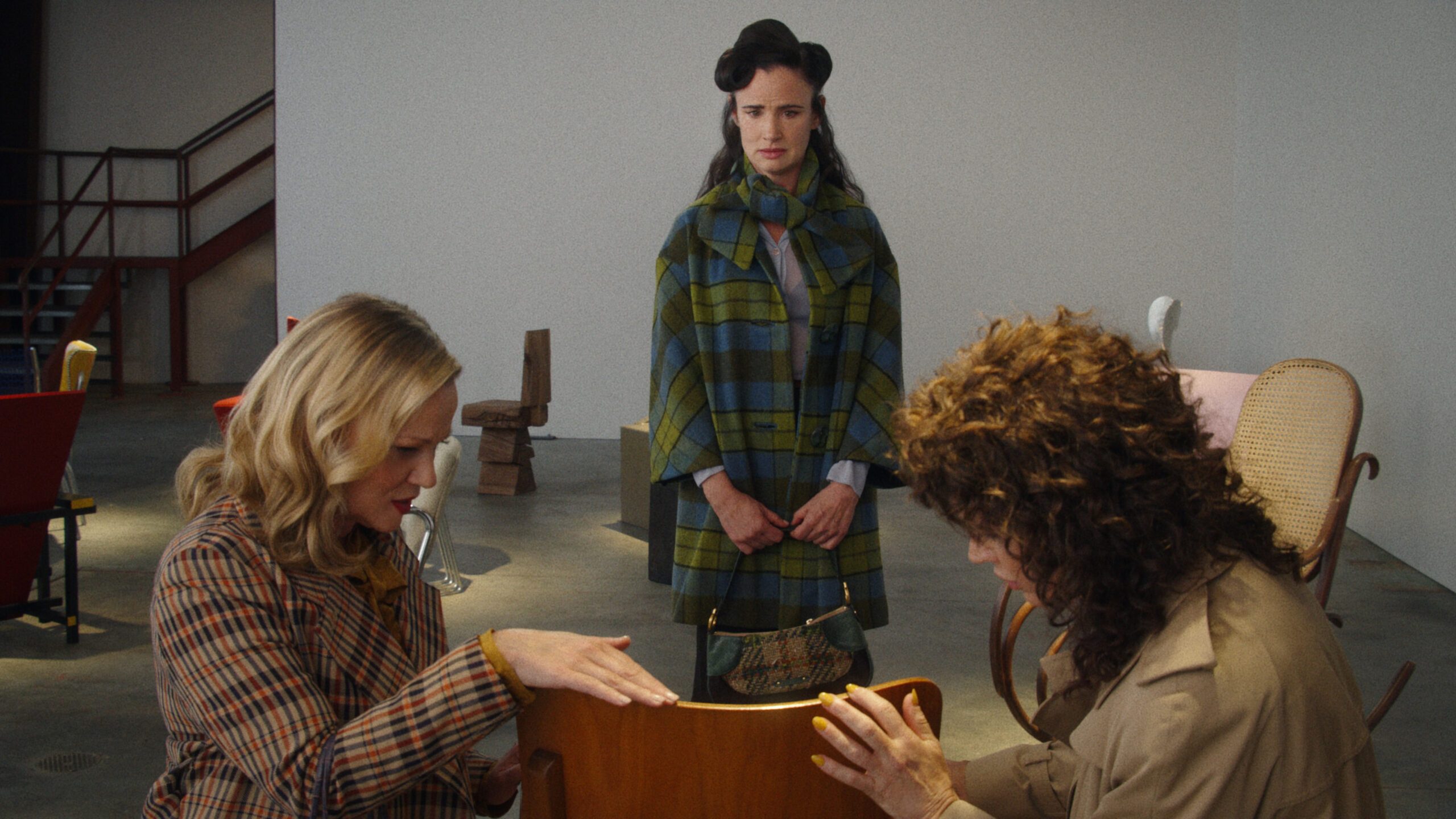
BH: I love the costuming as well, even outside of the beautiful chair. Just really nice coats.
AK: We work very hard to create full looks that are, like you said, it’s our planet, but not these uncanny ways of dressing and styling oneself that most people just wouldn’t do on a daily basis. But you see it and you really feel personality, you feel character. It’s like coming off of the person because of the coat that they’ve chosen. That kind of attention to detail is so exciting to me.
BH: Nothing in the film feels thrown together in that way. That’s what I like. Just how deliberate it is about something so absurd that you have no choice but to buy into it. It’s being presented as fact that her consciousness is in that chair.
AK: Exactly. We’re doing it. So if we’re doing it, we’re all doing it. It’s funny if you’re going to believe anything. I mean, you’re going to believe E.T. Like, what are you going to do? Sit and watch E.T. and every couple seconds go, “I don’t know if aliens are real?” It’s like, what are you doing? It’s the same thing with a movie like this. Fantasy is a relationship you enter into and you shake hands and you say, “I’m going.” With costumes, hair, makeup, set design, you’re helping a person along the way to let go of whatever. Their earthly thoughts. The thoughts that keep them rooted in reality. And you get to take them on the flight.
By Design
2025
dir. Amanda Kramer
92 min.
Opens Friday, 2/13 @ Capitol Theatre (Arlington)