
A Woman of the World is an astutely funny, occasionally modern, and culturally critical silent comedy about a femme fatale swooning her way through a middle-class, provincial, midwestern U.S. town. Based on Carl Van Vechten’s 1924 novel titled The Tattooed Countess, Woman of sheds Van Vechten’s grave romantic tones for those of lighthearted rom-coms (even if the result can feel a bit thin in A Woman’s lack of character work or intent beyond the Europe-v.-U.S. cultural clash). The film follows Italian Countess Elnora Natatorini (Pola Negri) after she stumbles upon her cheating French husband—a stinging betrayal discovered very shortly after she gets a forearm skull-and-bones tattoo dedicated to her man. Disgusted, Elnora travels to the Midwest to visit her by-marriage, heavily mustachioed, hardworking, goodhearted cousin, Sam Poore (Chester Conklin), in a multi-state town called Maple Valley. Hopeful to escape her European regrets, her “loose” way of life from Americans’ view—from her smoking cigarettes and having a tattoo to drinking and openly seducing men—sparks rumors and disdain like wildfire. The newly elected, goody-two-shoes District Attorney, Richard Granger (Holmes Herbert), actually confronts her about her un-American (un-uptight) actions, only to fall for her narrow-eyed gaze, sly voice, and seductively chaotic energy. As she becomes more well-known, others become similarly infatuated with the Countess. As Elnora’s upper-class European values continue clashing with middle-class American ones, her social and romantic actions become more sociopolitically moving than Elnora may intend. Whether that’s beneficial or divisive is for Elnora to hammer out, with a town’s entire outlook and her current lifestyle put at risk.
Pola Negri is the femme fatale archetype, and A Woman of the World’s driving force is her work as European royalty. While A Woman would benefit from deeper character work for the Countess beyond being loveless and foreign, the Polish Negri exudes everything such a trope fulfills. Irresistible charm, self-assuredness, and a slight touch of aloofness given the unfamiliar environment she’s now in are just some of her quirks: “I am so glad you came to save me from Water Works—I almost drowned!” she amusingly feigns to an increasingly sullen Richard, who she forgot built and owns that utility company. But she’s considerate and kinder than one might expect of a femme fatale; at every instance she’s made aware of her actions’ consequences, her eyebrows scrunch together in a mouth-like frown as she consoles how she can: “Forgive me… I forgot you built the Water Works. Please show me you are not hurt,” she almost immediately rebuts to her own unawareness. With every cultural difference, individual oddity like Sam’s mustache-protecting mug, and interaction with the town and its gossipy bunch, she carries herself with a similar vain, reckless, but unexpectedly somewhat thoughtful gait, making for a stone-solid female protagonist to laugh with/at and relate to. She’s an unusually free-thinking female character for century-old moviemaking.
Conklin as Sam also deserves much praise for his zany take, as he fills dear ol’ Mr. Poore with a slapstick look on life that nonetheless retains much integrity from years of belittlement and overworked fatigue. The rest of the cast also does a fine job. Visually, A Woman of the World is pleasurably luxurious, from its high-arched set design and chic costumes to its clever use of visible metaphors and symbols. Plus, as director Malcolm St. Clair does in much of his work, the high-class-European-v.-middle-American component is used to humorous effect, so every criticism of the U.S.’s more constrictive social, economic, and gender structures is as insightful as it is hilarious. While more could’ve been done to address cultural separation below the upper class—e.g., realistic cultural exchange among the working majority—the humor helps the cross-cultural examinations feel more digestible, especially as Granger’s integral role in that eventual overlap becomes apparent.
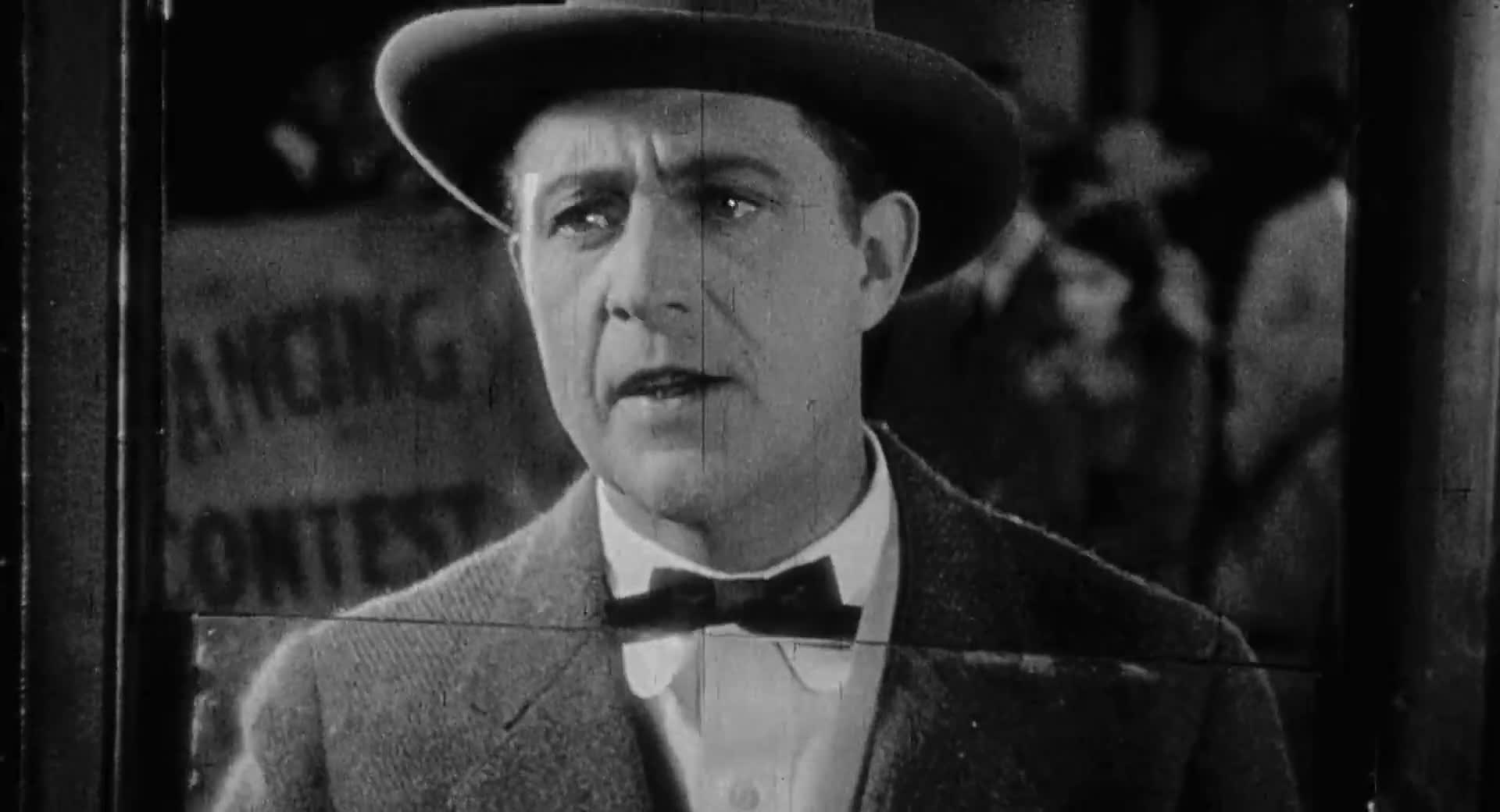
Granger, portrayed by Herbert as morally driven and hesitant, instantly falls in love with Elnora. As he tells her upon their first meeting, “Hey! You with the cigarette! We don’t want any loose women from other towns here,” only for her to give a devilish smile as she pulls more, his cheeks drop and eyes widen in awe. As much as the District Attorney in him feels legally obligated to denounce her from the get-go—which he eventually does, believing he needs to “drive her out of town” and proclaims as much to the public and other officials—he can’t help but want her as close as possible. As his fondness grows, so does his moral contradiction. He must give into the idea that not only is he in love, but that the Countess’s lifestyle, demeanor, and choices are merely different instead of disreputable, as does the rest of the town to a lesser degree (“She did it for the man she loved!” says the entire town over, with Richard and the rest beginning to empathize instead of outright shun). Thus, their relationship also reflects the cross-cultural acceptance and semi-American assimilation necessary for the Countess to live as she wishes. If even the District Attorney cannot understand these meaningless differences, how can anyone else? Elnora herself says in confrontation to the film’s opening cheater, “[I am a] woman of the world, yes; but not the world’s woman!” and the District Attorney’s merely another man she must prove that to. His feelings, fortunately, make him an easy target, as acceptance and resignation from his esteemed public position become givens when his love swells beyond control.
Overall, while more work was needed to make A Woman of the World a class-act in early age, refined comedy cinema, it’s got more than enough heart(break), humor, visual splendor, and emotional distress for silent cinema fans and Pola Negri diehards. Plus, with the raw rock band Pearl Jam’s hit Vs. and Vitalogy albums, A Woman of the World will only intensify with every argument and literal whip-crack that dances across the screen—making this ripping media collaboration that much more of a core-rattling thigh-slapper for those looking for some century-old humor and femme fatale hubris.
1925
dir. Malcolm St. Clair
75 min.
Screens Thursday, 2/26, 7:30 p.m. @ Somerville Theatre
Synced to Pearl Jam’s albums Vs. and Vitalogy and presented by Silents Synced