
The Boston Baltic Film Festival runs from Friday, 2/27 through Sunday, 3/1 at the Emerson Paramount Center, and through 3/23 virtually. Click here for the schedule and ticket info, and follow along with my multi-outlet coverage at the Boston Hassle and There Were No Gods Left.

Flesh, Blood, Even a Heart
“Why is dying such a clusterfuck?”
That’s what Liv (Ieva Segliņa) reluctantly asks her husband Marcis (Gatis Maliks) after her dad dies in Flesh, Blood, Even a Heart. Coffins are ugly and expensive, everyone at the hospital seems hellbent on making things harder, and even the washing machine “dies” on her. Liv’s father wasn’t a particularly good person, but there is a complicated sadness in his passing. More than a fair share of that melancholy comes from the past too, a past that neither erupted nor was forgiven while he was still alive.
As Liv processes her ex-pornographer father’s death, it’s her relationship with Marcis that captivates director Alise Zariņa. We’re introduced to them during couple’s therapy with a physical exercise that cinematographer Mārtiņš Jurēvics shoots with a similar vulnerability and closeness as a sex scene. It also happens to feel a lot like the bathroom sex they have later, with close-ups on their physically touching body parts (the same parts even). Even the sex isn’t quite right, and Marcis stops things early so his daughter won’t hear. He shields her from “trauma” at the cost of an increasingly cold shoulder to his wife. They love each other, but something is missing. As the world around her crumbles, she can only find blame in herself. They don’t kiss anymore, and Liv has creeping insecurities about her own beauty. Does he not find her attractive anymore?
Marcis has his own problems to keep him occupied. In his childhood, he was an acclaimed dancer in Latvia—and his mother’s recollection of this past embarrasses him; in adulthood, he has abandoned dance for pretend sword fighting. Swords are more masculine than the dance floor, his deeply ingrained gender expectations must tell him. Is he man enough? The irony, of course, is that medieval cosplay and competitive dancing are a lot alike with their special clothing, precise and rehearsed movement, and a required partner to vie. Just as with the therapy and sex, the cinematography corroborates the similarity between the dance and sword games with full-bodied wide shots and background spectators.
Both insecurities contribute in their own way to the film’s political relevance. The premiere fell on Latvia’s Independence Day and the personal pasts of Liv and Marcis frame their country’s political past. The relationship between Liv, a younger woman, and her fossilic dad, who clearly traumatized her in the past, mirrors many modern Latvians’ own reckoning with the Soviet past. The brutalist architecture of the hospital is another reminder of the old system and leads her astray when she visits her dying father, as if, from the present, the past becomes an impossible to read map. When Liv humorously quips, “I don’t want anybody to die– besides Putin, probably,” she materializes the political angle from subtext to text.
Things aren’t perfect now, either. Liv’s frustrations with the modern healthcare system are not frustrations stuck in the Soviet past. Marcis’ own masculinity-themed struggles are also birthed from political realities. Latvia has one of the highest women-to-men ratios anywhere on the planet, arguably contributing to a perceived need for men to “perform” masculinity. And perform he does.
Flesh, Blood, Even a Heart is a thematically rich film with no easy answers. Life is complex, and so too are the relationships that make it so wonderful in the first place. Emotions arise, simmer, and dissipate at both slight provocations and major life events—and that’s something Zariņa has her thumb on. In a world where simple narratives and social media platforms push black and white dichotomies, stories like this bring back nuance.
Fränk
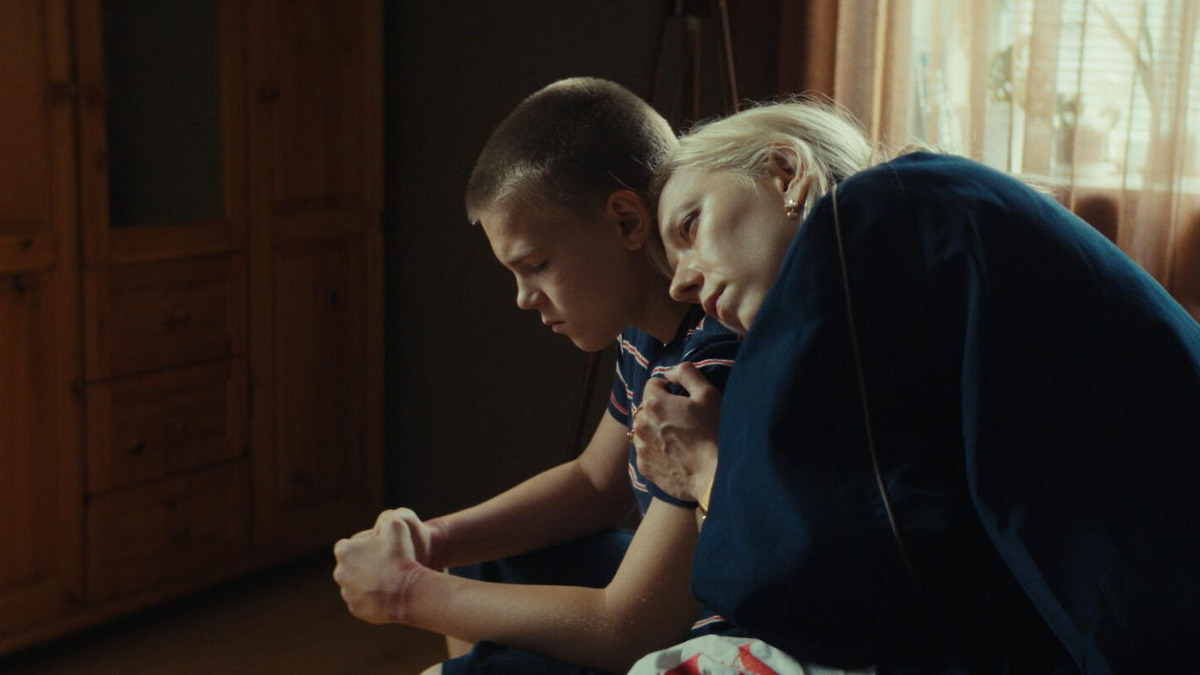
Frankenstein is everywhere these days. From Guillermo del Toro’s star-studded Netflix flick to Maggie Gyllenhaal’s more stylish The Bride!, the monster of Mary Shelley’s Frankenstein has returned in full to the movies. Estonian director Tõnis Pill brings the jolly monster to the Baltics in Fränk. Sort of…
Fränk is not actually an adaptation of Shelley’s novel, though there are monsters and a character named after Frankenstein (in the grand tradition of everyone thinking that is the monster’s name). Fränk (Oskar Seeman), whose real name is Sasha, is a towering disabled man with a slightly disfigured face and a glowing smile. The small town delinquent kids think he is a monster, hence why they (mis)name him after the canonical science-fiction beast. They are the real monsters. The gang of middle schoolers degrade him, beat him with sticks, and even mercilessly dump a bucket of paint on him from above in one of the film’s more heartbreaking scenes.
The real main character is Paul (Derek Leheste), a newcomer to the rural Estonia town after moving in with his uncle for the summer. He likes to play harmonica and quickly latches onto the other young boys in town. They are not good influences, to say the least, but gang-leader Jasper (Tõru Kannimäe) is the worst of them all. When they aren’t bringing misery to the innocent disabled man, the 13-year-olds pass their days drinking alcohol and huffing glue. The bluesy instrumentation of Paul’s harmonica (and Markus Robam’s score) sonically separate Paul from the others by always sounding just slightly out of place.
It would be too peturbing for belief if it weren’t for the introductory text in the beginning that “this movie is based on real stories,” which itself comes right after a warning of depictions of “children disturbing the public order.” This is a fatalistic film. The boys overdose on drugs, ponder homicide, and attempt suicide. It’s also one of those rare films which, despite having a cast full of children, are difficult to call a “children’s film,” for no reason beyond the depictive callousness of the world.
The acting across the board is stellar. Pill apparently has the chops to direct children, which isn’t something every good director can pull off. None of the kids feel like they are acting, and that helps keep the misery melodrama alive. Seeman clearly is a very skilled actor too; his very legible and moving facial expressions could have easily been lost beneath the heavy cosmetics. There’s also something a bit yucky about the performance. He is an abled-bodied man in disabled drag (for the second time in his still young career after Faulty Brides, I might add). That trend needs to stop here, because he is too talented to waste his skills ignobly.
Fränk is a difficult and dark watch, but seeing it a second time I was fixed by how much more hopeful it felt. Nobody is unlovable, not even the film’s worst offenders. The same scenes that frustrated me the first time, moved me the second. I’m also excited to see it on the big screen for the first time at the film’s North American premiere at the BBFF.
Hopefully Pill is right about that, and the worst monsters in our world can still find a little love in their hearts. We need that right about now.
Borderline
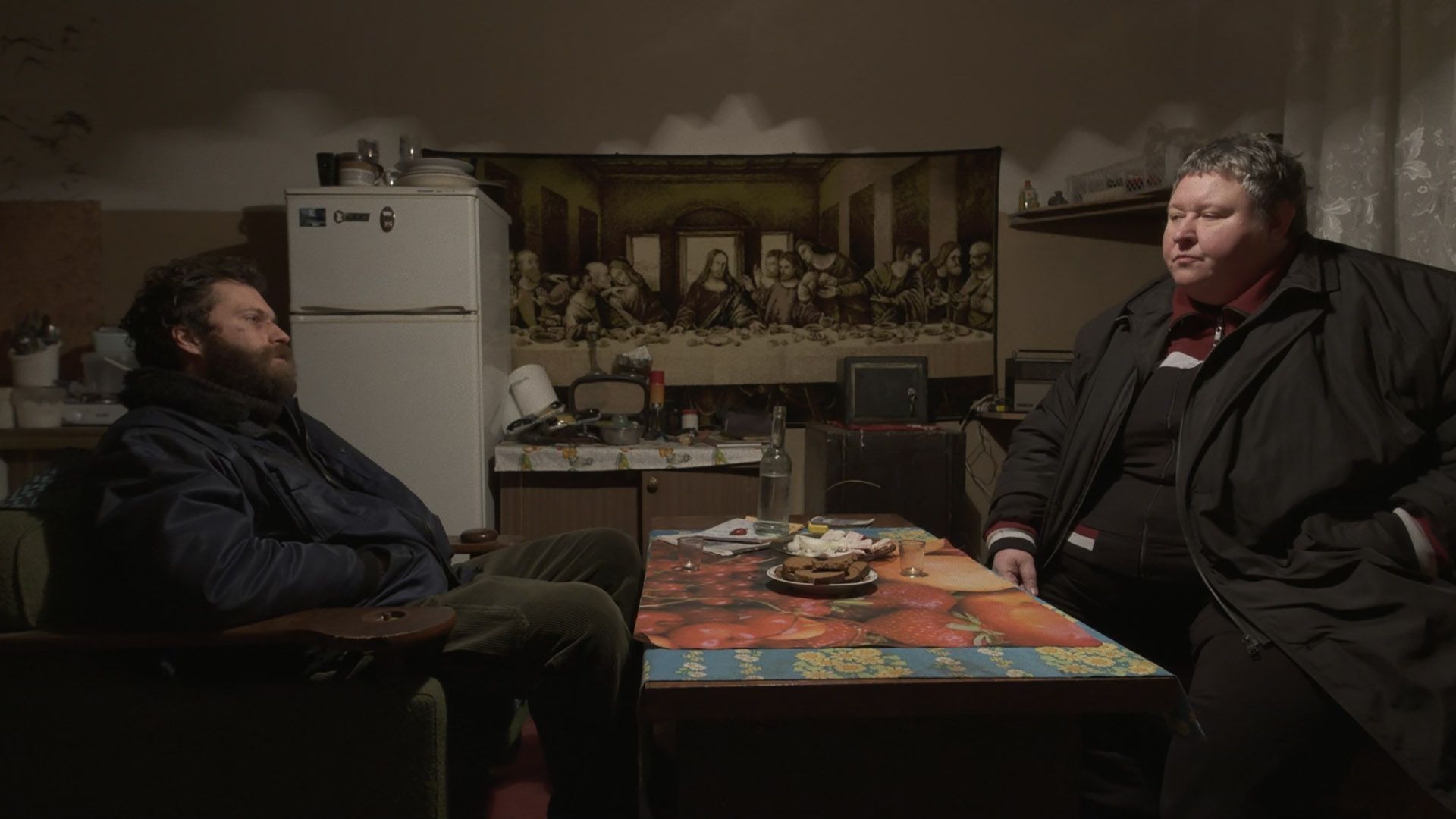
An easy way to hook an audience is with an original setting. That’s what director Ignas Jonynas does in his 2025 crime-thriller Borderline, which is also having its North American premiere on March 1. Set on the Lithuanian-Russian coastal border to the west, not the east, of the Baltic country in a town called Rusnė, the border is more like an unmovable bomb waiting to go off than it is like a character.
It’s an unusual place to set a film, in part because it’s a relatively small border in a less-populous part of the country. The Russian land, separated by the Nemunas Delta, is fully surrounded by European territory. The border exists in an anxiety between two worlds: one of stability and one of instability. A changing of season from fall to winter complements the betweenness of the geography too. The distinctive geography makes it a perfect match for the gritty and ominous noir subject material.
Vilius, played by Šarūnas Zenkevičius, who also has a prominent role in Renovation (also playing at this year’s festival), has a job almost as unique as the setting. He is an ornithologist, paid to track the migration of birds. (I thought this was an impossibly rare career until a few months ago, when I met someone with this job!) His daughter (Urtė Povilauskaitė) is mute and lives with mental disabilities.
Still mourning his wife’s passing, solo parenting has come with a hefty (financial) burden to Vilius. The dead-wife plot device leverages the urgency the film needs, but it doesn’t do much emotionally; this is perhaps in large part because we never truly get to know the daughter, who also lost her mother, in a meaningful way. The mourning is one-dimensional and typically masculine in this sense. The burden of her passing also makes Vilius easy prey for a cross-border crime syndicate headed by a woman named Vanda (Danguolė Beinarytė). His tracking equipment makes him a particularly attractive target to join their operation.
Vanda is truly a frightening woman. Though she is the antagonist in a crime (neo)-noir, by no stretch is she a femme fatale. She is older, has a limp, and repels all the other tropes. Traditionally, femmes fatales seduce because they have something to be gained; she is already powerful when we meet her. There is nothing conventionally seductive about the character. Her physical size matches her imposing power; cinematographer Audrius Budrys’s camera work frequently draws attention to her powerful frame too. Beinarytė gives the character a dry and scorched voice that only someone who might stab you would have. Every line delivery slowly rolls off her tongue as if her rule extends over the demands of time too. The weak and the needy are the ones in a rush in Borderline; Vanda is the one who makes them rush.
Characters die in a funky assemblage of creative violence. The action pulses with excitement in a way small budget Lithuanian filmmaking rarely achieves. A few of the car chase scenes, in particular, arrest the viewer in real danger. Jonynas doesn’t hold back any punches here either: things get real bloody. It’s at its worst not in the shady routine work of Vanda’s gang but when the criminal underworld tries to reassert itself into domestic life. An attempted rape of Vilius’s daughter, by Vanda’s son in what’s surely a Freudian power-move, ends in an unexpected yet cathartic self-defense. The action works because of the cinematographer’s patience as he slowly approaches the assailant’s attempted crime. He imitates the assailant’s approach, coming from the back on an expected target. We also see the front of the attack through a well-placed mirror, as if we are about to surprise attack him for his depravity. The talented camerawork and staging makes her defensive response of frantically carving his chest with a knife even more rewarding. It’s cathartic to see abusive and powerful men meet the end they deserve.
Fränk
2024
dir. Tõnis Pill
109 min.
Screens Friday, 2/27, 6:30pm @ Emerson Paramount Center
Director in person
North American premiere
Flesh, Blood, Even a Heart
2025
dir. Alise Zariņa
93 min.
Screens Saturday, 2/28, 3:30pm @ Emerson Paramount Center
Filmmakers in person
Borderline
2025
dir. Ignas Jonynas
102 min.
Screens Sunday, 3/1, 1:00pm @ Emerson Paramount Center
Filmmakers in person
North American premiere