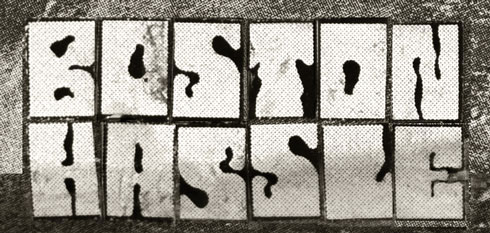

The thing about The Zone of Interest is the rumble.
It’s low and indistinct, and at times almost subliminal. We hear it from the first frames, underneath an otherwise pastoral scene of a smiling family picnicking by a river; it continues, uninterrupted, over the following scene as the mother and father sleep in their twin beds. I at first wasn’t sure if I was supposed to be hearing it– if it was a problem with the projection, or if it was bleedthrough from a neighboring theater– but in those cases you tend to hear discrete explosions or muffled musical cues, not this constant, rhythmic thrum. The rumble is intentional, to be sure, but it’s not clear what is causing it, or if the characters hear it, or even if it’s diegetic at all. Perhaps it is simply the ambient sound of pure, hovering evil.
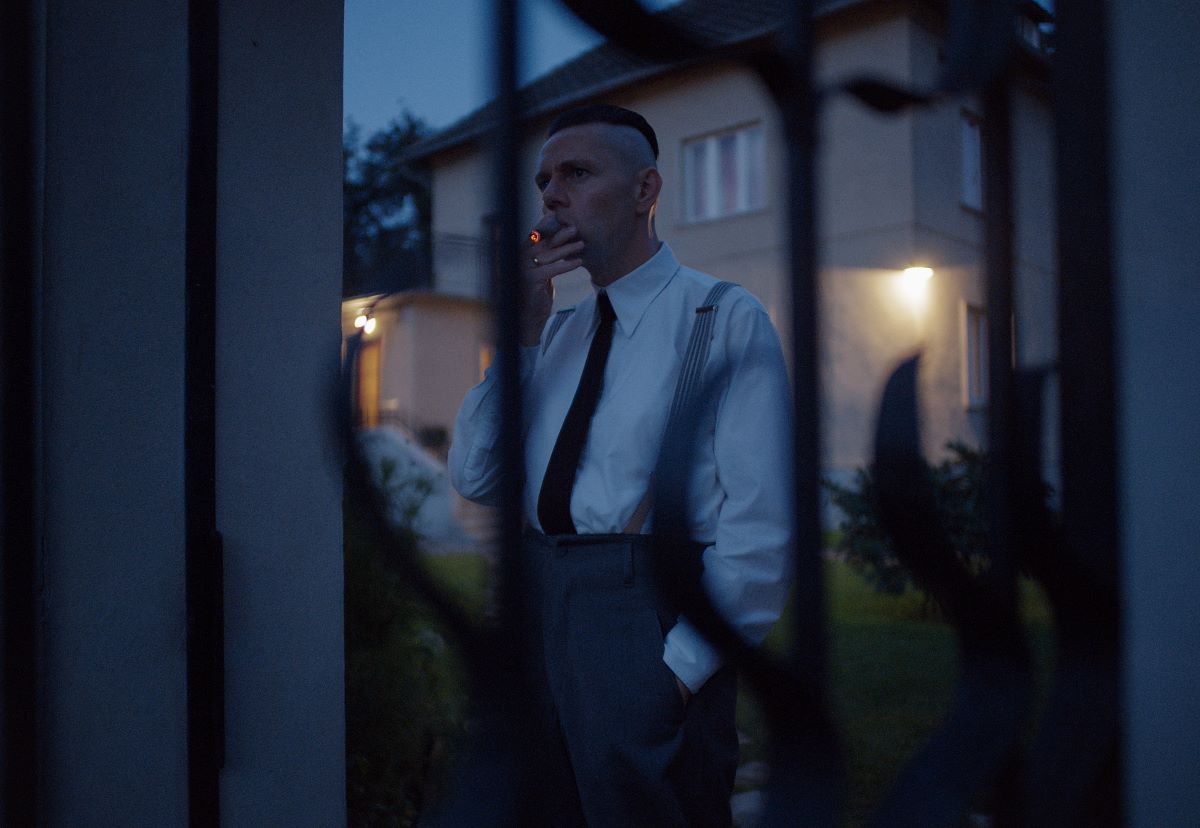
If you were to walk into The Zone of Interest with no idea what it’s about (which I very strongly would not fucking recommend), this rumble would be your first tipoff that all is not right. It would not be the last. As the characters return from their trip and settle back into their daily routine, the rumble is joined by other noises, these ones more recognizable: gunshots, dogs barking, wails of anguish. We never see the actual sources of these sounds, either (thank god), but we know exactly what is causing them. The family with whom we were just vacationing belongs to Rudolf Höss (here played by Christian Friedel), the Nazi commandant responsible for the introduction of Zyklon B into the gas chambers. His home, which he shares with his wife Hedwig (Sandra Hüller, who is having a hell of a year) and their five children, is located immediately outside the walls of Auschwitz.
The Hösses know, as we do, what is happening on the other side of the wall on which Hedwig grows her ivy; they can hear the din of death, can see and smell the plumes of smoke periodically issuing from the crematorium. It’s tempting to say that they don’t care, but that’s not quite correct either. After all, Rudolf is the one making it all happen, dispassionately signing off on proposals to make the camp run more efficiently– to kill more people in less time and at less expense. They know, and they care, and all of them– the family man and his vivacious wife and their apple-cheeked tykes– think that it is a good thing.

The Zone of Interest is the first film in a full decade from British director Jonathan Glazer, who cut his teeth on music videos before helming some of the most disquieting films of the twenty-first century. His last, 2013’s Under the Skin, cast Scarlett Johansson as a humanoid alien, luring victims and observing our world with a quizzical, detached eye. The Zone of Interest is not science fiction, of course, but it is no less surreal; here, the world itself is the monster, and we (or Glazer’s camera) are the alien observer. We watch in horror at the Hösses’ complete lack thereof, as they rummage through clothing left by murdered Jews and gab as casually as if they were at a charity swap meet. The surrealism is in the agonizing normalcy of it all.
Does The Zone of Interest humanize the Nazis? Most certainly– I’d wager that’s the entire point. But there is a world of difference, eroded in the age of social media, between humanization and sympathy. Every single one of the worst people you’ve ever heard of was a human. John Wayne Gacy was an upstanding pillar of his community; Charles Manson was a guitar-strumming dreamboat; Idi Amin was, by all accounts, hilarious. By compartmentalizing them as something other than human, we absolve ourselves, and we absolve the people around us– we could never do that, and neither would our friends or family, and none of us would ever let that happen. But complicity is a hell of a drug, and fascism in the moment tends to look a lot like normalcy to those not being actively exterminated. The Zone of Interest does humanize its villains, but it is in no way a plea for understanding. It is a desperate wake-up call.
While “humor” is not a word I would use in conjunction with The Zone of Interest, it does possess an undeniable streak of wry irony, albeit of the blackest and most bone-dry vein. The primary source of human drama, as far as the Hösses are concerned, comes when Rudolf receives a transfer. Hedwig is beside herself: “They’ll have to drag me out of here!” she says of the home which immediately abuts the Auschwitz death camp. Glazer is a satirist in the Swiftian model, presenting the material with such an ostensibly straight face that his camera’s “objectivity” becomes more damning and withering than any amount of polemic. When Glazer’s camera does “break character,” as in a brief, heartrending interlude in which we follow the Hösses’ Jewish “maid” back to her own home, the effect is all the more devastating. The film’s perspective can be summed up by a scene in which the camera lingers on one of Hedwig’s beautiful flowers, then slowly fades to red, the soundtrack swelling to an unbearable hum of feedback, before cutting abruptly to silence and black. It is as if the film itself momentarily loses its composure in the face of all this horror.
Walking out of the theater into the streets of downtown Boston was as unnerving as anything in the film itself. It was a lovely late November night (award-season films regularly screen for critics months in advance); the Christmas decorations were on full display, and I could see people dining and laughing through the windows of the upscale restaurants off Tremont Street. But I couldn’t help but view all of it with a vague sense of unease and terror; I could still hear that rumble. More than any other film this year– perhaps this decade– The Zone of Interest will dig itself under your skin, will gnaw like a canker sore on the back of your subconscious. This, again, is the point. In a time of fascism at our doorstep and genocide abroad, we can’t afford to give in to the seductive normalcy of the moment. The Zone of Interest will ruin your day– because it knows that someone has to.
The Zone of Interest
2023
dir. Jonathan Glazer
105 min.
Opens Friday, 1/12 @ Kendall Square Cinema, Alamo Drafthouse, and AMC Boston Common
Expands to Coolidge Corner Theatre Friday, 1/19