Justine Triet’s Anatomy of a Fall does something I don’t believe I’ve ever seen in a narrative film before, and it does it within its opening milliseconds. Before the story begins– before even the logo cards for Neon and the film’s other production companies– we see a black screen displaying the URL “DidSheDoIt.com” in plain white text. That site (which the viewer will hopefully not attempt to access until after the film’s completion) consists of little more than a yes-or-no poll asking the titular question, along with links to showtimes and the film’s various social accounts (at least, as of press time; who knows what future viewers will discover at that address if Neon isn’t diligent in its domain renewal). Upon answering, you will see the current percentage of viewers who have voted yes or no, and are invited to submit your rationale.
This is, on its face, a peculiar bit of gimmickry for such a sober film, more in line with the spirit of William Castle than the most recent winner of the Palme d’Or. But whether the notion of a canny marketing team or Triet herself, the very fact that the question is being asked colors the way one views the film. We know from the outset that there will not be closure, that the question of “who dunnit” will be left open to interpretation. We know that we cannot be certain whether or not to trust the protagonist with whom we are about to spend the next two and a half hours; we know that we will not know whether justice has been served by the time the credits roll. Whether this declaration of ambiguity benefits or detracts from the film will largely depend on the viewer (the domain “DidTheQuestionWork.com” appears to be up for grabs, if anyone wants to pose a follow-up), but it is at the very least a fascinating experiment in audience expectations. Frankly, if it jolts American audiences trained on true-crime podcasts into paying attention to this wordy, foreign-language character study, I’ll chalk it up as a win.
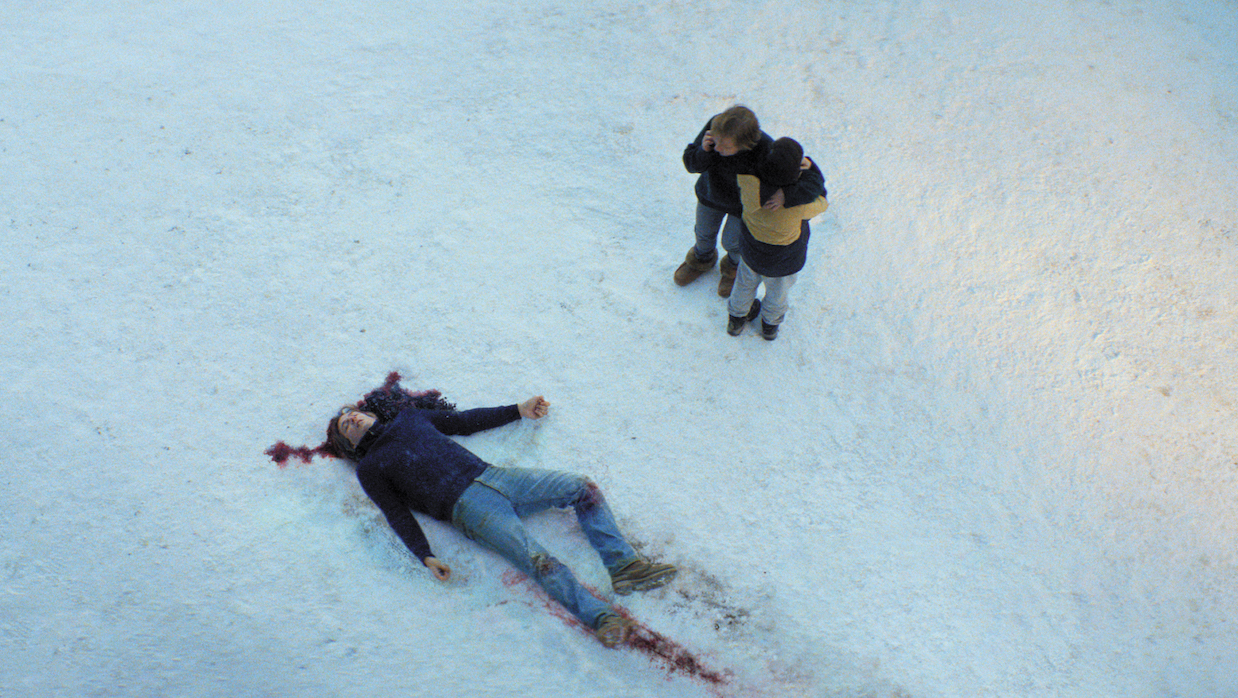
The facts of the case: novelist Sandra Voyter (Sandra Hüller) is sitting for an interview in her remote chalet, but is interrupted by the music blaring from her husband Samuel’s DIY project upstairs (his selection, a cover of 50 Cent’s “P.I.M.P.” by the Bacao Rhythm & Steel Band, becomes perhaps the most unexpectedly menacing needledrop of the year). After the journalist leaves, Sandra’s visually-impaired son, Daniel (Milo Machado Graner), takes a walk through the snow with the family dog, Snoop (a very good boy). When he returns, Daniel discovers his father, very much dead in the snow beneath an open window. Initial signs point to an accident, of course, but certain injuries discovered in the autopsy suggest that Samuel may have been mortally wounded before he hit the ground. Sandra enlists the help of sympathetic attorney Vincent Renzi (Swann Arlaud) to devise a strategy to convince the jury that she didn’t do it (dot com).
What follows is a sort of cubist take on Law & Order, methodically moving from one angle to another as we slowly grapple with the bigger picture. Following a fairly straightforward first half hour or so laying the groundwork of the story, the film’s second act is set entirely within the courtroom, as Vincent and the prosecuting attorney lay out their respective cases and interview the first round of witnesses (the courtroom scenes are spoken entirely in French– a setback for Sandra, a German native who conducts her family life in English). In the third act, the perspective jumps again, this time into flashback as the court submits a recording discovered on Samuel’s hard drive of a fight he had with Sandra less than 24 hours before his death (this is, notably, the first time we actually see Samuel alive for any extended period).
These shifts are unusual, but rarely alienating– thanks in no small part to that opening announcement of ambiguity. Triet, after all, is playing a shiftier game than the average American courtroom procedural. The film is less focused on the outcome of the trial as it is upon the trial itself, the way the objective narrative of Samuel’s death twists and contorts depending on which attorney has the floor (it must be said that both Arlaud and Antoine Reinartz as the advocate general have some great deadpan comic beats, as when Reinartz dispassionately expounds upon “P.I.M.P.” in French). Because we know that no concrete answer will be given, we are invited to absorb the information alongside the jurors.
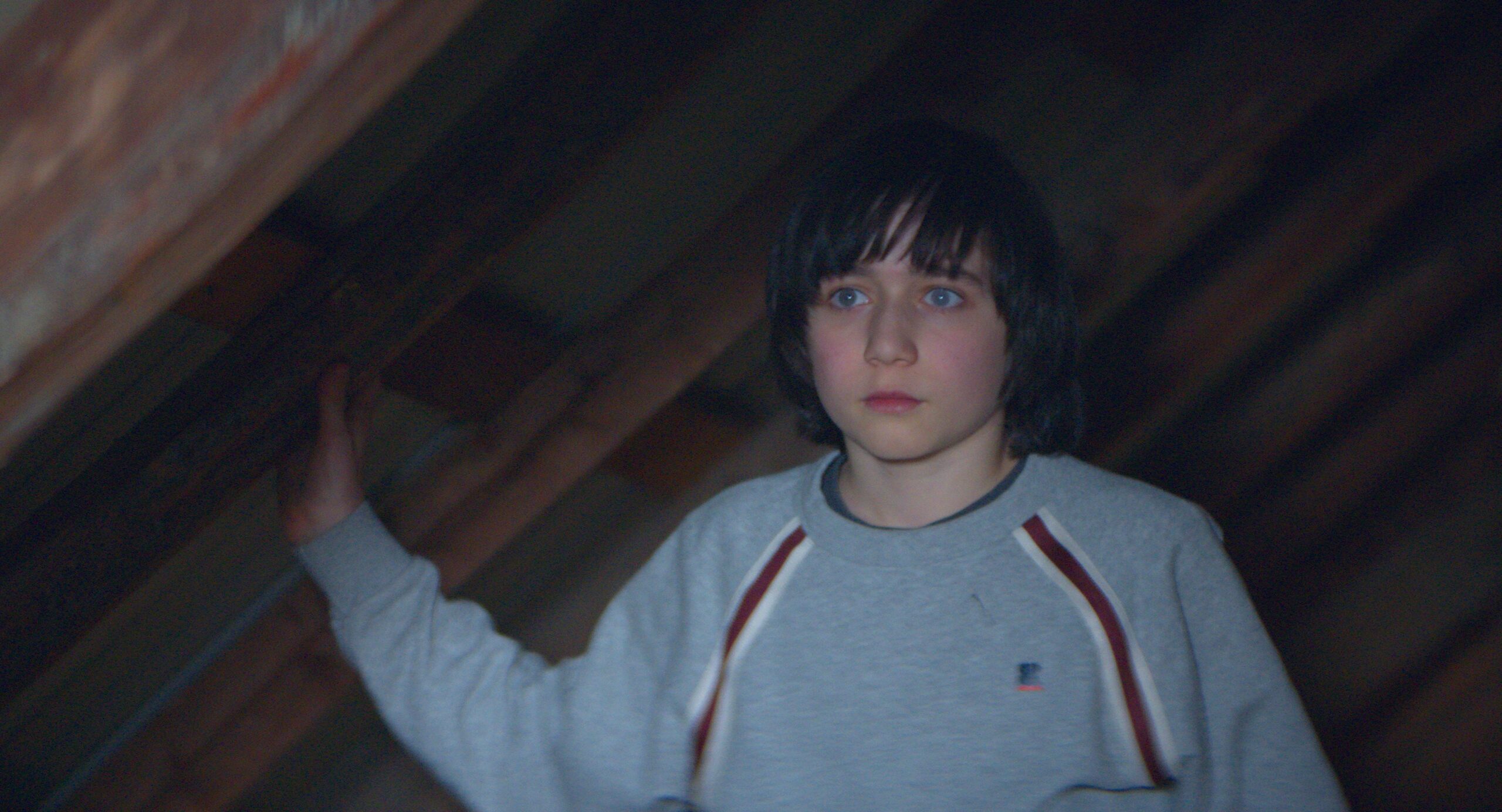
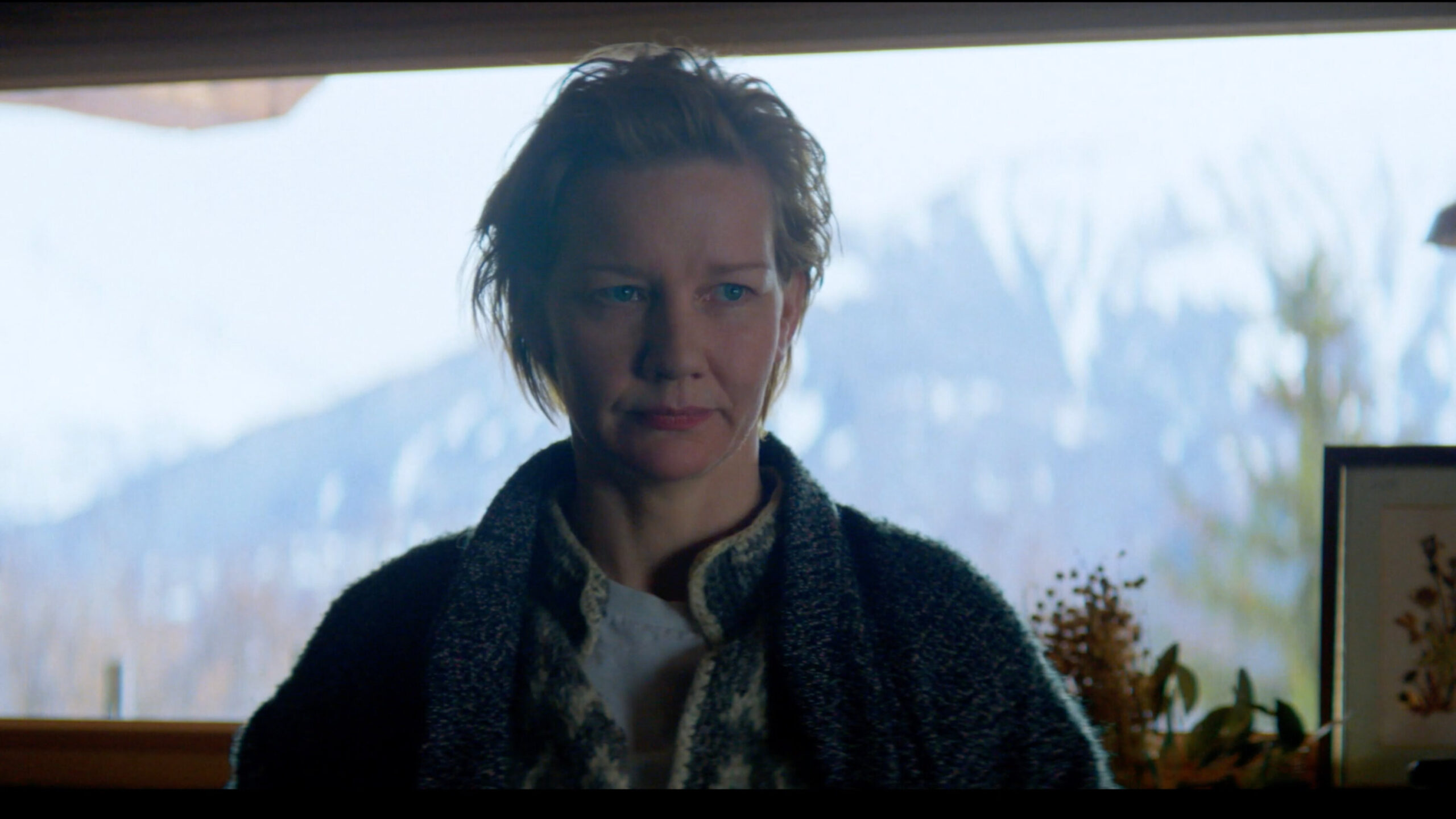
The face of the film is Hüller– she is the “She,” after all. Her performance is a sphinxian Rorschach test; she largely maintains her poker face, and her various reactions and admissions open themselves to a wide range of interpretations. For my money, however, the film’s greatest performance belongs to young Milo Machado Graner. Daniel spends the entirety of the trial sitting in the gallery, even as the judge cautions him that things will be said that he may not want to hear; Daniel counters, reasonably, that he’s going to spend the rest of his life obsessed with his father’s death, so he might as well receive this information firsthand rather than learn about it on the internet later. For much of the film, Daniel is silent; Triet frequently cuts to his somber face, and we imagine what it must be like for him to hear so many uncomfortable truths about his parents. In the film’s final movement, Daniel takes center stage and we begin to spend more time with him than with Sandra, but many of his words and actions remain opaque. In the end, your position on Sandra’s guilt will likely hinge more on Graner’s performance than on Hüller’s.
So did she do it dot com? I have my suspicions, but I think the answer to that question is largely beside the point. The point is the question itself: the way we spin reality to shape the narratives we choose to present about ourselves, and the narratives we choose to accept about others. It is not incidental that both Sandra and Samuel are novelists– one quite successful, the other frustrated and thwarted– and that Sandra’s most famous work involves parallel realities. Anatomy is not a science fiction film, but it is very much in conversation with the concept of the “multiverse”; depending on our perception, the real-life people around us can indeed appear to be everything, everywhere, all at once. The question of “Did She Do It?” will continue to be asked as Anatomy reaches a wider audience. I don’t suspect an answer will be agreed upon, but the fact that the question is being asked means that the film is a success.
Anatomy of a Fall
2023
dir. Justine Triet
150 min.
Opens Friday, 10/27 @ Coolidge Corner Theatre