The Love That Remains (Ástin Sem Eftir Er) is an emotionally nuanced, compellingly static, and abstractly fragmented story of the effects of withering love on an isolated Icelandic family unit, even if its purely artistic reaches can sometimes feel obtrusive. Thanks to a steady grip on the changing seasons’ beauty contrasted with the quietly dramatic separation of a mom and dad—Anna (Saga Garðarsdóttir), a struggling artist, and Magnús (Sverrir Guðnason), an emotionally unavailable fisherman—The Love That Remains makes for heart-pulling, quiet cinema perfect for those longing for exes or future partners in the drifty, isolating whites of winter. Following the estranged couple, their older daughter Ída (Ída Mekkín Hlynsdóttir) and twin boys Þorgils and Grímur (Þorgils and Grímur Hlynsson), Love sees a year of strenuous, grindingly slow dynamic destruction and shifts as Magnús essentially cuts himself from his family. As time passes, Anna uses her art to cope, Magnús his work, and the kids a dummy they build and shoot arrows at. The tragedy of Magnús’s inability to parent and love exacts a greater cost on the family he leaves behind, forcing Anna to sacrifice even more simply so their kids can live decent lives. Through her art, director-writer-cinematographer Hlynur Pálmason gains a gateway into the surreal, stretching Love beyond a simple breakup story to trace the emotional toll divorce takes on all parties and how time goes on despite our feelings.
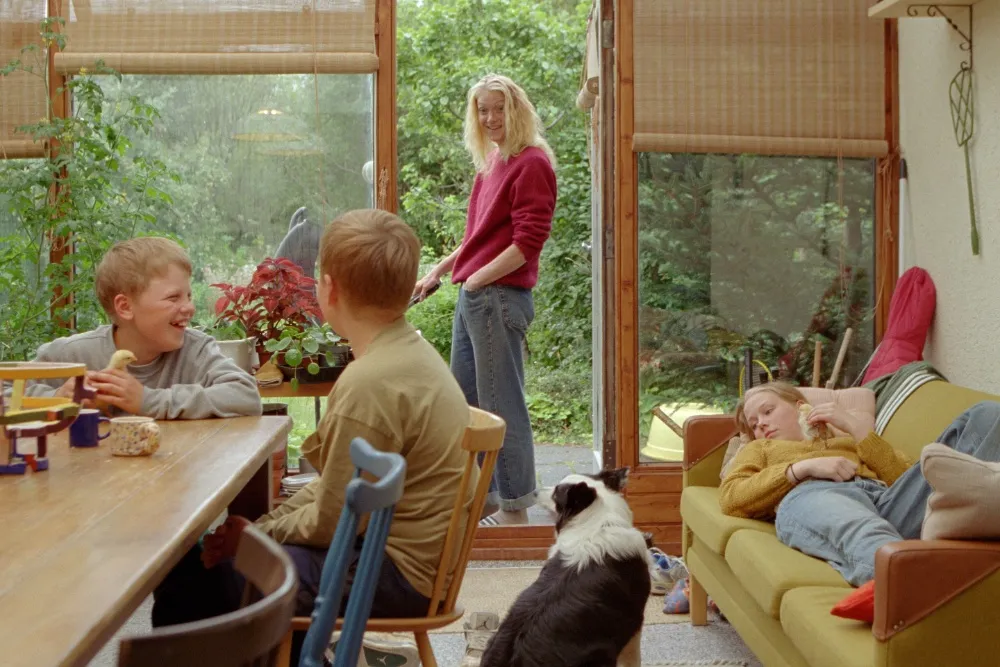
Very much in charge of The Love’s quiet narrative—even going so far as to have his own three kids star—Pálmason establishes an uneventful yet somber piece, filled with metaphors and reflections as love strains under the changing seasons. Giving viewers breathtaking scenery of Iceland’s pristine waters, endless greenery, and near-blindingly white snow, Anna and Magnús see their relationship evolve (or devolve) in tune with such weather changes. Initially, it all seems fairly ordinary. They have dinner; Magnús goes to work; the kids play; Anna makes art with her kids and struggles to get proper recognition; they all talk about school, friends, or the dog’s icky habit of “rolling around in filth” that nevertheless brings “joy.” This mundanity would usually bore, but crisp performances from both Pálmason’s kids and their on-screen parents, beautiful imagery, enticing depictions of slow-creeping dread bleeding into everyday life keep things compelling—until new truths smash into their lives like a brick chucked through a window.

Reality and home life can change just as easily as rain: even with Magnús trying to continue sexual relations with Anna, their marriage-sustaining love dwindled off-screen, requiring permanent change that weighs on them and the kids. Adding almost magical elements reminiscent of Iceland’s mythical folklore, Pálmason blurs reality, dreams, and surrealism to convey the family’s feelings through this very real change. Anna’s art, covered in naturally occurring marks, reflects the chipping toll Magnús accosts everyone else; while initially less hesitant, Anna eventually calls Magnús’s refusal to let go “lame,” dismissing him outright as patience runs thin. He’s psychologically scuffed her for years, as she has her art in the physical plane. The parents also try to find a new dynamic with which to parent their kids and live as a family, with their individual parenting styles clashing more over time, intercut with close-ups of berries, mushrooms, and less in-this-realm imagery to keep wondrous curiosity flowing as the love twists further. With Anna preferring an easygoing approach with her more-perceptive-than-they-think kids—”They were so young when they had me,” ída discusses with the twins at one point, calling “weird” if she had a kid at her own 17-year-old state—Magnús’s attempts to discipline them into obeying him as a parent only further alienate him. The kids distance themselves from Magnús. Anna and Magnús argue. Magnús learns nothing, and no one changes their attitude. Back to square one. But eventually, the cycle must break.
Magnús begins dreaming (or imagining) what life is and could be like. Whether he cries floating at sea, telling the universe “I’m sorry, Anna, I’m sorry, ída, and I’m sorry boys,” or he embraces Anna’s sun dress like a blanket as he’s enveloped by the dress’s lusciousness and Anna’s pale bosom, his struggle to fully accept the separation bubbles even as he continues not properly parenting—”You pretend to scold them because you love them, instead of just loving them and therefore scolding them sometimes,” Anna spills. Instead of facing responsibility, he runs off to work, keeps everyone at a distance despite wanting more, and forces Anna to bear even more as the kids turn their anger into action in shooting their initially lifeless knight. This untethered exploration of reaction to loss and its forceful emergence of people’s true colors, like with Anna becoming the easygoing parent and Magnús becoming the othered parent where “Everything is easier and more fun when you’re [Magnús] not around,” makes The Love That Remains an introspective piece about the self vs. the tribe (family, community, friends, etc.). Though a lack of stakes or conclusivity significantly hinders The Love That Remains from feeling consistently enlightening or artistic and more annoyingly vague, its mostly abstract outline of life after divorce in relation to larger natural and social contexts keeps it morose in the liveliest way.
Thus, The Love That Remains transcends a straightforward divorce narrative, instead offering a deeply symbolic drift through the lives and minds of a fragmenting family. Even if love doesn’t end, it morphs, strains, deepens, and shallows with the tides, requiring constant work that the likes of Magnús—despite his regrets—cannot face. For Pálmason fans, bittersweet family film enjoyers, and those looking for something mildly depressing to match the loneliness of winter’s inches-deep blankets of snow, The Love That Remains is a cathartically necessary flick. Remember to love your kids and family, or regret will overwhelm you, as it does Magnús, or damn you, as it does Anna and her kids.
2025
dir. Hlynur Pálmason
109 min.
Screens 2/20 through 2/26 @ The Brattle Theatre
Read the Hassle’s interview with director Hlynur Pálmason here!