
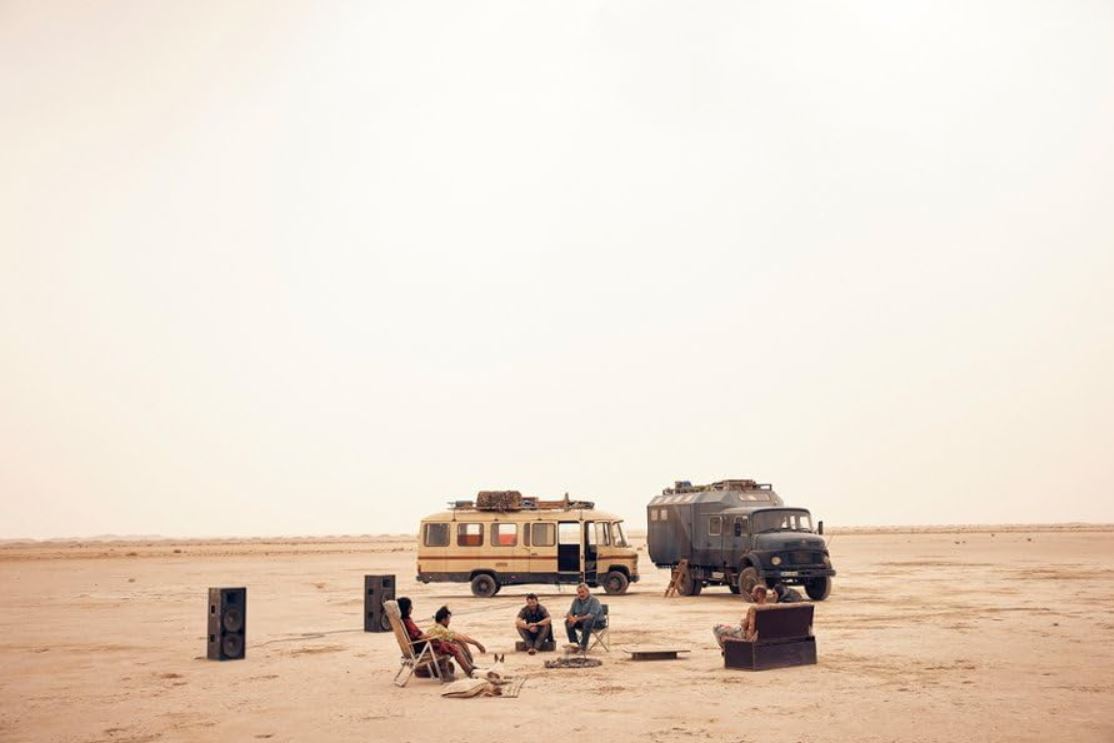
When I was a kid, my dad and I caught the ending of a movie on TV. I had seen too little to know what was happening, but enough to scare me into a months-long nightmare. Without knowing for sure if it had happened, I remembered vacuum-suctioning, red sand, and a feeling of abandonment which manifested into a phobia that one day I’d be plucked out of this planet and into an isolated, lawless environment. When I later described my “scariest childhood movie” to someone in college, they simply said, “You’re probably thinking of Total Recall.” Ah, maybe I was! But I had never thought to revisit to confirm, uncertain that the lore will either dissipate or deepen.
After watching Óliver Laxe’s Sirāt, I initially thought about facing the inevitable rewatch. Would I have been as scared if I had seen the ending of Sirāt when I was younger, with no consequential context to help me understand? Or would I have thought of Total Recall as being a lot cooler and thought-provoking if I had seen it now? What makes me tie them together other than the psycho-ecological impact of sandy abundance?
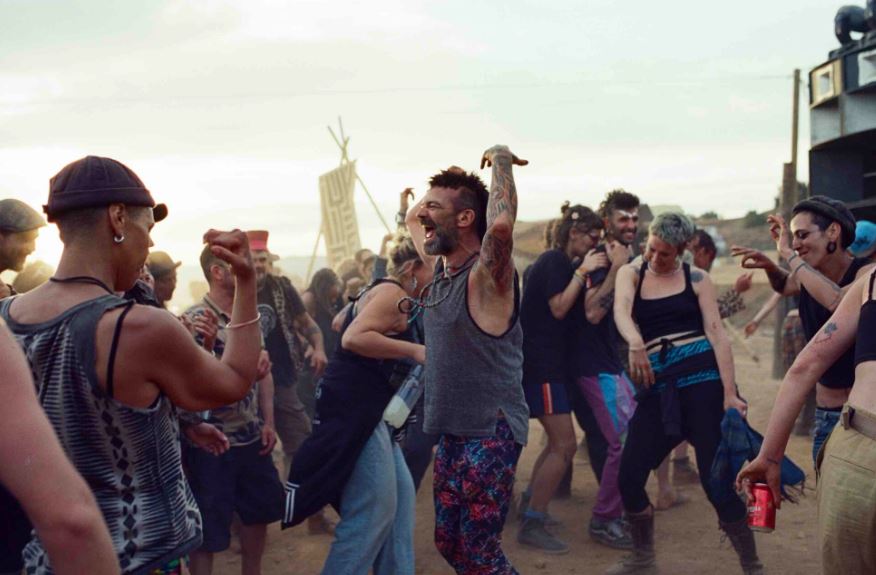
Make no mistake: on its own merit, Sirāt is a masterfully crafted amalgamation of sound and space that establishes a well-paced, thundering, dreadful experience in the desert. As steadfast as the script is (written by director Óliver Laxe and frequent collaborator Santiago Fillol), the film also reconciles the strong presences of David Letellier’s score and Mauro Herce’s cinematic spatial entrapment to introduce an alien environment without leaving Earth. The first scene, in which an all-day rave takes place in the Moroccan desert, is curtained by stacked subwoofers. Dancers fill the screen with physical abandon, but even in the disarray, the frame of the sweaty strangers somehow manage to pull your eyes toward the center, even though we have not yet been introduced to any character. I’m not sure if it’s an illusion that my mind made up to look for stability in the crowd, or if the camera’s trickery somehow replicated the anatomy of the speakers, in which the voice coil stays still even when its surrounding cone undergoes a seismic experience.
Similarly, Luis (Sergi López) centers Sirāt’s purpose when he searches for his missing daughter, suspecting that she may have traveled from Spain to join in the flatland festivities. Ravers spare a second of sober sympathy to Luis and his son, Esteban (Bruno Núñez Arjona) as they seem to share equal amounts of urgency and hope that she’ll manifest somewhere among the crowd. The premise in of itself seems to be a vulture of futility, exacerbated when Luis and Esteban decide to follow a group of ravers to the next party, despite their insistence that Luis’s family car can’t handle the off-road route or hang with the crowd (God forbid people arrive to the function in linen button-ups and Mortal Kombat t-shirts).
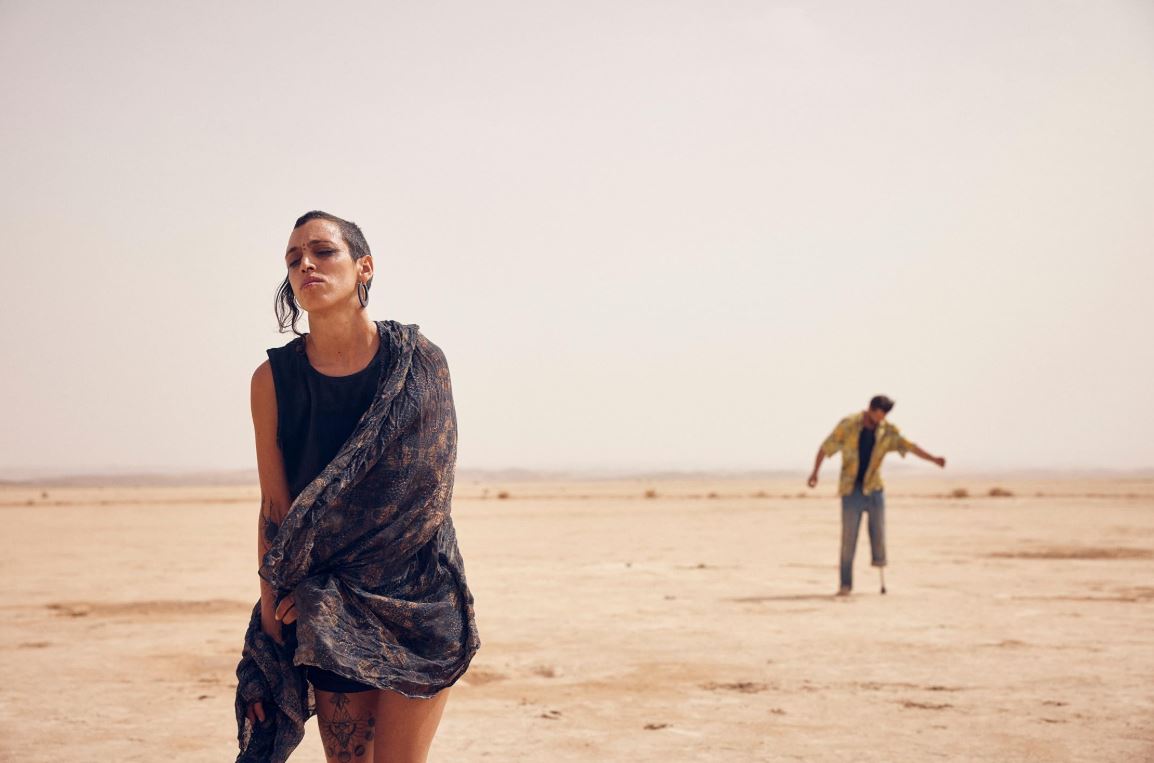
My aversion to outdoor activities without immediate access to utilities is my personal hell, and this movie hits a particular phobia that has me wildin’ out when Luis encounters challenges on the terrain without a reverse course back to safety. While there might be some intentional horror-related devices at play, Sirāt is also a journey toward something – the beginning of an apocalypse (the intermittent radio noise from the vehicles indicate that a war is approaching), an out-of-body experience, a slow burn to a dark truth. The initial friction between Luis and the ravers wears down into a survival-type camaraderie, but Sirāt doesn’t feel like a movie following the beaten path. Is it like Taken? Definitely not. Little Miss Sunshine for the goths? Perhaps, if we could agree that they share similar DNA of a great road trip movie. A film with a divisive ending? Yeah, I’d bet on that. Luckily for me, it’s the division that I live for, especially when it becomes so unpredictable that the script can nearly accomplish a level of no wrong, as long as it stays loyal to the characters.
I can also bet that we don’t normally get to see characters like this for prolonged screentime without them being reduced to singular personality or physical attributes. The ragtag group of ravers are uniquely present, both in their portrayal (the five characters share the same first names as the actors who portray them, further giving a docu-style feel to the movie) and in the representation of ravers and the PLUR culture. There are different lenses one could wear in watching this: the raging political and personal impact of outsiders as countries head toward violent resolution, Luis comically hovering around the scene like someone bringing their Subaru caravan to a Mad Max war rig chase, finding family in a hopeless place. The soundscape might thwart itself as some techno-isolated migraine hell for some, but I felt like I was as unraveled in the music as our fellow friends. It’s no surprise that the film’s sound design is being heavily lauded (of note, their Oscar nom for Best Sound is credited to an all women-team, the second time that’s happened in history after the team behind La La Land and First Man).
The experience of watching Sirāt splits into a sort of land-and-sky vision: the characters traverse the land with their own missions while bad premonitions hang over their heads beyond visible horizons. But the film’s realistic captivation makes it difficult to tear away from the screen when it feels like we’re on the bumpy ride with them, discovering the new ways people do for each other. Like Total Recall, I could dissect the film into the bits that make Sirāt deeply distressing, but unlike watching Schwarzenegger trying to emote, it would not do the film justice to simply call it that. In fact, despite the desert chills, viewers might find that that buried underneath the bass-heavy wilderness is a lattice of heartwarming kinship between strangers looking for reunion.
Sirāt
2025
dir. Óliver Laxe
115 min.
Opens Friday, 3/6 @ Coolidge Corner Theatre, West Newton Cinema, and AMC Boston Common