
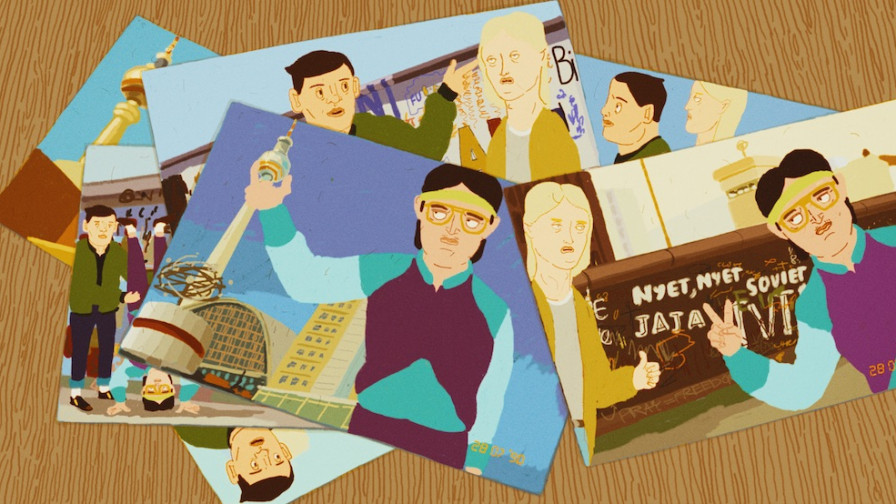
What soundbite of an American in the Eurosphere is more monumental than “Tear down that wall?” While the tradcon American’s American biopic of the year may have already broadcasted its importance to empty theaters, most of the living generations can acknowledge the rippling connotations of the fall of the Iron Curtain, in which Europe can slowly be stitched back together (in concept). Pelikan Blue, a documentary about international ticket forgery in the 1990s, might be pinpointed on the outskirts of the event’s effect, but it’s no less valuable of a voice. I’d go as far as to say that it even exceeds most historical docs when it comes to impact and levity.
When the borders between countries begin opening up, three Hungarian men — Ákos, Petya, and Laci —decide to forge their train tickets, which were then at exorbitant prices. Through espionage (which includes surreptitiously loitering at train stations to monitor operations) and scientific experimentation with common cleaning products, the men are able to lift the pen-written information on tickets and reproduce blank ones. They then can fill out themselves with the public information on transit times to make their way into France, Italy, and the part of Western Europe that were once deemed a destination dream.
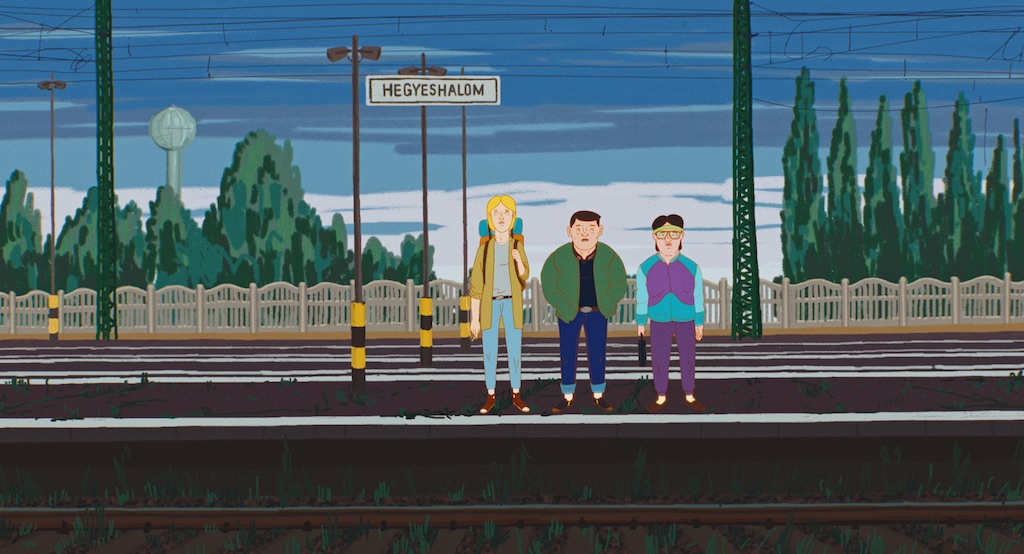
In an interview with POV MAGAZINE, producer Ádám Felszeghy noted that the successful anonymity of 2021’s Flee helped construct the possibility of creating Pelikan Blue. The voices are provided by actual men, which allow less interference in their emotion and hindsight errors when sharing their adventures. The story is also filled with voice recordings of other travelers who have been part of the scheme (Csáki had been working on the project since 2011) and even a detective who was part of an investigation (whether the forgers and the detective have met is not clear, but I’m entertained by either option).
The result: Pelikan Blue is spliced between animation influenced by the ’90s (think Hank Hill ‘n’ the gang pulling off an Ocean’s Eleven heist to their fullest citizen capabilities) and re-enactment of physical objects in motion, like landline phones ringing and ticket books making a thud on a desk. Though it sounds like a brain rattle, the thread of the narration makes it more seamless than it sounds and more visually entrancing to watch different mediums blur together the audio of the story, the sketching of the storyboard, and the truth of their motives.
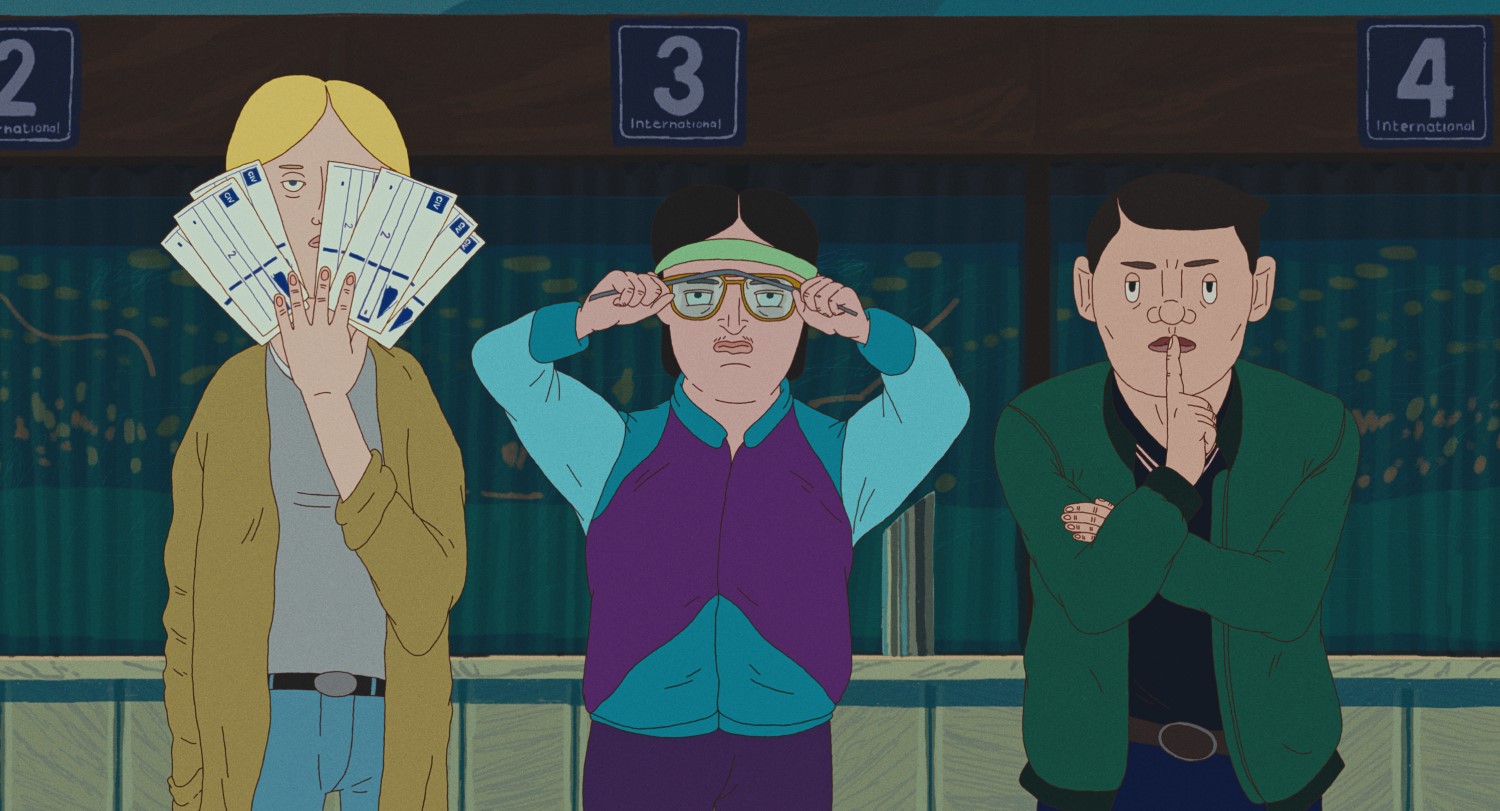
One special achievement of Pelikan Blue is that while we won’t know the real faces behind the adventure, the film never makes us feel like we’re losing a piece of the story. Characters are drawn with such distinction in fashion of that era and palpable facial expressions that this animation for de-identification doesn’t feel like an alternative choice, but the correct way to tell this story. The whimsical, colorful style, matched with the characters thriving in its fluidity, can be cherished in each frame and movement. The direction takes intentional style for certain parts (for example, the men heed a warning about The Clown, a curly-haired French train attendant with a scarily unbroken stare for wrongdoings, which is detailed in a nightmarish mirror-house sequence), which helps accent the art’s purposeful vibes for happiness and dread within the lines. Documentaries, especially with creative intentions, can sometimes drag after a while, but Pelikan Blue keeps the fun train going even after their forgery shifts end. I can imagine them being just as enjoyable hanging out at a bar as they are in the off-hours of train counters.
Towards the end of the film, the men, last interviewed in 2014 with aged relaxation and wistful stares, reminisce about that period in their lives. They acknowledge the use of Pelikan Blue, the only type of ink dye that they knew how to remove, as the key to their petty-crime freedom. But this is a humble admission; the dream of pursuing something that was once unreachable had pushed them to make it real, lawful or not, for themselves and others (though if you’re still at the point where you’re like, “But…crime!”, then perhaps the movie is not a go for you). This kind of lovely desire is also a small treasure to hold onto as we embark a different stage in this country for the next four years. There’s nothing in the history books or in my imagination to exact what could happen, except to expect days feeling heavier than others. But in the crushing weight of oppression and despondence, I urge you to consider Pelikan Blue as a bedtime story: that we are still human, and the joys that shape us to feel that way can be enough to get us out of bed in the morning.
Pelikan Blue
2023
dir. László Csáki
80 mins
Screens Sunday, 11/17, 4:00pm @ Somerville Theatre