
Take this with as many grains of salt as you like, but I once read a second- or thirdhand account which claimed to reveal the division of labor in the films of Benny and Josh Safdie. Josh, this person alleged, was the person you or I might think of as the true “director” of the brothers’ collaborations— the one on set, calling action and telling the actors what to do. Benny, meanwhile, would make his presence known in the films’ post-production, shaping the (undoubtedly chaotic) raw footage into something resembling a feature film. I have no idea if any of this is remotely true, but it certainly feels right; as a fellow Boston-area film student in the mid-2000s, I can attest that guys who looked like Josh generally made more interesting films than guys who looked like Benny, but also that you wanted a couple of Bennies on your crew to keep things running smoothly.
These perhaps-apocryphal parameters are also borne out in the Safdies’ respective 2025 solo films, both of which could roughly be defined as “sports movies.” Benny’s The Smashing Machine, which came out earlier this year, is on paper a more or less by-the-books biopic of MMA fighter Mark Kerr, but retains the analogue warble and general woozy texture of the Safdie brothers’ house style. Josh’s Marty Supreme, on the other hand, feels like the honest-to-god directorial follow-up to Uncut Gems, an equally manic, two-hour-plus panic attack about a hustler careening his way through life through sheer chutzpah and a knack for wearing down anyone with whom he comes into contact. Marty Supreme will likely not be to all tastes, but, like Uncut Gems, I couldn’t get enough of it.
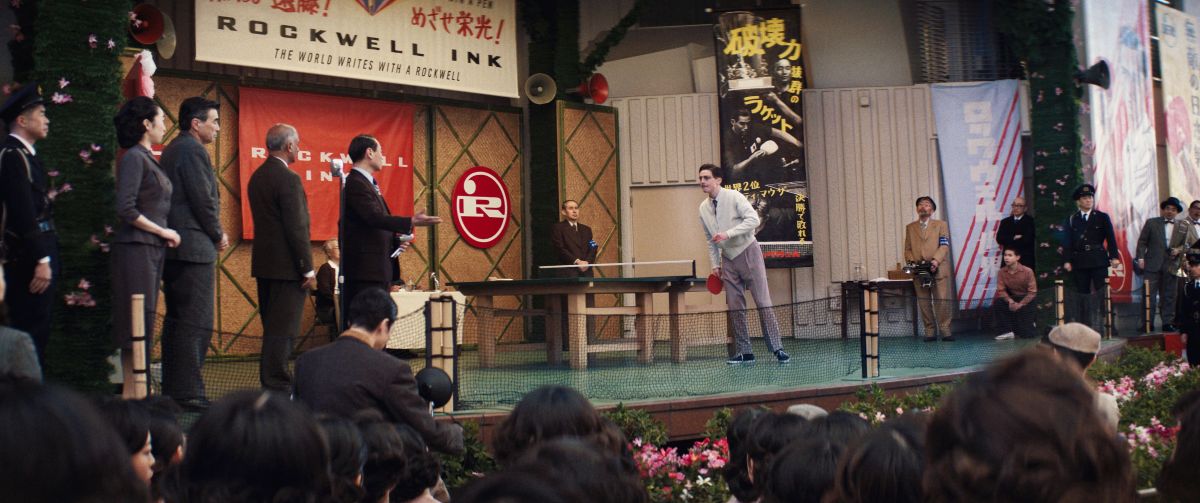
Marty Supreme is set in the small but intense world of professional table tennis in the 1950s. “Small but intense” also describes the film’s protagonist, Marty Mauser, played by Timothée Chalamet as something of a cross between Woody Allen and the Tasmanian Devil. Marty may or may not be the best ping pong player on earth, but he believes he is, and he will stop at nothing until the world sighs and grants him the title (“Someday you’re gonna see my face on a Wheaties box,” he boasts, and one senses it’s not braggadocio so much as a self-affirmation). Pulled into Marty’s maelstrom are Rachel (Odessa A’Zion), Marty’s on-off girlfriend, who we slowly learn is just as pugnacious as he is; his hapless cabbie best friend (Tyler “The Creator” Okonma); a fading movie star (Gwyneth Paltrow) and her ballpoint pen magnate husband (Kevin O’Leary, aka Shark Tank’s Mr. Wonderful); a classic New York heavy (filmmaker Abel Ferrara) with an enormous dog named Moses; and on and on, in a narrative that somehow ends up spanning at least four continents, in spite of the fundamental silliness of its central sport.
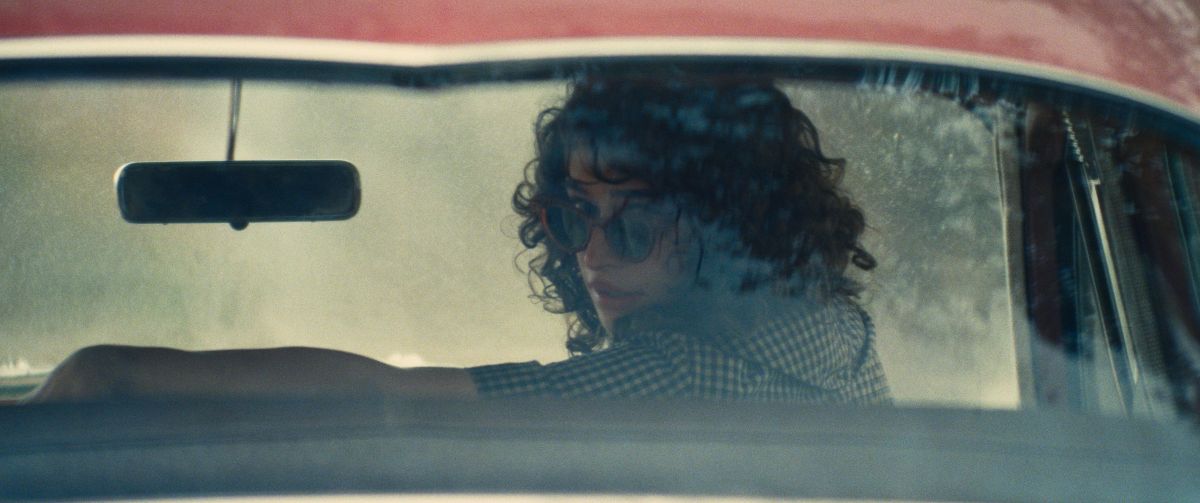
Technically speaking, it would not at all be inaccurate to describe Marty Supreme as an “underdog story.” It has the scrappy outsider, the humbling early defeat, the long climb back to the top, the climactic tournament— all hallmarks of the genre. But most great underdog sports films— your Rockies, your Rudies— carry with them a certain degree of sentiment, the preprogrammed emotional beats that net films the coveted/dreaded “inspirational” label. This is, to put it mildly, not Marty Supreme’s game. For one thing, Marty does not seem particularly humbled by that early loss; instead, he perceives it as a cosmic slight leveled against him by the universe, and sets himself to right this wrong by any means necessary. And while he does get that second shot at greatness, one doesn’t get the sense that he’s achieved it by bettering himself, so much as worn the universe down until it gives in.
As an actor, I’ve always been somewhat ambivalent toward Chalamet; he seems like the sort of actor I shouldn’t like, yet I have to admit that he’s been in some of the best films of the past decade and he’s almost always very good in them (for my money his best performance up to now has been in The French Dispatch, a belief I understand is considered fringe even among that film’s fellow devotees). This, however, is the first time I can say I have well and truly been wowed by a Chalamet performance. Chalamet throws himself into the role like a man possessed, all elbows and oily skin, with a patchy dirtbag mustache and an acid-tongued motormouth. On playing a match against his older mentor, Marty brags to a reporter, “I’m gonna do to him what Auschwitz couldn’t,” before quickly adding, “I’m Jewish, I can say that” (Chalamet is too, which I was relieved to learn). Just as Uncut Gems forced me to reluctantly hand it to Adam Sandler, Marty Supreme is the film which has me finally admitting that Timothée Chalamet is the real deal.
Indeed, the similarities to Uncut Gems run deep in Marty Supreme: the grimy New York setting; the vaporwave soundtrack by Wayland native Daniel “OneOhTrix Point Never” Lopatin (here bolstered by anachronistic needledrops from the likes of Tears for Fears and Public Image Ltd.); a surreal, computer-animated opening sequence swimming through the internal anatomy of one of its central characters; a wildly eclectic supporting cast of character- and non-actors (which, in addition to those listed above, includes Fran Drescher, Penn Jillette, David Mamet, author Pico Iyer, and Ted Williams, the golden-voiced homeless guy from that 2011 viral video). And there is an undeniable connection between Marty Mauser and Howard Ratner, two wildly obnoxious yet utterly indomitable forces of nature with a seeming ability to bend the universe to their will. It is likely no coincidence that both men’s names evoke household pests; like their namesakes, both Mauser and Ratner just keep coming back.
Yet there is an underlying humanity to Marty Supreme, something that runs deeper than Gems’ film-noir-on-speed nihilism. There’s more to Marty Mauser than Howard Ratner’s twin addictions to money and adrenalin. Here is a scrawny, working-class kid from the slums, whose one gift (besides manipulation) lies in a game almost no one in America takes seriously, who is nonetheless determined to make the world take him seriously— or, at the very least, get what he feels he deserves. As toxic a presence as he is (there’s a reason he eventually gets tossed to the curb by nearly everyone with whom he comes into contact), we can sense a fundamental sadness and unease to his megalomania. Safdie became a father twice over during the development of Marty Supreme, and it probably isn’t a stretch to map his paternal anxieties onto Marty’s (significantly, the story’s events take place precisely over the course of Rachel’s unplanned pregnancy). Marty is desperate to make something of himself, and against all odds, he kinda-sorta succeeds. Maybe I was wrong; perhaps this is an inspirational sports picture after all.
ERRATUM: An earlier version of this review referred to O’Leary’s character as a “fountain pen magnate.” My wife, an avid stationery enthusiast, has informed me that his pens are actually ballpoint. The author apologizes for any inconvenience or distress caused by the error.
Marty Supreme
2025
dir. Josh Safdie
149 min.
Opens Wednesday, 12/24 @ Coolidge Corner Theatre (in 70mm!), Somerville Theatre, West Newton Cinema, Kendall Square Cinema, Alamo Drafthouse Boston Seaport, and all local AMCs