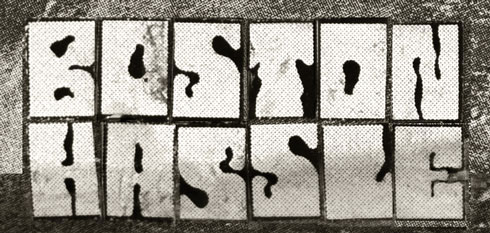

As it happened, the winds of change brought Drop Nineteens’ founder Greg Ackell to Boston from Northfield Mount Hermon, a coed boarding school in New England with a deep emphasis on student artistic expression. Greg recollects, “It was a beautiful place, pastoral, a creative place. It was sort of an outlier so far as boarding schools went, in the 1980s at least. There were a lot of musicians there”. The Northfield music scene Greg participated in also included the likes of Gian Feleppa of The Glove Compartment, and Jamie Walters of Beverly Hills 90210 and chart-topping, made-for-TV band The Heights. Uma Thurman was also a rising star in the modern dance department. Greg reflected, “On campus, seeing bands is just about all there is to do. No one has cars. There’s no TVs. Come Friday night everyone’s looking for somewhere to go. Students either go to the one movie that’s playing at the library, just hang around doing not much other than smoking cigarettes, or go see a band perform. The point being you’re the only show in town.”
Greg crossed paths with classmate Chris Roof in this college-like environment and they connected over their deep interest in music. “We were friends through the music. We ran in different circles, but he was a good drummer, and we played in a band together,” recounted Greg. “We wrote a lot of original material but also covered the Mary Chain, Bunnymen, Cure, R.E.M, Clash, Velvet Underground, even Hendrix. It was pretty formative. We did play what we felt were serious shows to us.” Still, Greg and Chris weren’t particularly close and didn’t make it a point to talk about their college plans. “I forget if we both knew we were going to Boston University, but we certainly weren’t going there to start a band together. That’s for sure.” Arriving at BU for the Fall 1989 semester, Greg moved into Rich Hall on West Campus, adjoining the historic Walter Brown Arena, and Chris moved into Danielsen Hall by Kenmore Square. Chris recalled, “Once we bumped into each other we talked about putting another band together, and we ultimately did”. “You know who you know in life,” Greg added. “That’s a pretty golden rule, so we decided to get something together.”
Back at Rich Hall, fellow freshman Steve Zimmerman hears music blasting from Greg’s dorm room and goes to introduce himself. “Steve was very green, first weeks out of his hometown in the big city, and an eager beaver is how I would describe him”, recalled Greg. “I remember him knocking on the door and being like, ‘Hey, my name is Steve and I love the music you’re playing.’” Steve added, “I dressed like Michael J Fox from the TV show Family Ties at the time, so I was wearing sweater vests. That’s what I saw coming out of high school, so I went to college thinking I was supposed to wear that.” Greg continued, “I really didn’t think he was very cool because, don’t forget, I had come from this boarding school where everyone’s hipper than thou, and relatively unaware of the popular culture on TV. They don’t act so excited, and so I kind of rolled my eyes when we met. But Steve has a lot of charm. And he has since eclipsed me in the cool department.”
Unable to get into bars, Greg and Steve sussed out what was going on in the neighborhood and began to frequent DIY basement shows on Brainerd Road, where it’s often faster to just walk from West Campus than to wait for the B train. Steve remembered, “You’d go out to Allston, and you’d hit these basement parties where bands were playing, but there’s some schmoe who would charge at the door and they would somehow have all this beer, and bands would play loudly, and it would go on for right into the wee hours of the morning somehow. We did that because we couldn’t get into bars. We were still too young”. At a Brainerd basement show, Greg introduced Steve to another showgoer as the bassist of his band. “There was no band, and I wasn’t a bassist, but that was the ice breaker.” When Greg caught him up to speed about his encounter and background with Chris, Steve was down to turn Greg’s Friday night bluff into a self-fulfilling prophecy.
In April Rain formed when they all still lived on campus and,at this stage, they amounted more to a bedroom project than a band. They would continuously experiment in the Danielsen basement, eventually coming up with songs they wanted on tape. Chris explained, “Somebody would come in with a riff, then we’d work it for hours, days, weeks until it began to turn into an actual song.” The three-piece band was coalescing, but it lacked the male/female vocal blend their music would later be so identified with. First choice for Greg’s vocal counterpart was Paula Kelley, a BU freshman from Rich Hall who also attended a New England boarding school (Phillips Exeter Academy) and had an extensive musical background.
Playing piano from early childhood, Paula went on to become an orchestral harpsichordist in high school but by the time she went to university, formally studying music paled in comparison to experiential learning in the local scene. “I had the hubris of a seventeen-year-old, for sure. My thought process was that I was already writing songs for an indie band that played around town and didn’t want to ‘lose my edge,’ as it were. How naïve,” reflected Paula. On campus, Paula and Greg connected over their shared musical interests. “Greg and I were hanging out in his dorm freshman year. He whipped out his guitar and began playing…a Cure song, I think. When he was done, I took the guitar from him and…I don’t remember what I played but I know I was trying to one-up him. I guess it worked, or at least annoyed him enough to ask me to be in his band.” Being immersed in activity with bands that were already playing shows, Paula didn’t have time to also join In April Rain, but she thought the material was solid, and featuring on homespun demos would be convenient, so she agreed to add her voice to the songs.
Though In April Rain were inexperienced, their sound was expansive enough to go beyond a 4-track tape, and with Chris’s technical strengths on their side they decided to rent an 8-track Tascam machine from E.U. Wurlitzer in Back Bay. Chris recalled then taking the machine to his family’s house in Cape Cod to record “drums first, which is not standard and was a bit precarious. The rest of the instruments on the first demo were recorded in my dormitory room closet.” Precarious as it was, the results turned out well enough to repeat these methods for subsequent demos. He continued, “We loved to get music down on tape, but it was also to get the word out.” In reality, this demo didn’t travel far beyond the collection of Greg’s friend Damon (Swirlies) from his part-time Mass Ave ice cream shop job, but the wave was rising.
For Greg, Steve, Chris, and Paula, the ‘89-‘90 year at Boston University was no less than eventful, and ‘90-‘91 would prove even more pivotal. Greg explained, “After the dorms, sophomore year of college I moved into 295 Newbury Street in Back Bay, between Gloucester and Hereford, and Moto, much like Steve coming by my door and liking the music I was playing and knocking…same deal. He lived in the first floor front apartment, and I lived in the first floor rear. I’d hear great music coming from his apartment-all this early Creation Records stuff-and then his door’s open one day and I see a vintage Vox amp, a Gibson 335, and a ’67 sunburst Jaguar, and oh my god, a better look on a guy…and he’s a lead guitarist. I can play a lead if I have to but I’m just not a lead guitarist. It made all the sense in the world.” Moto’s welcoming presence and enticing musical taste helped Greg see the future of the band unfold before him.
In April Rain’s creative momentum was rising upward, and they had begun to feel like they had outgrown some aspects of themselves. For one, the band name also seemed to have outlasted its appeal, which Greg always thought was too derivative of The Jesus and Mary Chain. One night in the dark, in some bunk beds, Greg suggested the name Drop Nineteens, explaining to Steve how as a kid, when his father and step-mother lived on the 19th story of a high rise in midtown Manhattan, he would drop fairly innocuous objects (twigs, pine needles, and berries from the planters) off the terrace late at night such that they would “drop 19” stories onto 6th Avenue. Greg recalled, “I remember saying ‘How about Drop Nineteens as a name?’ and Steve said yeah that’s alright!”
With Moto brought into the fold, the band forged a new identity. As Drop Nineteens, their continued experimentation yielded several new songs, establishing their brand of cryptic atmospherics with a menacing pop tinge. “The beginning of Drop Nineteens is that cassette of songs with Mayfield on it, and whether we thought of the new band name to put on the cassette or we had the name a month before, that is the beginning of Drop Nineteens as we know it,” Greg elaborated. By this point, Paula had moved into some band houses in Allston and was as active as ever in the local scene, but still had time to sing on the new demos. The band hadn’t even played live yet, so there wasn’t much occasion to sell a DIY cassette, but it proved exceedingly effective at getting the word out, especially during Greg’s travels.
“My girlfriend at the time was studying abroad in Canterbury, Kent, and when I flew to London to visit her for spring break I brought some of our tapes with me. I handed them around to people, kids at shows mostly, and to save on postage, also sent them to the addresses of record companies I had copied from the back covers of my favorite albums. 4AD, Creation, Fiction, Dedicated were all in London. These were the kinds of labels that we lived in awe of,” explained Greg. “Within a week or two I was getting calls from these UK labels back in the U.S., which came as a shock to me. I will admit that I didn’t think past that. I didn’t expect to get calls back, and really ever since that moment it’s a little like I don’t know what I started here and I’ve always been half trepidatious about it and a little bit torn. Be careful what you wish for is the old adage, right? I really didn’t think past getting a call back from 4AD! What kind of foresight is that? To me that was success. I could’ve retired from that one small triumph in my mind. So a lot of our story unfolds in the way it does because there was really no master plan. I was trying to make things happen, don’t get me wrong. But I didn’t expect it to work out. We were the proverbial dog catching the car.” And the car was about to accelerate.
Colleen Maloney from 4AD sent a copy of the first cassette to Melody Maker, who named Mayfield Single of the Week, and Drop Nineteens instantly gained favorable comparisons to Slowdive and Ride. Getting that level of coveted attention in the music press as an unsigned band was practically unheard of at the time. Additionally, being called the “American Slowdive” as NME dubbed them, was especially strange to Greg. Slowdive’s early imports weren’t readily available at the record stores he’d go to in Boston and he hadn’t actually heard them yet. Still, he felt like the reviews of Slowdive in NME and Melody Maker he’d read up to that point also could have been describing his own music.
Existing as essentially a recording project up to this point, Drop Nineteens hadn’t yet played live when an invitation came through to play at University of New Hampshire. “Their radio station had picked up a copy of one of our demos and there seemed to be a bunch of interest there”, explained Chris. Campus was busier than ever when the band arrived, as Greg recalled “a weekend where there was a lot of stuff going on. We were one of the things. It was one of those setups where Chris was doing sound, as well as playing the drums.” Steve added, “It was pretty good draw for out there, certainly given the fact we were complete unknowns in New Hampshire-I don’t think that crowd followed the British music press.”
Traveling along Drop Nineteens on their maiden voyage was Turlach MacDonough, by whose efforts came what limited photographic documentation that exists of this era of the band. “He was a cool guy and he would hang around,” Greg remembered. “No one asked him to take pictures, but if he hadn’t, there’d be nothing from that era.” Chris elaborated, “The dark, live, double exposed photo of Greg that ended up as the Delaware insert was taken at that show by Turlach. He developed them in his own dark room at the time.” Turlach’s photos of the UNH show hinted at the sort of lightning in a bottle Drop Nineteens could conjure.
Label interest started to pick up but the early offers were mostly concerned with picking up the demos for release, not the band recording an album, so they resisted the false sense of urgency such sudden opportunities might have presented. Greg remembered, “We had gotten this attention with the first cassette but we didn’t like any of the deals that were being offered. They were all kinda low numbers. We weren’t looking to get rich, but we wanted money to be able to make a fucking record. They weren’t offering enough to properly record.” Not long after their live debut, Drop Nineteens returned to Wurlitzer’s to equip for what they called the Summer Session. “I didn’t wanna get stuck where we were cause we were very productive in those days, so I just said, with all this interest, let’s just make another set of demos, because we had time on our hands and I wanted to keep us moving.”
Steve elaborated, “We went into the room with the intention of writing an EP length set of songs as quickly as possible, and we felt like we had solid enough ideas to rent the equipment, and then isolate ourselves. Lay down the basics of what we had come out with, then finish them up and get it out to try to maintain interest in the press. Show that we’re still writing, creative, and evolving, cause that sound was even more washed out, even less immediate than the first demos.” The songs came together in a flash, but this time a new vocalist had to be found to sing alongside Greg. “Paula was never formally in the band when we recorded the first demo,” recalled Chris, and a simple trip to the dorms or Newbury Street conflicted with priorities over what was still a side project to her. “I was on tour with my other band, unfortunately named Crab Daddy”, Paula clarified.
Featured this time would be Hannah Yampolsky, a friend of Greg’s who tastefully filled the vacancy with vocals unlike Paula’s, but just as complimentary. “I love her voice on that demo,” Greg recounted. “I consider her part of this story, very much so. To this day when I think of Drop Nineteens I certainly think of Paula’s voice, but I also think of Hannah’s voice, and I think of Megan’s voice. They all added something indelible, and not once have I ever felt they were simply interchangeable. We achieved some real beauty on that second demo, a more blissed out kind of sound. It went even deeper into what you now call shoegaze.” Recording with Hannah was successful, but the band wasn’t entirely convinced she could fill Paula’s shoes on stage. Greg added, “I think we had a fear that…, for starters, I don’t know what her interest was, and I think we tried to play with her in a practice room and we couldn’t quite make out what she was doing. She wasn’t projecting, not that any of us were really that good at performing, but Paula was more seasoned, and we figured that she could be a more serious person in a band. She could sing more like a performer, whereas Hannah was a more experimental singer, or rather a person experimenting with singing.”
Like the first cassette, The Summer Session featuring Daymom, earned high marks from the UK press. It was at this point that Paula was asked to join the band. No longer would it be just one-off appearances, but a considerable opportunity for her and the rest of the band. Drop Nineteens might not have been her ideal band to get out there with, but she liked the music and agreed it would be worth it this time to join. With the five-piece lineup in place, Drop Nineteens embarked on a short tour with Chapterhouse, playing storied venues like Danceteria in New York, Maxwell’s in Hoboken, and the 9:30 Club in DC. All iconic rooms, though ironically, Drop Nineteens had still yet to play a single hometown show in Boston.
Label attention heated up through the changing seasons and things were about to get real. “The talk with record companies really picked up after we played our own show as a part of the CMJ Festival in NYC’s Meatpacking District, back when it was populated by actual meat packing plants. I had to do sound and play the drums again. I’m sure it sounded interesting, but it was a pure and raw show, which many of them were,” reflected Chris. This show, a standalone bill at a venue called The Clit Club (no joke) on Halloween night in 1991, saw a capacity crowd turn out at 1am to see Drop Nineteens play, including Virgin Records A&R man Keith Wood, who immediately became an adamant supporter of the group after catching the tail end of their set.
“They were there for the last few minutes, and it was our cover of Madonna’s Angel that they saw. That’s all they saw, but, sometimes things go really well and that song that night sounded good. We were very manic. Greg’s hand was bleeding all over the place from his flutter style strumming at that show. He used to strum through his guitar. It was a real scene, bumping into each other on the tight stage. All of the starts and stops, and the wah that Moto was doing,” Steve remembered. “Everything was flawless, for that few minutes that Virgin happened to show up. It was enough for them to say, ok, we’ve heard a lot about this, we showed up in time to catch a little bit, and it started the serious conversation.” Paula added, “I remember talking to the Caroline people after the show and just…it all happened so fast. It seemed surprising that we ended up on an American label; it was all but a foregone conclusion that we’d end up on a UK one. Something just clicked with Caroline, though. Maybe I just remember them being the people who got me the drunkest after the show, but it really was a fantastic night. Most gigs that long ago are a blur, but I do remember that one well.”
Drop Nineteens had already been approached by another Virgin subsidiary, but there was something left to be desired. Greg elaborated, “It was a development deal, meaning you get $10K to make your record. No money to really buy new gear. Probably not enough money to hit the road in any meaningful way, but you get your record out there and on the off chance it does well the advance bumps up exponentially to $150K to make your second record. It was a real deal. It was gonna be distributed and everything, but I didn’t like the initial number and I was starting to think I want to sign to an American label, because we’re from America, except for Moto of course, and we thought of ourselves as different than a lot of those British bands, even though there was a lot that aligned us with them and we were very friendly with the people in that crowd. I wasn’t looking down on them, I just was thinking we’re American and I wanted to go with that and not try to do this kind of anglophile thing. I was trying to embrace what we were and contemplating what might distinguish us, because the expectation was for us to join that scene, even though we already had joined it in some ways as a result of all the British press about us.”
Keith Wood was certain of Drop Nineteens’ potential, and he made them an assuredly competitive offer for a three-album deal with the Virgin subsidiary he ran, Caroline Records (Smashing Pumpkins, Hole, The Jon Spencer Blues Explosion). “I thank him to this day because he’s one of the sharpest guys I’ve ever met, certainly in the music industry,” Greg said of Keith Wood. “He subsequently went on to manage LCD Soundsystem to the top of the proverbial heap in the aughts. He gave up being an executive and just did that, but that shows you what kind of taste this guy has. He’s got his finger on the pulse. He can feel things, and he got us like nobody else did. He said to me, ‘Greg, listen, Caroline is also a subsidiary of Virgin, so you can’t tell anyone I’m saying this. Say no to that fuckin’ development deal and we’ll get you the money that you’re going to need for your first album. The band can buy some new gear, and we’ll put you on tour. We’ll get you on MTV’, which was a big deal. It sounds silly now to be on MTV, but at the time, if you were an alternative band, being put into rotation on MTV’s Sunday night show 120 Minutes was a road to selling records and people coming to your shows. People watched it religiously. We certainly watched it, so with that in mind, that’s what we did. We turned down every other offer, including the development deal, and as promised, Keith stepped in and signed us. We now had a decent amount of money to go to Downtown Recorders, where the Pixies recorded Doolittle. We had a budget to record our debut album.”
A deal now signed, it was collectively decided within the band to scrap all the songs from the demos and write all new material for their debut album. Recalled Steve, “We had a meeting, and Greg said how do we all feel about scrapping everything that we’ve made, which we know was a lot of work to get to this point, but now that we have a deal, we are going to make an album. Let’s just write a new album from scratch. After the way that that second demo came together so fast, we had a lot of confidence that, sure, we can write an album! And so we set out to write songs for Delaware, wanting them to be more immediate, a little bit more of our own sound than some of our counterparts in the UK.”
Some label personnel were baffled by this decision, expecting the previously demoed songs to already make a fine album. Greg remembered, “I think they were a little worried about us because I said we’re not going to record any of the songs from the demos, and Keith said that’s fine with him. Keith believed in us one-hundred percent and was fine with whatever I decided. He believed fully in Drop Ninteteens’ vision, such as it was, even though I was making it up as I was going along, and still am to this day.” To bring focus to the project, Paul DeGooyer was enlisted as co-producer with the band. Greg expounded, “I think Paul was brought on to, I don’t want to say chaperone us, but just to make sure this didn’t go off the rails. There needed to be a focus, and I think he achieved that to some extent. He helped us get some structure, though it’s frankly not a very structured record. I think that’s part of its charm though. It’s a little all over the place. Some songs aren’t even really songs, they’re just kind of experiments.”
Making Delaware found Drop Nineteens busier than ever, while still managing their academic commitments. “A little bit hinged on our college schedule,” explained Steve. “We were fortunate enough that we had some support from families to be in college, and we knew that if we weren’t in college, we wouldn’t have that same support, so we took classes as we wrote Delaware. We had to write and get ready for the next period of recording, and then touring. When we came out of school and went on tour, it was the label supporting us. We sort of planned it so that it could be one or the other, because we didn’t have time for jobs on top of Drop Nineteens and school.”
Working with Paul DeGooyer started out well enough, with the band coming by his apartment to work out song ideas between classes and studio time. Off the cuff experiments at these hangouts yielded considerable material to work with. Greg recalled, “For Kick the Tragedy, I remember that we went to Paul’s apartment before studio time, cause a lot of that album was written in the studio, and for that one we sussed it out at Paul’s apartment first, Steve and me. He had a little keyboard and I was playing the guitar chords Steve had come up with, and we were figuring out what this thing was going to be. It didn’t truly become what it was until very much into the studio when I decided to pull layers in and out and add the spoken part. But the way we developed that song was that we’d layer guitars on it and then also some keyboards, and we would just kind of riff on things. For Steve’s bass line, I would point at his fretboard and extemporaneously say, now go high, now go low! It’s a beautiful document in the end, but it was somewhat haphazardly put together, and Paul helped us organize all the elements.”
The creative chemistry between the band and Paul, however, began to sour during post-production, when assistant engineer Vincent Buckholz II self-directedly created his own mix of Winona. “We did get into a big argument over the mix of Winona,” Greg recounted. “Paul was mixing it and I just wasn’t crazy about it. Paul was trying to do a soft/loud approach which was all the rage back then, whereas I wanted it more uniform, with my guitar line and vocal melody running through it like ribbons. So Paul and I were already at odds over the mix when I walked into the studio one day and an assistant engineer named Vincent had created a mix of the song when he was just fuckin around. The reel was up, and it kind of blew my mind. I was really thrown by it. He developed a thing where he had hard-panned my double vocal, and it had this very thick Brian Wilson type sound, Stack-O-Vocals, and it was the first time we tried that. It instantly changed my whole approach to the mix of Winona, and to some extent the sound of the band ever after.”
Vincent’s mix instantly won favor with the band, but Paul saw the initiative as redundant insubordination and insisted his original mix remain. “I made it clear that’s what I want, and Paul disagreed. Vincent got in a lot of trouble because he wasn’t supposed to be a creative in the studio, and it really freaked him out, cause you have to remember, I’m not paying the studio, the record company is, and I’m quite certain Paul complained to the studio manager. There was a lot of friction and my understanding is Vincent absconded to Vermont and never continued to work in music after this debacle. I hope it wasn’t just because of us, but I thank that guy for informing that mix and our sound.”
Having caught a glimpse of Vincent’s approach, shelving it was simply not an option for the band and they worked together to prevail. Greg elaborated, “Paul and I really came to a head at the end of Winona. It involved me holding my tongue, which is not easy for me, and letting him finish his mix. When he was done, I grabbed the two-inch tape reel, put it under my arm to walk out, with Paul standing in front of the door trying to stop me. I got out the door with Winona, let’s just put it that way. I remember hearing Paul in the doorway as I beelined it to my car yelling ‘You’re a real piece of work Greg! You’re not the Rolling Stones!’”. Moto offered up the $300 for the band to go and mix it with Vincent on their own, this time without Paul in attendance. When it came time to run the matter by the label, Greg was left to his own devices. “I brought both mixes to Keith Wood at Caroline and said ‘here’s Paul’s mix, and here’s Drop Nineteens’ mix. Which one do you think is better’, and he said ‘well, it’s a really good song Greg. They both have strengths and no real weaknesses so far as I can tell, which one do you like more?’ And I said, ‘our mix Keith’, and he said ‘that’s what’s on the record then’.”
Drop Nineteens had won this battle but lost an ally in Paul DeGooyer, though he would eventually come around to recognize Drop Nineteens’ Winona mix as the true one. “When Drop Nineteens came back in 2022, Paul and I had a conversation, and he was very gracious. Since working with us long ago, he’s become a big deal in the industry, and so it was kind of him to reach out to us. I didn’t invite the conversation because we separated on such bad terms, but he sent an email and alluded to, in his words, ‘your superior Winona mix’, and I don’t think he was taking the piss. It worked out in the end and I’m glad that he’s cool about it now, because all that matters is the music.”
Now stood a band with a completed debut album and a visual was needed. Without much connection in the Boston scene, Greg reached out to high school friend Abby Dubreuil. “She was a good friend of mine, even when I got to BU. We just stayed friends. She was younger than me but she was a cool person, and she introduced me to her aunt Petrisse Briel who was a commercial photographer,” reflected Greg. “To be honest, I don’t think I saw any of Petrisse’s previous work. I was probably just trying to impress Abby that I could afford to hire her aunt.” With Petrisse Briel hired to shoot Greg’s cover concept of “a Dorothy from The Wizard of Oz type girl with a gun in her hand”, the band set about scouting potential locations. “It was between Sierra’s Barber Shop and a degraded billboard on exterior brick building from a store that had been out of business for years, Skippy White’s Disco & Soul.”
The abandoned Roxbury location of Skippy White’s lost out to Sierra’s Barber Shop, just blocks from Downtown Recorders on Tremont Street. The scene, as if Dorothy had just robbed Standard Station, aptly portrayed the band’s identity apart from their British contemporaries. “The composition was somewhat unexpected,” Greg remarked. “We didn’t plan for it to have that overly real look. That’s achieved by using a really bright flash in daylight, and it was a surprise when it was developed what it looked like to everybody. I remember Paula, never shy about offering her candid take on something, being particularly like, I don’t know, it’s a little weird looking. But ultimately it’s taken on a life and story of its own, that cover, and I think part of its appeal, apart from my admittedly overstated concept of a young person holding a gun, is the surreal, or super-real lighting.”
Upon release, Delaware earned overwhelmingly positive reviews and sold well, but the band still hadn’t made so much as one local live appearance in Boston. That would change when they arrived at the Paradise Rock Club, a mere stone’s throw from the dorm where Greg, Steve and Paula met, with a packed audience of local scenesters coming out of the woodwork to gawk at the band that was well on their way somewhere. Paula remembered “that being a trainwreck. It was our first show in our hometown and we’d had a crazy amount of buzz built up around us, and all the local bands who’d been playing around town for years were so skeptical of us. They went to see us because they wanted us to suck. And we did.” Added Greg, “We were nervous playing to an audience filled with local luminaries of the time like Juliana Hatfield (Blake Babies), Evan Dando (Lemonheads), Kristin Hersh (Throwing Muses) and Naomi Yang (Galaxie 500), so we kept pounding the red stripes during the set, and just totally fell apart. It was quite the auspicious debut for Drop Nineteens, that night in Boston.”
On the road, Drop Nineteens were met with enthusiasm, from midwest halls with high staff to showgoer ratios, to places like CBGB’s packed to the rafters with an in the know New York crowd. They also faced some unexpected challenges when making their way to their Canadian dates. “The only time we played as a four-piece was when Moto, who is from Japan, wasn’t allowed to cross the US-Canada border because he was in the U.S. on an expired student visa,” recalled Chris, “so we put him on a bus to Detroit and we played Montreal and Toronto without him.” The band, in turn, did what they could to adapt to the circumstances. Greg elaborated, “We were so nervous to play without Moto, because he’s an integral part to our live set, so again, we just got hammered and soldiered on.” In Moto’s absence, Paula stepped up to the plate to cover some of his leads, remembering, “I was freaked out because I had to cover his guitar parts…which I did…pretty terribly in Montreal. I had no advance warning there, but it went better in Toronto, and then imagining Moto hanging out in some hotel room in Detroit, smoking cigarettes, looking cool as fuck like he always did, while we were in Canada sucking.”
After the Canada episode, the band reunited with Moto and reached perhaps the high water mark of the North American Delaware tour: their headlining appearance at Sub Pop’s Vermonstress Festival in Burlington, VT. Though again an outlier, this time as a Caroline band, they hit their stride in the company of storied contemporaries like Velocity Girl, Beat Happening, and Come. Chris recalled “being intimidated to headline at Vermonstress”, while noting that, “It did really pump us up and we played one of the most raw and in your face shows I remember that night.” Drop Nineteens had come a long way in the short time since their hometown debut, as Paula explained, “Vermonstress totally flipped that shit script. We were awesome, the people were awesome, the festival was awesome…man, what a good time that was. The vibe was different there because it was out of Boston. Boston crowds can be tough.”
Following the North American leg, the band didn’t have much downtime. With the European trek beginning in weeks, and the Winona video getting serious play on 120 Minutes, Caroline had the good sight to arrange for recording a new EP. “The record company said it would be good to have more music out before touring. We also wanted to show how much our sound had evolved at that time,” commented Chris. Sessions took place at the long demolished Syntex Recording Studio in Fenway, with the help of engineer Max Rose. Leading the project was a revamped, plugged-in version of album track My Aquarium, but the true showing of the band’s evolution was the second track, Nausea. “Those are Paula’s chords,” Greg reflected. “It’s the first time she had chords in one of our songs, and Moto contributed that guitar riff. We were moving in a direction that was more collaborative and I think that brief era of Drop Nineteens was us really playing together.”
A video was made for My Aquarium (Second Time Around), including a cameo appearance by Delaware cover star Hillary Weiler. It too earned rotation on 120 Minutes, with a cheerful atmosphere that could have passed for the cliffhanger before a commercial break. “Making the video for My Aquarium was a great time,” recalled Paula. “Actually, making the Winona video was really enjoyable, as well. If they were doing one of those VH-1 Behind the Musics on us, that would be the time when they’d say, ‘Drop Nineteens were riding high…,’ to preface some shitty thing that happened. But yeah, despite our occasional differences, we could really scare up a good time when we needed to.”
The band flew to the UK and Europe for a headlining tour to promote Delaware and the Your Aquarium EP, as well as to stop in at the BBC to record two radio sessions for Radio 1: four tracks each for John Peel and John Goodier. Fans lined up at sold out venues and saw the likes of The Cranberries and Radiohead supporting Drop Nineteens in select cities. This was a continuation of what Paula described as the band riding high, and while she was certainly accomplishing some of her goals by playing in the band, it was never exactly what she envisioned as a major outlet for creative expression. It was discussed at the outset of the European tour that she was going to do the tour and she and the band would part ways afterwards. Ostensibly, this was agreeable, but the experience wore on Paula fast and considerably. She remembered, “The only people I knew were the guys in the band and I felt a bit like a fifth wheel. I especially wasn’t into being the only girl in the entourage. I was so young and didn’t have the hardened exoskeleton I have now. It was tough. The early 90s were different. There was no internet, and mobile phones had barely become accessible. When I was alone, I was alone. And I don’t mind being alone, that in itself isn’t the problem. Being alone in your own group of people is a whole different feeling.”
A point of contention arose when an offer came in for a supporting slot on PJ Harvey’s 1993 international tour, including a more extensive European itinerary, the US and Japan. As Paula saw it, finishing the tour was the existing commitment and Greg disagreed, seeing the tour as including any legs that might be added as the natural cycle of touring for an album. Greg reflected, “Our feeling was this was a great opportunity. We got on really well with Polly(PJ Harvey), who was just about the coolest artist in the world at that moment, and we wanted to be part of that tour, and so we did ask Paula, will you do these shows? Really, we called it finishing the tour because the tour isn’t over ‘til it’s over, right?” Definitions aside, Paula had had enough and was ready to move on. She reflected, “It wasn’t that I wanted to screw them over. I was just so done. My body and mind couldn’t have done it even if I’d wanted to.” The engagements ultimately had to be turned down, without enough time to find Paula’s replacement before the US leg started. Disappointment about not continuing with PJ Harvey and missing out on further promoting Delaware around the world was felt hard by the remaining committed members.
After wrapping up in Europe, Drop Nineteens parted ways with Paula as originally agreed. She recalled, “We took the ferry back to England and I stayed in London after that. I lived in London for a couple years trying to get Hot Rod off the ground. I got jobs waiting tables and got fired from them. In fact, I got fired from a job waiting tables right before the Drop Nineteens CMJ showcase. Why the hell did I keep waiting tables? Maybe because I love humiliation. Or hate dignity.” Hot Rod would go onto release their debut album Speedangerdeath on Caroline in 1993.
A rift had also grown between Greg and Chris during the European trek, and after the tour Drop Nineteens were minus a drummer too. “Chris was getting on my nerves on tour, but then, I was getting on his nerves too,” explained Greg. “I don’t know what that is, just being young and thinking oh, the drummer’s annoying me. We’ll get a new drummer. It started as simple as that, and I look back on it now and it’s ridiculous. I will admit there’s a bit of regret there. I coulda hung it out longer with Chris but it didn’t occur to me to do that. What occurred to me was, it’s not working, fuck off, and I think that hurt Chris, because he didn’t see that coming and we were together for all those years, in high school and everything, and so I do feel bad about that now.” Upon returning to Boston, Chris continued his involvement in the local music scene while finishing his studies. “I played with a few friends’ bands for a while after that and did sound for others as well, including briefly at Club Passim in Harvard Square,” Chris recollected.
To rebuild Drop Nineteens, Greg and Steve canvassed Boston University campus for a female vocalist to replace Paula. “We initially had official auditions for female singers, but they’d come in knowing about Drop Nineteens, all the hype, and we’d hear, ‘When am I gonna be on the payroll?’, and we’d reply honestly that there’s not as much money as one might think there is,’”remembered Greg. “It was a hard thing to fill that position with the Boston scenesters, and so after a few disheartening auditions we went around just chatting with people, strangers mostly.” Making their way to Warren Towers on East Campus, they encountered Megan Gilbert, a freshman with a background in high school musical theatre. “She looked like a cool girl. Hey do you sing? This just seemed like a more down to earth way to go about it. Well she could sing, beautifully. She was in.”
With Megan on board, it was now time to find Chris’ replacement, and so Greg called back again to his roots at Northfield, where he and Chris first met. He recounted, “I hit up Phil Maistrellis, who was one of my best friends at Northfield. He took me to some garage north of Boston and Pete Koeplin was playing there. I said how about that kid?” At the time of the encounter, Pete was playing in punk band Flipside, recalling, “we were in my basement practicing. Phil came in with Greg, and I’ll never forget that moment, Greg had these dark Raybans on.”
Phil had met Pete while off on his board in Manchester, before it was By The Sea. “He was a few years older than me. He grew up in Magnolia,” Pete remembered. “At one point my dad and my brother and I built this huge, “mini chin ramp” is what we called it. If you know anything about Powell Peralta skate, there’s the chin ramp. It looked like a big W. We made a miniature version of that, that was four feet tall with a spine. We built this whole thing in my parent’s driveway and kids came from far and wide in the area, because at the time there were no real skateparks anywhere, so Phil showed up with some friends. We became friends through skateboarding. They weren’t people I knew from high school, so it definitely happened through all of that. Phil was in a neighboring town, and he was going to Northfield Mount Hermon, but I remember Phil playing me Delaware in his car and being like ‘listen to this, the one part on Kick The Tragedy, it’s like ‘fucking Phil is off on his board’, he’s like ‘this one’s about me. I remember when that happened. Greg and I were in Florida!’, and I was just like, ‘awesome, this band sounds great.’ I didn’t think much of it. I mean, it was interesting, and it was all cool, but it wasn’t something that I was like, ‘woah, how do I get into that band?’ There was never a thought. I was working in a restaurant and skateboarding.”
By the time Phil called Pete to tell him about the opportunity to try out for Drop Nineteens, Flipside had begun to fade away as high school bands going to college often do. “I got a call a year later from Phil saying ‘dude, Greg’s looking for a drummer. I don’t know, opportunity might be knocking’, and I was at UMass Amherst, and not knowing exactly where I was gonna be going with my studies, to put it lightly.” Hitting the road with a professional band seemed more worthwhile to Pete at the time than hitting the books at university. “Greg called me. I talked to him and he said we’re gonna be recording a new record. We’re gonna tour, and so why don’t you go to the record store and find Delaware and the Your Aquarium EP, listen to them and come to Boston in a week for an audition,’ and I was like, ‘well ok then’. So I went and I found the records and I listened to them and I went in and met Steve, Greg and Moto, and we just ran through a bunch of stuff.” Within a week, Pete would be offered the position. “For me it was like the dream call, are you kidding me? ‘Mom and dad, I think I’m gonna leave school to play in this band. I think its gonna be something serious.’ And that’s exactly what happened. Two weeks later we were driving down in the blizzard of 1993 to perform in a sold out arena with Smashing Pumpkins.”
As the historic blizzard overtook the East Coast on their trip down, the band tuned into the radio to hear it being broadcast that the AIDS benefit concert with Smashing Pumpkins was postponed and no one knew where Drop Nineteens were. The show eventually went on, but Drop Nineteens were stuck for about a week in blizzard-coated Atlanta. “We drove through a crazy nor’easter. There were three feet of snow on the streets of Atlanta. The show was postponed for days and days, and we’re all just stuck there,” recalled Greg. “There’s no snowplows in Georgia and we’re all just cabin fevered in this hotel fuckin around, and I don’t know what Moto’s grand plan was but I know it really wore on him, that cold dead stretch in Atlanta.”
The blizzard compounded with experiences in Europe and at the Canadian border, and Moto ultimately decided a career as a touring musician wasn’t for him. Greg reflected, “When we arrived back in Boston he got out of the van and said I’m out. He was older than us, so I think he was just always a little bit further ahead in life than we were. Later I found out that he had found out he was starting a family.” With Moto’s exit, Pete then suggested his cousin Justin Crosby as a new lead guitarist, and he showed up about a month later. “That went really well, meeting Justin,” remembered Greg. “It was a big story at the time. We were probably at our height of people paying attention to us, and we changed the lineup drastically and so it was of importance who was joining this band, and we had to kind of make a story of it. I coined Pete and Justin the Neophyte Cousins.”
Well prepared to join the band that made Delaware, Justin nonetheless embraced the step into the unknown. “I listen to Delaware a lot and I was quite a fan of that album before starting the writing process. I was under the impression that shoegaze was what we were going for, so I was surprised when we started writing so differently, but I was just sort of adaptive to Greg,” explained Justin.” Pete added, “It was so divergent from Delaware, but at the time I was coming into the band going like, alright, you’re the leader, what do you wanna do? I can do a beat to that, I can do this to that, and then Justin and I came up with that 7/8 lick and a couple of other things. Justin was totally adding his two cents to all of it.” Megan’s vocals further cemented the sound of the evolving band, as Greg reflected, “I think her voice is a knock-out on National Coma, particularly the track Moses Brown where she takes the lead. I’m not a fan of that album, but I am a fan of Megan’s voice on it.”
This formation was essentially a new band, with a more immediate sound reflecting the breadth of their collective personality. Further setting this phase of the band apart was the use of modular composition. “Greg would come in with a part and he would say, ‘I got this,’ and he would play something and we would record onto a boombox,” Pete recollected. “We would do things in pieces, to the point where by the time we got to the recording studio, Greg was on the box going, ‘let’s play this part’, and fast forward, and he’d go, ‘and this part’, and we’d put them together and make a song, which is a really unconventional way of composing. That’s one of the main reasons National Coma is such an unconventional sounding album.”
Finding a producer for the follow up proved challenging for the overhauled Drop Nineteens, taking meetings with a few notable candidates before another look in the mirror. Steve recounted, “We said no to some producers. Jimmy Destri from Blondie wanted the job, but we said no. We met with him and were not sure if we’d commingle so well. Greg really wanted J Mascis, but he was busy. He had interest, but our respective schedules didn’t work, so Greg and I just produced it ourselves, with Max Rose engineering. To this day I do wonder what National Coma with J Mascis in the room might have turned out like.”
Drop Nineteens’ self-contained approach continued to earn the label’s confidence, and with that came both Virgin Japan picking up the album, and a much larger budget for the artwork. Greg detailed, “Same as Delaware, National Coma’s album art was my concept. It’s a nude female model with her skin painted white juxtaposed against an image of the ski trail National in Stowe, VT. The rendering of the cover was only expensive because it was pre-photoshop era and I wanted the two images to blend as seamlessly as possible, and the graphic design firm claimed it took a lot of computer time. I think they were just ripping Caroline off, but they had a relationship with the label. I could have cut and glued the two images together on cardboard and saved us $10K, and it probably would have looked better.”
Things were going well, but as more songs were submitted to Caroline, some confusion grew about how to position the band’s stylistic left-turn. Steve reflected, “They were really excited about it, and when Greg drove down to New York and delivered the album, our new A&R guy Lyle Preslar (Minor Threat) said, ‘I think it actually might be genius.’ But the label had a real hard time figuring out how to market it. What do we do with this? It was always like, well what’s the single?”
Ultimately, Limp was chosen as the single and a video was made, but National Coma didn’t land as gracefully as Delaware when it hit shelves. Steve reflected, “The demos did great, Delaware did great, and so when you always do great you don’t think that people who want to listen to what you do aren’t gonna accept your next thing, even if it’s a turn. And when you’re that age, also, you don’t necessarily understand what it was that might be your trademark, your own brand, and your sound, and think that if you completely crumble it and make a different thing, what that might mean to the audience or to the company who has decided that they’re gonna make an album with you based on a certain sound.”
The National Coma tour began in Lausanne, Switzerland and made its way to the UK for an extensive run of cities. Compared to the end of the Delaware tour, the band had, at least for the time, a renewed sense of adventure about them. Pete reflected, “Megan and I were both kind of like kids going like oh look at us now, we’re in London!” The high spirits of the early tour saw them reach their largest audience, at 1993’s Reading Festival. Setlists drew from both albums, sometimes opening with Justin repeating the opening riff of the track Franco Inferno for a few minutes as the band readied to saunter onto the stage. Steve commented, “I don’t know if I could go back and listen to that set now, what that must’ve sounded like, to go from Winona to 7/8.”
The US National Coma campaign started on a high note, with the band headlining the second stage at Lollapalooza, on a bill that included Royal Trux and Luscious Jackson, but tensions rose in the band, and morale sank considerably by the time they agreed to tour the US from coast to coast with Blur. The tour was supposed to end in Boston, again at the Paradise, adjoining West Campus where so much had begun just three years before. Greg recalled, “Steve and I were growing apart during that tour and I remember even saying in an interview once, I don’t think I could call it Drop Nineteens without Steve. Mind you, I said this in front of other band members. I’m sure they didn’t appreciate that at the time. But there was truth to it.”
They were already home again and had about reached their collective limit, but the tour got extended for a few additional dates. Pete remembered, “I call it the appendage to the National Coma tour. There were maybe five or six dates out West, and one of the highlights was when we were playing in Kansas City and they asked us to stop playing. It was with a band called Dig. The promoter or whoever was like ‘you guys have got to fuckin stop cause this band has to play’, and Greg just flicks his guitar pick at this guys face, turns around to us and goes, ‘we’re doing Angel right now!’. We hadn’t practiced it, and I was like, alright! We just started playing it, and halfway through that song, they pulled the plug. They shut the power down. It was kind of a hilarious, funny moment. I thought people were gonna get hurt. Someone’s gonna start a fight. And then in Denver, we were all just so spent, and it was just kind of depressing honestly. It was the end of the year, the end of the tour, and everyone was miserable.” Greg called the label and had them buy flights so everyone could quickly get out of each other’s hair, and be home in time for Christmas.
What started as a promising new adventure ground to an unceremonious halt, with Steve and Megan deciding to leave the band. Justin recalled, “It just kind of very quickly ramped up to that, and I remember there was always some tension there, but it was very abrupt.” Steve and Megan continued with music after their exits, subsequently appearing in the bands Bake McBride and La Marcha, respectively, but for Drop Nineteens it was back to the drawing board once again. Pete elaborated, “I got a call from Greg in January, and he said, ‘I don’t think Steve and Megan are coming back. Who do you know that might wanna play?”
To fill Steve’s shoes on bass, Pete’s oldest friend Luke Temple was recruited. “I met Luke on a big wheel,” recalled Pete. “His mom and my mom became friends when they moved into the neighborhood, so I’ve known Luke forever.” Greg elaborated, “Luke eventually went on to form the band Here We Go Magic, who I thought were brilliant. That guy’s a great musician and a good soul. Again, totally destined to be in his own thing, not playing bass in my band, and certainly not just replacing Steve, but he was in the band for a little bit.” Replacing Megan on vocals was Aimee Whitlock. Pete recollected, “I didn’t even know that Aimee could sing. She was a friend of a friend of mine from high school, and I think it was just like, sure I can do that!”
Since the height of Drop Nineteens’ time on Caroline, their A&R champion Keith Wood’s career had advanced, and they were no longer in such supportive hands. In this environment, London/Polygram acquired their contract, and so Greg, Pete, Justin, Luke, and Aimee set about recording demos for the third Drop Nineteens album. Unfortunately, their new A&R rep, Ken Friedman, was no Keith Wood. “Ken Friedman is a notorious guy in the music industry,” explained Greg. “They blame him for The Smiths breaking up. He was managing The Smiths in the mid-eighties and he’s the moron that got between Marr and Morrissey, and that’s when Morrissey said fine, fuck this. That was Ken Friedman, and true to his snakelike form he ended up being a celebrity restauranteur, owning the infamous Spotted Pig in Greenwich Village, and ultimately ended up one of those #metoo guys. Along with Mario Batali, he got deservedly cancelled. Asshole.”
Roughly a half-dozen songs were demoed for London Polygram, but, as Pete remembered, “the wheels were falling off by then.” Justin added, “At the time I remember looking back and feeling like there’s just this constant cast of characters shifting. It just seems like there was nothing to latch onto that I could understand. I think the problem was we never had someone actively on the periphery keeping us glued together.”
If new vacancies weren’t enough to stop the band’s progress, matters weren’t helped by Ken Friedman’s involvement. “I always thought that guy was a jerk,” explained Greg, “I delivered the demos and he leaves me a voicemail exclaiming, ‘Let’s make a record! Let’s make two records!’ And they had already given us money, and months would go by and I just wouldn’t hear back from him, and they had gotten us out of the Caroline deal. I already had distanced myself from Caroline, and had no interest in that label with Keith Wood now long gone, and so I found myself in limbo in terms of personnel as well as the business side of things.” For Drop Nineteens, reality had become far removed from recognition, and with the help of Matt LeBlanc [no relation to the actor] and Greg’s friend Myda El-Maghrabi in place of Justin and Aimee respectively, they rounded out their third act. “We played a few of shows in New York,” recollected Pete, “The shows were intermittent.”
Drop Nineteens seemed to have run their course, but irresolution remained in Greg’s mind. He expounded, “There were a few shows, and then I just said that’s it. Simple as that. But I was sitting with National Coma as the last thing I had done, and I had already come around to not really liking that record and kind of wondering what have we done here? I still had it in me to settle a score with myself.” To settle this score, Greg formed a new band called Fidel with Pete and his former Flipside bandmate Craig Rich.
In their short existence, Fidel was productive, playing out at spots like Mama Kin in Fenway and Brownie’s in New York, and recording a full-length album at Fort Apache Studios in Cambridge, which didn’t contain any Drop Nineteens leftovers. Greg reflected, “I paid for that myself. We recorded an album and never released it. I toyed with releasing it. But I frame myself as being my band. That’s something I did, and the other very talented people in my band encouraged me to do that, and so now I’m gonna be in a band and I’m not gonna call it Drop Nineteens? What the hell is that? So I never released the Fidel album, and for a while I was very proud of it and felt its sheer existence was enough for me. Score settled.” Pete recalled, “We practiced, we worked hard, but then like most bands, it just came to a point where we just didn’t practice anymore, and then how does a band survive?”
For his part, Greg had considered his goals as a musician accomplished, and he was ready to move on with the rest of his life, but as the Y2K bug’s shadow began to rise, the question of what happened to Drop Nineteens seemed worth discussing at least once before resolutely putting it all behind him. “At this point I was just gonna be done, and I said that being the case, if another Drop Nineteens album is going to exist, it’s going to because we do it now,” Greg recollected. “I wasn’t even excited about it, but I just knew that if I let years go by that it would never happen, and that’s something that I knew more than anything in the world. It was in this context I proposed a conversation. I had already moved to New York, but I went up to Boston one weekend. Steve and I sat in front of each other for about an hour playing guitar, and then we went and met Paula.”
“We met up in a gentrified dive bar in Boston, the Model Cafe,” explained Paula. I decided not to do it because I had another band, Boy Wonder, that was really busy and doing pretty well at the time.” Without Paula’s involvement, Greg’s remaining interest in the project fizzled, as Steve remembered, “He called me the next day and said we’re not gonna do this. We hadn’t actually reformed the band or done anything yet, it was just a thought, and that started with, well we know the sound of Greg and Paula’s voices together is desirable, at least under that name of Drop Nineteens. And when she was already saying it wasn’t right for her, it just didn’t seem like there was a point.” From there, Greg finally felt like he could put Drop Nineteens behind him and move onto what else life had to offer. For her part, Paula’s career was fully in motion, and resiliently picking up steam after some shake ups at Cherrydisc, who released Boy Wonder’s 1997 debut Wonder Wear.
Boy Wonder would release their final EP, Break the Spell, in 1999 on Jackass records, which would eventually rebrand as Stop Pop and Roll before releasing Paula’s 2001 solo debut Nothing/Everything. The album met success enough for Sony distributed Sterne records to pick up the French release of her sophomore solo effort, 2002’s The Trouble With Success or How You Fit Into The World. After moving to LA, she then formed The Paula Kelley Orchestra, while also playing in Banquet Hall featuring Todd Spahr of Boston’s The Cavedogs. Kelley left Banquet Hall after their 2012 debut album What Could Possibly Go Wrong, and moved onto a new phase of her career. ‘I’m doing work behind the scenes,” she explained. “Writing, orchestral arranging, some session work. I was finding that the PKO was stressing me out and I had to give it a rest. That’s not to say it’s six feet under yet.”
The Neophyte Cousins too went onto pronounced and varied music careers after Drop Nineteens. Like Paula, Justin also found his niche behind the scenes. Composing for film, television, and video games, his work has appeared in such varied places as The Daily Show, WWE, and Silent Hill Downpour. As for Pete, his time in the band set the foundation for a life behind the drum kit. He recalled, “Drop Nineteens originally sent me into a career path that I didn’t know I was going to do. I didn’t set out to be a drummer in my life. I knew I could play drums, but it wasn’t until Drop Nineteens came along and I was like, maybe this could be a career.” Throughout the 2000’s he was in the band Kahoots, and in more recent years has drummed on and off stage with a variety of artists such as Chris Brokaw, Gary Backstrom, Brooke Hindell, and even a reformed version of his pre-Flipside band Lasomn.
For all that was happening in the alumni’s disparate careers, the absence of Drop Nineteens began to cast a larger and larger shadow throughout the first two decades of the 21st Century. In that time, filesharing greatly expanded access to their albums, which had by then become collector’s items, and a whole new generation of bands would come up informed by Drop Nineteens’ singularity. The 2000’s saw the live music industry trend toward destination festivals, often marked by choice indie rock reunion headliners. My Bloody Valentine’s resurrection to curate a 2008 edition of All Tomorrow’s Parties set a pace for years after years of defunct wishlist bands making triumphant showings somewhere, but Drop Nineteens long remained one of few stones unturned.
While a good amount of the former members were friendly, it seemed etched in stone that Drop Nineteens were in and of the past. Greg had long since left his music career behind him and didn’t feel like he was missing anything. “Steve and I continued to be friends. Some years we’d meet up in Stowe, VT around my birthday to hit the glades together. Occasionally he’d come down to Brooklyn to catch a Spoon or Car Seat Headrest show with me. We didn’t talk about Drop Nineteens much, and twenty years go by. Ok, occasionally we’d have a laugh about some outrageous moment from the band’s history that one of us remembered in detail and the other had invariably forgotten entirely. But there was never talk about doing anything further with the band. I just wasn’t interested, and Steve understood that fully. Why? Cause that guy understands me,” Greg recollected. “I wasn’t bitter about anything, I just felt like it was a good thing to do early in my life. To get it out of my system maybe? I remember bumping into Hannah Yampolsky on the subway once, the L train, late aughts probably. Something like that would remind me of the band, but otherwise I didn’t contemplate it much. Like I said, I really just wanted to get those demos out when I was 19 and get a label to call me back. Well, we did quite a bit more than that, for which I was proud and probably also just a hair conflicted. But it never, ever, occurred to me why I’d go back to it.”
Those members who favored reuniting long accepted it as a non-starter with Greg. Steve and Pete maintained the most enthusiasm for the idea over the years, going as far to make Myspace Music profiles for Delaware and National Coma-era Drop Nineteens respectively. These each featured a handful of songs, photos, and a way for fans, young and old, to connect with them. While it may have read to some as a portent of a reunion, a 2009 Cherry Red reissue of Delaware, without Greg’s involvement, was as new as news got. That was, until a dozen years later when an old friend gave Greg a call.
“Craig Rich from the Fidel days got me on the phone and tried convincing me to come up to Gloucester, MA to record with him. It wasn’t the first call I’d received over the years of someone trying to tempt me back. But when I hung up the phone it was the first time since I stopped making music decades ago that I started thinking what would a modern Drop Nineteens song sound like? It’s just the first time I wanted to hear one,” Greg remembered. “I texted Steve asking him what he thought a modern Drop Nineteens song might sound like and he said, well let’s get you a guitar.” Steve then overnighted a Jazzmaster to Greg, who would draft the lion’s share of what would become the third Drop Nineteens album over that weekend, alone in his Brooklyn apartment.
With a new resolve Greg and Steve set about reforming the band in the image of the one that created Delaware. By this point they had long recognized it as Drop Nineteens’ definitive sound, and this view was shared even among the National Coma-era players. “Delaware is an album where it’s like this is the band,” remarked Justin, who himself preferred to see Moto return on lead guitar. “This is them being themselves and then National Coma was sort of a weird in-between phase cause everyone was trying to feel each other out, so I feel like Delaware is the album. It’s the album I listen to most. I very rarely listen to the album I played on.” Though he had long left the public eye, Moto never stopped playing through the years and was more than ready to join the reformed Drop Nineteens when the prospect arose.
The forward-looking Drop Nineteens would be embracing the identity they developed from Delaware but it was immediately clear to Greg and Steve that Pete’s continuous drumming experience, and his friendships with them made him the right fit for the future of the band. Greg explained, “I don’t think that Chris would want to be in Drop Nineteens again honestly, but I didn’t like the idea of us doing this thing and it getting attention, and it ending up like, ‘no one called me’. So we called him. We said, ‘hey man we’re doing this thing. We already decided we’re gonna do it with Pete for a number of reasons, but we wanted to reach out. Not to ask for your blessing, but to say this is what’s going on and let’s talk, how are you?’ I think it went well, which I feel good about cause I’m sure he wasn’t pleased with me for a long time. I’ve got nothing but appreciation for what an amazing drummer Chris was, and I presume, still is. I hope we’re at a better place than we were.”
Expectedly, Pete said yes to the invitation right away, recollecting, “I was like if I don’t get that fucking call I’m going to be very upset, but it was the call I had been waiting for and I was on board immediately with whatever was going to happen. When it started with just Greg and Steve, I relate it to in the Hobbit, when Smaug wakes up, and is just awake and all of the sudden burning down a thing. Greg woke up! Steve gave him a guitar and all these songs appeared, and it was something I was thrilled to be a part of again.” With the band lineup at four strong, Greg then took the leap of making an announcement that no one was expecting.
In late 2021, an Instagram post explaining the backstory with Craig Rich and the overnighted Jazzmaster summed it up that Greg, Steve, Moto and Pete would spend the next year making the new Drop Nineteens album, to be called, in homage to artist Ed Ruscha’s work, Hard Light. Greg remembered, “We announced this record, and for a little while I was thinking it was a bit premature that we did that because are we really gonna do this? But in retrospect it was a smart thing to do. I think if I hadn’t said that it would’ve been a lot easier to drop out of this thing. Because I put myself out there and said I’m gonna do this, it held my feet to the fire. Now we had to do it, and do it well.”
This announcement was nothing short of a breaking development in the world of indie rock, where Greg and Drop Nineteens had gradually and passively attained a high status of distant mystery in the years since the likes of Kevin Shields and Jeff Mangum came and went back once again. “I’ve never been on social media my entire life. I just wasn’t interested in it, and so for me this announcement in a lot of ways was people finding out that I’m still alive,” Greg recounted. “It sounds kind of ridiculous but it’s true that it’s a mystery what happened to me, to the people that knew me in the context of Drop Nineteens that is. I wasn’t hiding from anybody, but before social media, you kind of lived your life and you would go through it and people would come and people would go. I never had a problem with that being the nature of our collective lives. So joining social media and announcing my continued existence to anyone and everyone who ever knew or met me just never appealed to me. And still doesn’t. The band has a social media presence, but I don’t personally. Naturally, I direct a lot if not most of the content on our socials, but I don’t even know the passwords. Steve and our manager handle that stuff, thankfully.”
The as-yet partially reformed band quickly hit their stride developing the new material. Pete recalled, “as much as it was starting from square one, especially for Greg and Steve to start hashing out song ideas, it was very familiar. People don’t change all that much. We go through changes and life happens, but personalities and the way Greg is methodical about putting things together so artfully, and the way Steve is a hardworking, kind person, and they both have a clear vision as to what they want to do. They might not know exactly how it’s going to get there, but when they started discussing Paula it was just great. I could see it all happening.”
Before approaching Paula about joining the reunited Drop Nineteens, they thought it best to prepare a few demos so that she would have more to consider than a concept with no music behind it. “Knowing her and our long-shared experience, I just wanted Paula to know what it would be. I felt it would be useful for everyone involved that we show her a few songs before she answered, so it wouldn’t be the kind of thing where she says yes to something but then we all come to realize it’s not working or whatever. We talked and I said this is something we’re doing. We have you in mind. In fact we’re only really considering doing it with you. This was nothing against Megan, but this was going to be a return to effectively follow up Delaware in a way Drop Nineteen never did, and that’s Paula and me. Those are the voices on that record. And I do think our voices together have tremendous chemistry.”
In the time since the Model Cafe discussion, Paula had even further distanced herself from her Drop Nineteens’ past, once commenting on a hypothetical reunion, “I don’t know why that would ever happen.” Everything, however, seemed to line up just right for Paula this time. Her days in the music industry, while by all measures successful, saw her face an increasingly difficult battle with addiction. Thankfully, she found herself surrounded by a world of new possibilities after achieving sobriety in the 2010’s.
With her newfound clarity, Paula began to remember the vitality and fulfillment in performing, and in this improved state of things, she found herself interested in what Greg and Steve were proposing. Speaking to Owen Murphy of KEXP Radio shortly after Hard Light’s release, she explained, “Greg approached me about the Drop Nineteens reunion, and at that point I was like, you know what the hell, I’m doing music again. This is like, it’s really good timing. It seems like I can handle life.” Upon hearing the demos, Paula was immediately convinced that she was ready to rejoinDrop Nineteens.
Now at full strength, the band posted an update to their website confirming Paula’s involvement on Hard Light. Pete recollected, “It was just such a fantastic experience to have all five of us on a zoom call for the first time, talking about it. Greg’s the captain, and Steve’s the first mate who’s right there with him, and it all kind of fell into place.”
While Hard Light remained in progress and under wraps, Drop Nineteens in collaboration with UK Streetwear brand JERKS released a limited edition line of merch to observe Delaware’s 30th anniversary. Of the JERKS releases, perhaps most evocative was the skateboard deck honoring their late friend Phil, bearing the Kick The Tragedy lyric that kept him in the minds of a curious many. The merch line sold out incredibly fast, with many fans and even the band’s relatives missing out on choice items, but it was made certain that Phil’s family was included in the celebration. “His brother Chris has one, so it is totally an honor, and well deserved. Phil was a bad-ass,” Pete reflected.
Among old friends Drop Nineteens reconnected with since announcing their return was recording engineer Max Rose, who enjoyed working with them on the Your Aquarium EP and National Coma. He soon joined the team to help out with the new record. “When I announced our return, people came out of the woodwork,” Greg reflected. “We heard from Paul DeGooyer. We heard from Max Rose. He helped us with some rough mixes when we were working these songs out. I went out to Seattle and we worked in his studio together. Max has been a good friend to the band since we came back from the dead. Similarly, Brian Charles, who mixed the Fidel album with me, offered to mix Hard Light’s 11 tracks in his new Cambridge, MA studio Rare Signals. Just another amazingly talented person we feel lucky to call a friend.”
Working on Hard Light remotely had many advantages over previous albums for band members, who by this point lived all over the map. Greg explained, “You don’t have to assemble the band and buy a shit ton of studio time. You can do things now, where the options are kind of infinite, for better or worse. When are you done tinkering?” Without the old limitations, richer textures were overdubbed beyond what was attempted on Delaware. “Delaware was done on 24 tracks on two-inch reels. As just one example from Hard Light, I recorded over fifty guitars on the closing track “T”. That’s 50 tracks! There were ways you could do that in the studio in our early days, but they were very involved and a little out of our budget range. More isn’t always better, but with us it can be.” Steve added, “On Hard Light there was so much thrown out and so many choices made, and so in a sense that’s a luxury. There are things that afford you that in modern times, and so that’s enjoyable but it’s also maddening because you could suddenly be at 3AM, ‘I’m going to change that thing,’ and you go do it. You can’t put it down because you have that ability to pick it back up.”
As the band tinkered away, interest in their return was exploding. An ever-expanding fanbase pined at the prospect of what the band described as unlike, but every bit the ride as Delaware. Greg explained, “We were making an effort here to have it where you don’t know what’s around every corner. You can’t listen to three songs on it and go oh I know what this record is. That was very deliberate on our part. I don’t know why that interests us, but it does. We don’t want the listener to know what’s coming.” On Hard Light, Drop Nineteens stood firmly on their familiar constitution, while continuing to move forward, as they all had in their own ways. “The vocals are up a bit. That’s a choice. My lyrics are a little more forward I think. They’re not just cool sounding. They have more depth. Some of that’s age, just getting older and wiser, probably smarter.”
“Scapa Flow”, the first single from Hard Light, debuted in August 2023. Upon first listen, fans finally heard the dream had indeed come true, with the point further driven home by the music video featuring historic footage of warships being raised from the depths. “Scapa Flow’s parable is pretty simple. I read about these shallow depths in Scotland where all these ships were scuttled in World War I, and they raised these ships to salvage the parts cause that salvage is worth something, the iron, the steel, and I just thought what a great parable for the band. And I question it lyrically in the song, asking ourselves, is this a good idea? I have one line, ‘Shallow wrecks from the bottom better left than picked up’ where I’m not so sure this is a great idea, but you know, that’s just me. The sound of me hedging is the sound of Drop Nineteens. Not to mention I get a real kick out of referring to us as shallow wrecks.”
Drop Nineteens decided to release Hard Light with Brooklyn based Wharf Cat Records, joining an eclectic roster alongside Water From Your Eyes, Palberta and Bush Tetras. A summer release date was first set, then pushed back to November as expectations continued to rise and a more thorough promotional campaign was carried out by the label and distribution company, Secretly. Their return to the stage similarly was postponed from October 2023 to after the new year. Pete recalled, “It was a cart before the horse thing when we were like, this is not the way we wanna come back, at this moment. Let’s take the time required to do it more properly, after the new album is out.”
In the weeks leading up to Hard Light’s release, two further singles were released. “A Hitch” and its accompanying lyric video displayed a hard-edged psychedelia as if to hint at the direction they might have taken after the Your Aquarium EP under different circumstances. “The Price Was High”, an indie banger highlighted by Paula’s lead vocal, was the final pre-release single, with a live action video that further drove home the reality that she was back. That Drop Nineteens were back.
Upon its release, Hard Light met roundly with critical acclaim, and fans hailing the meshing of past and present. “I think this is a modern record,” remarked Greg. “People are saying it’s like it’s out of the past in a favorable way, but the truth is that it wasn’t made with those guitars we had back then, it wasn’t made with the technology we had back then, it wasn’t even made with the sensibility we had back then. But my and Paula’s voices sound like our voices. The way Steve plays the bass sounds like the way he plays the bass. There are some things that you can’t shake even if you try. We know how to sound like ourselves, and there’s a kind of beauty to that. It can be confining, but it’s also liberating, if you’re able to accept and run with it.”
With the album launch successful, Drop Nineteens released the final single from Hard Light, “Tarantula”, an up-tempo new wave number inspired by Greg’s partner Tara (thus the song title). Significantly, Tarantula’s video documented the first in-person collaboration of all five members. Pete remembered, “The first time the five of us were all actually in a room together was in my house, when they came over and we were running through some things for the Tarantula video. We were just kind of talking about it and then sitting and strumming guitars, and I was on the drums. That song is a lot of fun to play. It was a momentous occasion to all be there.”
Ahead of the long-awaited return to the stage, the band continued working with Max Rose on their next release, an archival compilation entitled 1991, comprising the pre-Caroline demos that have long circulated as lossy bootlegs. Though they came to be seen as integral parts of the Drop Nineteens catalog, the demos had languished on tape. Paula recollected, “We did them on cassette. God, do I even have any cassettes now? I’ve lost so many recordings I did because they were on shitty cassettes. Strange how, at the time, you never think something’s going to become obsolete.” Greg elaborated, “It’s not always comfortable for us going back and revisiting that stuff cause it’s very early work of ours. I think it drives Steve particularly crazy, but the songs are out there on YouTube, so if they’re gonna be out there we may as well present them in a way that is at least palatable to our ears and closer to how we originally heard them. Max Rose worked tirelessly restoring those recordings with the best fidelity possible.” The lead track, Daymom, was the first remastered 1991 track to premiere on KEXP.
Against all odds and expectations, Drop Nineteens returned from a non-existence that everyone took for granted, and have proven to themselves that the impossible exists. On the strength of their early work, a legend sprouted, and grew through the wires in ensuing decades, only to meet them where they had finally found themselves. “As for our return, we’re not 19 anymore, and this resurrection has kind of taken over our lives in a way that I don’t think we anticipated at the outset of committing to it,” Greg reflected. “Our priority was to record a new album. I understand and appreciate that some people want us to perform on stage, but in our minds this was never purely about Drop Nineteens reuniting to play Delaware for the kids and our older fans and those in between. I mean, we’re gonna do that, and hopefully it’s a good time for all involved. But the reason we came back was to write, record, and release Hard Light.”
Coming into 2024, Drop Nineteens had a full year ahead of them. They recorded an assuredly smart, thunderous cover of Lana Del Rey’s “White Dress”, which is being released as a 7”, with the ruminative “Nest” as its b-side. Together, these tracks show Drop Nineteens in complete control and at the top of their game artistically, 33 long years on, and counting. Additionally, they released a remastered reissue of Delaware on vinyl, with an altered album cover, and donating a large part of its proceeds to the charity Artist For Action To Prevent Gun Violence.
When asked about the future of Drop Nineteens, Greg posited, “There’s lots of ways this band might continue, and lots of ways it might not. Most recently, I’ve been thinking about the White Dress 7”, because it’s the last thing we recorded. There are two particularly resonant lines on that thing for me. The first, and finer line, is Lana’s:
It was such a scene, and I felt seen
The second, is my last lyric on the b-side, Nest:
And for the love of god awful I’m so glad that I looked back
What I’ll say is…together, these two sentiments do sort of tie a neat bow around the story of this band for me.” After which a long pause of silence, Greg added, “For now.”

Drop Nineteens’ latest release, 1991, is available today on CD, vinyl, and digital formats from Wharf Cat Records.
©2024-2025 Tom Faix. All Rights Reserved

Wow. Thank you so much for all your work on this detailed oral history of a band that I’ve loved since I happened to hear “Angel” in the middle of the night on WMBR in the summer of 1992 . I came across this completely randomly, after seeing the Pitchfork review of “1991 / Delaware” and reading about the behind-the-scenes of “Winona.”
Thanks Korry. You can imagine how surprised I was to see that Pitchfork review lead with a retelling of the Winona mixing episode. Still haven’t heard Paul’s original mix yet myself.