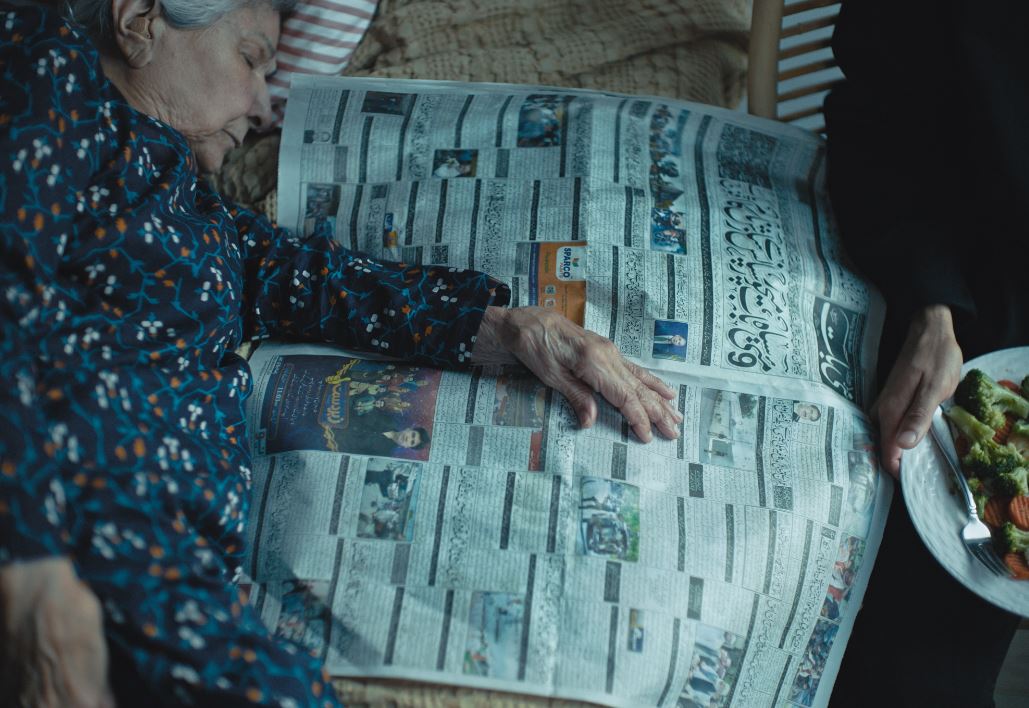
How do you balance the consequences of British colonialism through dating apps and long-term health conditions into a 19-minute short film? Ask Shehrezad Maher, the filmmaker behind The Curfew. Born and raised in Pakistan before coming to the US to study in visual arts, Maher’s blended background of history and striking imagery sets up her first narrative piece to be strikingly alluring. The short film features a grown man named Ayaan (Sathya Sridharan), who is in charge of taking care of his grandmother Nayyer (Balinder Johal) for the weekend, a responsibility taken care by his older sister. Not being able to speak to each other (partly due Ayaan’s inability to speak Urdu and Nayyer’s post-stroke status), the bridge between them seems challenging, especially as he also tries to navigate the workings of their newly inhabited apartment.
In some circumstances, the feeling of isolation can feel hostile: sharpened silence, the absence of communication feeling like a black hole of empathy. But Ayaan and Nayyer exist together in a familiar comfort, despite the ocean of experience and language that separate them. Nayyer exhibits sleepcrawling, in which she leaves the apartment on all fours, dragging her body down the hallway. However, with Ayaan’s experience at this new apartment – clean, sterile, equipped with surveillance cameras – this event might not be the scariest part of the experience.
Ahead of its North American premiere at the Hamptons International Film Festival on 10/11, followed by a screening at the New Orleans Film Festival on 10/25 (the latter of which is available to watch online), I spoke to Maher through email about the deliberations behind The Curfew. Her dissection of the cinematography, importance of off-screen conflict, and the show/not tell mindset enriches the world that we observe through this film.
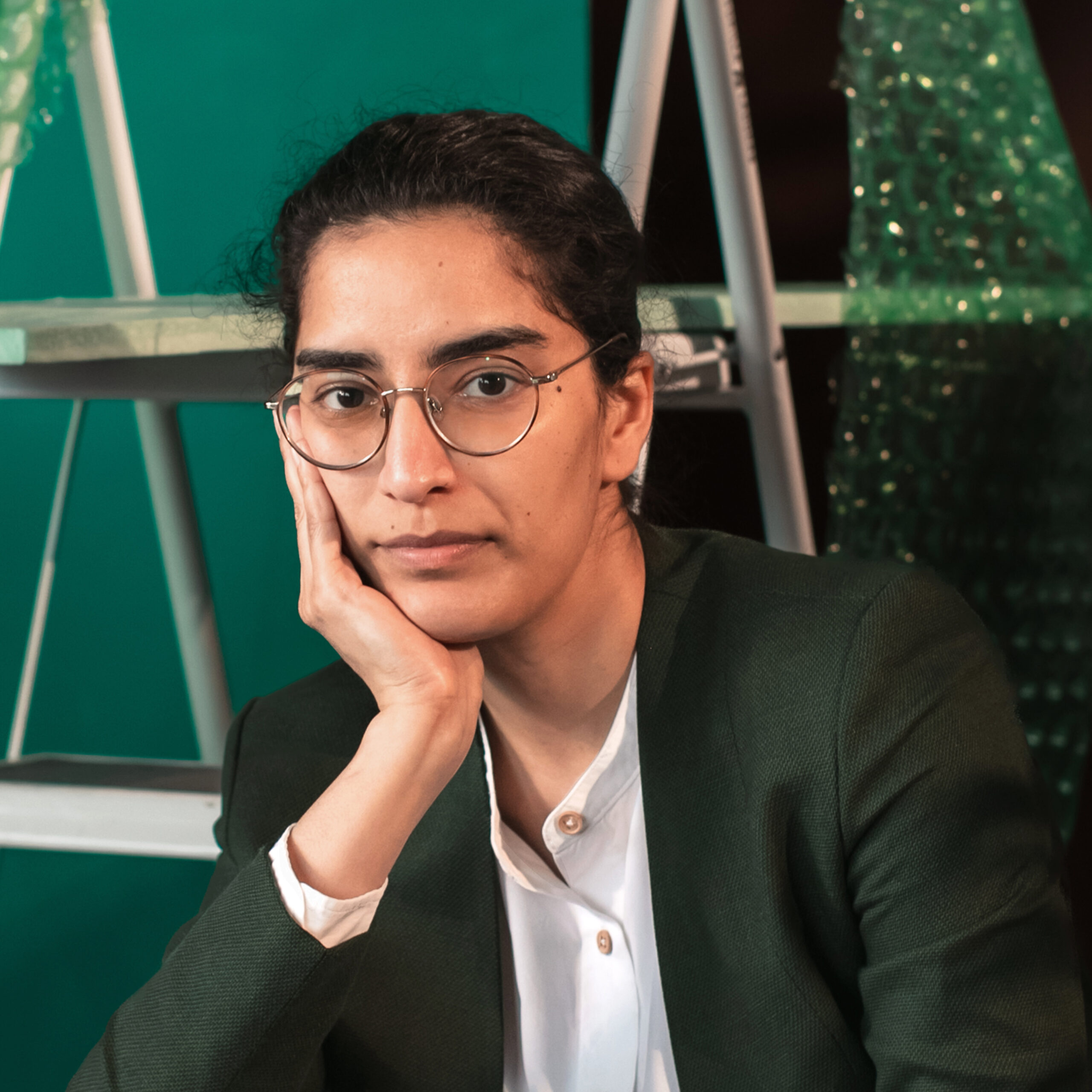
BOSTON HASSLE: The Curfew is your first released narrative piece, though the story doesn’t feel fictional at all. From your past work in documentaries and non-fiction, how did you decide to create these characters in this setting?
SHEHREZAD MAHER: I made my previous nonfiction films in Pakistan, where I was most interested in engaging with the world outside my home. The films became a socially acceptable cover that allowed me to be out in public and observe the people and places I was drawn to. Fiction became an opportunity to turn inward and came after I had more time and distance to reflect on my relationships with people back home and what it meant to grow up there and then move to the US.
I wanted to explore a setup where two characters, bound by family but estranged by time and place, are temporarily stuck in the close and unfamiliar quarters of a new apartment. Against the airy, polished backup of Ayaan’s gentrified apartment building, the gravity of Nayyer’s past bears down on the present. After compartmentalizing and filing away his family’s history from another country, a long-neglected past surges into Ayaan’s awareness with startling immediacy and intensity.
BH: The story is a snapshot of a relationship between Ayaan and his grandmother, though they aren’t able to communicate based on Ayaan not knowing Urdu and his grandmother’s stroke. The relationship, on paper, might be new and strange, but there’s a warmth from their characters that make it feel like they’re family for sure. Was it hard to display their relationship without being obvious, like blatantly sharing childhood memories out loud?
SM: I didn’t want to shy away from them feeling like total strangers. Having had a grandmother who was somewhat cold and distant, and who often turned inward when she felt vulnerable, I wanted their relationship to be emptied of the usual gestures one might expect from a South Asian grandmother and her grandson. For me, the tenderness between them arises not in the last scene or a single moment of reconciliation but in the way Ayaan learns to respect her desire to be alone and makes quick work of bringing her tea, connecting her Zoom calls, etc. Yet outside her door, he’s making a doomed attempt to learn Urdu, even though she’s only there for the weekend.
I love the challenge of presenting the past in the present without using conventional exposition tools like flashbacks, which can be too instructive in explaining the present. In a more oblique way, the fruit seller is a fragment of a memory for Ayaan – something possibly from childhood that resurfaces through Nayyer’s presence.
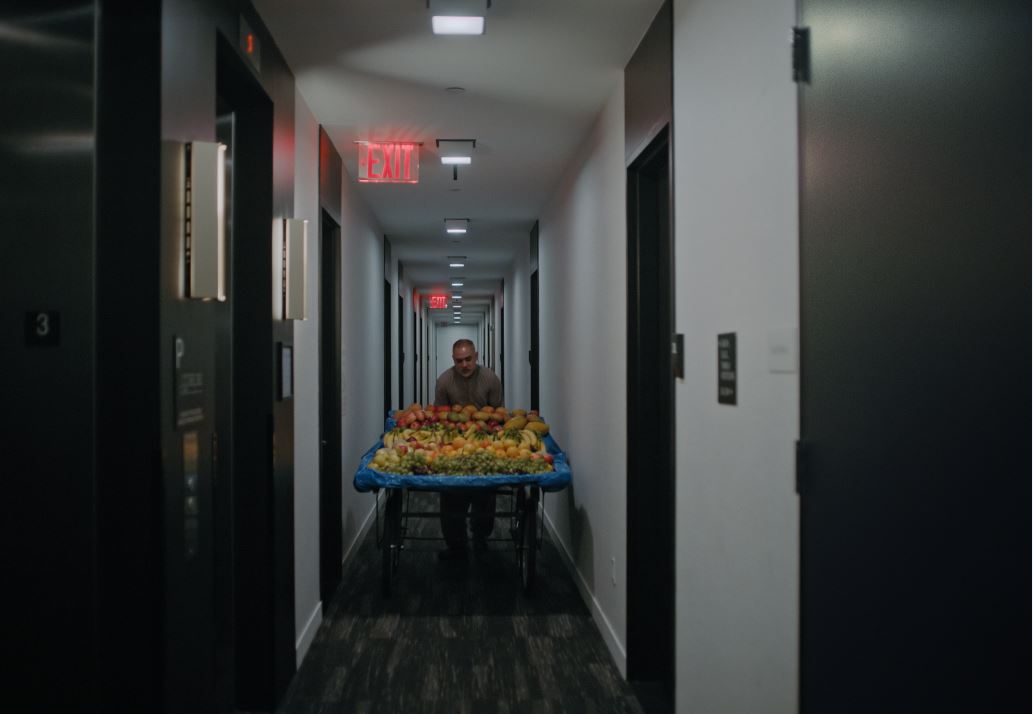
BH: From the intentional clarity in framing, it seems like the movie is driven by imagery. Because of the missing communication bridge between Ayaan and his grandmother, did you feel like you had to tailor [the imagery] in a certain way to make up for the space normally reserved for dialogue?
SM: Dialogue often expresses how characters see themselves and others, while imagery, sound, and silence reveals what lies beneath those perceptions. Since The Curfew and a feature I’m developing involve characters who feel distant and estranged, I try to use dialogue only after every other avenue has been exhausted.
I’m interested in how the spaces the characters inhabit, including the clutter of unpacked boxes, specific grocery items Nayyer prefers, devices, Zoom calls, and objects tied to rituals of care, can become a kind of psychic landscape that reflects their interior worlds and heightens their sense of rootlessness. My cinematographer Dustin Lane and I also set certain visual parameters to reinforce a sense of alienation between Ayaan and Nayyer and sometimes other characters. They’re not fully visible in the same frame until the very end, with one body often cut off or segmented while the other appears more fully.
BH: I’m fascinated by the sort of surprise multi-media footage, like the surveillance footage and even the sort of quick zooming in of the picture, as if we’re looking through one of the large-media microscopes at a library. They don’t overpower the film’s message, but they were still cool choices. How did you decide to break it up like that?
SM: Up until this point, the audience has shared Ayaan’s confusion about Nayyer’s parasomnia. Then comes the blunt, matter-of-fact photo, which probably comes as close as any image could to summing up British colonialism in India, even though that’s impossible. I was drawn to the idea of a character who feels his family history is convoluted and distant – like secret knowledge he can only access with his older and more knowledgeable sister’s help – and yet, some essential part of it is just there, online, searchable, flattened into an image or caption. There’s something absurd and poignant about that dichotomy.
The surveillance footage became a way of visually tying together the culture of policing and watchfulness that Nayyer remembers under martial law and curfews with the contemporary world Ayaan inhibits — this sterile new building where every big corner is outfitted with a surveillance camera and neighbors report on each other. The CCTV imagery is a bit of a retinal cold bath after the intensity of watching Nayyer have a nightmare, but it suggests the distance between Nayyer’s past and Ayaan’s present is starting to collapse a little in Ayaan’s mind.
BH: I also liked the interstitial scenes that help illustrate the characters, even if they don’t necessitate them coming up again, like the Tinder-swiping and the neighbor petition. How important was it to establish them outside of the story within a short film?
SM: Those scenes are sly in the way they seem incidental on the surface but still echo some of the film’s reflections. I grew up in a culture where we internalized deep shame about our bodies, our minds, and the color of our skin, and were conditioned to view ourselves as inferior to the white man. Much of this was shaped by British colonization and even weaponized by it. So I’m curious how some of these ideas mutate across generations or countries of adoption.
With the dating app, which bodies has Ayaan come to see as more desirable or ideal? Is there a thread that can be teased between this photo of an Indian man crawling at the feet of three British soldiers and the present day in Ayaan’s life, where a man goes door to door trying to report an unsupervised child playing piano and impose a cutoff time? When Ayaan is misread as a food delivery guy or neighbors police neighbors, the lobby and hallways of his new building become charged with power dynamics he might have previously overlooked. The neighbor’s complaint is justified, yet his sense of entitlement underscores those dynamics and raises questions about who feels most comfortable exercising authority.
BH: Lastly, there was something that spoke devilishly to me about the steamed vegetables, as I think my immigrant parents would be scandalized if I had tried to feed them that, even if it was medically recommended. Having the gelato be the sort of unsung hero – or medicine, golden bridge – is such a nice, cathartic touch. Can you explain the makings of the last scene?
SM: I didn’t want it to feel like a one-note moment of resolution and connection, but rather a moment of observing, of seeing someone in a new light. I wanted Ayaan to feel unsure, like when a cat finally decides to sit with you and you don’t want to scare it away.
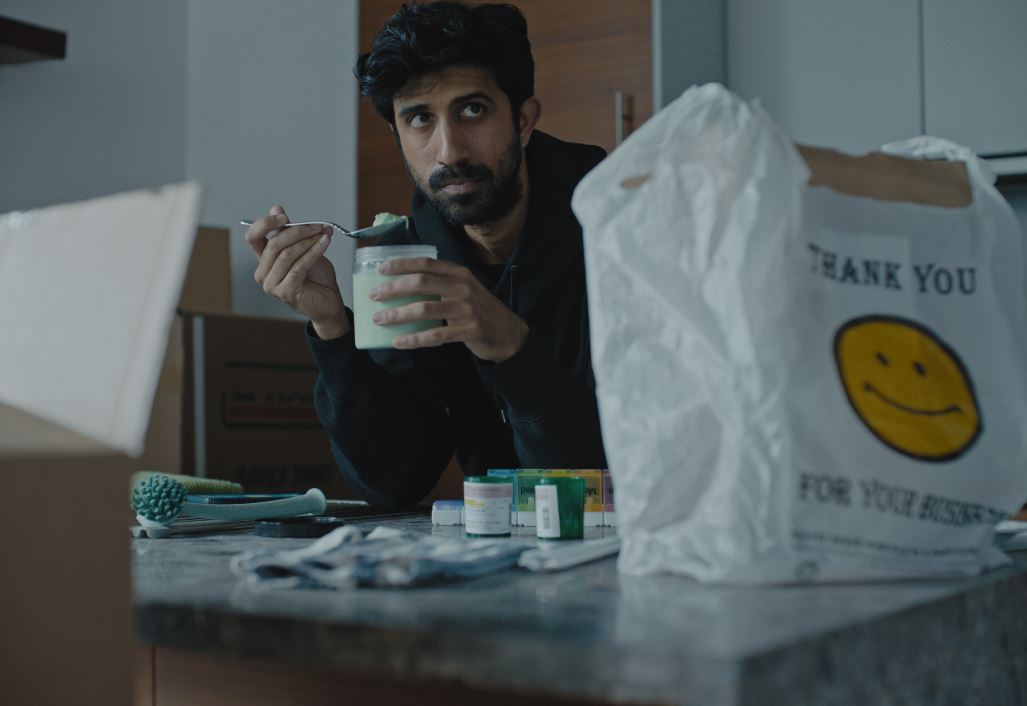
While the neighbor’s kid practices piano for what is likely the last time after being reported on, Nayyer goes a bit more rogue from the reserved version of her we see during the day. She experiences a moment of autonomy in a childlike state, and Ayaan feels relief at finally decoding her needs after the sad, dutiful vegetables. As Nayyer breathlessly indulges in her appetite, Ayaan also experiences strains of bewilderment and revulsion – emotions that feel true to my experiences as a caregiver. I was drawn to that mix of wanting closeness while also feeling unsettled by the sudden, intense proximity to a person, and feeling overwhelmed by the inescapability of the ties you have to them, for better or worse.
Another feeling I’ve felt as a caregiver is wondering if a certain shared moment is emotionally reliable. If feeling closer to someone depends on them remembering it, will Nayyer recall this the next day, or is it just another bout of her parasomnia?