
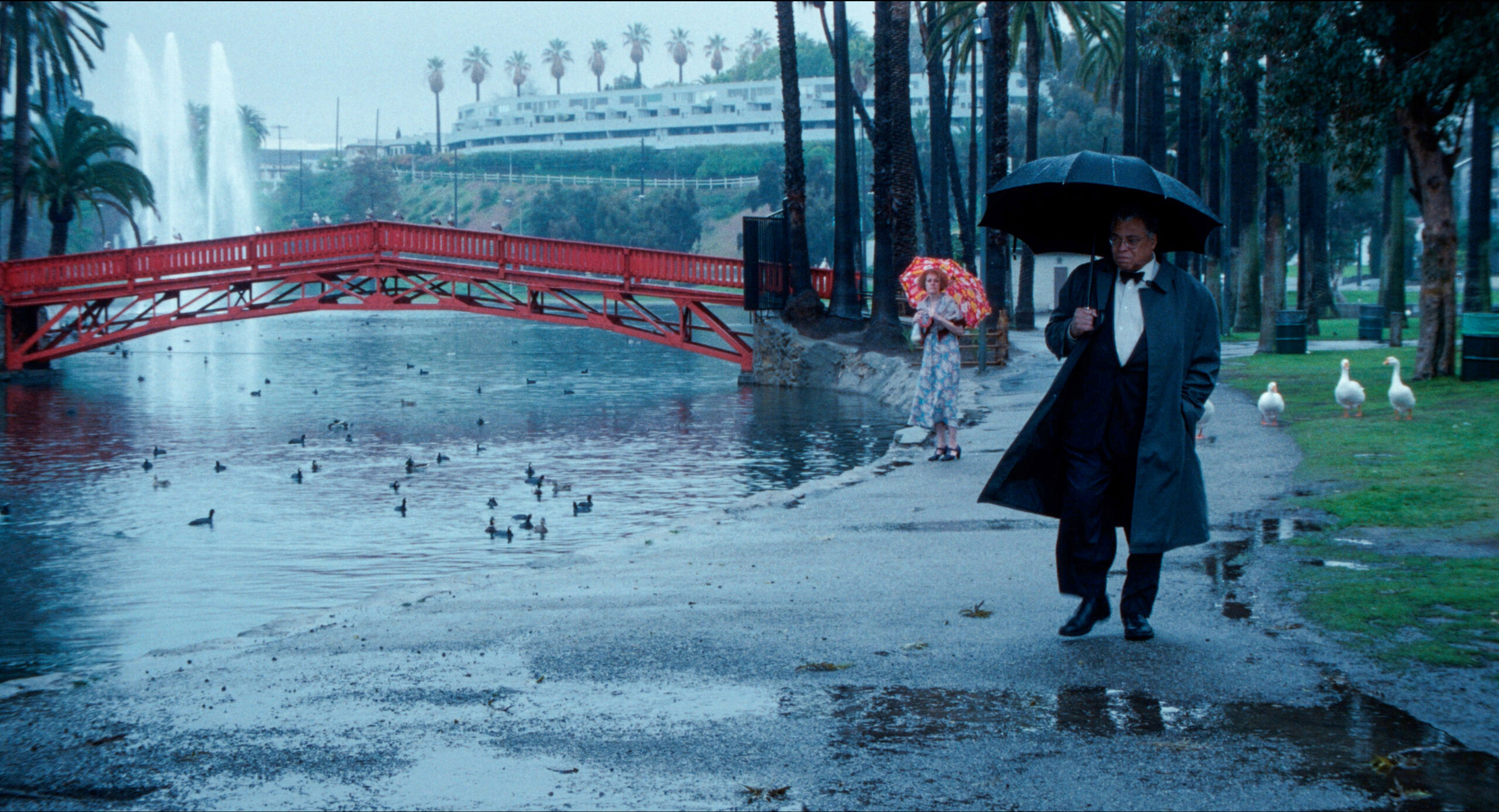
Charles Burnett was 33 when he created Killer of Sheep for his master’s thesis at UCLA. When he released his sixth directional film, The Annihilation of Fish, right before the turn of the millennium, some would have thought that the film’s synopsis — two older people falling in love — was an indicator of a finale of sorts. The Annihilation of Fish was not as big as Killer of Sheep or To Sleep with Anger, which makes its re-release all the more serendipitous. Burnett, who is now in the octogenarian directors’ club, is thankfully still around, making his rounds at film forums and print interviews where he can see another one of his films reach a deserved revival (Killer of Sheep didn’t reach the public stratosphere until thirty years after its release).
At surface level, The Annihilation of Fish may seem like an additional carriage to the era’s bandwagon of romantic comedies. For most people, 1997’s As Good As It Gets is probably the seminal intersection of older people with mental disorders that can still find love, boosted by the dual Best Actor/Best Actress Oscar win for Jack Nicholson and Helen Hunt, both bonafide stars in their own rites. But The Annihilation of Fish feels like an authentic sliver of rare chances. The film confides its characters in two veteran Broadway actors, James Earl Jones and Lynn Redgrave. Though it wouldn’t be their first or last known work (Jones’ prior big-shot moment was voicing Mufasa in ‘94, and Redgrave was nominated for Gods and Monsters the year before), Jones and Redgrave perform with such a tender heart that the patience to care for these characters comes on quick. The Annihilation of Fish knows exactly what it takes to flourish their oddities, and then to cast this story off into the world to enjoy — or, in this film’s trajectory, to re-discover.
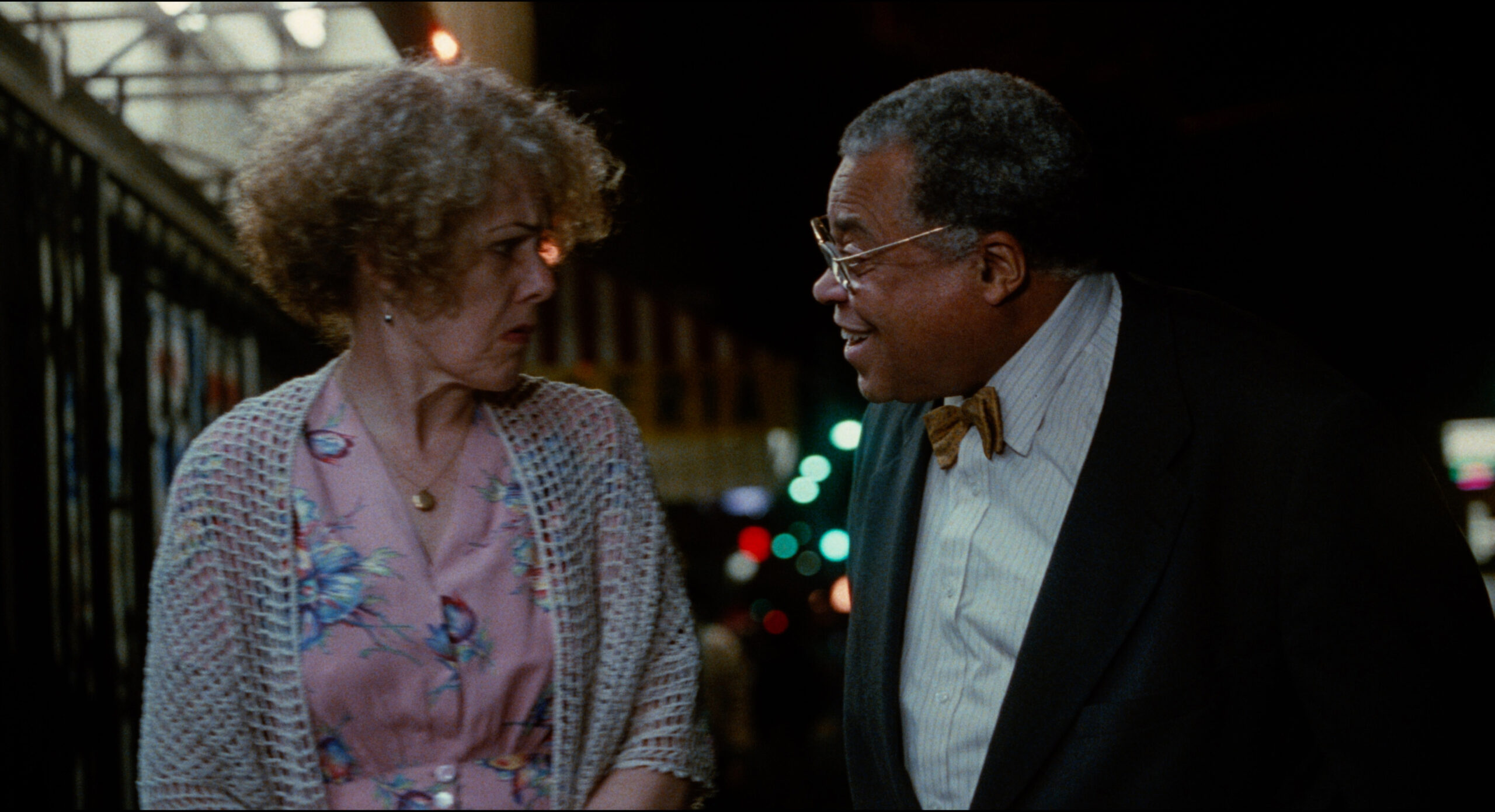
Jones plays Obadiah, or “Fish,” a Jamaican immigrant who had just been released from an inpatient psychiatric setting despite exhibiting delusions of an unseen demon over his shoulder (“The President and Congress just did what psychiatry couldn’t do,” a frustrated psychiatrist shares before being forced to deinstitutionalize Fish). Redgrave plays Poinsettia, or “Flower,” a lonely woman who breaks up with her hallucinated boyfriend, Italian composer Giacomo Puccini. Both of our lonely protagonists end up in LA (the location of Burnett’s many films), renting in the same house owned by Mrs. Muldroone (Margot Kidder), a widow who implores that people spell her last name correctly.
Fish’s demon is relentless. Every morning, Fish wrestles with the invisible demon in a demonstrated one-man horseplay on the floor. While it seems that victory lands on Fish’s hands, the demon comes back with a fresh set of fists and a particular request to have an official referee present – a role that is given to Flower when she stops by his apartment one day. As someone who had just been seen in cohorts with a fake lover, Flower is hypocritically weirded out by Fish’s behavior. In today’s widened approach and acceptance to mental health disorders, the differential optics are much clearer when watching how society perceives a white woman who can go about her day-to-day life and a Black immigrant who had been institutionalized for the same symptom.

Eventually, the neighbors soften towards each other and find comfort in their unusual grooves. Vulnerability, and the steps in uncovering one’s soul, are a powerful presence on screen, especially when shared between two weathered souls who may otherwise not bend the knee to emotional connection. Growing up to be painfully alone is probably one of the cruel consequences of living a long, dissatisfied life, but as Fish declares to Flower, “I’d die before I laugh at somebody’s loneliness.”
Lack of nuance, especially prominent in short-video form of civilian canceling and social media shaming, makes compassion a harder skill to achieve these days. To tend to love is to listen, and Fish and Flower learn to listen through the noises of their pasts and current troubles. Burnett lets the late stage of our lives feel as important as our youthful years by polishing off the power of love that we can give to each other. It’s not an exaggeration to say that it feels like a dog-eat-dog world out there, which makes it certain that we need Fish and Poinsettia to show us what’s possible against the odds stacked against them. But it’s also certain that, in their own configured lives, that they don’t need us at all.
The Annihilation of Fish
1999
dir. Charles Burnett
108 min.
Screening 3/28-3/30 @ Brattle Theatre – Click here for showtimes and ticket info