Diractors is an ongoing series in which Hassle writer Jack Draper examines films, new and old, whose directors are better known for their work in front of the camera.
After all is all said and done, Silkwood is a cautionary tale. The story of Karen Silkwood was one to learn from 30 years ago, and now it’s again confirming what we already know. Mike Nichols made a career combining cynicism and humanism, an incredibly tough needle to thread, but it works to Silkwood’s advantage. There’s certainly something in the water with how workers were so easily radicalized, to find that they were disposable for how labor intensive their work is. Like Paul Schrader’s Blue Collar, Barbara Kopple’s Harlan County, USA, and Martin Ritt’s Norma Rae, Silkwood has the DNA of a character-driven story that is then sophisticated by the effects of capitalism, which need to explain away transparent flaws. What’s lovely about Silkwood (and the other films listed) is how great actors and superb storytelling can ease us into a crisis with our characters, as opposed to frontloading an issue that leads to something in the lane of a journalism film.
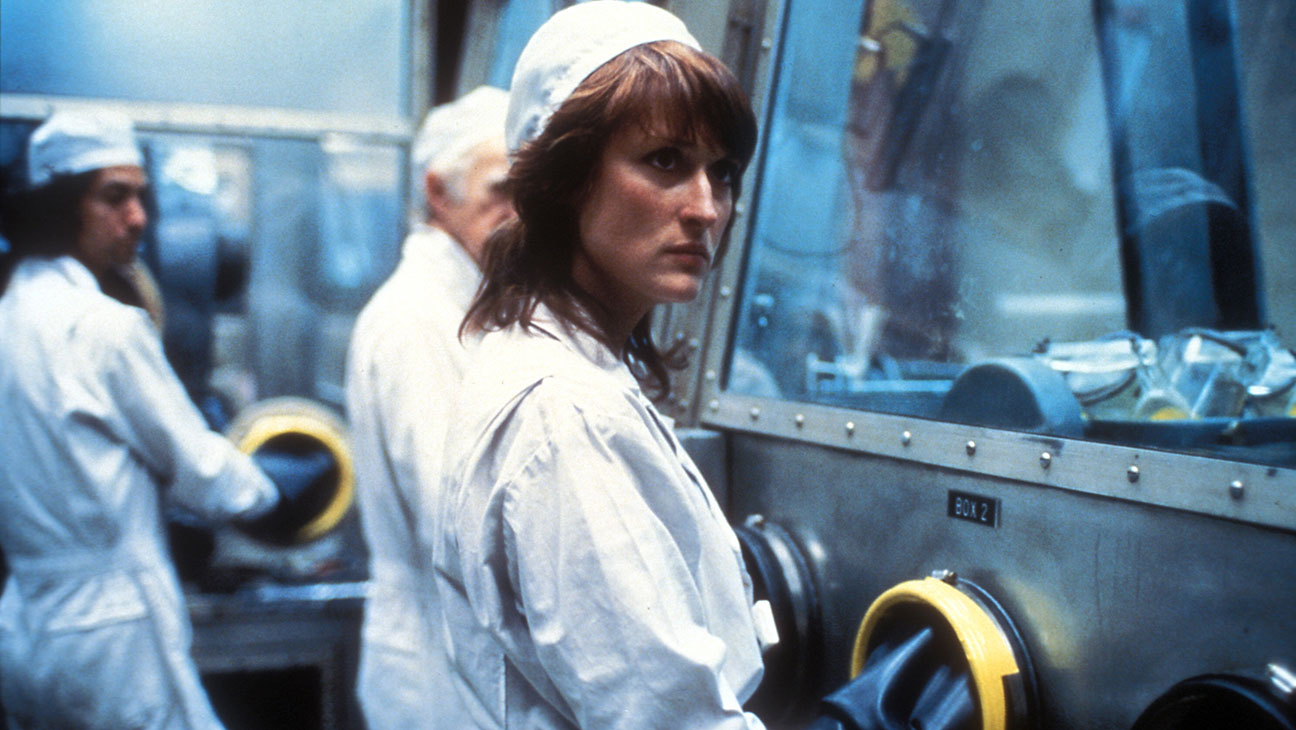
Silkwood is the story of American workers. They happen to work in the Kerr-McGee nuclear plant in Oklahoma, making plutonium fuel rods for nuclear reactors. But they could just as easily be working in a Southern textile mill (there are echoes of Norma Rae), or Amazon. The movie isn’t married to the nuclear plant coming and goings, it’s about the American working class. Its villains aren’t monsters; they’re organization men, labor union hotshots and people afraid of losing their jobs. Nora Ephron wrote the screenplay– her first– adapted from Howard Kohn’s book Who Killed Karen Silkwood, making it easier for the dynamics to feel lived in than just another real life story with an accessible message. Meryl Steep, Kurt Russell and Cher are all splendid, disappearing into their roles; Russell’s Drew and Cher’s Dolly pull Streep’s Karen in opposite directions.
Karen approaching and reckoning with the union is one of my favorite parts of the movie. There’s no telegraphing, yet it also resists putting a face to the opposition. We see there’s some publicity in her complaints; she gets a free trip to Washington, and then the New York Times, all while meeting with people who perceive this as a much bigger issue than she does. She proceeds to have an affair, crystallizing Karen as Ephron’s first prickly protagonist. Streep doesn’t embody a talking point, nor does she feel powerless to Drew, more so on common ground with two equal views of the issues. Drew just has more foresight than Karen, is the real martyr for the workers to rally behind, and for the people at the top to accuse of worrying about nothing. It’s a tale as old as time to think that someone of an ordinary background who assumes the role of a whistle blower will die or disappear of “mysterious causes,” yet Karen was also caught in a loop. Her powerlessness, even with the press or union backing, is the kind of defeat that can’t ultimately crack into the dangerous effects that we see so clearly. The sketchy car crash that occurred is one that was out of a loss of hope, yet grimly, Nichols and Ephron know it works as a deeply sad send off for Karen’s life, and for America’s continuation.
And then there’s director Mike Nichols, an EGOT (insane!) whose career is genuinely fun to reflect on, especially as a director. His multifaceted mind as a comedian-turned-theater director-turned-filmmaker is so special. His comedy with Diractors alum Elaine May is incredibly influential, even today ( Iwonder what her script for Silkwood would look like!). Their work as a duo taught them both how to bring out the best in each other, and each went on to be great actor-directors. Like Jonathan Demme, Nichols knows how to traverse from one genre to the next with ease, and their love of actors made it for easy productions through out their careers. Nichols knows how valuable great performance is in contribution to his direction, and he was unafraid to make theater cinematic. Nichols adapted Who’s Afraid of Virginia Woolf? or Biloxi Blues from stage, but Silkwood is a return to cinema. Nichols took an 8-year break prior to this movie after 1975’s The Fortune while busy directing Neil Simon productions for the stage, where he fell in love with performing. Life after Silkwood was pretty good for Nichols, rounding out the ’80s with a string of classics including Working Girl, the aforementioned Biloxi Blues, and reteaming with Streep, Nicholson, and Ephron inHeartburn. Hope I did him well, Mark Harris.
Silkwood
1983
dir. Mike Nichols
127 min.
Screens on 35mm Saturday, 3/8, 6:00pm @ Brattle Theatre
Special introduction and post-film discussion with Strictly Brohibited
Part of the series: True Tales of Wonder Women