

Diractors is an ongoing series in which Hassle writer Jack Draper examines films, new and old, whose directors are better known for their work in front of the camera.
I can vividly remember first seeing Bradley Cooper’s debut as a director, A Star is Born. It’s 2018 and my first year and semester at Keene State, a university I’ll soon leave (which is not Bradley Cooper’s fault). The theater was Keene Cinemas 6, still one of the dingiest theatres I have ever been to, which was not worth the walking distance through the chilly October night. After realizing there’s nobody there to scan my ticket or hand me candy, I let myself into the auditorium where A Star is Born was showing, after months of seeing that tremendous trailer. I really had no opinion on Cooper before this; I liked him, but never having seen his noisiest films (The Hangover, Wedding Crashers, American Sniper) kept me from getting bored of him. I wouldn’t come to the weightless Silver Linings Playbook until covering it for my podcast Exiting Through the 2010s, but that one feels like a lot of its charm comes from how you had to be there. Much of the same can be said for Lady Gaga, who I admire but by no means qualify as a superfan. She’s always gonna be a compelling celebrity, even if her music can begin to sound a bit diluted. As an evolving Oscars nerd at this time, it was clear that A Star is Born, like Moonlight and Phantom Thread before it, was going to live on far beyond award season discourse
We cover lots of movies here on Diractors that, uh, don’t have the largest cultural relevance, and feel like hidden gems nowadays. A Star is Born takes us into new territory; it’s not only the most famous Diractor film of 2010s, but one of the most totemic studio films of the past ten years. Between this and the fact that this is the fourth (and best?) reinterpretation of the movie, I can’t imagine there’s a need to recap the plot in the middle of this review. But what sounds familiar for the dilution I saw with A Star is Born, or at least what I clocked when the movie goes out of its way to acknowledge. During that solo theater experience in 2018, I saw A Star is Born as a commentary on the ways in which a celebrity’s image is outside of their control, which made for great drama. Seven years later, however, I read it from a place of sincere romance and heartbreak. The downfall of Jackson Maine (Cooper) and rise of Ally (Gaga) is pretty clearly intended to reflect Lady Gaga’s actual start in the entertainment industry– not just her persona, but the insecurities and Italian roots which Cooper delicately weaves into the movie, making this characterization feel intentionally cast rather than a remake waiting to happen. This could even extend to Cooper himself, knowing he is not number one on the call sheet or never having the juice to develop a persona for movies, and the fear that people may decide they can move past the need for him.
Cooper injects further interrogation about himself in Maestro and a bygone celebrity image, but it’s a remarkable performance. So is Gaga’s in Star, of course; I still think they gave up trying to hide the fact that they gave up, but that’s okay. Jackson and Ally are fully realized people that are capable of love, just not with each other. They’re simply people with the inability to communicate, on top of Jackson’s literal struggle to listen even to himself. As much as we can interpret how much of their relationship Jackson is sober for, I’d like to assume Jackson is very aware that this is a doomed romance from the start. In one of the more devastating moments of the movie (aside from the actual tragic ending), Ally, now with new hair and full-on ick towards Jackson, tries to recapture something lost when she traces her nose after Jackson tells her he just wanted another look at her. What was once a deeply sweet and sad (ifmemed to an agonizing death) attempt at an inside joke shows this realization that there’s nothing left to romantically resuscitate despite Jackson’s sobriety and Ally’s fame.
It is this that Cooper also finds very sad and profound. How much more hollow (or shallow, haha) can you become once addiction infects yourself, and by extension the people around you? The people who suffer from the disease of alcoholism can be truly so charming and so lovable, which makes everything hurt so much more. Despite all the pill crushing and Jack and cokes, Jackson isn’t a bastard, just a kinda dumb guy who proposes once he sees his buddy (Dave Chappelle) content with a family. Even his brother Bobby (the great Sam Elliot) can plainly see that Jackson is far from knowing who he is anymore, even after knowing him for a lifetime.
———————————————————————————————————————
To keep up the momentum of A Star is Born, Cooper not only needed something to prove himself once more as a diractor, but but also to show he could handle something beyond adaptation. Maestro, famously, took a long road to get into being a Bradley Cooper film. It was first going to be directed by Steven Spielberg (who, funnily enough, went on to remake West Side Story). Martin Scorsese was attached to direct at one point (who knows how long that lasted), only to leave to make The Irishman. Cary Fukunaga was going to make another film with Jake Gyllenhaal as Bernstein, which would’ve been released at the same time as Maestro. Everyone stepped aside for Cooper, who had an infatuation with Lenny Bernstein ever since he was a kid. This was more than the “I’m attached already to a project and the opportunity arose to direct” situation that we saw with A Star is Born. Yet, the level of importance which it took on for Cooper being seemingly gifted a capital-I important biopic from goodwill as an actor, gave the movie some skepticism even before its arrival to Netflix. I’m certainly not one of these skeptics, but Maestro is a prime example of time being kind to a movie with the purest of intentions.
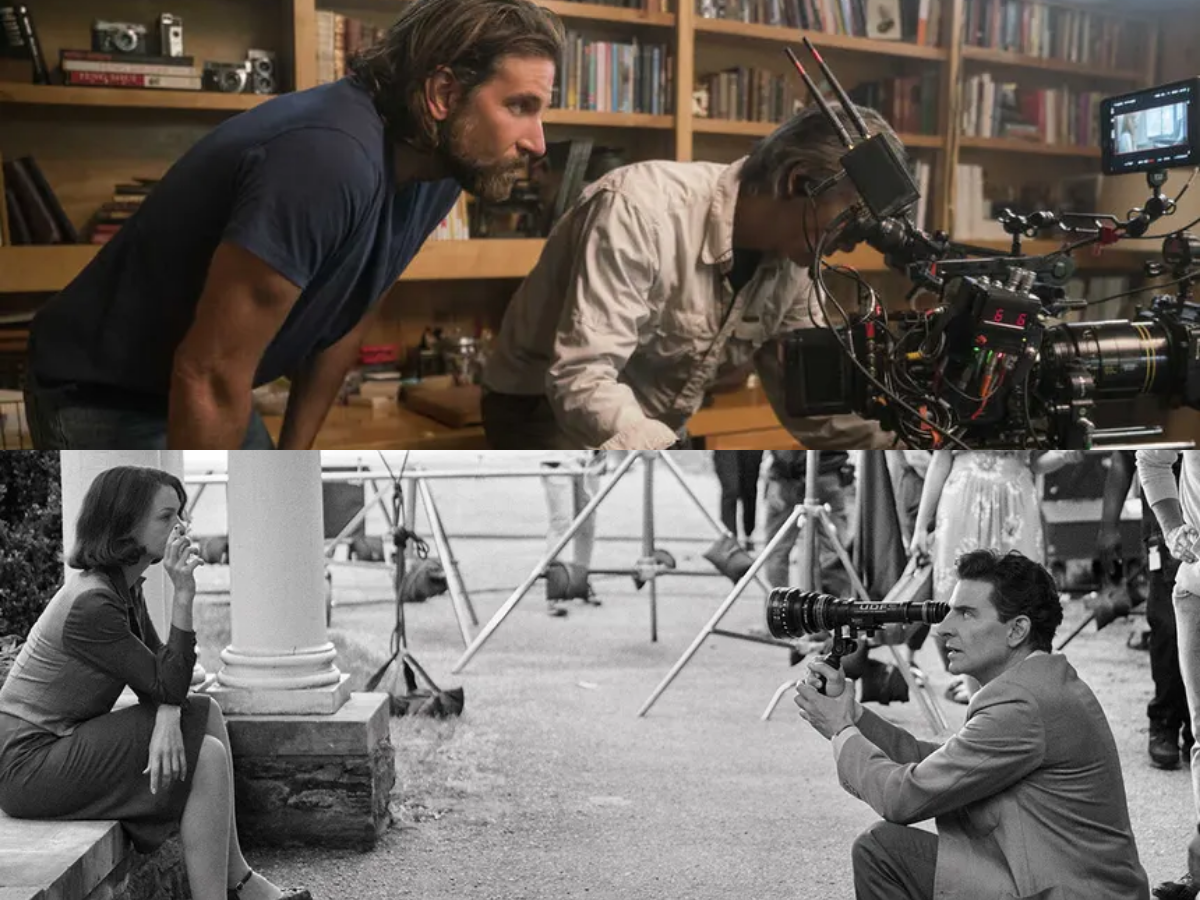
Maestro is most concerned about the identity and complicated relationship between Leonerd Bernstein and Felicia Montealegre Cohn, and how one of the most famous people of the 20th century was deeply lonely despite his love of people. It is notable, and maybe at times questionable, how Cooper is resistant to his classical music conducting itself being something to investigate. Questionable doesn’t mean bad, but rather understandable, since Lenny’s masterful conducting isn’t all that complicated and as a genius he doesn’t find is the heaviest burden as his life continues. Being a genius comes more naturally to him than being a celebrity does. Cooper colors outside the lines with how to read someone’s psyche who’s always exposed. Addiction and insecurities got in the way of being a dad and being a husband; even though its so interesting for a biopic of this importance to resist showing his art be the cause of self destruction.
John Mulaney has a brilliant joke which goes “You know Leonard Bernstein was one of the great composers and conductors of the 20th century, but sometimes, he would be gay. And according to a biography I read of him, when he was holding back the gay part, he did some of his best work.” Which is just as comical as it is true, since Bernstein and Montealegre have one of the more fascinating dynamics in a biopics I’ve seen. In spite of the traditional sideline that The Wife™ takes in a marriage with two successful artists, Montealegre still holds power despite having to sacrifice this life as an actress since Bernstein can’t help but live life out loud. Note the absence of a scene where Felciia discovers Lenny’s infidelity; rather, we jump cut to the mid ’50s and her having to deal with his public affairs. And consider how perfect Carey Mulligan is in the moment to clear the air with their oldest, Jaimie (Maya Hawke), when rumors resurface of questioning Lenny’s sexuality. In the conversation with Jaimie and Lenny, he denies it, but with a tinge of melancholy. It’s clear that he isn’t in the clear, but the conversation buys more time before the questions resurface. Her annoyance becoming more clear as the movie continues as he puts their marriage and family in conflict from his mistakes. It’s this very interesting feeling that Cooper taps into for this romance that you can fall out of love with someone, but how strong your admiration is can make up for that.
Bradley Cooper told Steven Spielberg in an interview that he was most comfortable with switching from acting to directing since he consistently thought like a director when he was solely an actor. It was fluid then, but now, with the makeup, voice, and nose of it all, he felt becoming Bernstein made the other actors more comfortable with Cooper having this opportunity to be vulnerable. Don Cheadle remarked on something similar while making previous Diractors subject Miles Ahead as he was committed to Miles Davis even when the cameras were off. This can come off as corny, but you do realize this doesn’t break illusion within your own ensemble when switching hats between actor and director. Being a diractor comes with the assumption that you’ll live up to being a gifted actors director, but B-Coops goes above. He proves he is a really talented romantic storyteller who’s unafraid of intimacy and ugly truths.
A Star is Born
2018
dir. Bradley Cooper
130 min.
Maestro
2023
dir. Bradley Cooper
120 min
A Star Is Born is currently streaming on Hulu. Maestro is currently streaming on Netflix.