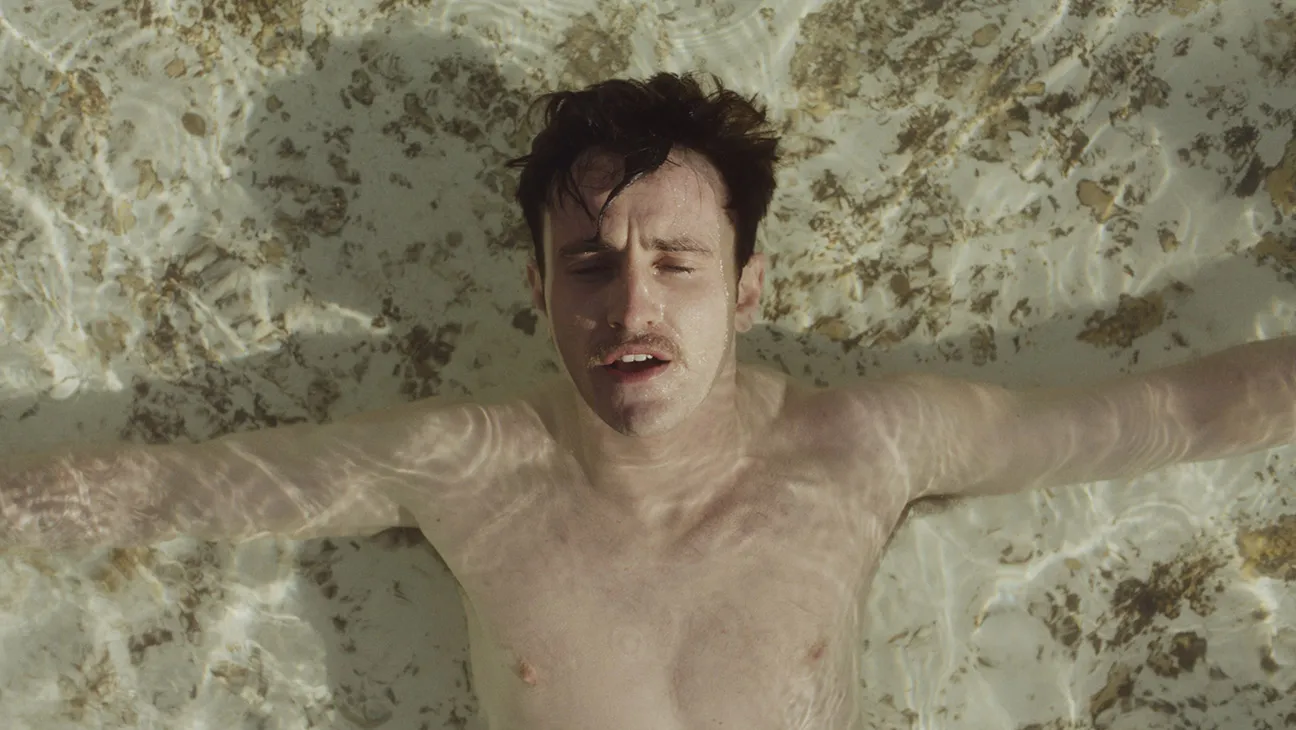
The History of Sound is a reSoundingly average romance piece. Though David White (Josh O’Connor) and Lionel Worthing (Paul Mescal) are a blissful pairing—breathtaking scenery and somber scoring elevate their tragic lives—a deliberately mucky pace and lack of actionable progression effectively castrate Sound‘s pleas for attention. The profound loss the two experience, fortunately, comes through just well enough for this History to pass the time, even if slowly and sorely.
At the New England Conservatory of Music in 1917, farm-raised music student Lionel meets David at a pub, where the pair immediately bond over their shared love of music and all its properties. They screw, fall in love, everything’s great, right? Wrong. World War I begins, which drafts David and leaves Lionel behind, given his poor eyesight, meaning he must go back to his Kentucky farm, with the Conservatory closing. Later, Lionel receives a letter of David’s return and employment in a Maine college, where they venture on a project recording locals’ songs on wax cylinders across the state. With their shared love of music and each other only growing with the trip, they unfortunately must separate again, with David’s work and Lionel’s planned trip around Europe. While Lionel tries to stay in touch over the years, David never answers, forcing Lionel to move on—and though he tries, he never does. Time and time again, he finds himself in new situations, longing for the connection he had with David, even as he learns more about music and sound. He must either find David and stay with him, or see the old cylinders and accept his permanent separation from David, using it to drive himself and whatever sounds he loves the most.
There’s a lot to enjoy in this personal, fictional history, even if it sludges through flat notes that almost spoil the appeal to hit some of the right ones. While the irregularity of David and Lionel’s deeply intimate gay relationship going unperturbed in 1910s-’20s America doesn’t go unnoticed, O’Connor and Mescal are wonderfully charismatic even when gravely depressed. O’Connor exhales into David a soulful wisdom beyond his years, as every experience seems to bear a heavy mark on him. So much so that, as David heavies his eyelids and droops his cheeks even in the happiest of moments, one can’t avoid the fatigued look seen in a person who has seen more than his fair share at a young age. And whaddyaknow, David has! As he explains the horrors of his past, such as how “After my parents died I lived with my uncle outside London for a few years.… I was momentarily unparented,” the weight of life merely translates through his stiffened state of difficulty in dealing. That is, until it turns back to his favorite subject: “I was so obsessive… annoying as a little boy. I would go around and ask people for songs, writing them all down in a little book,” he says with a smile only wide enough to hide the misery without the music. Especially after the war, which “… made everything dimmer [and] cold” for David, the “obsessive” chase for songs could only do so much to help—an experienced exhaustion O’Connor effortlessly emanates to bounce off Mescal’s intentionally naive and warm take as Lionel.
While David loves music, Lionel has a true gift for it. He experiences sound much more intimately—and impactfully—than anybody else: “My father said it was a gift from God. How I could see music. How I could name the note my mother coughed every morning. What the dog across the field was barking. The key of the springtime frogs.” While others may understand and appreciate music, they don’t live and feel its existence as intensely as Lionel does, which Mescal brings home. With every opportunity to discuss or contemplate music, Lionel’s eyes light up, and a grin spreads. However, unlike O’Connor’s character, Mescal ensures that Lionel comes across as shy, hesitant, and sheltered. As Lionel narrates this History, Mescal delivers a poetic presence both on-screen and on-sound; with every new experience, his next smile seems lesser than it was the last time. In his sheltered state, Lionel is clumsy in relationships, and Mescal heavies himself with every new self-propelled loss upon realizing he’s not happy. Though the pattern could be more heavily pronounced beyond characters confronting him about it—”My mother wrote me after you left. Said that I should leave you before you left me. I want you to go,” one eventually ex-lover tells him as he cuts things off—Mescal ensures such undoing decisions also weigh on his conscious, much like how David’s issues weigh on him. Even apart, Lionel feels only closer to David and their shared love of sound, bringing them closer together even in their absence. For Lionel, music becomes that much more potent as he uses it to remember every bit of his life, be they joyful or painful, because that’s what music and living are all about: “Emotion in songs. Nothing fancy, but high in feeling, and that’s why I love ‘em.” The History of Sound is, at its core, then, a demonstration of love and music’s endlessly valuable impacts on our lives and how they make it worth living—a feat brought home by its central duo.
Unfortunately, this musically driven gay love song simply isn’t doing enough to reach the dramatic heights it strives for. The message may come through, but Sound is still dull; at two hours and seven minutes, the film drags, drags, and drags some more. While the general concept of human connection, longing, and loss comes through thanks to the central duo’s gravitating performances, spending two to three minutes for every walking sequence, contemplative scene, or intake of acre-wide landscapes significantly weakens this film’s intent. Plus, all the interesting things happen mostly off-screen. David’s wartime experience is never directly depicted, except in his explanations of its effects; every death and major life-altering instance occurs almost entirely off-screen, such as unexpected familial deaths. A third of the time, people are just singing presumably symbolic songs that mirror Lionel’s then-current experiences. With just about nothing happening most of the time, The History of Sound feels more like an actual slow-moving documentary than a historical drama about sound bonding two souls. None of the heftier intrigue it hopes to achieve surmises, because, well, nothing to spark that actually happens.
Thus, even with decent core messaging of the impact one brief human connection can have on entire lives, The History of Sound feels more like a well-shot showcase of the central duo’s star power. For romance fans, depressing cinema fans, and fans of this pairing, The History of Sound may surely resonate, but even for them it may wear thin with time.
2025
dir. Oliver Hermanus
127 min.
Now playing @ Coolidge Corner Theatre, Kendall Square Cinema, and all local AMCs