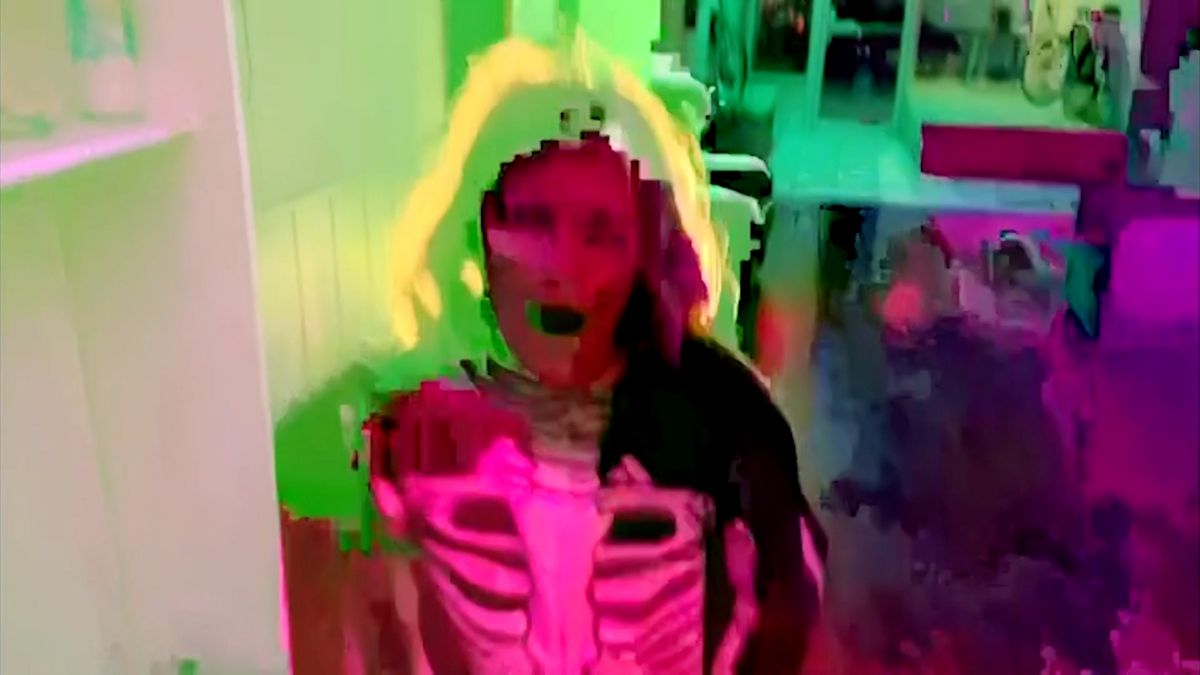
One of the great paradoxes of horror is that found footage— the subgenre, pioneered by The Blair Witch Project, purporting to be the authentic home movie footage shot by real people beset by the paranormal— has become more the province of major studios than actual independent filmmakers. In many of the found footage cheapies which flooded the market in the 2010s, the terror is undercut by suspiciously high production values and model-pretty, Hollywood-hopeful stars. But when done right— when made on a shoestring on consumer-grade equipment by people who look like they might live next door— found footage remains one of the eeriest strains of horror, as if you’re looking at something you were never meant to see.
Such is the case with It Doesn’t Get Any Better Than This, the new film by Nick Toti and Rachel Kempf, which serves as the centerpiece for the Brattle’s week-long Found Footage Freakout series. The film stars Toti and Kempf as a pair of low-budget filmmakers who purchase a run-down duplex in a rough part of town to serve as the setting for their next feature, only to run afoul of strange noises, local cultists, and, quite possibly, a gateway to hell. There is an authenticity to the film which sets it apart from its genre-mates, a lived-in nature to both the characters and the location which makes the ensuing madness all the more horrifying. Adding to the mystique is the fact that Toti and Kempf have sworn never to release the film digitally, instead touring it around the country as a live, communal event. In advance of the film’s local premiere run at the Brattle, I spoke to Toti via email about the project’s origins, its unusual release strategy, and the necessity of improvisation.
BOSTON HASSLE: You both play filmmakers in the film who happen to be named Nick and Rachel. Is it safe to assume you drew from your own experience (to some extent) in devising the film?
NICK TOTI: We’re playing ourselves, but they’re fictionalized, highly exaggerated versions of ourselves. The dynamics between the Rachel, Nick, and Christian characters are based on our real lives, and the whole plot and background that gets set up at the beginning of the movie is essentially true. Rachel and I really did buy a rundown old duplex in rural Missouri to use as a location for a horror movie, just like our characters do. The biggest difference between our characters and us in real-life is that we intentionally made ourselves a lot dumber in the movie. It’s more fun to watch people make bad decisions than smart ones.
As we were making the movie, we continued blurring the lines between what was real and what was made up. We started recording a lot of our personal lives, some of which ended up getting used in the movie. In hindsight, the whole process of making it was sort of like a prolonged manic episode. There became no clear distinction between when we were in character and when we were being ourselves. We just lived like that for months.
BH: The duplex is such a great, creepy location. Was this just a house that you found, and if so how much work did you have to do to creep it up?
NT: The story behind the duplex is that we had been planning to make a different low-budget horror movie called Homebody, which takes place in an old duplex that this young couple decides to buy a fix up. We found the perfect duplex for Homebody in the small town where we live, and it was being sold for pretty cheap because it was unlivable and the owner just wanted to get rid of it.
When we actually looked inside, we found the walls covered in satanic graffiti, swastikas, and Bible verses. And there had clearly been numerous squatters who had stayed there, leaving behind all sorts of random stuff ranging from children’s toys to used syringes. It all added up to a perfect horror location, which was a shame because we were going to have to clean all of that up to make the place ready to shoot Homebody. So Rachel and I immediately decided to delay Homebody and shoot a found footage horror movie first.
BH: Much of the dialogue appears to be improvised. Did this extend to the plot itself, or did you have a pretty good idea going in of where the story was going to go?
NT: We started filming immediately without knowing exactly what the story was going to be. There’s footage early in the movie of us exploring the duplex, which is really just us looking around this newly purchased property for the first time, and we let the stuff that we actually found there inspire a lot of what the story was going to be. Even the title of the movie comes from something that we found written on the wall of the duplex.
It didn’t take us long to come up with a spooky premise and basic plot, but we were constantly revising the story as we filmed. Since we were improvising all our dialogue, the scenes would often go in an unexpected direction, which would then impact the story. Our initial idea was to incorporate a lot more local history and folklore, because there are a lot of ghost stories we’ve heard in the town where we live. But then we started editing the footage and found that the relationships between the characters—especially the Rachel and Christian characters—was more compelling than the local history stuff.
The irony lurking behind all this is that Rachel is actually an incredibly gifted screenwriter. In fact, it was her writing that made me want to learn to make movies 15 years ago. But even though we didn’t have a traditional screenplay, it was definitely Rachel’s strong instincts as a storyteller that made the movie work.
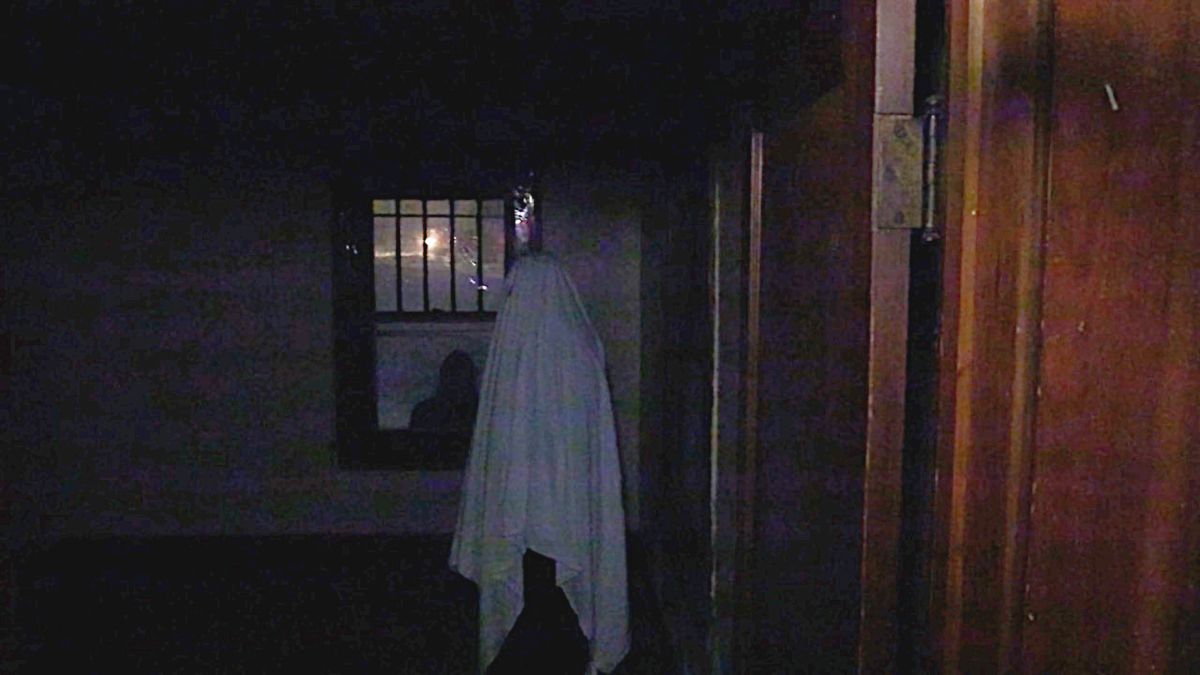
BH: It’s clear from the t-shirts and posters throughout the film that you’re big horror buffs. What were some specific influences you had in mind while making this film?
NT: We watched dozens of found footage movies while working on this, but the biggest influence for me was the actual documentary that I was in the middle of making when we shot It Doesn’t Get Any Better Than This. I spent seven years making this massive documentary about a relatively obscure midwestern musician named Sigmund Snopek III (interested parties can watch it HERE), and that experience gave me a really clear sense of how our fictional scenes could be staged and shot to feel authentic.
Even though we watched a lot of found footage, we weren’t directly influenced by any in particular. That was more about internalizing the various genre tropes so we could hopefully subvert them or at least avoid anything too clichéd. One movie that was a definite influence is this proto-found-footage movie made by Yoko Ono and John Lennon called Rape, where they supposedly hired a camera crew to follow a random woman until she had a nervous breakdown. There’s also a scene in our movie where Rachel needed to perform as if she were in a trance, which we ended up doing by actually hypnotizing her. You could say that was influenced by Herzog’s Heart of Glass, if only because he had the idea first. Carnival of Souls was a movie I thought about a lot while making this, and The Royal Tenenbaums gave us a model for frontloading character exposition in a way that was fun and engaging.
I also want to acknowledge the work of my friend Zachary Oberzan, whose brilliant autobiographical movies are a huge inspiration to anything I make. It Doesn’t Get Any Better Than This is sort of like a horror version of Zack’s movie Your Brother. Remember?
BH: You’ve made clear in the film’s promotional materials that you have no plans to give It Doesn’t Get Any Better Than This a home digital release. Could you talk a little bit about your reasoning behind this decision?
NT: That was a decision we made very early on. Our initial idea was to make a small movie that we could tour around the midwest and regional horror festivals. We never expected the movie to get as much attention as it has.
The reasons behind the decision are complicated, but the simplest explanation is that one of the actors involved would only be in the movie if we agreed to never release it online. But we also recognized that by limiting its release, we could potentially generate interest in our no-budget, DIY horror movie. I wouldn’t recommend it as a strategy to other filmmakers, but it worked out well for us.
For a while, we were really leaning into the gimmicky nature of it and began incorporating live theatrical elements into our introductions and Q&As. We’ve done live séances with audiences, given out prizes, and even auctioned off the duplex at one screening. But our ultimate gimmick was releasing the official sequel exclusively on Viewmaster. We started scaling back on the gimmicks, though, both because we’ve gotten too busy to travel around with the movie as much, and because people started paying more attention to the gimmicks than the actual movie. So now we’re back to a place where we want to let the movie speak more for itself.
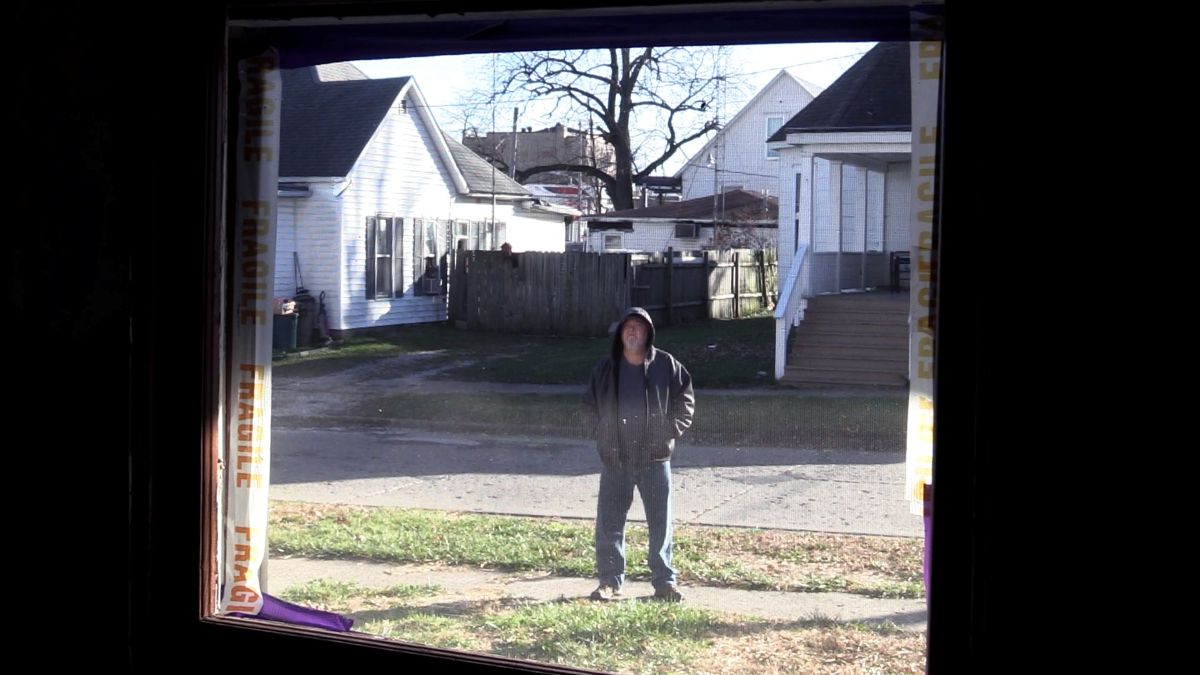
BH: What’s next, both for the film and for you as filmmakers?
NT: I’m very happy to share that we’ve partnered with the distributor Tull Stories to release It Doesn’t Get Any Better Than This in theaters in the UK and Ireland this fall. We’ll also continue screening around the US as much as possible. Upcoming screenings can always be found on our website.
As for what’s next, it’s actually been a pretty busy year for us. We did eventually shoot Homebody, and we should be finished editing that by the end of the year. We also just shot a short film called Dead Grandma, and I recently finished a 40-minute documentary called The Knower of Absolutely Nothing. All three of those projects should be released next year. We’re also in preproduction for our next horror feature, Scary New Year. And if anyone was wondering the reason why I’m answering these questions alone, it’s because Rachel is busy at work on two new screenplays, one a television pilot and the other a new feature.
I should also mention DieDieBooks, the small publishing company that Rachel and I run. This summer, we successfully crowdfunded our next five releases. Anyone interested in horror film criticism should check us out at diediebooks.com.
It Doesn’t Get Any Better Than This
2023
dir. Nick Toti & Rachel Kempf
84 min.
Screens Friday, 9/19 through Tuesday, 9/23 @ Brattle Theatre – click here for showtimes and ticket info
Part of the series: Found Footage Freakout