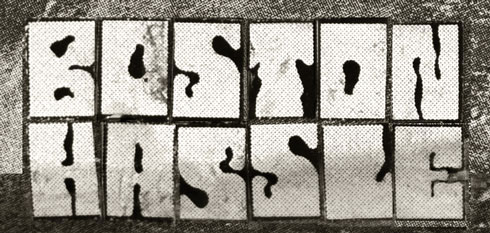
If I had to describe Jonas Mekas’ Walden: Diaries, Notes, and Sketches in a single word, it would be dizzying. Maybe frenetic; definitely experiential.
That’s how this weekend of screenings kicked off for me, with the sprawling, rapid-fire deliverance of glimpses and poetry and worldly wisdom that is Walden. At both Friday and Saturday’s screenings, I had the pleasure of seeing Mr. Mekas speak in person on his films and on a wide array of topics related to cinema, as well as the spectrum of feelings, behaviors, and moments that characterize what we call the human experience. At 94 years old, Mekas possesses a charming, energetic spirit, eager to clarify misconceptions about his artistic persona, and to pose yet more questions about his own work in the eyes of viewers. I got the feeling that the audience enjoyed his bluntness and honesty as much as I did. The idea of beating around the bush had no place here.
Mekas has been an incredibly prolific maker of film and poetry throughout his long and decorated career. After fleeing his home country of Lithuania in 1944 due to war, he and brother Adolfas (who features in much of the film footage Mekas shot after arriving to the US, and who has worked with Jonas on many projects) were stopped in Germany and imprisoned in a forced labor camp. They managed to escape and hide out the war’s remaining days on a farm. Then, after studying for some time in post-war Germany, Jonas and Adolfas made it to Williamsburg, Brooklyn, where Jonas’ filmmaking career quickly took off and steadily flourished. Reminiscences from Germany, which premiered on Saturday (its first screening in the US) explores the period of time during which Jonas and Adolfas were imprisoned and displaced. But for the most part, Jonas’ most well-known works reside in the present tense, in his newly unfolding and blossoming life in New York City, and not in the past. Indeed, at one point he told us that he does not find it useful or productive to think about the past at all. It is those life-sustaining and energy-moving aspects of life that captivate him.
Now heralded as the godfather of avant-garde cinema, Mekas has played a crucial role in the development of these arts, largely working within the format of diaristic or ‘diary films’ – and he is adamant to make it clear that in this realm of filmmaking, he was no pioneer. “I invented nothing,” he points out plainly after being introduced on Friday, prior to the screening of Walden. He clarifies that he was simply going with the trends that were happening at the time (i.e. the ’60s). A critic for the Village Voice, he provided a lens through which non-mainstream cinema was examined, and co-founded Anthology Film Archives, a center for preserving and promoting independent film. Mekas has had a direct role in curating, supporting and producing the work that has solidified independent and experimental cinema as what it is today – a field full of talent and innovation.
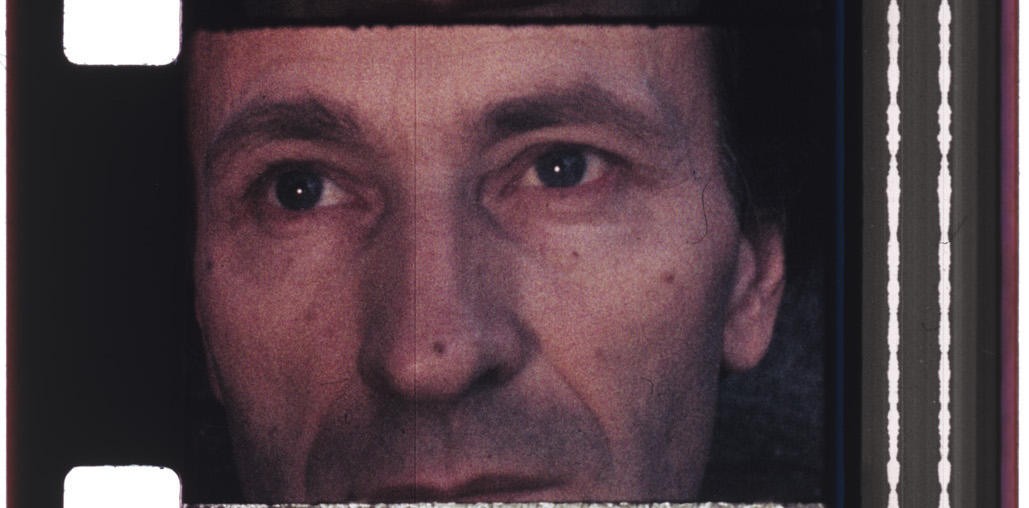
WALDEN: DIARIES, NOTES, AND SKETCHES (1969)
Parts of Walden were hard to watch simply because of how it was shot and edited: rapid-fire is the only apt phrase I can think of to describe it. Most shots last for no more than half a second. Though some longer ones do appear at times, they are glaring exceptions to the rule. Such a style beautifully renders the notion of glimpses, and by that I mean the way in which our lives are structured by mere snapshots of understanding: of others, of ourselves, of the mechanisms that guide life, and movement, and energy, etc. An overarching message I took away from seeing Mekas’ films and hearing him speak was the inextricable and necessary component of life that is recording images: after memories are gone, images remain. In Out-Takes from the Life of a Happy Man, he solidifies this hunch of mine: “Memories are gone,” he says in voice-over, “but images – they’re real.”
The idea that images are all we really have left, after the events of our lives have been lost among an overload of information and memories, is a powerful one and, ultimately, it leaves me with an ambiguous feeling. Is this a happy thing at all? Though it is truly happiness that concerns Mekas – the state of being at its core – and its manifestations through our manifold behaviors, thoughts, and feelings, it is unclear whether the films themselves are happy. It is clear that Mekas considers himself a happy man, and eager to establish that off the bat, as the name of Out-Takes from the Life of a Happy Man would lead you to believe. So perhaps, I reason with myself, we should simply take his lead and not worry about heaviness or sadness.
Walden, at 180 minutes in length, is divided into six parts, or six reels. Each reel is roughly a half hour in length. In a poignant symbolic gesture to the whole of cinematic history, Mekas dedicates the film to Lumière – which could serve for either one or both of the Lumière brothers, Auguste and Louis, the motion picture pioneers who devised the Cinématographe in the late 19th century, outdoing Thomas Edison’s Kinetoscope.
Within each of the six sections that comprise Walden, intertitles serve a critical role in organizing the film’s disparate locations, faces, objects, and sensations. They’re usually direct, clueing viewers into what we are about to observe: ‘The girl with the bicycle and the blue shirt,’ for example, precedes flashing images of a girl on a bicycle, wearing a blue shirt. Sometimes the intertitles have a more poetic feel to them, and we have to do some cognitive work to understand the connection (which admittedly is a challenge at times, only because the film moves along so quickly). ‘I thought of home,’ which recurs several times throughout the film, shows us objects or places that presumably remind the Author (as Mekas refers to himself) of Lithuania. As for why they serve as remembrances, we cannot know.
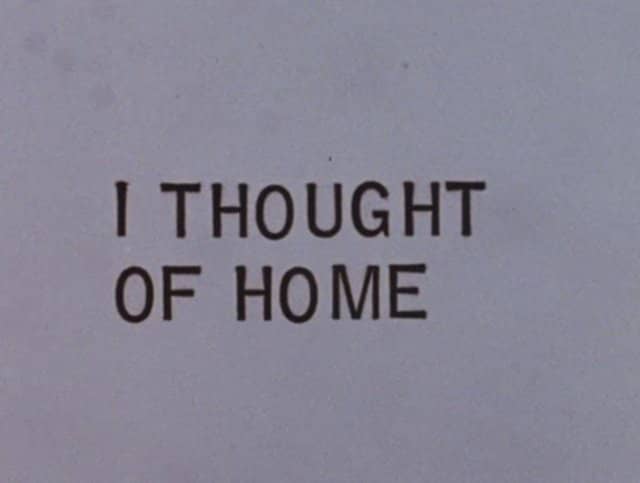

WALDEN: DIARIES, NOTES, AND SKETCHES (1969)
A timeline for the entire film was offered to viewers before the screening, which not only includes the names of people and places that are pictured, but also clues us into the sounds that can be heard throughout the film. This is where Mekas refers to himself as the Author, in an opening note to readers, hoping that they will enjoy the work of Walden. The timeline is helpful not only in culling all the information we receive, but also in anchoring the whole work of Walden as not just one of cinema, but one of poetry as well. It is an authored work, not just seen and recorded, but comprised of a wide array of artistic processes.
Seasonal change, and the sense of rebirth that seasonality instills, also plays an important role in Walden. Time and time again we see snow-blanketed New York, its streets a little bit more empty than usual, its people a little more joyful than usual. Mekas is particularly dazed by the beauty of flowers and leaves, and they serve as evidence of incoming seasons. Intertitles also cue the importance of seasonal change. At the beginning, ‘In New York was still winter’ shows “scattered snow” in Central Park, but an intertitle cues doubt as to the true state of the season: ‘But the wind was full of spring.’
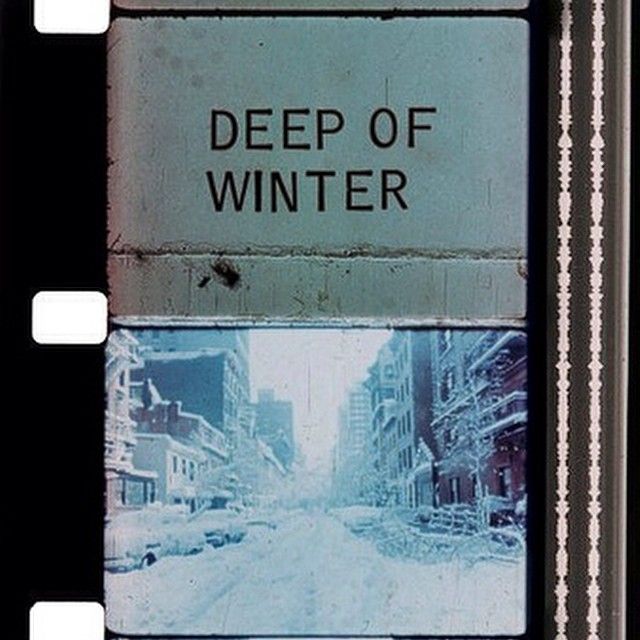
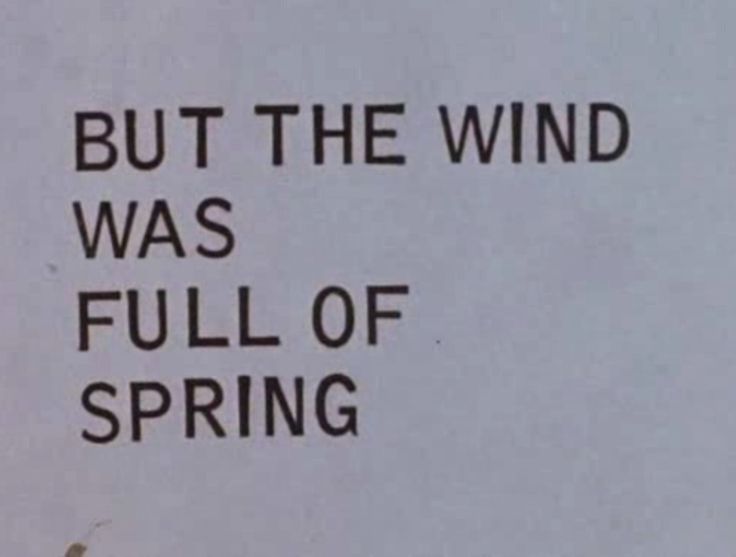
WALDEN: DIARIES, NOTES, AND SKETCHES (1969)
An abundance of gatherings – from weddings, to dinner parties, to outdoor hang-outs, to marches (specifically anti-war ones, this being the era of Vietnam) – reinforce Mekas’ fascination with human experience. I think this is where viewers can get confused about the content and message of his films. Mekas very clearly intends Walden and his other works to be political: “Walden is a political film,” he says in response to an audience question, “because what is politics? Politics is a way of living…feeling…behavior…” That is to say, politics, and the general realm of the political, are intrinsically connected to how life and reality manifest themselves, embodied by our gestures and behaviors, carried out and exemplified by our participation in life itself, whether we mean to espouse ideology or not. Mekas understands that art is inherently political. But he doesn’t seek to impose any sort of ideology or political preference, and vehemently admonishes doing so. Perhaps more importantly, Mekas believes in and supports the kind of politics that only artists are capable of making: art that shows the beauty, and confusion, and diversity of life; art that records history as it happens, and through which a new kind of history is made possible.
“I don’t think I believe in real life,” he muses after Friday’s screening of Walden. “I don’t understand humanity, for example…especially today.” But reality is something that Mekas comes to understand through the creation of art, and especially through the filming of life as it unfolds. His words are inspirational yet they have a cautious undertone to them. I think his presence might have clarified that internal struggle of politics vs. art that many emerging artists deal with, especially in recent weeks, and I can only hope that some of these viewers left the theater with a resolve to fuse the two as meaningfully as possible – or else, with the realization that even if they don’t try to do so, it will happen anyway.
Out-Takes from the Life of a Happy Man follows much the same format as Walden, but certain faces appear here that are absent in Walden – like Mekas’ wife and daughter, and a son, later on. Chronology is not necessarily important in Out-Takes. I suspect Mekas intends to subvert traditional chronological filmmaking, at least somewhat. At the beginning and again at the conclusion of the film, he speaks in voice-over on the role of Filmmaker: “Late at night, the city is sleeping…everyone is sleeping…” the words come out in a drawl of sorts, evoking the sleepiness of thoughts at nighttime. He continues: “Only the filmmakers are watching.” There is a dream-like quality to the images in Out-Takes, and in voice-over Mekas repeats phrases and draws them out longer than necessary, suggesting the power of dream and sleep. But there’s no question that the imagery is grounded in reality. He speaks of the “reality of images,” the idea that only in being recorded do images truly become real. Shots of Mekas at the editing table recur throughout, reminding us of the Author’s hand in all of this.
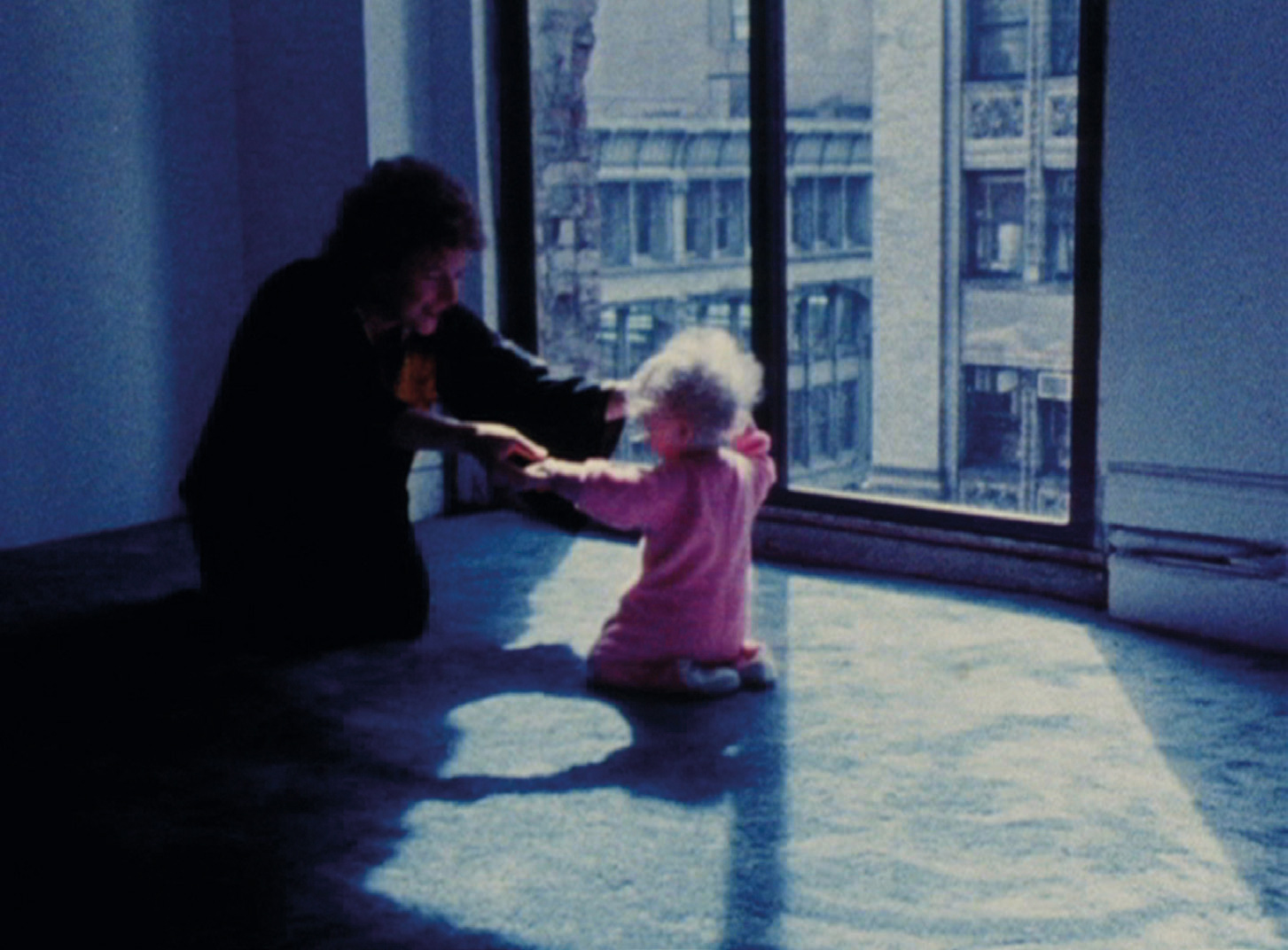

OUT-TAKES FROM THE LIFE OF A HAPPY MAN (2012)
Reminiscences from Germany takes a slightly different tone than Walden and Out-Takes, perhaps because it is so heavily rooted in the past. Mekas approaches the horrors that happened to him and Adolfas during this time almost whimsically: after visiting the forced labor camp, showing its layout and describing the tasks to which he was assigned, he boldly declares, “I tell you, it was boring!”
Nevertheless, Reminiscences from Germany still manages to bring us back to the present, as Mekas explores an apparent struggle with place and time that seems to have persisted over the years. As he rides around in a cab, presumably in a nearby German city, he says with a voice hinting disorientation, “I was somewhere else…I was completely somewhere else.” Whether he speaks of this traumatic past, or the freedom that followed, is unclear. But it is certain that our past stays with us no matter what; that we leave parts of ourselves in the places we’ve been.
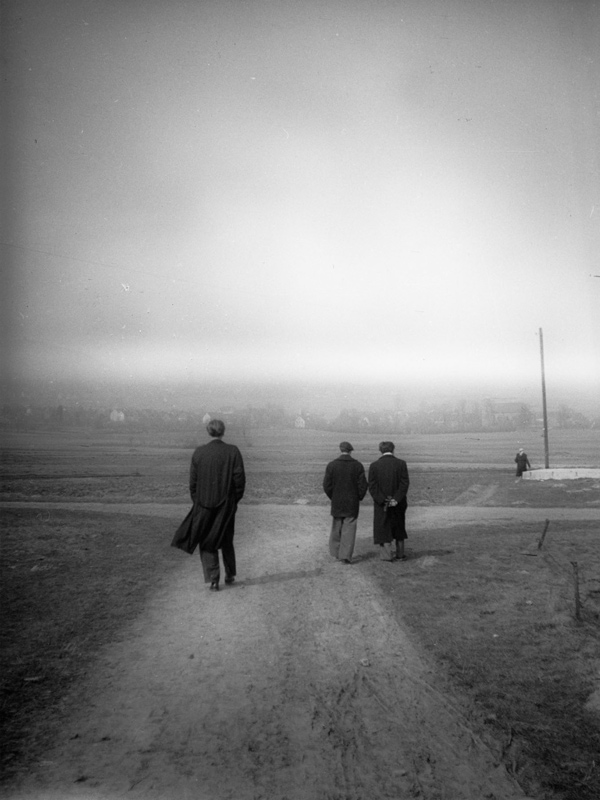
REMINISCENCES FROM GERMANY (2012)
Asked what he’s doing these days after Friday’s screening of Walden, Mekas humbly responds, “I’m building a library,” eliciting uproarious applause. “And a café,” he adds, “so people can fight about cinema, not about countries.” More applause and laughter. I’m laughing and clapping along with them, of course, partially in awe at this treasure of a man, and partially trying to take into account his desire not to be treated like a celebrity or inventor of anything. He is merely a happy man, I tell myself, living out his happy life, and I’m happy to have seen a glimpse of it.