
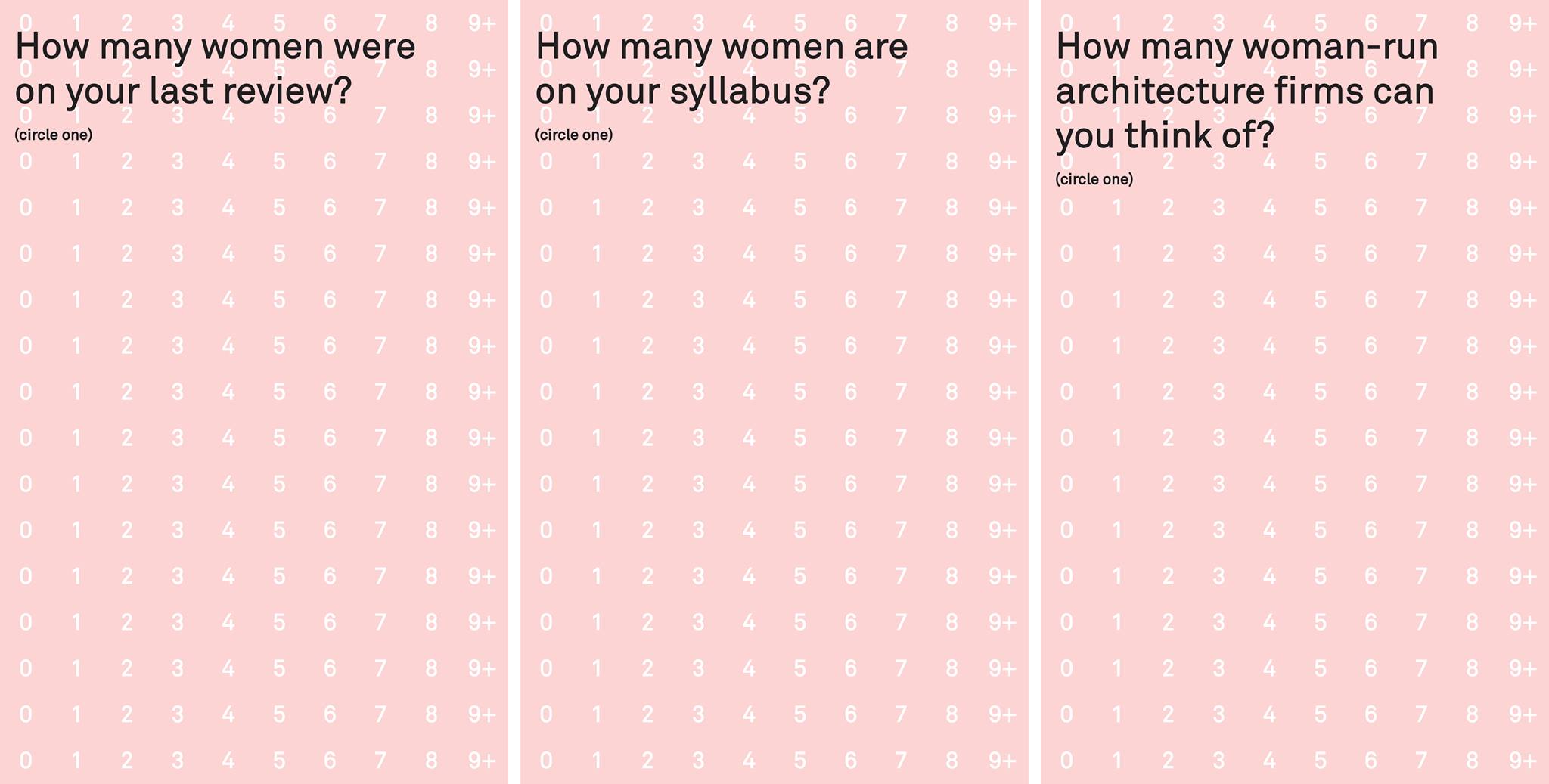
Last Friday, four Architecture professors spoke at NOMAS Power Lunch: Women in Academia Panel at MIT Architecture.
Current graduate student Emily Watlington moderated the panel, and began the discussion by asking the panelists Joyce Hwang, Lauren Jacobi, Caroline Jones, and Caitlin Mueller to share their experiences as women working in a field where men continue to outnumber women.
It became clear that each professor came from different backgrounds, had different stories to share, and different ways of thinking about their positions relative to the world.
Caroline Jones, the Associate Department Head at MIT Architecture seemed to be firmly rooted in the ideas of early feminist theories.
The more junior faculty, however, had integrated other fields into their Architectural work. Lauren Jacobi, an Assistant Professor at MIT Architecture, applies economic and sociological concerns to her work. Caitlin Mueller, also an Assistant Professor at MIT Architecture, works at the interface of architecture and structural engineering. Joyce Hwang, an Associate Professor of Architecture at the University at Buffalo, directs an office of architectural practice and research that focuses on confronting contemporary ecological conditions through creative means.
The beginning of the discussion touched on the importance of introducing feminist theories and women architects in the curriculum, the need to question the concept of what makes a ‘great’ architect, and to introduce other subjectivities, such as urban ecologies and post-human eras.
The central tension of the discussion was the cognitive dissonance between two points:
- That the issue at hand is to un-learn deeply ingrained negative beliefs about women that permeate our social structures, or
- That there are things that women “still need to learn” so that they can become competitive in environments where men hold power.
Other troubling moments hinged on how the concept of ‘worth’ was discussed, that is, how women could prove their worth, rather than assert its a priori existence, and on the unexamined dependence on numbers, percentages, data, and the belief that these are unbiased metrics that we can expect on to ‘accurately’ measure social fairness and equality.
For example, when Associate Department Head Caroline Jones told the audience that only 10% of the professors in the department were women, she was quickly corrected to “21%” by a male voice from the back of the room, contradicting her knowledge of her own department, and thereby negating her argument.
The panel organizers at one point mentioned that a lot of women who they invited to the panel were “too busy” to attend, potentially a comical paradox. Is it a good thing that these women Architects had too much work (a sign of their success) to attend? Or can this be taken as a sign that the competitive nature of their work takes time away from an important thing they would otherwise (hopefully) want to do: publicly addressing issues of sexism in their own field?