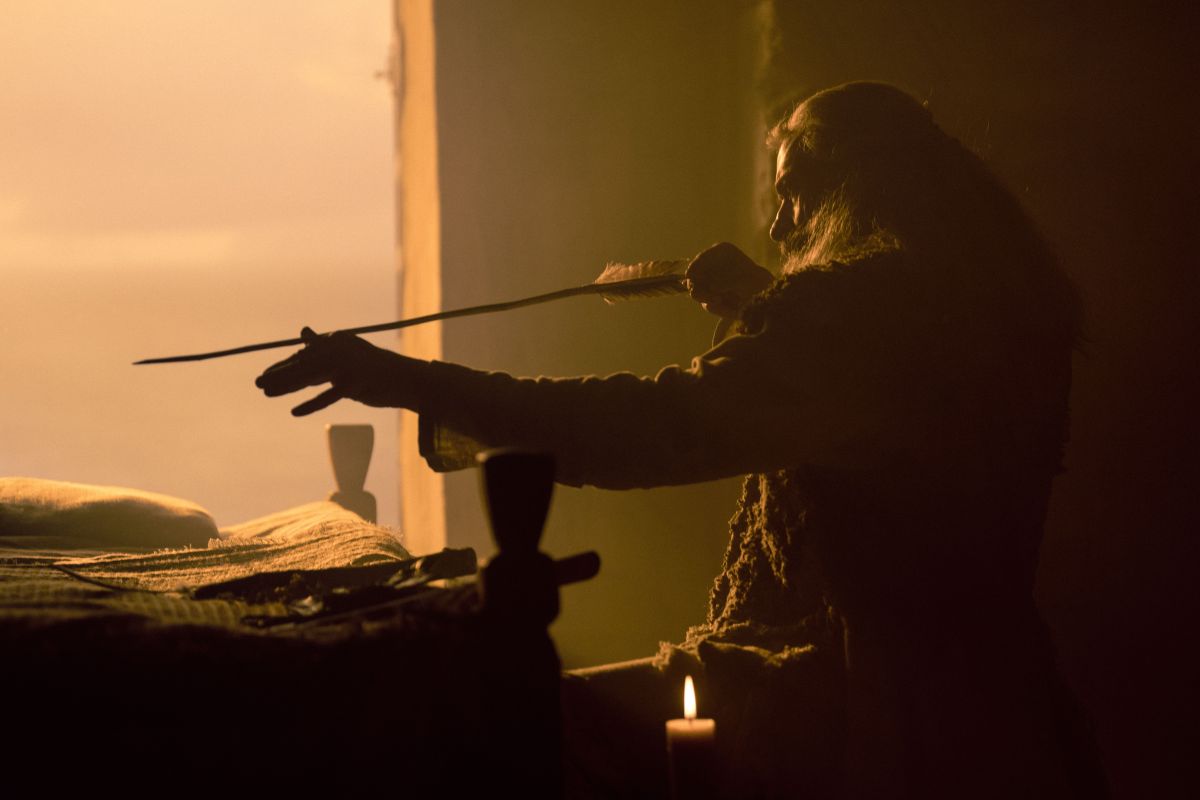
The Death of Robin Hood is, for better and for worse, one of those movies that demands a lot of patience. It’s languid, it’s atmospheric, it is driven by internal character struggle and vague spiritual gestures. It intrigued me from the beginning, but based on what I’d heard about its execution, I thought, as I sat down in an AMC theater, “This will probably be a movie that could lose half an hour.” But I have to say, while not all of it makes sense, most of it feels very intentional. At MOST, it could cut 15 minutes.
The Death of Robin Hood is implied to take place years after the events that inspired the Robin Hood legend, which is largely a lie. The movie opens on a young woman weathering a snowstorm, coming upon a grizzled stranger (Hugh Jackman), who gives her some food. She declares that she is not afraid because Robin Hood protects the meek in these parts. As she recalls different parts of the legend — that the Merry Men stole from the rich and gave to the poor, that Maid Marion was Robin’s great love — the stranger dismisses all of them as falsehoods, saying that Robin Hood was a violent brigand who only stole for himself.
The girl is revealed to be the family of someone Robin murdered, and as she tries to execute him in his sleep, he kills her, evidently with some remorse. Jackman kicks off his magnificent performance of barely restrained self-hatred with the smallest tells of what Robin really feels as he calmly tells the girl how she alerted him. Soon after this incident, Robin is reunited with Little John (Bill Skarsgård), who now goes by Edward, and needs Robin’s help to save his farm and new family from men who have also come to avenge themselves.
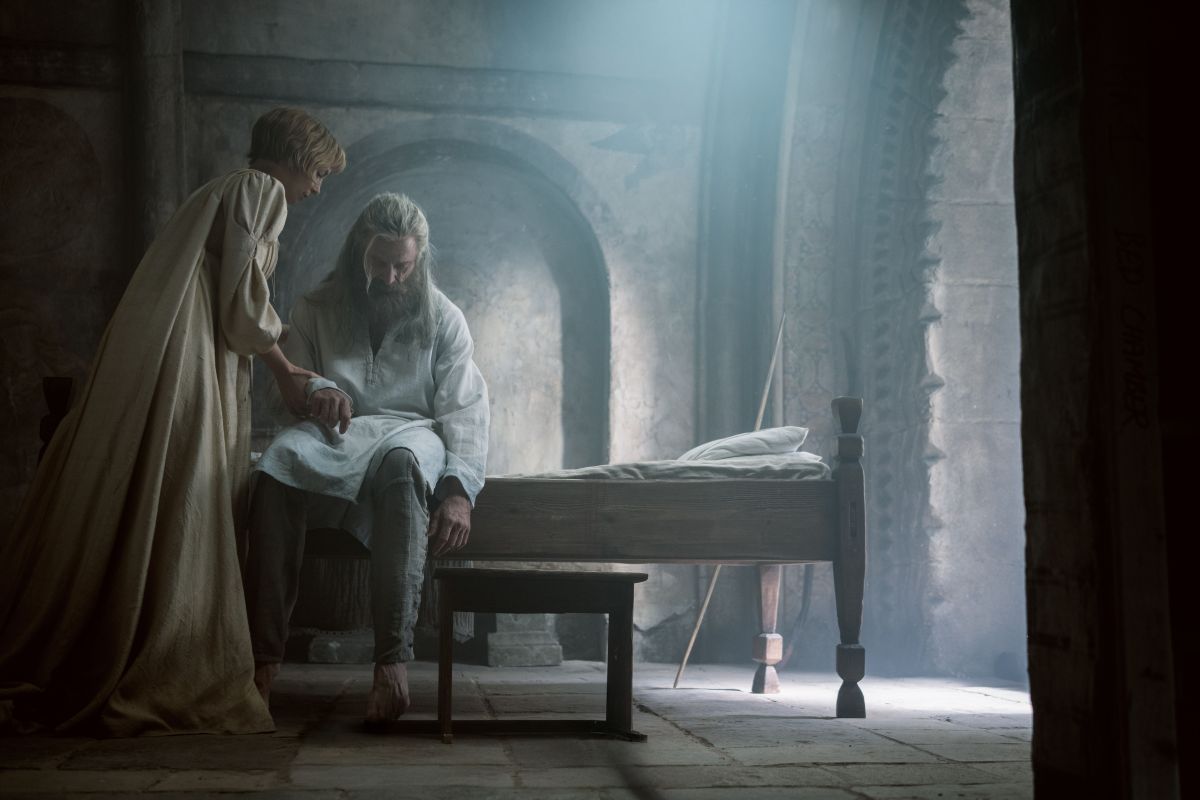
Robin is gravely wounded on this mission, and Edward takes him to a strange, remote priory to heal, under the care of Sister Brigid (Jodie Comer). Later, when Edward is killed in another fight, his daughter Margaret (Faith Delaney) joins Robin at the priory. And here is where the true ethos of The Death of Robin Hood begins to take shape, as Robin is deeply moved by Brigid’s pure intent to help anyone who is in pain, and he bonds with the severely traumatized Margaret, slowly drawing the girl out of her shell by teaching her about trapping and archery.
The team behind The Death of Robin Hood magnificently captured the harsh but sweeping setting, with cinematography that highlights the small work of collecting food, skinning rabbits, and making a bow, as well as the scope of the fog-blanketed landscapes. The sound design in the opening scenes is particularly lovely, throwing you right into the brutal winter winds, then the morbid implications of the title drop. The classical but dark adventure score is great, as well as a couple of songs with proper lyrics that come in to unsettle you at key moments. If this movie does one thing right, it is its grim, medievalist, nature-forward aura.
Concerning the writing: as I said, it moves slowly, meditating on themes of culpability and revenge as it ties its characters in knots, creating a mess of hurt and past crimes from which it seems there is no way of escaping. There is occasionally some weird dialogue, with a roundabout quality to pointless observations, but largely, I found the quiet conflict compelling. Supporting characters played by Noah Jupe and Murray Bartlett reckon with their own pain, and confront (or are forced to confront) the question of whether to pursue revenge in nuanced subplots.
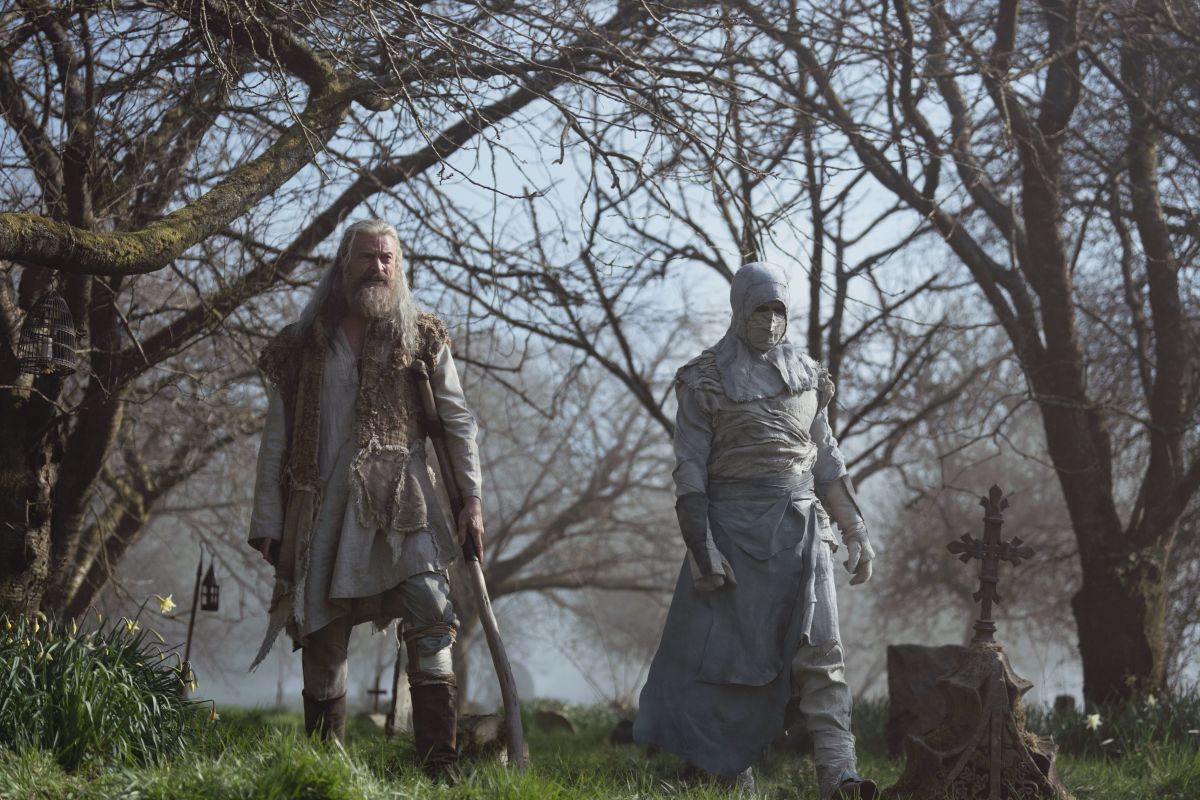
I also thought that Jodie Comer gave a standout performance. Brigid suffered her own tragedy and found a new life and purpose in managing the priory, taking in all lost souls, offering them physical and spiritual healing. She is poised, nurturing, and entirely devoted to what she has built. Which is why it is riveting to see her worldview challenged and how she clings to what she believes in, coming through this awful test without compromising herself. She is the heart of the story, enabling Robin to adopt a gentler outlook that, in turn, helps others.
There is, however, an unshakable disconnect in this movie’s premise. If you’ll allow me to build upon another critic’s words, The Boston Globe’s Odie Henderson opened his review thusly: “Life in 2026 is filled with politicians and billionaires cramming racism, AI, transphobia, and xenophobia down our throats on a regular basis, yet the one thing A24 felt we needed was a movie where a beloved hero who stuck it to the rich was actually the bad guy?” The thing is, the movie itself acknowledges the value of the myth, though not so much because of its revolutionary social implications.
The film, unfortunately, is entirely uninterested in explaining why Robin and the Merry Men committed all these horrible acts beyond suggesting that it was for their own sense of adventure. The idea of Robin Hood as a hero seems to exist in this world, but it’s not clear where it comes from. The Death of Robin Hood is solely focused on philosophizing on guilt and forgiveness, but it’s a stretch to ask the audience to believe that a man who once burned children alive, allegedly for his own amusement, has the capacity to feel this kind of remorse.
They could have implied that the Merry Men did have a righteous mission, but that it meant doing horrible things in order to redistribute wealth, or that they got carried away and eventually became less heroic, and had Robin reckon with this aftermath. Nonetheless, the story of Robin Hood does take shape, becoming a force so strong that, hundreds of years later, we are still curious about what it is like to be someone like him. This iteration, at least, has hefty character work I didn’t necessarily dislike, making it feel worth it to delve into his tale once again.
The Death of Robin Hood
2026
dir. Michael Sarnoski
123 min.
Opens Friday, 6/19 @ Coolidge Corner Theatre, Capitol Theatre, Apple Cinemas Cambridge, Alamo Drafthouse Boston Seaport, and all local AMCs