
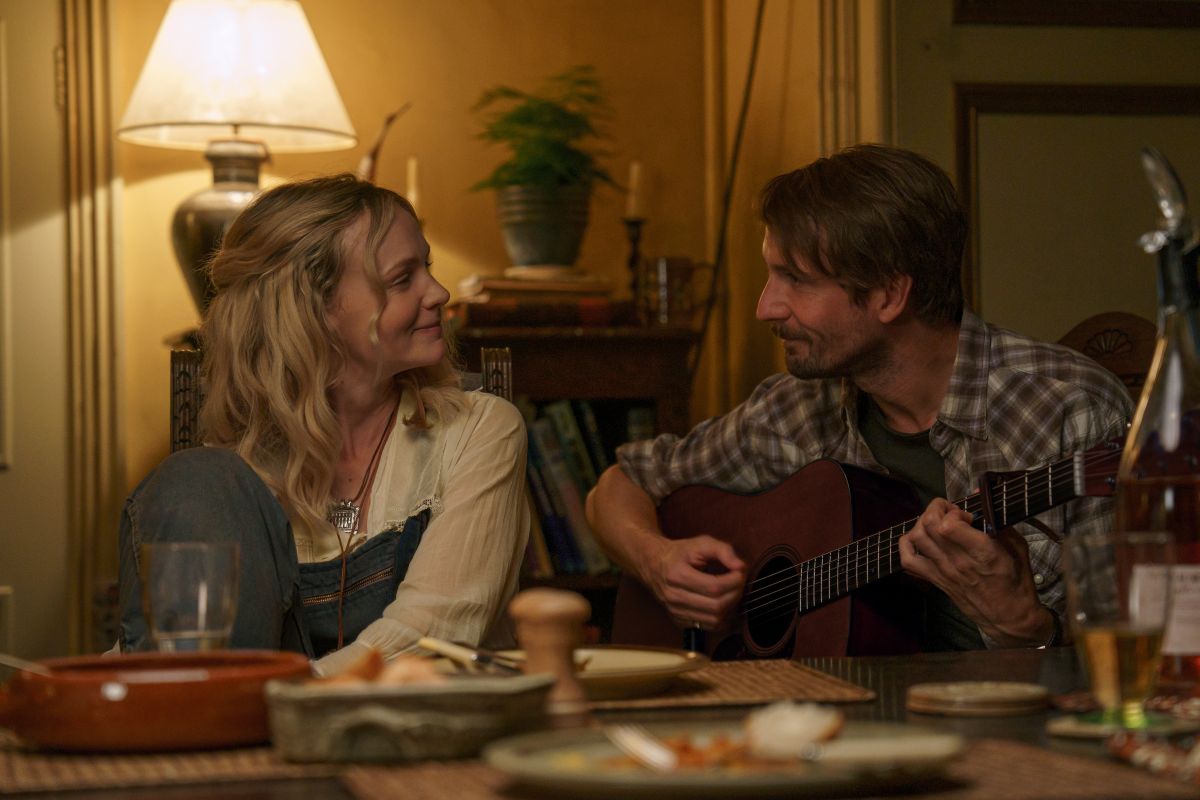
Over the past decade or so, “cozy” has evolved into one of our most improbably outsized adjectives, at least as far as entertainment goes. “Cozy mysteries” are a burgeoning multimedia phenomenon, encompassing movies, television, literature, and podcasts, while “cozy comedies” like Ted Lasso and Schitt’s Creek have developed rabid international followings– to say nothing of the “cottagecore” trend which has twentysomethings doing their best to live and act like Mrs. Tiggy-Winkle. The reasons for this, of course, are self-evident: in case you haven’t noticed, it’s an increasingly scary world out there, and few could be blamed for retreating, even if only for a couple of hours, into a den of fur-lined slippers and hot Earl Grey.
There was a time, back in my snottier-than-thou youth, when I might have recoiled from this strain of unabashed niceness, but look: I’m forty years old, the world is going to hell, and if you give me a well-written, patiently shot movie about decent people wearing sweaters in a little cottage by the sea, I’m going to eat that shit up. The Ballad of Wallis Island is not a revolutionary piece of art, but it’s sweet and funny and just plain nice, and I have a feeling a lot of people could use that right now.
Tom Basden plays Herb McGwyer, a folk-pop singer of some renown who touches down on the remote title island to play an unplugged set for less than a hundred people. It’s a smaller gig than he’s used to– he was once one half of McGwyer Mortimer, “the best-selling UK folk act of 2014”– but he’s been promised half a million in cash, which he’s earmarked to pay for his next album. Even so, conditions are more ramshackle than expected: there is no harbor, forcing him to wade from the dinghy to the shore, guitar in hand; his room is just a spare bedroom in some bloke’s house with a sink that won’t stop running; and said bloke won’t leave him alone, following him like a shadow and constantly plying him with niceties.
Eventually it becomes clear that the show will be for much less than a hundred people: Tom, the bloke hosting him, is a superfan and two-time lottery winner who’s cashed in a portion of his winnings to host a private concert for him and him alone. Oh, and there’s one more thing: unbeknownst to Herb, the concert is to be a McGwyer Mortimer reunion, despite the fact that he hasn’t spoken with his onetime songwriting partner (Carey Mulligan) since the end of their romantic relationship.
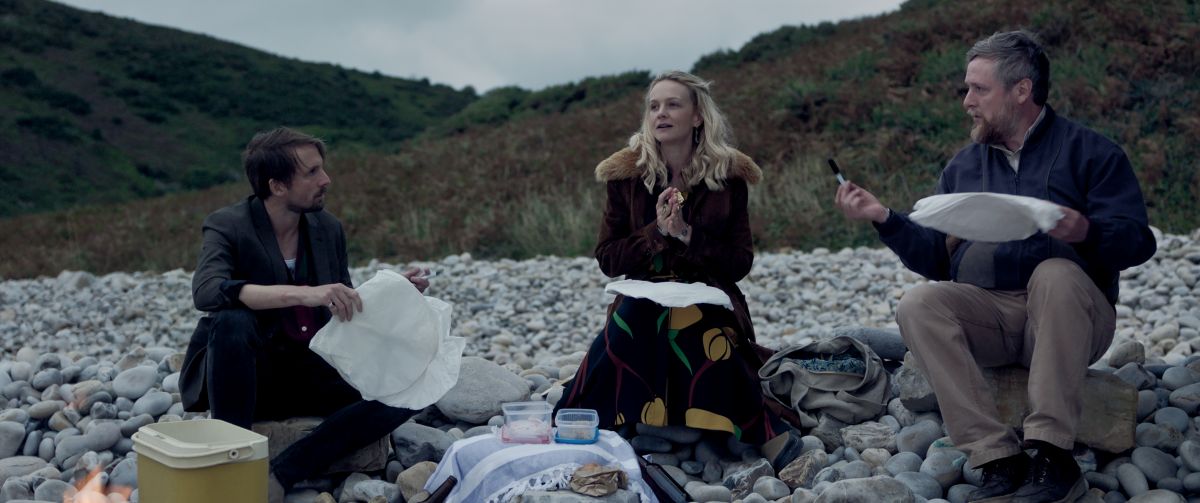
I’ve emphasized the coziness of The Ballad of Wallis Island, but I do want to make clear: Herb McGwyer is kind of a dick. Much of the humor comes from the clash between this presumably pampered superstar and the rustic charms of his new surroundings. His “rider” is cobbled together from items he’s offhandedly mentioned enjoying in various interviews (“We’ve got your favorite apples!”), and the only way to contact his manager is via a rickety payphone in the center of town (“This is Misery,” he bemoans over the phone, “I’m gonna wake up with no ankles!”). Yet while Herb is still nominally an A-list star, it’s clear that he’s strayed from the intimate music that’s made him a star; Tom has no interest in hearing any of his solo material live, and Nell (who for her part has retired from music, settling down in Portland with a likably square husband) lightly chides him for his commercial turn. We don’t ever hear this latter-day material, but we glean everything we need to when Herb sheepishly namedrops his latest single, “Work the Body feat. Lil’ Peas.”
But the heart of Wallis Island beats in Tom, played by Britcom stalwart Tim Key. We can understand Herb’s frustration with his host; he is, by all appearances, quite possibly the most annoying man in the world, any conception of “social cues” or “personal space” clearly eroded by years of isolation. But he’s also an absolute sweetheart, hospitable to a fault and, at this point, clearly more passionate about music than either of his famous guests. He has very much a dad’s sense of humor, prone to terrible puns and seemingly compulsive rhyming (“Wowsers in the trousers!” he exclaims upon witnessing McGwyer Mortimer’s creative friction), but he’s so lovably earnest and naive that it’s difficult not to be won over by him.
The same could be said of Wallis Island as a whole, which adopts the laid-back, wistful tone of the folk music which provides its soundtrack. There are only about five speaking roles in the entire film, and each is fully realized and charmingly played. Mulligan, as yet another one-time member of a musical power couple, possesses both a warmth and a maturity lacking in her more famous partner, and Sian Clifford is a hoot as the lovely but singularly unhelpful local shopkeeper (it’s the sort of role one could imagine Olivia Colman landing prior to her transformation into an awards-season juggernaut). Even Herb isn’t a bad guy, just burnt out and out of his element, and much of the film’s humor derives from our identification with his frustration– he’s as much Basil Fawlty as Glen Hansard.
Wallis Island is, by design, a slight film filled with big, soppy emotion, and it should go without saying that those with little patience for cutesy-poo– those like my younger self– might find themselves as trapped as Herb McGwyer (it should go without saying that a taste for folk music is a prerequisite as well, though thankfully McGwyer Mortimer favors an earthier, more traditional sound than the ClearChannel-friendly caterwauling that typified the folk scene in the mid 2010s). But it’s such a sweet and funny and all-out charming movie that even the most jaded crank might find their defenses dropping. Like the 180-gram vinyl Tom compulsively places on the turntable, it’s got a warm sound, and you can drink tea to it.
The Ballad of Wallis Island
2025
dir. James Griffiths
100 min.
Now playing @ Coolidge Corner Theatre, Kendall Square Cinema, and AMC Boston Common