Let’s set the scene.
Showtime: Sunday night on opening weekend
Screen specs: AMC Dolby
Audience specs: It wasn’t sold out, but the three or four front rows were pretty filled considering there were several empty seats around me. Many were dressed up in sparkle-decorated gear, and I had the genuine fortune of having a row of excited fans seat in front of me.
Companions: I went with a casual fan who seemed to exclusively only know the radio hits from 1989, which probably made that era especially enjoyable.
Pre-show BAC: A regrettable 0%
Disclaimer: I’m not a Swiftie in the biblical sense, but I think my knowledge of her life that might be on par with one.
To my recollection, I have mentioned Taylor Swift once before in this space, when writing about Austin Veseley’s Slice. In a passing comment, I mentioned about a slight obsession over the (Tay)lore of “All Too Well” during the pandemic, as one does. At the time, I thought the song was one of the peak forms of songwriting in modern pop — the kind of Stevie-Nicksian track that feels so mature compared to the other tracks on Red lyrically (“22”) and sonically (“I Knew You Were Trouble”). It was also the prime example of Swift’s famous Easter eggs sprinkled into the promotional cycles and content of her music. If her songs were a puzzle, the inspiration and clues behind “All Too Well” was the one that felt completely solved. Still, it hadn’t been released as a single and, to my knowledge, she had only performed it live once on camera at the 2014 Grammys. Her songs are generally fine and fun, but “All Too Well” was the masterclass in pen-meets-tear-streaked-notepaper ballads. I wanted to drown in its soul-baring autofiction.
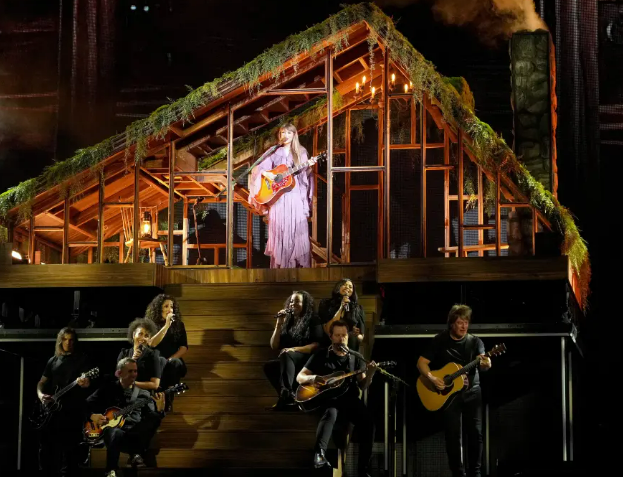
Since then, Taylor Swift had published that discourse that I’ve written in my head for so long. In the progress of re-recording all of her songs, Swift had expanded “All Too Well” into a ten-minute version and created a short film in a supposed attempt for an Oscar nom (and while she didn’t get that, scoring a director-on-director interview with Martin McDonagh is not a bad consolation prize). In the nine years from the original song release to Taylor’s Version, so much has changed in the landscape of Taylor Nation that The Eras Tour had to happen. As the introduction to the 3-hour setlist goes, it’s been a long time coming.
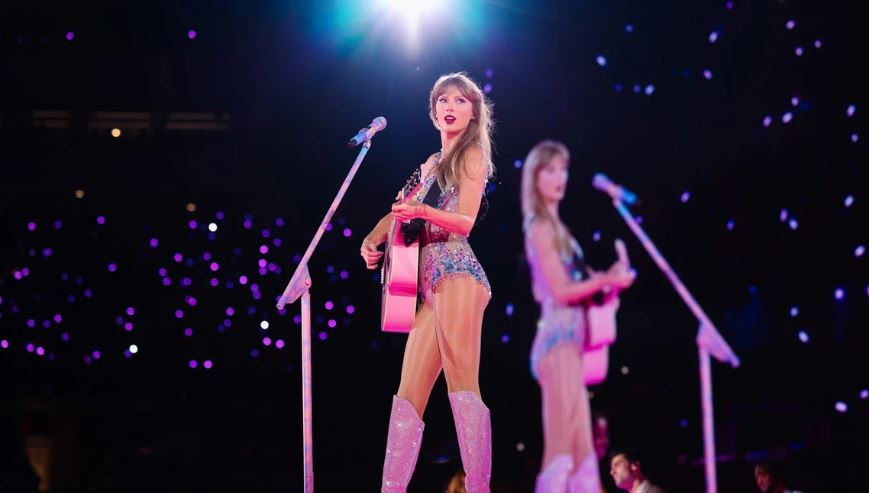
In writing about this film, I wanted to remove most of what I know about Swift outside of this concert, which I believe is something that Swift wanted as well. Despite numerous fan videos capturing a slew of celebrities dancing it up under the coveted VIP tent, The Eras Tour (which is how the movie will be referenced) trimmed Swift’s shadow in pop culture (which is a big feat knowing that she is famous for papped squad walks). The 2.5-ish hours of The Eras Tour (a night at the actual Eras Tour is an hour over that) are mainly performance-focused, save for the expected cuts to screaming fans and an adorable moment where Swift knights the 22 fedora to Bianka Bryant (whose father had been an unabashed fan of her music). In between the re-release of cult classic Stop Making Sense and the December release of Renaissance, this concert film might feel like it will be bunched in as a specific trend of the year. However, the purpose of the tour is addressed by Swift in the film: there were five albums that did not have an accompanying tour (two of which were released during the pandemic). Instead of catching up individually, the tour serves as an alluring retrospective of her music. If you had been worried whether “Bad Blood” and “betty” belong in the same playlist or if her concert would mainly be songs off Midnights, The Eras Tour promises that you will hear her greatest hits, Taylor’s Version-style.
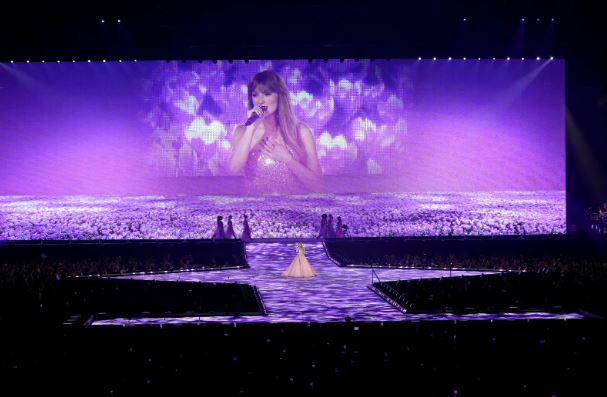
Barbenheimer was a testament to the moviegoing experience being alive and well, but The Eras Tour is the quick turnaround-reminiscence of a monolithic movement that brought strangers to exchange bracelets, share tears, and reach across the generational aisle. As post-pandemic celebrations go, The Eras Tour is a reminder that things can be grand-scale spectacles again. Even though it was a world I didn’t feel the need to visit (and admittedly, I feel like I would have had a better time watching this in theaters than in nosebleeds), I understood that this film means a lot for many, and to still be able to see it in some form was a magnificent experience. Additionally, in a bold move, Swift skipped over movie studios and dealt directly with theaters to get this movie out there, resulting in a power so compelling that it forced The Exorcist: Believer to give up the coveted Friday the 13th release date.
To review it as a concert film? If we’re talking about stadium-sized production, this is exactly what you’ll get here. The Eras Tour was filmed in her three shows at the SoFi Stadium in California (the transitions appear more fluid than, say, Homecoming, but doesn’t tinker around with the editing like in this one cut). The order of the eras is not chronological, which becomes advantageous and creatively enlightening in certain places (like the aforementioned masterpiece “All Too Well” segueing into my personal favorite masterpiece folklore, or the seductive-alarm bass lines of the reputation era placed in the movie like a shot of espresso at 1 PM). The visual texture seems clearer than what I thought my eyesight is limited to and the sound-mixing is of such global-headliner quality that I knew that I was going to leave the theater with the post-concert ringing in my ears. Setlist-wise, we are blessed that “ME!” was excluded and scorned that “exile” and “Wildest Dreams” were not included. As most musicians are apt to do, Swift finds herself in the pitfall where she concludes the tour with the newest album. “Karma” may be her boyfriend, but it’s not my finale (though this is where the age-division between the audience and me is, as very few people stirred to “You Belong to Me” which???).
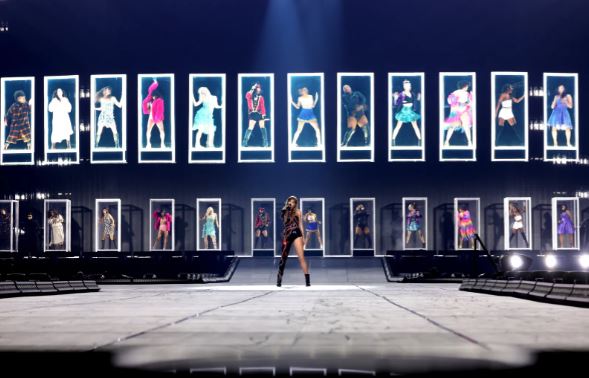
To attend as a non-fan? I won’t sign my life by the statement that no one is immune to Swift’s earworms, but if you have an ounce of appreciation for music performance, just know that Taylor Swift is that performer who wants you to leave with a good time. I have no comments about the choreography or the way she sings some cringe lines with her whole chest, but these things speak to how Swift takes all of her eras in stride (and, again, for 3 hours!). Sometimes, it works in wonders that time and age allows it to go: the histrionic young-love of “Enchanted” (“Please don’t be in love with somebody else / Please don’t have somebody waiting on you”) or the star-crossed “Love Story” sounds like a confessional wink. “Look What You Made Me Do,” which might be one of Swift’s most controversial songs upon release, felt less blame-seeking and more tolerable than I remember.
One thing that you might think about in different parts of the movie is that Taylor Swift is very self-aware of her place in culture. The manifestation of that is probably too heady for me to cross over to that side of the fandom, but it’s the perfect distance I want to be with Swift: understanding the magnetic force of this woman, responding with appropriate reactions, and then sleeping soundly at night. I can’t promise that this will happen for you.
Taylor Swift: The Eras Tour
2023
dir. Sam Wrench
169 min.
Now playing @ Coolidge Corner Theatre, Capitol Theatre, and megaplexes everywhere