Watching the very first episode of Saturday Night Live today, 49 years and nearly a thousand episodes later, can be a disorienting experience. The basic format is familiar: there’s the celebrity host, some musical performances, and sketches performed by the original Not Ready for Prime Time Players. Yet the cast isn’t the only thing not ready for prime time; the show itself feels as if it’s not quite fully baked. The sketches are more like absurdist blackout skits than the fully formed pieces we’re now used to; host George Carlin doesn’t interact with the cast, instead popping up intermittently to perform truncated versions of his own standup bits; the show is augmented by not one but two musical guests, as well as two additional standup comics, a short film by Albert Brooks, and an extended sequence from Jim Henson and his Muppeteers. It’s funny, of course– one could scarcely expect the product of so much immense talent to not at least produce a smile– but it’s also off in a way that’s peculiar given its seismic cultural impact. We know, of course, what the show would eventually become, but there is a sense at this early stage that it isn’t yet quite sure what it is.
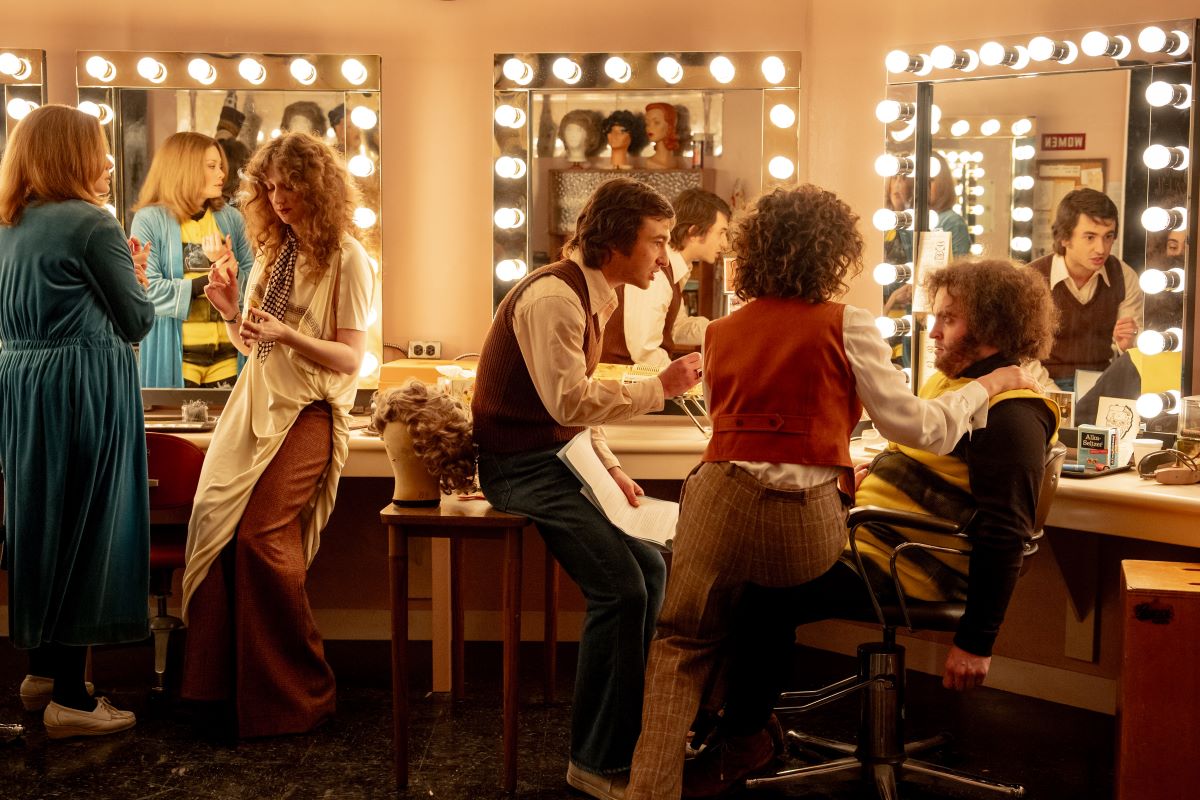
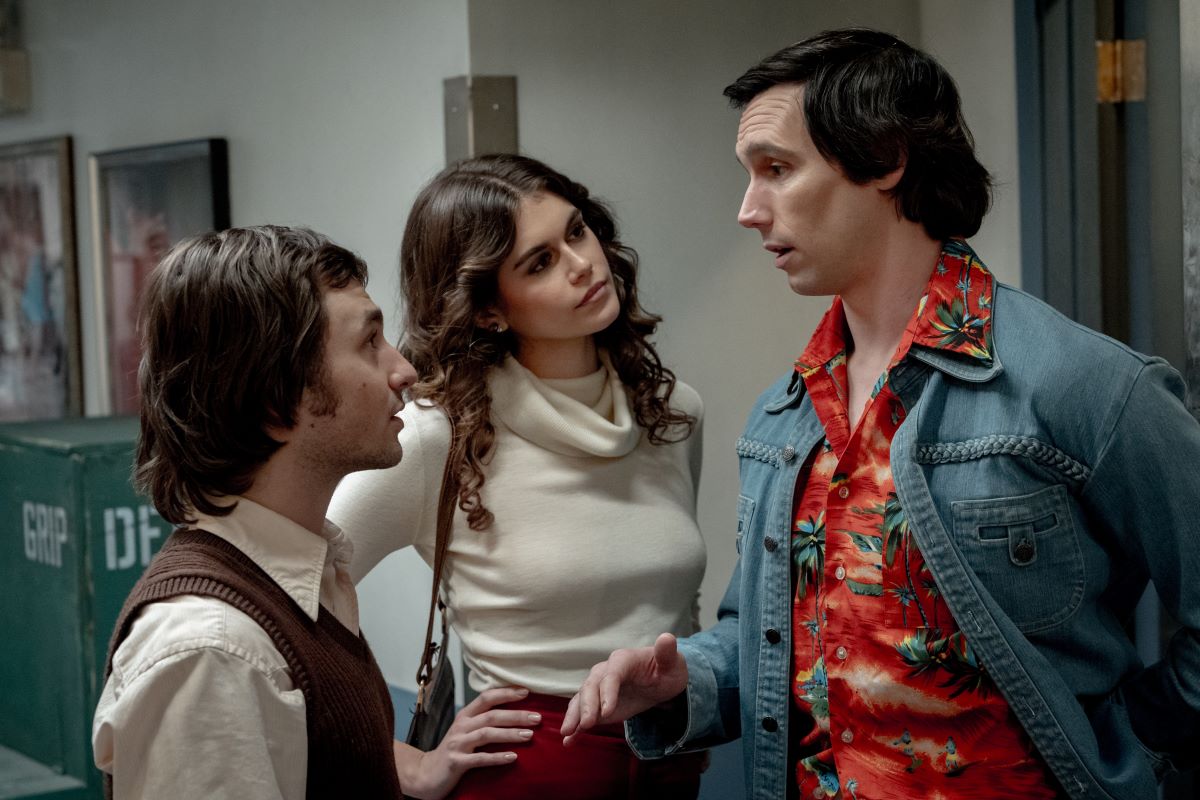
This sentiment is repeated like a mantra throughout Jason Reitman’s Saturday Night, which gives the Hollywood biopic treatment to the 90 minutes leading up to that deceptively fateful broadcast. In more or less real time, we follow producer Lorne Michaels (played by Gabriel LaBelle, the ersatz young Spielberg of The Fabelmans) as he skitters up and down the hallways of 30 Rockefeller Center, managing egos, putting out fires both figurative and literal, and trying to figure out how to condense a show which ran three hours in rehearsal into his allotted 90 minutes of airtime. Star talent John Belushi (Matt Wood) still hasn’t signed his contract, and Chevy Chase (Cory Michael Smith) is clearly already eyeing his next career move. Mercurial head writer Michael O’Donoghue (Tommy Dewey) is openly daring NBC’s standards and practices division to shut the show down. Late night king Johnny Carson calls and threatens to take back his time slot if things don’t go swimmingly, and legendary old-guard comic Milton Berle (J.K. Simmons) pops by to sling his dick around (this may or may not be a metaphor). Michaels’ complicated marriage to writer Rosie Shuster (Rachel Sennott) is on thin ice, as is his professional relationship with “hip” program director Dick Ebersol (Cooper Hoffman). Ebersol and tightass network exec Dave Tebet (Willem Dafoe) tails him across the set, trying to get him to at least articulate what he’s trying to accomplish with this shitshow. One senses that Michaels does have an answer, but he’s unable to articulate it; like us, he can see what the show will become, even if it is thus far unrecognizable.
There is a fundamental contradiction in bestowing this reverential treatment to a show so rooted in irreverence, and Saturday Night does not always meet the challenge. The film frequently does that irritating Aaron Sorkin thing of giving its characters puffy, self-important monologues in which they seem to step out of time and acknowledge how much what they’re doing matters, in ways which often feel anathema to the work itself. It smacks of boomer hypocrisy to position Michaels as the headstrong youth challenging the status quo when, fifty years later, the real Michaels is more ensconced in his power than the Johnny Carsons and Milton Berles of his time ever were. The people portrayed in this film were The Establishment before I was born, and those who are still around show little interest in making room for the next generation of comedy rebels anytime soon. Belushi or O’Donoghue would probably puke if they were alive to see Saturday Night, and one suspects that there’s a reason Chase has not been invited on the press tour.
And yet, try as I may, I can’t quite bring myself to hate Saturday Night. For one thing, its self-imposed 90-minute time limit keeps things from getting boring; it frames its action like a 20-some-odd-ring circus, its various subplots constantly bobbing and weaving around one another (often several per scene). This is not a literal history lesson, of course, as various bits of lore from the show’s first five years are mashed together to fit the film’s conceit (though Michaels did make the fateful decision to defer his own role as Weekend Update anchor to Chase, he did not make it five minutes before the show aired). Instead, the film is best taken as a sort of jukebox musical of bits: famous sketches are woven into conversation, possibly apocryphal stories are amplified to operatic proportions, and the entire thing is delivered like an amphetamine-fueled anecdote from a very funny friend. You may not believe it all, but it’s hard not to smile and go along with the flow all the same.
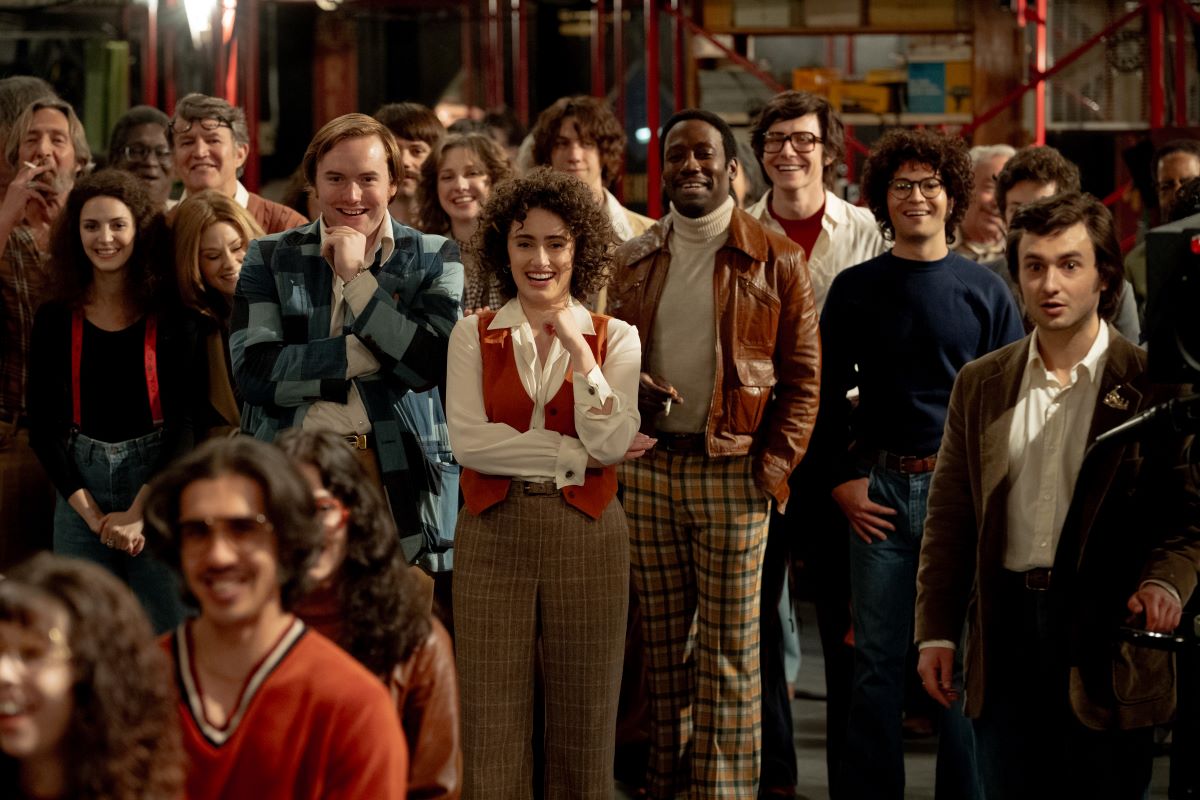
Surprisingly, my favorite part of the film ended up being the part I most dreaded going in: the actors playing the iconic members of the original SNL cast. To be sure, none of these actors rival their real-world counterparts’ comedy chops (and they’re all probably at least a couple of degrees more good-looking than they ought to be), but each captures the essence of their roles in delightful ways. The standout is probably Lamorne Morris, who hilariously embodies Garrett Morris (no relation) as he ponders what exactly he’s doing there, not only as the show’s sole Black cast member, but also as an acclaimed stage actor and playwright nearly a decade older than his costars; indeed, the elder Morris often draws the short stick in accounts of the show’s history, and it’s nice to see his brilliant contributions get the recognition they deserve. The other actors have perhaps less work to do given the higher profiles of their characters, but all do quite well in conveying what made them so special, from the oddball intensity of Dylan O’Brien’s Dan Aykroyd to the pixyish sweetness of Ella Hunt’s Gilda Radner (regrettably, like the show itself, Saturday Night can’t quite figure out what to do with Kim Matula’s Jane Curtin or Emily Fairn’s Laraine Newman, but even they get a few good moments in each). No one will confuse them for the real thing, but it feels a bit like spending time with some old friends nonetheless.
I’ve railed more than once in this space against the too-glossy Hollywood biopics which tend to crop up this time of year, which often function as wax museums more than proper movies. I can’t quite argue that this is not the case with Saturday Night, which is stuffed to the gills with contemporary actors reviving familiar faces and their most famous bits. But wax museums stay in business for a reason, and having grown up a dyed-in-the-wool comedy nerd I can’t pretend to be immune to Saturday Night’s charms. Saturday Night is not a great movie, and as history it’s downright spurious, but there is great pleasure to be drawn from spending an hour and a half in this space with these characters. I can imagine myself returning to this movie as a comfort watch further down the road, which is more than I can say for most of a given year’s prestige pictures. I went in ready to hate Saturday Night, but, in the words of Emily Litella: never mind.
Saturday Night
2024
dir. Jason Reitman
99 min.
Opens Friday, 10/11 @ Coolidge Corner Theatre, Somerville Theatre, and theaters everywhere.