
Project Hail Mary is an intimate, violin-worthy exploration of friendship, government toughness, self-confidence, and perseverance in the middle of a visually polished, intergalactic last-ditch effort to save humanity from extinction. While way too slow for its own good—wildly diluting what could otherwise be directors Phil Lord and Christopher Miller’s sci-fi masterpiece—between transitions, there’s nothing but gold in Hail Mary’s heart, humor, character, and themes. With Drew Goddard returning to adapt Andy Weir a second time after the 2015 adaptation of The Martian, Project Hail Mary feels just as freshly woven, self- and societally aware, and undeniably fun when the lulls dissolve.
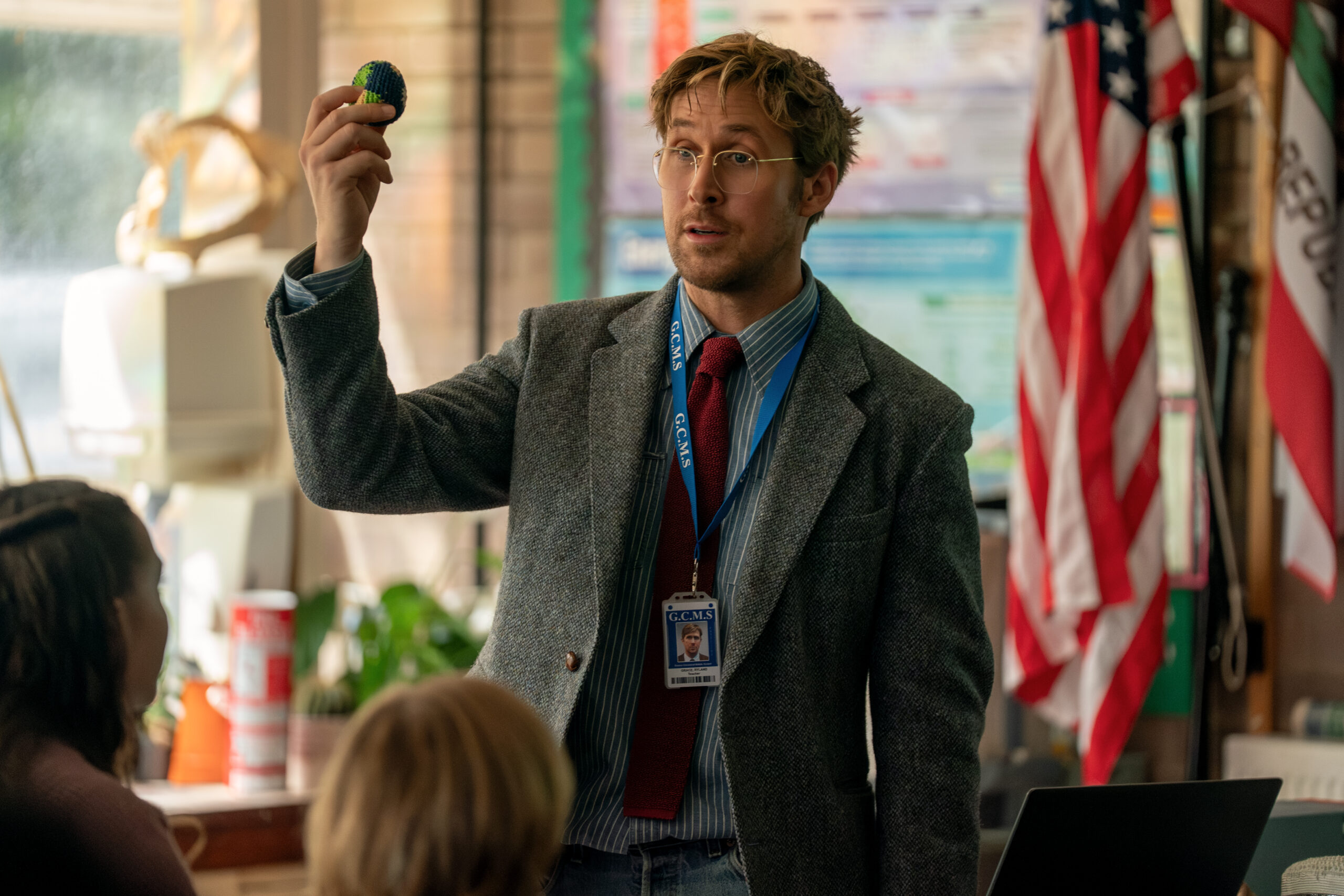
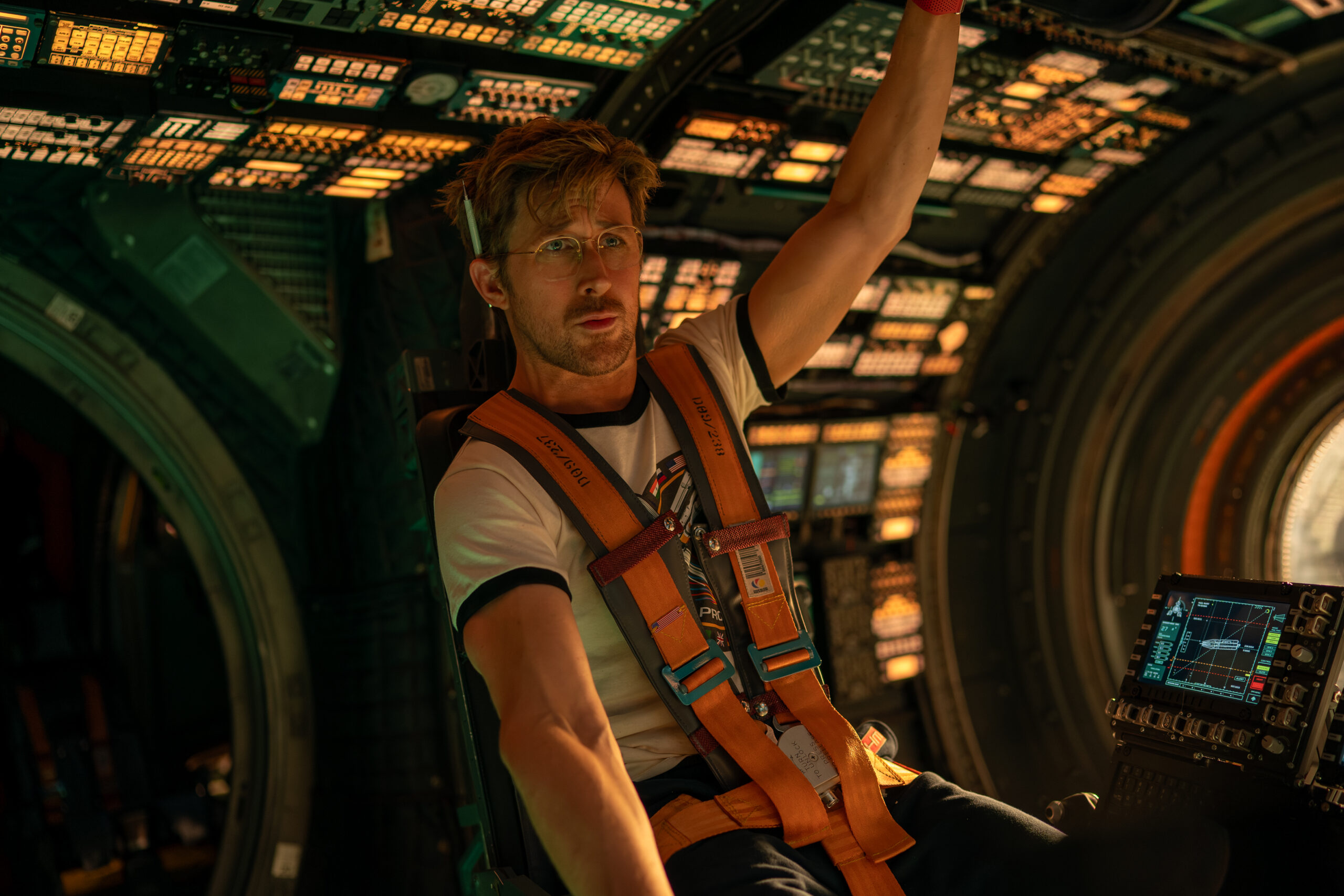
Ryland Grace (played by fellow RG Ryan Gosling) wakes up on a spacecraft seemingly in the middle of nowhere with no memory of who he is or what he’s doing. Finding he’s the sole survivor of a three-person mission to a distant solar system, Ryland slowly remembers that he is a middle school science teacher, tasked with saving the world from a 30-year catastrophic global cooling event caused by a solid stream of microorganisms called Astrophage that eat the sun to propel its intergalactic journey and reproduce. International government scientists determine that the Astrophage, initially detected as an infrared line called the Petrova Line, is consuming the energy of all nearby stars except one, Tau Ceti. Using the same Astrophage as fuel to propel the ship, the Hail Mary, Ryland travels on a one-way voyage to Tau Ceti to see why it’s resistant to Astrophage, where he instead first finds another alien ship made entirely from xenonite (solid-state xenon) belonging to a different space-bound species. Ryland meets a five-legged, rock-like being he aptly names Rocky, because of his stony appearance and because of the famous fictional boxer Rocky Balboa. As they begin to understand each other and their differences, like Rocky’s ability to use echolocation to see and talk, they not only agree to stop Astrophage together but also bond over their shared situation—Rocky, too, is the sole survivor of a planet-saving mission to stop Astrophage, only he comes from the planet 40 Eridani. As they find commonalities between their species, the pair grow to be close friends like Ryland never knew before on Earth. Only together, no matter the sacrifice, can they save their people and, almost as importantly, each other, over and over.
What does true, undying friendship look like? Is it about loyalty, integrity, and honesty? About having fun, common interests, and memories to scoff over? Or is it none of those, and something less explainable like an innate platonic connection between two souls? It’s hard to gauge at times, because people can be shifty; everyone has their own priorities, lives, boundaries, and decision-making styles, so shallow friendships and even friend breakups are unfortunately common. Maybe they shouldn’t be.
Project Hail Mary’s strength lies in its golden example of unyielding companionship—through every scary moment, uncertain choice, and changing dangers, Rocky and Ryland stick by each other and find nothing but goodness and safety on the other side. Aside from the on-ship awakening, Ryland appears to be an ordinary teacher: he tosses “lava” around with his students, asking them spitfire questions about science just covered in the class. He gets pressured to talk about the buzz words of the news—sun dots, global cooling, etc.—which he attempts to downplay as “a small to medium whoop” to humanity, as any teacher would; an image not unlike that potentially experienced by many viewers about global warming in their childhood education. But before long, what makes him unique—or, to the government, manipulatable—arises: in years’ past, he theorized life might not need water to exist and evolve: “There’s nothing magical about hydrogen and oxygen.” Though proven wrong, Eva Stratt (Sandra Hüller), Ryland’s eventual government agent superior, insists “we need scientists who are sure of themselves and of their capability to save [the world]” regardless of their argument’s factual basis—convincing Ryland his out-of-the-ordinary theorizations could be beneficial. “I’m wrong about everything and everything is wrong,” Ryland eventually proclaims in doubt, without realizing that everyone looking at the problem in the wrong way has stopped them from saving themselves until now.
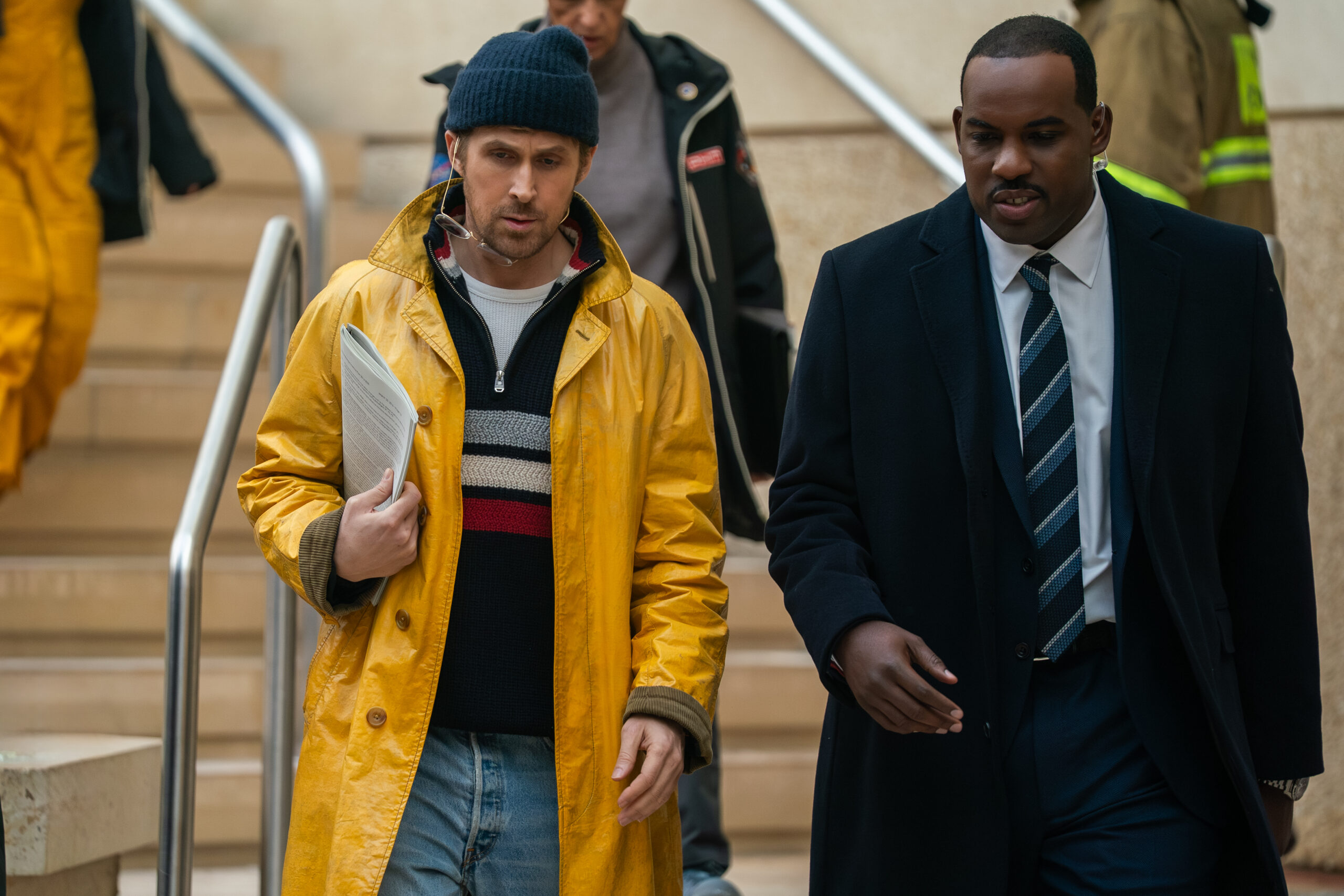
Even though Ryland is never one to miss a joke—”Wow…! Nothing happened!” he says to a group of military and political leaders as he tries and fails to examine the Astrophage via x-ray, infrared, and more—he learns of the situation’s gravity quickly and, perhaps worse, that “I’m expendable.” Eva reveals how his loss would be the least devastating, as he has “no immediate family, no friends, no wife, not even a dog.” He has his students, sure, but only so much as any teacher can rely on the kids they’re meant to guide. His relationships with others on the ground, though sincere for him, only go so far as his assistance: he befriends Eva over daily coffees, discussing the day’s plans and their reactions to them, and a security guard, Officer Carl (Lionel Boyce), as they lightheartedly construct tools together for the mission. Nothing exists beyond their mission to save everything they know—so once Ryland’s doubt resurfaces, “This sure feels like a betrayal” when Eva drugs him for a forced Hail Mary boarding. It’s especially bone-chilling as Officer Carl, up to that point a friendly face, stands over a subdued, face-planted Ryland, falsely reassuring him with an eerily stern tone. In short, Ryland learns an even harder truth than humanity’s extinction: he has nothing and no one on Earth to call home or to experience happiness with. Rocky becomes the perfect solution.
The starring duo’s introduction to one another is cautiously cute and cleverly mirrored. When Ryland first arrives at Tau-Ceti and another Petra Line in its shimmering blood-red glory, all he sees is a distant ship three times his ship’s size made of nothing but interconnected xenonite lines. Scary stuff. Hard gulp. But instead of doing anything hostile, the ship merely parks next to him and throws a space-bottled message (only to bounce off its hull, prompting a second message to be thrown much slower). In the xenonite bottle, a metallic model of the surrounding galaxy springs out, mystifying Ryland and prompting him to allow the mysterious ship to link with his. The pair meet, mimic each other’s movements, and slowly learn of each other’s backgrounds and personalities. They find they’re more alike than apart; their purpose is the same, they both have the capability for reason, love, and bravery, and they’re both living organisms in search of purpose and belonging. Of course, they have differences to ensure witty banter ensues—but ultimately, Rocky is the upbeat hero that Ryland unconsciously tries to be throughout. When Rocky learns of Ryland’s ultimate fate, for example, he doesn’t hesitate to offer up some of his fuel to get Ryland home: “It only adds six years to Rocky’s journey…. I will not let Grace die. Grace must go home.” Such determination, combined with a near-ferocious optimism Rocky allows to drive him as he and Ryland navigate their new friendship and mission, makes Rocky an unbeatable pal—and someone from whom Ryland learns true selflessness, sacrifice, and bromance. Throughout the film, even as he “doesn’t really understand boundaries” and becomes condescending when the pair becomes essentially roommates, his unwavering positivity and loyalty to Ryland demonstrate what we should all strive for in our friendships—both in what we give and receive, as Ryland realizes he must do. Friends are just that worth holding on to.
Despite everything Project Hail Mary gets right, its sluggish pacing is a big nuisance. For every golden scene of remorse, joy, betrayal, or laughter, there’s about five minutes of nothing. Somebody’s walking or deep in thought for too long; tools are made with every granular, unnecessary detail included; transitions between sequences, usually filled with show-stopping space shots and equally ear-massaging scoring, quickly dull as they drag on. A few of these instances would be bearable, but here it feels like a desperate attempt to upgrade Project from a budding sci-fi comedy to a grand space opera; that might’ve been achieved had 30-45 minutes been chopped. Fortunately, the gold of friendship and intergalactic eye candy still shines, avoiding Project Hail Mary’s slow-burn woes, for the most part. For science fiction fans, comedy enthusiasts, Ryan Gosling lovers, Andy Weir readers, and those looking for hope in a gloomy time for the nation and the world, Project Hail Mary is a blast through the stars and our relationships.
2026
dir. Phil Lord and Christopher Miller
156 min.
In theaters Friday, 3/20 @ Alamo Drafthouse Seaport, Cinema Salem, Landmark’s Kendall Square Cinema, Coolidge Corner Theatre, West Newton Cinema, Apple Cinemas Cambridge, Maynard Fine Arts Theatre, Somerville Theatre, Showcase SuperLux, and all local AMCs