Vietnam’s box office appears to be one of the fastest growing audiences in Southeast Asia. Almost every year the country produces a new all-time box-office regent and the country’s newly minted highest-grossing film of all time, Mai, has also become Vietnam’s greatest success abroad. Director Trấn Thành owns all three of the top-three admissions with this year’s Mai, 2023’s The House of No Man, and 2021’s Dad, I’m Sorry. All three of these titles come in at over 420 billion đồng. Number four, Avengers: Endgame, comes in at just over half of that at 285 billion đồng. Thành possesses a formidable grip on the box office; the grip is also a simple one. He makes simple films that capitalize on basic human appeals.
Mai, a straightforward romance that gets a bit twisty toward the end of its runtime, never deviates too far from the universal standard of the romance. And people devour romance.
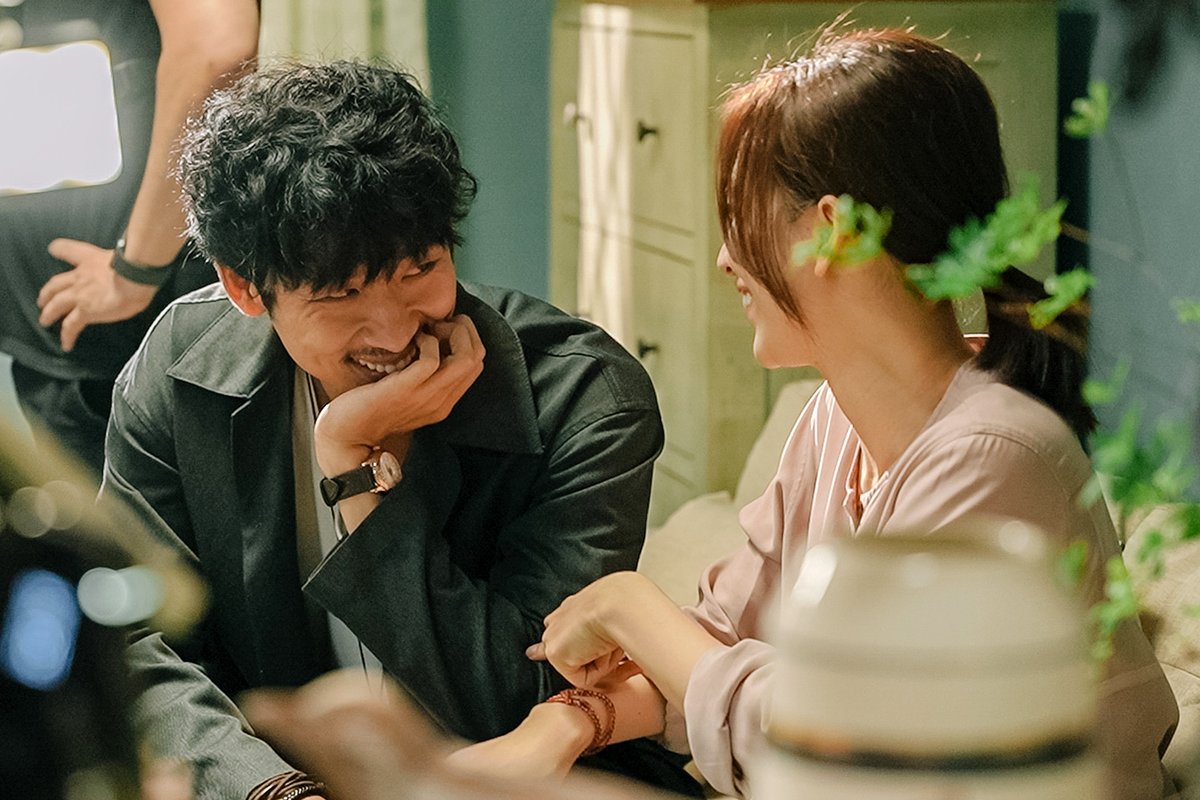
Phương Anh Đào plays the titular Mai, a single mother working as a masseuse in her mid to late 30s. We meet her as she’s moving into a new apartment in Saigon. Her new neighbors, as well as her new co-workers, are immediately cross with her and determined to make her life miserable in all ways. Some hate her because she’s too pretty, some hate her for being good at her job, and others just because the universe determined to rule against Mai. Only Duong (Tuấn Trần) — a neighbor and frequent customer at the massage parlor — one nameless woman about her age who lives on her floor, and a reticent older woman show Mai the archetypal neighborly hospitality as she adjusts to life as a single mother in Saigon.
Mai only works if you don’t think about things too hard. As soon as you do, it all falls apart. The crude social environment coalesces into an almost laughable escape of twists and turns with Mai barely surviving at the center of the disrespectful game. The peripheral characters show no purpose beyond annoying Mai and hindering her pursuit of happiness. Even the barriers to her personal fulfillment — age, single motherhood, being a masseuse, a gambling father — shouldn’t be as fundamentally confounding as they end up being.
The massage scenes are more creepy than they are sexy. Thành never escapes the male fantasy of the massage moving into a quasi-prostitution sexy time, though Mai resists Duong’s initial attempts to turn his massage into something more. For some, the fact that she still has the capacity to fall in love with the pervert may or may not be a barrier to empathizing with the protagonist. The camera falls into the same trap as it treats the meeting of the masseuses’ hands (and body) on her customers like a game of intimacy. Massages can be sexy, of course. Last year’s sublime Inside the Yellow Cocoon Shell, also a Vietnamese film, showed with great sobriety that sexiness and worker exploitation don’t need to be married to one another in scenes featuring massage professionals. The physical sensation, if handled with delicacy, does not need to be explicitly sexual to be sexy.
Mai
2024
dir. Trấn Thành
106 min.
Now playing @ AMC Causeway
Joshua Polanski is a freelance film and culture writer who writes regularly for the Boston Hassle and has contributed to the Bay Area Reporter, In Review Online, and Off Screen amongst other places. His interests include the technical elements of filmmaking & exhibition, slow & digital cinemas, cinematic sexuality, as well as Eastern and Northern European, East Asian, & Middle Eastern film.