Exit 8 is a visually impeccable, mildly unsettling adaptation of the 2023 video game of the same name. Though it’s a bit too abstract to scare as much as it dramatizes, and it’s also void of tension once the mystery becomes clear, it’s definitely impressive that director/co-writer Genki Kawamura, co-writer Kentaro Hirase, and lead star/co-writer Kazunari Ninomiya managed to inject regret, abortion, fatherhood, remorse, choice, and lifecycle analysis into a fairly story-less video game. Even so, more energy and less single-setting-instilled dullness are needed for Exit 8 to wow and frighten as much as it subtly heightens its core metaphors, leaving this Neon-distributed adaptation far less engaging than it could be.
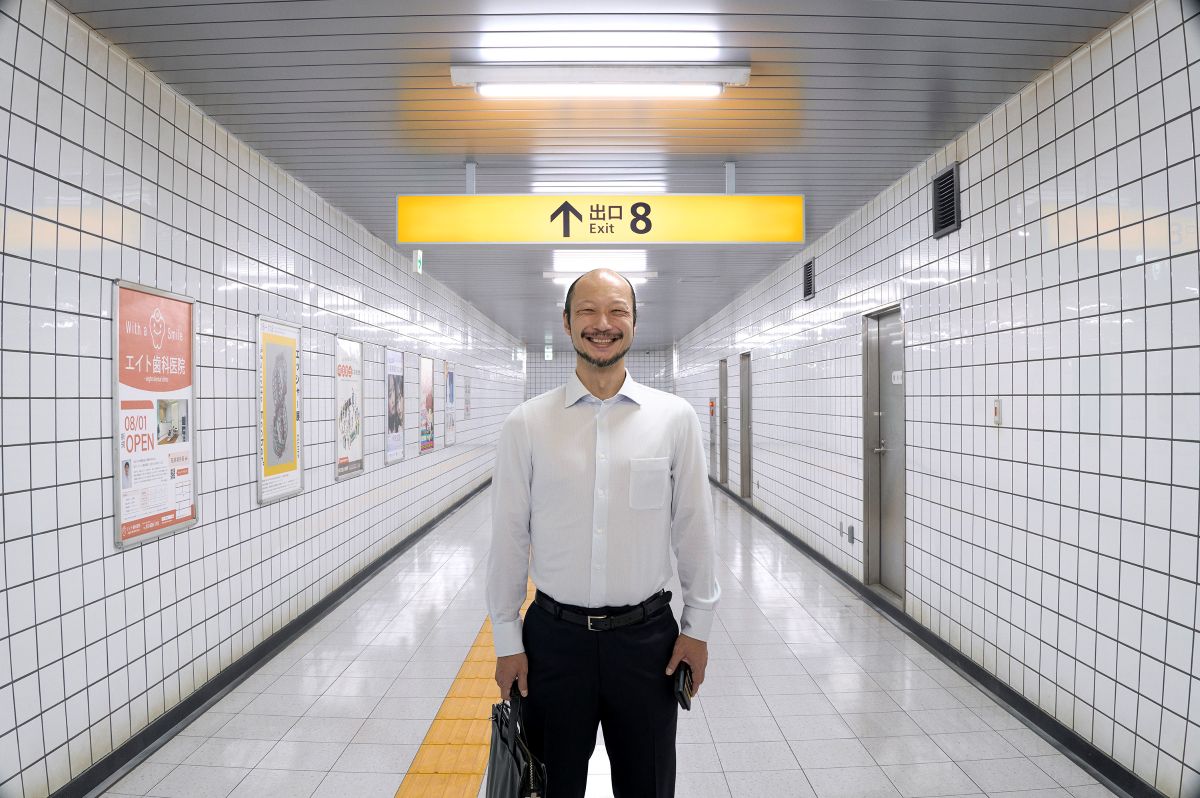
Following three primary parties—The Lost Man (Ninomiya), The Walking Man (Yamato Kochi), and The Boy (Naru Asanuma)—Exit 8 sees the Lost Man get trapped, both in an ever-looping train station and in indecision. After pretending not to hear a man scream at a woman and her crying baby on a train, Lost Man receives a call from his ex-girlfriend named, you guessed it, The Woman (Nana Komatsu), who informs him that she’s pregnant and unsure of whether to keep the baby or abort it. Unsure of himself, Lost Man simply tells The Woman he’ll go meet her at the hospital, before he walks out onto a platform with a sign saying “Exit 8” pointing to the only way out. Quickly, Lost Man finds himself walking endlessly through the same hallway, each time surrounded by posters, a few doors, and The Walking Man, who, at some earlier point, got absorbed by and became a part of the loop. Finding a sign with rules to leave, Lost Man realizes that he must progress through eight different stages by checking the same hallway repeatedly for anomalies, which can range anywhere from slight changes in poster art and a door handle being where it shouldn’t be to phone calls, people trying to impair his judgement, and blood rain. As he progresses and fails, he meets The Boy, and together they work through this nightmare of uncertainty—if only they knew their intrinsic ties to each other and The Lost Man’s big decision, or that their current predicament is built on cowardice and can therefore be easily changed.
Exit 8 is easily one of cinema’s better video game adaptations. Instead of applying a cookie-cutter, formulaic, contrived narrative to a scary setting—rendering any film entirely reliant on (usually weak) scares, as in the mindlessly loose Until Dawn flick—Kawamura creates an intense metaphorical reason why an endless loop exists. Anchoring it in the Lost Man’s choice, neither Exit 8 nor its protagonist should be seen as a pro-life or -choice; as shown on-screen in vague lettering before evaporating into the film’s first chapter’s title, “Part 1: The Lost Man,” Exit 8 is a “Test” for its central protagonist about whether he’ll support his ex’s choice or abandon her altogether. Each time he peers around corners, searches for the tiniest physical change on walls or ceilings, listens for odd sounds or experiences something disturbing, he faces his dedication to his potential family and the strength of his life priorities. He must either stand his ground and escape this cumbersome station loop, or do as he did with the screaming man: ignore, conform, and ultimately give up, leaving behind his ex, her dreadful choice, and her heavy words—”So which is it?”—that echo constantly on-screen and in viewers’ minds. Matching such journey-changing dread with the Exit 8 game’s nightmare mechanics elevates Exit 8 to depressingly tense heights.
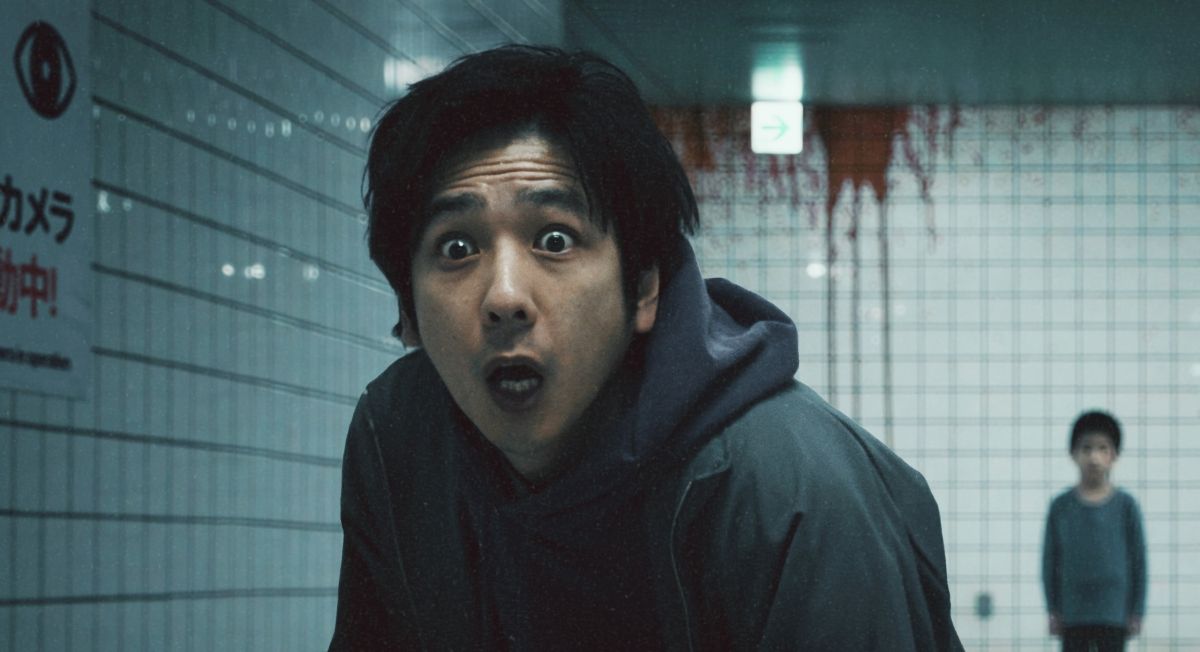
The Lost Man, fortunately, can find the answer in the film’s other two chapters and characters, The Walking Man and The Boy. Without spoiling how everything unfolds, both characters are mere reflections of The Lost Man’s past and potential future. The former, who’s trapped in the present day, once searched for the eighth exit to “Find my son!” Teaming up with the timid, silent Boy, who seems instinctively able to sense the station’s anomalies (e.g, he understands himself and what he wants better than the other characters), the pair get thrown off by an anomaly disguised as another person, The High School Girl (Kotone Hanase). Instead of trusting The Boy’s instincts, The Walking Man gives in to a fake Exit 8 illusion, going as far as throwing The Boy off him. He abandons the kid he sees before him in search of the promise of another, where birdsong supposedly welcomes his ascent to this unseen kid’s arms, becoming eternally part of the loop. The Boy—The Lost Man’s son? The Lost Man as a kid? It can go either way—who simply wants to say “I’m sorry, Mom” after accidentally getting separated from her in a game of hide and seek, is not screwed up by life’s other uncertainties, societal norms, or other needs, so he understands innately how to escape this vicious station’s mental and physical cycle. The Boy just needs an adult to guide him back to his mom, or the very same woman The Lost Man frequently calls about his future fatherhood. As depressing as these choices can get, The Lost Man—and viewers—have all the tools and mental capabilities needed to do what’s right. A father’s job is to protect his son. The Lost Man is just as capable of finding the source of that protective strength as anybody else, even through the scary moments.
Though Exit 8 is metaphorically and visually majestic—thanks in no small part to Ninomiya’s being a fan of the game and an extensive script collaborator—it lacks forward momentum, scares, and general stakes once the mystery unravels. Maintaining a level of restraint on all fronts, from characters’ emotions to the station’s freakiness, no one ever feels in real danger. Before the major metaphor reveals itself, there’s some intrigue in who or what might be putting Exit 8’s characters through. Is there somebody controlling all this so that characters can reevaluate themselves? Is there some mystical force that unleashes this in certain parties’ minds? Are all the characters the same person at different times, or different people who may or may not be related? Though Exit 8 maintains consistent somberness and a few unsettling tricks dot its landscape—poster eyes following, screams from elsewhere, doors opening to darkened hallways—it relies too heavily on its quick-to-deflate mystery to keep one hooked. If there were many more scares and internal deliberation sequences, perhaps Exit 8 could’ve reached the contemplative horror heights to which it fervently aspires. Even so, for horror fans, video game adaptation diehards, Exit 8 game lovers, and those looking for a minor spine chill, this adaptation is a fair loop through emotions, life, and the psychological consequences of spinelessness.
2026
dir. Genki Kawamura
95 min.
Opens Friday, 4/10 @ Coolidge Corner Theatre, Alamo Drafthouse Boston Seaport, and AMC Boston Common and Assembly Row