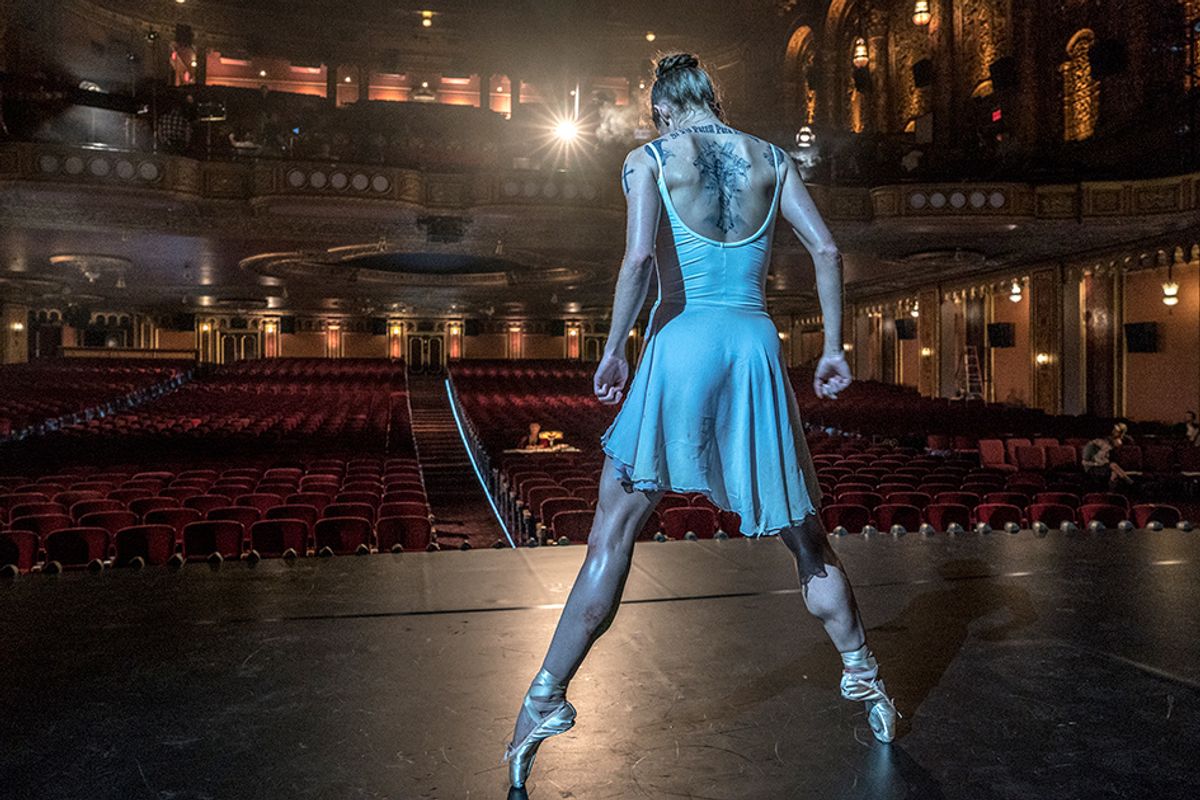
Ballerina is an action-packed, cultishly exploratory film introducing Eve Macarro (Ana de Armas) to John Wick’s world of assassins. After losing her father and sister to the sinister, twisted, family-faith-oriented leader of an assassin family called the Cult, known simply as the Chancellor (Gabriel Byrne), a tween Macarro is found and taken in by John Wick 1-4 returnee Winston Scott (Ian McShane), the New York Continental Hotel owner, fellow assassin and friend of the franchise’s titled hero. She is then introduced to the Ruska Roma and its unnamed leader, known only as the Director (Anjelica Huston), one of the criminal underworld’s governing High Table’s strongest assassin tribes. Grown through adulthood in Ruska Roma’s fierce ballet program, the Director eventually recruits Macarro into their assassin program and starts allowing her jobs. Through a warpath of ferocious action, non-stop death, and rule-written destruction, Macarro eventually re-collides with the Chancellor and his Cult, forcing her to face her past and fix her future—with a bit of help from the legendary Baba Yaga (Keanu Reeves) himself to even out her odds. Taking place between John Wick: Chapter 3 — Parabellum and John Wick: Chapter 4, Ballerina does its best to expand this brutal universe beyond the experiences of its leading white male protagonist.
John Wick casual viewers and megafans will find much to love in Ballerina‘s consistent dose of heavy, propulsive, and creatively spontaneous action sequences. Ballerina is brim-full of the same kind of tight, one-shot-looking action and fight choreography: Macarro throws knives faster than bullets fly, shoots a highly precise flamethrower at dozens, stuffs a grenade down a soldier’s throat before shoving him on the other side of a knocked-over table, and more. Continuing the same visual scope and setting as the previous films, it further solidifies itself as a worthy John Wick spin-off by eloquently expanding on the original quadrilogy’s themes of cultish killings, death-unfazed societies, and power-hungry leaders and killers, all through its solid use of blue-purple hues and grayed-down atmospheres. These themes bleed through the narrative as well, of course; with the Chancellor’s group being called the Cult aside, everyone, no matter what assassin affiliation they’re a part of, is forced to stay in the game.
It comes through clearest towards the beginning, as Macarro faces the fatal training necessary to become a Ruska Roma Rona (assassin). Placed at a table with an unbuilt, unloaded pistol, another woman comes in to sit opposite her with the same tools, frustrated at the current situation: “Do you know who I am? I’m you, in 10 fucking years.” Even though Macarro headshots this woman point-blank, the idea rings in her and the viewers’ ears as she obliterates everyone she’s contracted to and/or who is in her way. Even Wick himself eventually enlightens Macarro to the truth of her current path: “You can still leave. But the door will close sooner than you think,” he says in passing as an inspiration-necessitating Macarro ogles over the legendary Baba Yaga. The Ruska Roma and Cult are simply differently labeled and lead groups of the same idea: a group of people brought together to kill others and live virtually without consequence. Macarro must face this new truth as she gets deeper and deeper into the world of assassins, either accepting her new high-stakes reality or getting out before she’s killed.
Other themes arise as well, though not as profoundly as director Len Wiseman and co. may have wished. While the bland, severely short-sighted script significantly hinders Ballerina, like other Wick films, from being as artfully impactful as it intends to be, it tries to stick the landing by providing mostly sweeping one-liners whenever anybody speaks. For example, Macarro’s personal journey through Ballerina is a dance with death from faces past. While watching her face off against the imperturbable Chancellor is thrilling, the idea is thrown right in your face from the get-go as Macarro gets told to “fight like a girl” to gain the upper hand in every fight. Beyond just seeing Macarro fight dozens off, there’s nothing else substantial about her being a female assassin beyond that one-liner. That’s how most of the film’s characters are treated: like cutouts dependent on their actors to bring them to life. Fortunately, the cast is indeed daring, but they cannot entirely disguise what is otherwise dull writing—a flaw consistent across the entire John Wick franchise and thus not wholly Ballerina‘s doing. Nevertheless, such mindless writing contradicts the rest of the film’s polish, making Ballerina a fun, action-packed, and lightly enticing but noticeably underdeveloped entry in the John Wick universe. For franchise fans, Ana de Armas fans, and action fans in general, Ballerina will entertain even if it doesn’t make you think.
2025
dir. Len Wiseman
125 min.
In theaters everywhere now