As a critic, one of the hardest films to review is the one which you truly wanted and expected to like, but didn’t– at least, not as much as you’d hoped. On paper, American Fiction seemed poised to be one of my favorite films of the year: it’s got a wickedly funny premise, it provides a rare starring role for one of our greatest and most underappreciated actors, and it even has the added element of delight in showing Boston locations I know by heart (between this, The Holdovers, Eileen, and Dream Scenario, it’s been a good year for Massachusetts-set films). It has consensus on its side as well, with numerous critics I respect singing its praises and a very strong presence in the looming awards season. Yet, for all American Fiction has going for it, I left feeling strangely disappointed– and I’m trying to figure out why.
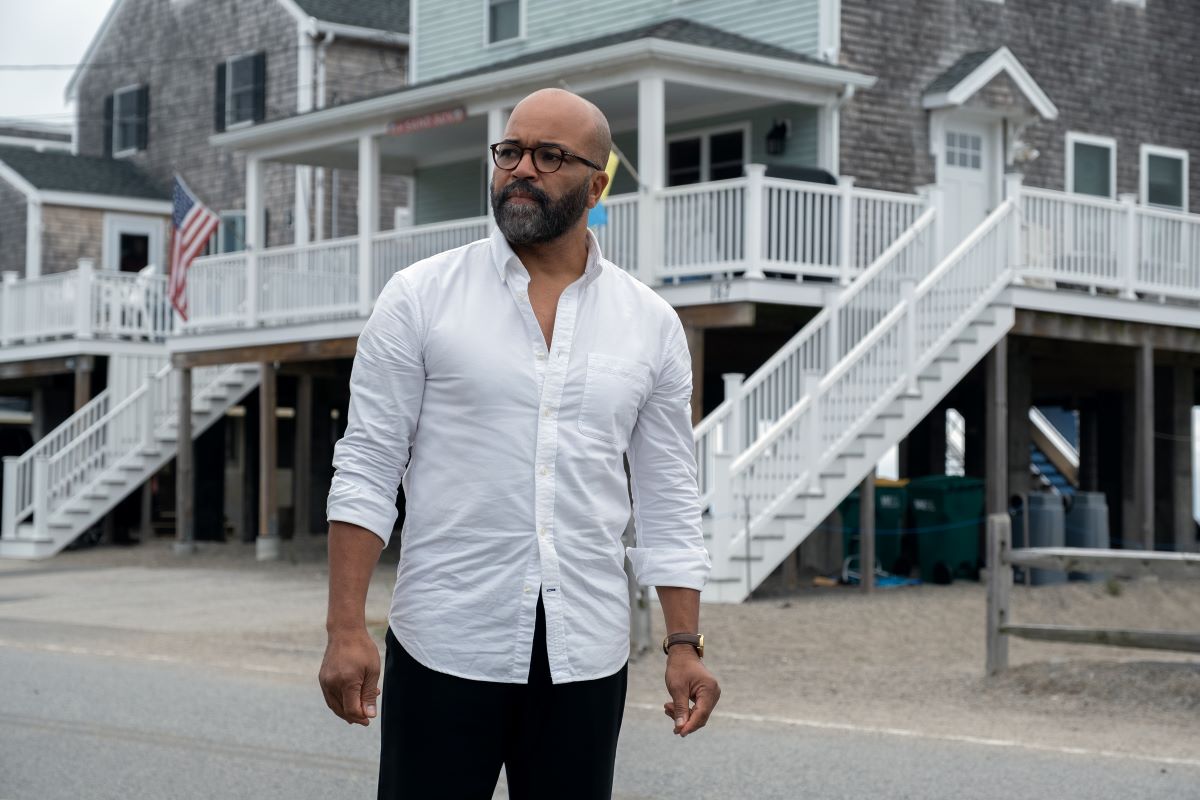
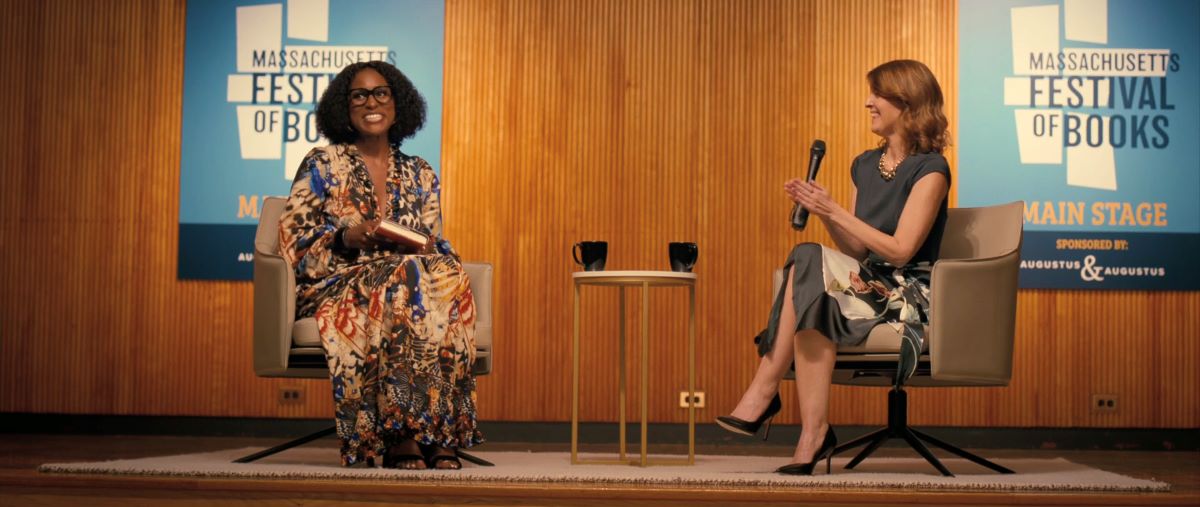
Jeffrey Wright plays Thelonious “Monk” Ellison, a prickly writer whose novels are a bit too stodgy to make much of a dent on the bestsellers list. Monk seethes with resentment over the fact that the only Black-authored books which cross over to white audiences tend to play into racial stereotypes (his chief rival, played by Issa Rae, is a darling of NPR for her book We’s All Lives in da Ghetto), and he tears into a clerk at a bookstore (the Brookline Booksmith, here playing against type as a Barnes & Noble-style chain store) when he finds his own books are shunted into the “Black Stories” section. On top of all of this, a series of family crises brings him back home to Boston in desperate need of cash. At wit’s end, Monk writes a witheringly sarcastic lampoon of a “Black” novel titled My Pafology (later retitled into something even more blunt and hilarious) and sends it to his agent under the nom de plume Stagg R. Leigh. As a lark, his agent sends it to a publisher, who, to their shared shock, loves it, and wants to option it as a movie with Michael B. Jordan. Offered more money than he’s ever seen in his life, Monk has little choice but to play along– even as he fears he’s sold his soul along with his book.
This is a very funny premise, and the scenes which play into it are often genuinely hilarious (one clueless white publicist, in discussing the book’s cover, refers to a do-rag as “one of those little scarves”). However, the film splits its running time equally with Monk’s struggles with his dementia-addled mother (Leslie Uggams), his newly out-of-the-closet brother (Sterling K. Brown), and a possible new love (Erika Alexander). These scenes, too, are often very good; Wright sells the weariness and melancholy of trying to find a place for his aging mom, and he is ably abetted by a more than game supporting cast. On its own, this story could probably make for a satisfying movie in its own right.
The problem, then, is that American Fiction tries to do both, and these two compelling stories have the curious effect of counteracting each other. When we’re with Monk and his family, it’s hard not to get impatient to get back to the brutally funny takedown of the publishing world. The satire of the scenes between Monk and his publishers, meanwhile, is softened by the goodhearted earnestness of the family drama (it’s probably hard to make an irreverent comedy about something as serious as Alzheimer’s in 2023, but a more caustic edge on the B-story would have gone a long way toward a more cohesive whole). I would watch either of the two movies within American Fiction, but I don’t think they make a very good double feature.
Which is a shame, because American Fiction contains moments which surely rank among the funniest of the year. As Monk begins to hate-write his “masterpiece,” his characters (played by Okieriete Onaodowan and the great Keith David) appear in front of him, acting out his dialogue and occasionally critiquing his choice of words (this scene works so well that I wish it was used as a recurring motif rather than a one-off, though I suppose “Not enough Keith David” is a criticism that could be leveled against nearly every movie ever made). Later, Adam Brody shows up as a vaguely Tarantino-esque filmmaker who tries to get in Monk’s good graces by impressing upon him his street cred (“I spent a month in the joint myself. Some interstate commerce shit.”). In these moments, American Fiction is cuttingly hilarious, a vital satire seemingly pitched directly toward this moment in time.
Which makes it all the more frustrating that it blinks. By softening the blow with its cuddly human side, American Fiction feels too self-satisfied by half. Its apparent desire to let its audience know that it’s really a “nice” movie makes its more biting moments come off as faintly insincere, as if it wants to play to the Ted Lasso crowd more than it wants to make its targets uncomfortable. Watching American Fiction, I couldn’t help but wonder how its main character would feel about it. While I don’t think he’d dismiss it as brusquely as the “Black History Month” cable TV bumper in his hotel room (which consists entirely of clips of thugs and slaves), Monk Ellison strikes me as someone with too keen a nose for bullshit to be fully taken in by it. For all its great performances and flashes of comic brilliance, American Fiction ultimately seems geared toward the same audiences who made My Pafology a hit.
American Fiction
2023
dir. Cord Jefferson
117 min.
Now playing @ Coolidge Corner Theatre & Kendall Square Cinema