In the seven years (almost to the day) since its inception, the #MeToo movement has proven to be a headache for Hollywood— not because of the consequences against its disgraced power players (which all too often turn out to be empty and fleeting), but because of the bind in which the movement places its mythmaking impulses. Hollywood has always loved telling stories about itself, particularly ones in which its participants bravely stand up against oppression. Here, though, the oppression comes in the form of Hollywood itself, which makes the movement harder to spin into a feel-good “magic of the movies” narrative. While there have been a handful of excellent films made about the moment, studios seem largely committed to keeping their heads down until this all blows over— and when they do decide to weigh in, we tend to wish they hadn’t.
The latest entry in this awkward cycle is After the Hunt, from the wildly prolific auteur Luca Guadagnino. Guadagnino is primarily known for films like Call Me By Your Name and Challengers, youthful pictures beloved by Gen Z and younger Millennials, which makes the odd, crypto-reactionary bent of After the Hunt all the more baffling. Despite a great cast and some appealingly acrid moments, After the Hunt is a mostly groanworthy take on a delicate subject. Guadagnino has been called many things throughout his diverse filmography, but this is perhaps the first time he could be accused of being square.
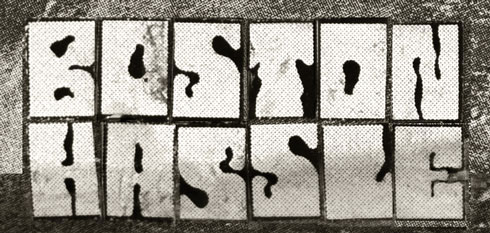
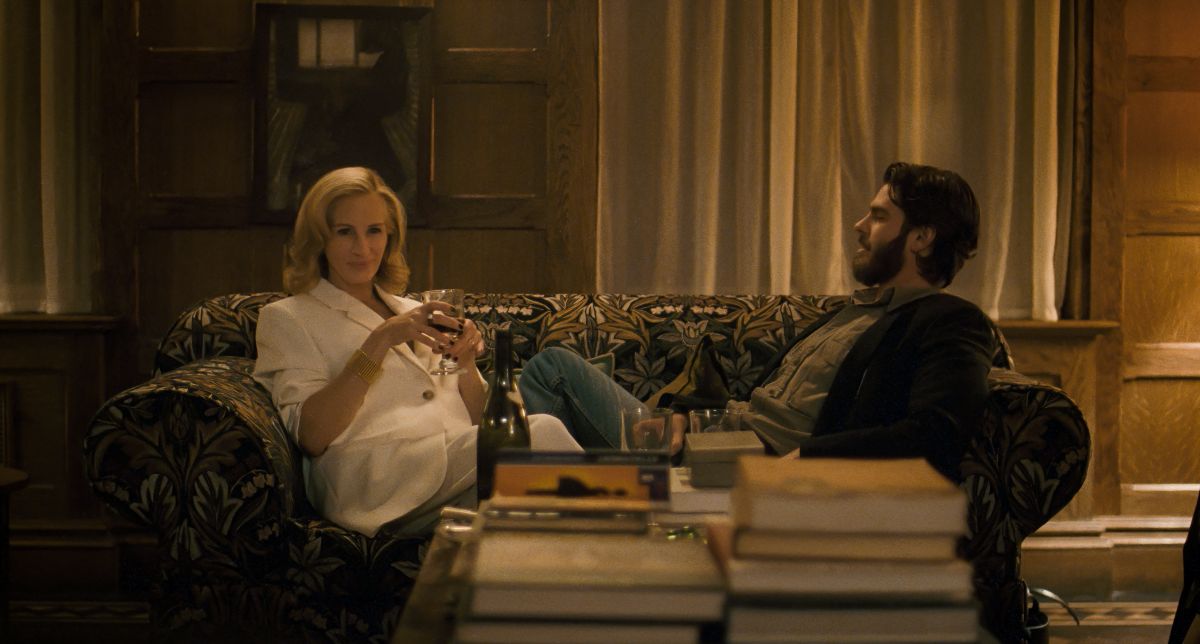
After the Hunt announces its tone from the font of its credits: a crisp, black and white Windsor, instantly recognizable to cinephiles as The Woody Allen Font. Allen is, of course, one of the most infamously “cancelled” of filmmakers, as well as one of the few with enough plausible deniability to remain a subject of debate. Allen is also a clear influence on the film itself, a self-conscious throwback to the unabashed intellectualism his films played at. We begin at an appropriately high-brow student-faculty dinner party in a residence at Yale (do those still happen at ivy league schools? Did they ever?). The faculty on hand are Alma Imhoff (Julia Roberts), an appropriately expansive professor of philosophy, and her department counterpart Hank Gibson (Andrew Garfield). Chief among the students is Maggie (Ayo Edebiri), Alma and Hank’s star student and daughter of a significant donor to the school. At the end of the night, after countless bottles of wine, Hank offers to walk Maggie home. The next day, Maggie comes to Alma in tears… and you can probably guess the rest. From here we follow Alma as she weighs the allegations, her feelings toward her colleague, and, above all, her own standing.
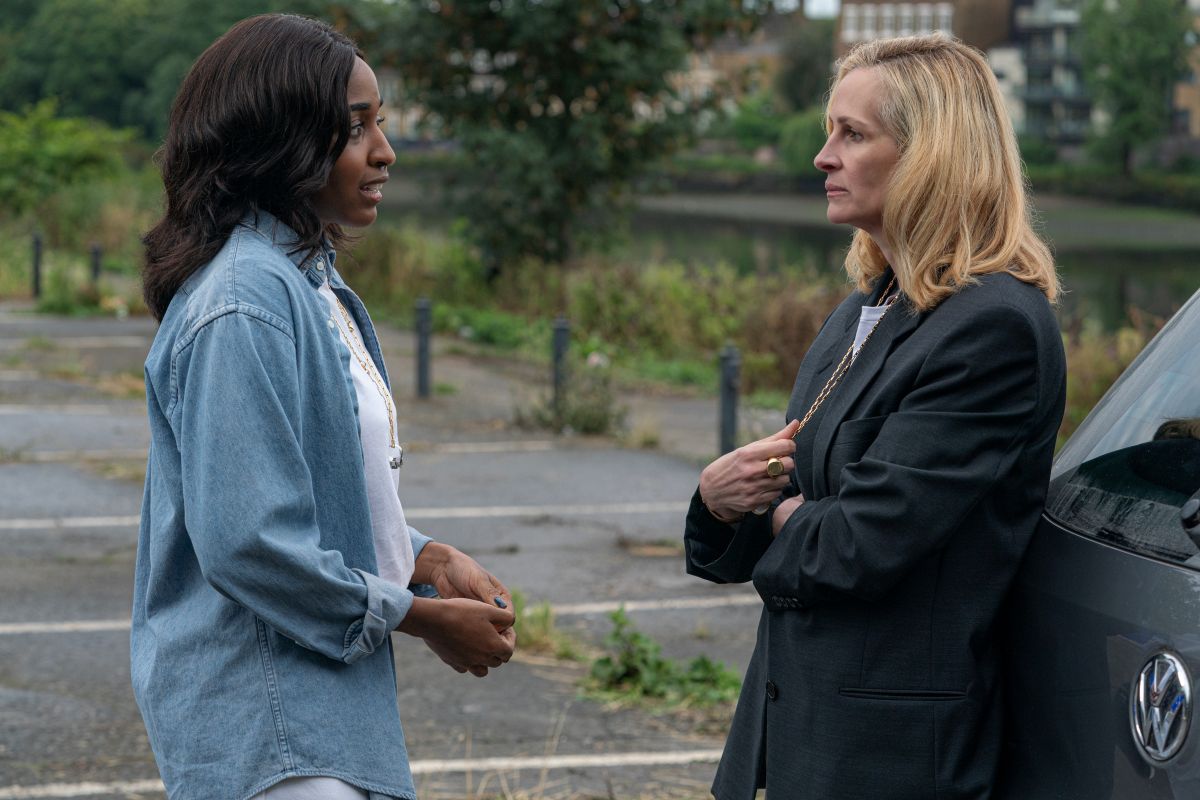
After the Hunt is the sort of film which ought to be played either completely straight (a la Kitty Green’s sobering Weinstein drama The Assistant) or as delicious trash in the Ryan Murphy vein— both tacks at which one imagines Guadagnino would excel. Unfortunately, the film takes a maddeningly noncommittal approach. The film is discomfitingly glib in the face of extremely serious subject matter, yet too unremittingly dour to have very much fun with. After the Hunt commits the cardinal sin of the social media age: it presents a take which is tepid at best.
The other crucial problem with After the Hunt is that, by centering its tale of damning allegations on a powerful, intellectual woman, it invites comparisons to Todd Field’s Tár— comparisons from which it cannot possibly benefit. Field’s film is, by my reckoning, one of the best of the decade so far, by turns (and often simultaneously) harrowing and hilarious. Above all, Tár exists in a space of ambiguity, leaving enough space in its narrative to keep you turning it over in your mind. By contrast, After the Hunt is hermetic, its characters constantly expressing themselves in florid monologues. It leaves open one fundamental question— that of what, exactly, happened between Maggie and Hank, and the extent to which Maggie exaggerated her account for clout— but it is hemmed in so tightly that there’s only so much room to wonder. In the wake of Tár’s release, there was speculation that some or all of the narrative may have taken place in a dream; here, we remain frustratingly earthbound.
This failure is not, it must be said, the fault of the cast, which is filled with some of the most eminently watchable actors currently working. The big story here is of course Roberts, clearly having a ball playing against type (she also gets the best line, listlessly moderating a class discussion while nearing her breaking point: “Oh, good, fucking Marcus is here.”). Michael Stuhlbarg is at his pissy best as Alma’s put-upon husband, and Chloe Sevigny is a hoot as the university’s frumpy counselor. And Garfield and Edebiri, as they are both so often asked to do, make the best of material which doesn’t quite rise to their talent. Taken purely as an ensemble piece of great actors sinking their teeth into reams of dialogue, After the Hunt is a solid way to pass a couple of hours.
But if you’re looking for an urgent take on a hot-button issue— or even just a film that’s about anything in particular— you’re going to want to keep moving. After the Hunt clearly aims for provocation, but it feels based more on second- or thirdhand accounts of The Discourse than of the actual moment. This is trouble for any topical film, but it’s particularly worrying for a director like Guadagnino, for whom provocation is central to his appeal. Perhaps this, the third Guadagnino joint to be released in the past 18 months, is a cue for the filmmaker to slow his roll a bit. The fact that he already has a new film in the pipeline— and that that film is purported to be a biopic of OpenAI CEO Sam Altman— makes one worry that the Luca wave may be about to crash.
After the Hunt
2025
dir. Luca Guadagnino
139 min.
Now playing @ Coolidge Corner Theatre (in 35mm), Kendall Square Cinema, Capitol Theatre, Alamo Drafthouse Boston Seaport, and all local AMCs