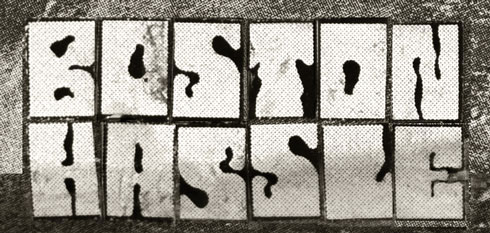
Tomas Alfredson’s 2008 romance horror film, Let the Right One In, centers on the budding relationship between two preteen Swedish children living in a snowy suburb of Stockholm. Similarly withdrawn and shy, they share a fundamental difference in Eli, the female component of the duo, being a vampire. Composed of a careful interplay between light and dark imagery, the film is paired with a dramatic score and explores many intricacies of friendship and youth: the loneliness of growing up, the ambiguous dividing line between good and bad, and the lengths to which some of us will go to seek protection from a chaotic world. Its picturesque simplicity underscores a landscape of fear, uncertainty and violence, but also reveals the beauty that can emerge from shared, youthful melancholy.
Though its careful, steady compositions – marked with the stillness and glow of winter nights where something unknown lurks somewhere unseen – conjure a stability of sorts, the film reaches grippingly powerful moments, sometimes breaching the line between order and chaos.
Eli, whose bloodlust is responsible for much of this chaos (her father is arguably more ruthless in his pursuit of survival, however), may be a blasphemous creature to some, especially in folkloric and mythical representations. But she represents something more like an angel to the film’s protagonist, Oskar, rescuing him from the callous abuse of his classmates. Such cruelty is perhaps as representative of that unseen, lurking nighttime danger as the threat of vampiric violence (and certainly more expected in the film’s world, where the existence of vampires appears to be rare and hidden).
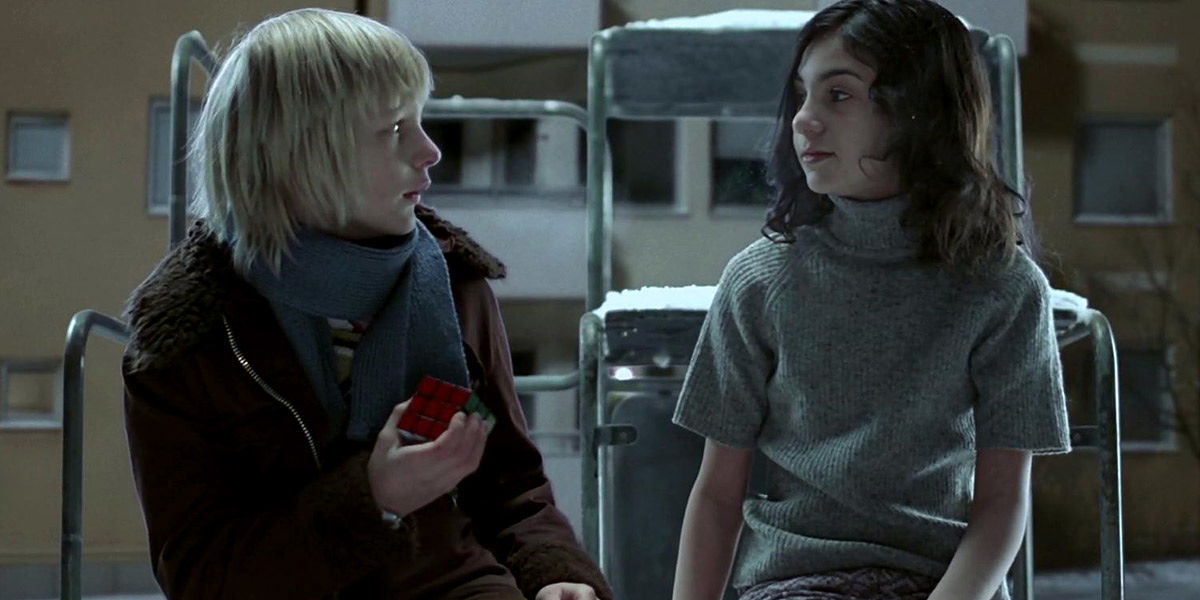
The constant bullying and fear Oskar suffers at the hands of his abusers is also, to some extent, profoundly less understandable than that brutal search for survival enacted, obligatorily, on the part of Eli and her father. Neither Oskar’s divorced parents nor his teachers even seem to notice his torment, and he resorts to isolation and fantasy to cope – forms of self-medication familiar to many of us, though hopefully not to the vengeful degree of Oskar’s imagination.
Though Eli cannot stand nor be seen in the sun, she is a beacon of light and hope for Oskar, showing him what strength is, as well as what violence looks like outside of his imagination. Perhaps this saves him from a period of prolonged darkness and despair, which many bullied children experience in adulthood. Whether or not this legacy unfolds, it is undeniable that the imagery and thematic content of Let the Right One In paints a world that is as tender as it is terrifying.
Let the Right One In
2008
dir. Tomas Alfredson
115 min.
Wednesday, 8/10, 5:30 PM & 9:30 PM, Brattle Theatre
Part of the ongoing series: Under the Influence
Double feature with The Invitation