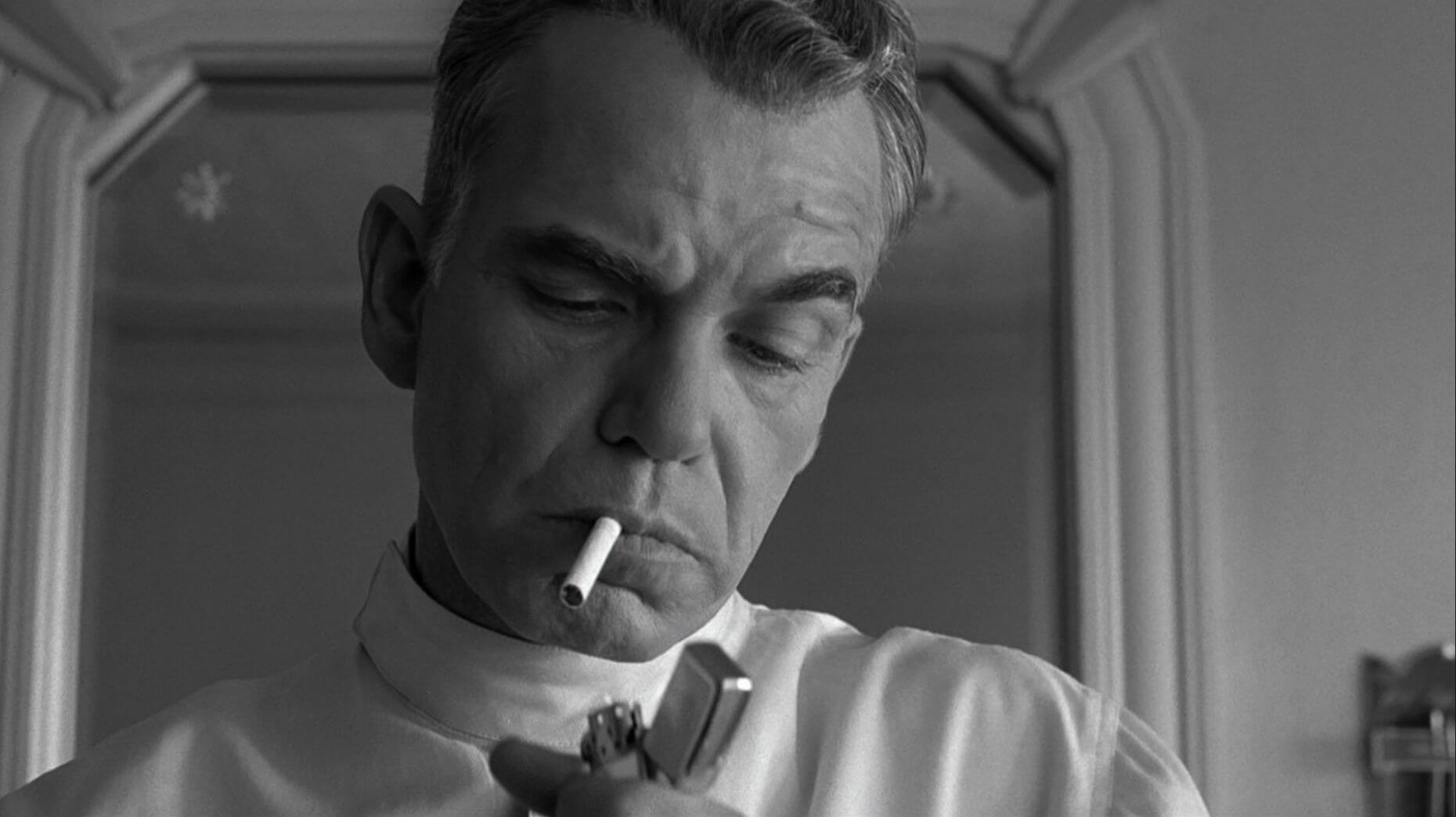
The Man Who Wasn’t There is a gloomy modernization of neo-noir storytelling, greatly enhanced by its cast and specifically Ed Crane’s (Billy Bob Thornton) gritty outlook and demeanor. Following Crane as he mans a barbershop with his brother-in-law Frank (Michael Badalucco) in a small Californian town in 1949, viewers watch as a depressed, quiet man lives his unbothered life—a detached wife in Doris (Frances McDormand) cheating on him with none other than their borderline thug mutual friend, Big Dave Brewster (James Gandolfini), is merely one in a list of problems he lets pass by. One day, he gets a seemingly indisputable offer from a shady businessman who offers a silent partnership in his dry cleaning business in exchange for $10,000 to finance it. Inexpressively desperate, Crane agrees, conducting a plan against his “loved ones.” No matter what happens, Crane cares about only one thing: that he’ll be okay in the end, even if that means destroying his dull and mildly hostile old life.
The Coen brothers go all out in Wasn’t There, providing a consistently despotic world filled with selfish people, taxes, and cops. The black and white coloring alone constricts the film to a tonal hopelessness considering its part murder thriller, part introspectively critical plot, but leaning entirely on Crane’s perspective secures its inescapable morosity. Unlike everyone else in the film, Crane’s a thinker: “I don’t talk much,” he explains at first, before jumping into the convoluted plans he quips and executes, overthinking end results. He observes everyone around him, seeing their vanity and discolored perspectives absorb their lives. Everyone around him who talks barely notices his life, hobbies or ideas—they’re too busy with their own lives and trampling on others when necessary. So he observes and stands aside, incidentally becoming the doormat at times, further destroying his low self-esteem and motivation to act.
Hence the business proposal: the perfect opportunity for him to steal from his marriage ruining source and pin blame on his wife need-be with nothing but a fresh start on the other side. Details, shmetails, right? Through Crane’s elaborate plotting and the lives afflicted in it, Wasn’t There illustrated a larger issue still prevalent within U.S. societies: drives for individualism, money, and power kill, though this country still encourages such mindsets. Such risks as murder, thievery, fraud, and legal issues face many who feel they have no other choice for survival’s sake. Through Crane’s sigh-demanding outlook and Thornton’s depraved take in perhaps his strongest role, Wasn’t There thus demands visibility for the working class and other struggling American citizens in a captivating journey through darkened lives and a twisted legal system—reminiscent to the potentially more intense reality we’ll live in a few short months. While issues of race and gender in this discussion are severely overlooked and the final 30 minutes often feel rushed or implausible even for dreams, for Coen brother fans, neo-noir fans and politics-are-personal filmmaking fans, Wasn’t There is a biting choice.
2001
dir. Joel & Ethan Coen
116 min.
Screens in 35 mm Friday, 11/15, 3:30 pm @ The Brattle Theatre
Co-presented by Screen Boston