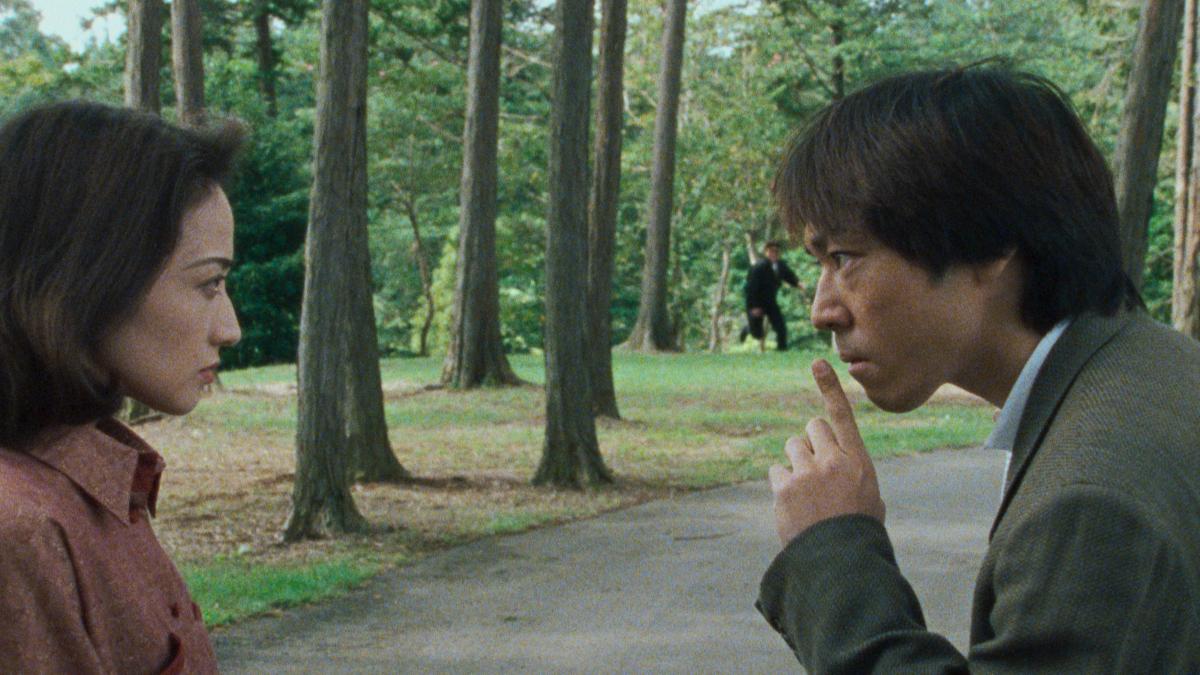
Serpent’s Path is a slow-burning yakuza revenge thriller that employs a minimalist, atmospheric style to explore the mental degradation of those seeking vengeance. As part of a thematically similar duo of films director Kiyoshi Kurosawa created in the late ‘90s, Serpent’s Path follows a deranged, unhinged, and torture-thirsty ex-yakuza member named Tatsuo Miyashita (Teruyuki Kagawa) and his calmer math teacher friend, Naomi Nijima (Shō Akawa), as the former hunts those who raped and murdered his daughter, Emi. Though revenge serves as Serpent’s foundation, it’s really the psyche of this torturous pair—and one’s increasing degradation—as they continue slicing through, shooting, and hosing down yakuza for their child-raping ways.
Kiyoshi Kurosawa has a knack for maintaining an observational gaze at his (usually) already cold subjects. In Serpent’s Path, he captures Miyashita and Nijima sometimes like a private detective or stalker, sometimes like one of Nijima’s students, and even like an admirer of the hefty death trail they leave behind them. These same spaces that this watcher captures visually demonstrate Serpent’s Path’s true purpose: we are who we are, no matter our situation. Some circumstances are just extreme enough to bend our existing personas to similar levels of intensity. No one in Serpent’s Path seems permanently changed by their matters. Current matters instead reinforce their personalities. Though Miyashita’s sanity upon watching and rewatching a tape of his daughter certainly slips, his determination to maim her killers seems entirely too fitting. As he continues degrading, getting more unpredictably violent, and continues talking to himself—“It’s finally time, Emi. I will finally get him”—his actions don’t really bother him; it’s his grief-fueled rage that breaks him. He seems perfectly fine with relentless, messy violence otherwise, though. The chipped-away walls, countless chemical stains, and cryptically rusty warehouse floors and shelves thus beautifully transcribe Miyashita’s already rotted-out, violent nature.
Even more disturbing is Nijima, given his consistent calmness throughout it all. Though his motivation for assisting Miyashita isn’t clear—or at least fully psychopathic, as he responds to a shaken Miyashita’s plea for clarity, “I always wanted to try something like this”—the way he deals with each of the pair’s three initial victims echoes the way he disciplines and commands his pupils in school. Though the clean, white walls of his classroom differ from the disheveled warehouse, virtually nothing changes in his routine. In class, he earns the respect of his disciples through confident instruction, disciplining them whenever any kid misbehaves; at the warehouse, he does the same with their chained-up hostages, instilling false trust that he wants to help them and disciplining them where deemed necessary. He wears the same clothes, uses the same bicycle as his mode of transport, and maintains his stillness the whole time. He even metaphorically leashes Miyashita the same way he does an 8-year-old genius in his class, except with the former via a calming, secure presence, whilst with the latter through gentle, normal encouragement of the kid’s gifts. In short, even in the warehouse, Nijima is organized, relaxed, and well-dressed. He’s smart enough not to let the yakuza’s filth nor that of Miyashita change him, let alone kill him.
Both characters’ fates are essentially predetermined by their personas from the get-go, and the film’s ending twists only further clarify that there’s nothing twisty about this human-nature-driven revenge mission. If you innately seek blood, that’s all you’ll get. Though Serpent’s Path is a bit too slow for all the death to simmer, Kurosawa’s bold dive into the differing natures of revenge-seekers is a grueling subversion of the otherwise popcorn-standard genre. For Kurosawa lovers, revenge thriller diehards, Japanese crime enthusiasts, and anyone looking for unexpectedly layered on-screen killers, Serpent’s Path is a bleak, bold pick.
1998
dir. Kiyoshi Kurosawa
85 min.
4k restoration screens daily from Friday, 5/15, 6:15 p.m. to Sunday, 5/17, 7:00 p.m. @ The Brattle Theatre
Double feature w/ CHIME (theatrical premiere)
Part of the ongoing repertory series: Kiyoshi Kurosawa x4